Mamma Mia

The Palace Theatre

Music and Lyrics by Benny Andersson and Björn Ulvaeus and some songs by Stig Anderson

Book by Catherine Johnson

Directed by Phyllida Lloyd

Mamma Mia is of course the phenomenally successful musical built around the ABBA back catalogue of hit songs. Approaching it’s 20th year of success and now having spawned two hit movies, it would seem set to fill the Aegean sea with froth, sass and sequins for at least another 20 years.

Girl meets Boy and falls in love, decides on a fairy tale wedding, and the only dilemma is which “Father” to call her own amongst three unwitting contenders. The Bride’s Mum is outed as having had a real summer of love during The Seventies and deals with the fallout with aplomb, ably aided by her two best friends and erstwhile backing singers. Everyone gets a happy ending and we all celebrate by dancing in the aisles singing along to Waterloo with a flurry of sequins and exploding confetti cannons.

Lucy May Barker hits all the right notes as the sweet ingenue Sophie. Shona White is reassuringly capable and confident as Donna and delivers on every song moving effortlessly through every emotion from Slipping through my Fingers and The Winner takes it all to the stomping Waterloo. The best friends/Aunties Rosie and Tanya both add a real comedic edge to this production. Nicky Swift is all warmth and impish charm while Helen Anker does a wonderfully acerbic, woman of the world oozing sex appeal. The men are rather less memorable and though all do a good job supporting the women this will always be a show about the girls.

Visually the staging is quite low key using clever lighting to take us through day and into night on a Greek island with glorious weather. The simple staging is effective as it is the colour and spectacle of the ensemble routines that are the visual highlights of this production. The big numbers are great and witty elements such as the choreography of the flipper dance is delightful in Lay all your love on me.

Mamma Mia is lightweight fun at the theatre but cleverly frames a great back catalogue of greatest hits. This is clearly a hard working, highly committed cast and the absolute highlight of the night is the rousing delivery they give after the last curtain call. Riotous fun and decidedly feel good entertainment.

The Palace Theatre until July 14th.

QUEENS OF THE COAL AGE

ROYAL EXCHANGE THEATRE

Written by Maxine Peake

Directed by Bryony Shanahan

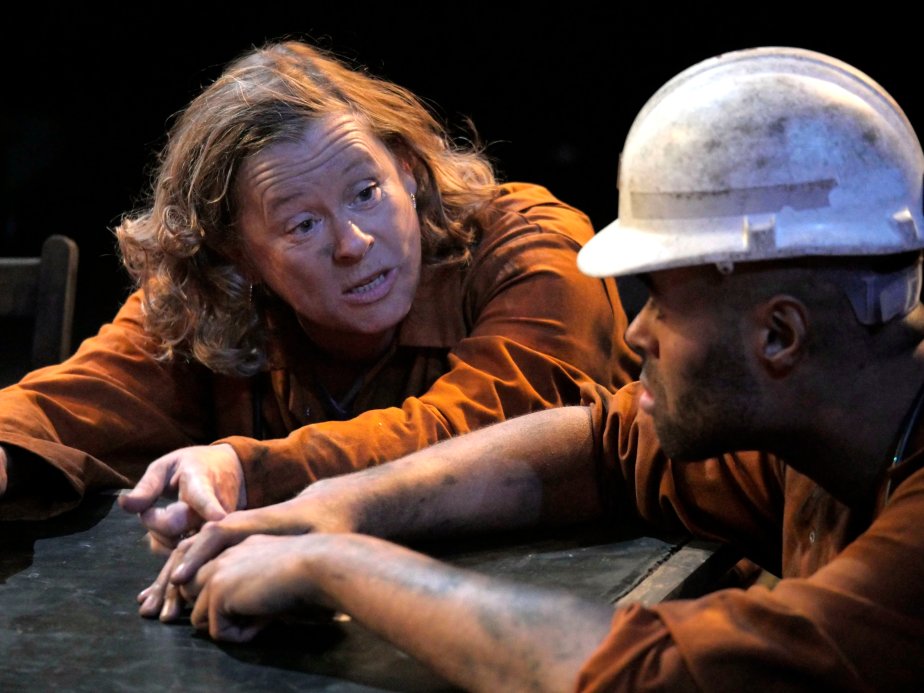
QUEENS OF THE COAL AGE is Maxine Peake‘s humorous and compassionate homage to the four women from Women Against Pit Closures who staged a 5 day peaceful protest within Parkside Colliery in 1993. As with Tour de Beryl andThe Last Testament of Lillian Bilocca Peake joyfully celebrates women who make a difference, who effect social change regardless of personal cost. As with previous work Peake mines a rich vein of humour throughout. She has an acute insight into the need for laughter in the bleakest of situations as humour can protect the toughest of us when we feel at our most vulnerable or desperate.

The four actresses deliver authentic, naturalistic performances. Kate Anthony bristles with energy and passion as Anne Scargill but poignantly allows for the expression of the unforgettable humiliations during the Strikes that wounded this formidable woman. Eve Robertson as Elaine displays a wonderful blend of awkwardness, difference and passion. Every emotion is conveyed with a real physicality that reminded me of Victoria Wood performing at her most vulnerable. Jane Hazlegrove endears as Dot who blusters through her misgivings and shines a light on the dilemma of how to build a society for our children while trying to also provide a secure homelife for them. Danielle Henry as Lesley brings spontaneity and exuberance to the group as she portrays a more youthful passion for the cause and brings awareness to the casual racism she experiences.

Looking at interviews that Anne Scargill and the other women gave after the strike to journalists and to Peake herself during her research , there is a genuine sense of almost verbatim delivery at times. Little touches such as Lesley’s hair combs becoming needles to stitch blankets from sacking and creating paper roses and a vase really happened and are touching elements of their story that are lovingly included.

The stage design by Georgia Lowe and lighting by Elliot Griggs capture life down the pit with the industrial pit head lift and the dim lighting enhanced by the mining lamps all around the stage and circle. They work in harmony to create a chilly feeling in the theatre as though the audience are underground too, observing in silence like the miners from different eras of the past who move poignantly on and off the stage.

Director Bryony Shanahan ensures that the comedy banter also allows space for the politics at the heart of this production. This production burns with the outrage that although some things may change such as musical taste – there are humorous bursts of music from the women’s youth alongside the pounding beat of young miner Michael’s beloved house music which electrifies the women too. However, the deep frustration lies in that racism, inequality and poverty continue to dominate the lives of so many. It’s noteworthy that nearby Oldham Coliseum is also premiering new work celebrating the power of protest with Ian Kershaw’s Bread and Roses. QUEENS OF THE COAL AGE is a production that celebrates unity, friendship, political activism and the ongoing importance of collaboration for social change. All hail the Queens of The Coal Age and all those women who seek something better for themselves, their families and their communities.

Royal Exchange Theatre until 28th July

Images by Keith Pattison

Bread & Roses

Oldham Coliseum

Written by Ian Kershaw

Directed by Amanda Huxtable

Ian Kershaw has written a protest musical based on the 1912 Bread and Roses worker’s strike in Massachusetts that is as relevant today and is a powerful call to arms. Kershaw is a passionate advocate of solidarity, equality and compassion and his views shine through in this piece. Bread & Roses is an anthem for change and a homage to the hope that Our Tomorrows are better than our Yesterdays.

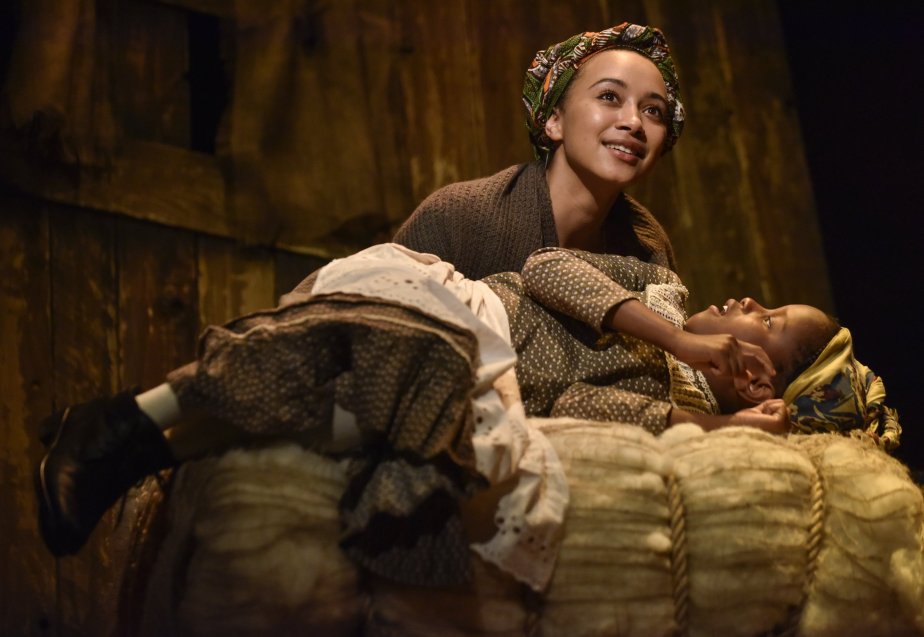
The opening scene is beautiful and truly memorable. Holding candlelit lamps, the cast bring in the new year of 1912 as they sing Auld Lang Sang a capello. New legislation had decreed that women and children now have a working week of 54 hours instead of 56. The Bread and Roses strike was the worker’s response to mill owners reducing pay and speeding up the looms. In a community comprised mainly of immigrants, the particularly special nature of this strike is that there was a united multinational response from the workers. Belts on looms were cut, the first moving picket line in America got around new legislation about loitering and children were sent away to places where they could be properly fed. Public response forced change and the mill owners had to accede to the workers demands.

This is a very strong and multiskilled cast. They sing extremely well and many play a range of instruments including piano, guitar, and banjo. The music is a mix of belting hymns such as Rock of Ages, haunting Irish ballads like The Parting Glass and stirring protest songs. There is Power in a Union by activist Joe Hill famous for his songs in that era, the wonderful Bread and Roses by James Oppenheim and the stirring bluegrass Ain’t No Grave made famous by Johnny Cash. The protest was known as “The Singing Strike of 1912” and this play celebrates that with gusto.

Lauren Redding as stout- hearted Martha gives a standout performance with an incredible voice and stage presence. Claire Burns as the martyred Anna is astounding. She creates goose pimples as the ghostly presence with her beautiful voice. I would happily buy the soundtrack to this production if it’s made available. Now that might be a great way to raise money for the foodbanks or homeless around Oldham??

The male performers do a great job throughout, particularly Oliver Wellington as Cal, but this is a female led cast. It’s star acting performance is Emma Naomi who has incredible natural grace on stage and captivates as Lily-Rose, the young widow and mother who finds her voice as an activist.

This was a very impressive opening night and Director Amanda Huxtable has created something very special. There are points where a more relaxed, naturalistic approach might benefit especially in the movement direction which at times appeared stilted. Moments where the chorus move into the aisles and circle during protest rallies work well creating a strong sense of audience involvement and creating more energy on stage. The illustrating of issues such as immigration, poverty, unemployment and the dangers of “false news” are crystal clear, leaving uncertainty around the need for the final modern day scene.

Kate Unwin‘s set has a real warmth and lustre. The cotton bales prevail in every scene whether at the impoverished worker’s cottage or at the factory gates where the mill looms turn overshadowing every life in the town of Lawrence as they once did in Oldham itself. The changing backdrop of gorgeous red and indigo skyscapes are sumptuous and set the mood very well. The lighting and sound is evocative as scenes shift from the peaceful sounds of riverbank fishing with the idyll of crickets singing to the whirr and clamour of the looms.

This is a wonderful production to see in Oldham and would also make an excellent show to adapt for schools or colleges to perform. There is a strong political message from the past that resonates in our current society. We may need bread for sustenance but we have rarely been in so much need of roses such as this production.

Oldham Coliseum 22nd June – 7th July

Images by Joel Chester Flides

Warhorse

The Lowry Theatre

Written by Michael Morpurgo

Adapted for Stage by Nick Stafford

Directed by Marianne Elliot and Tom Morris

A National Theatre production

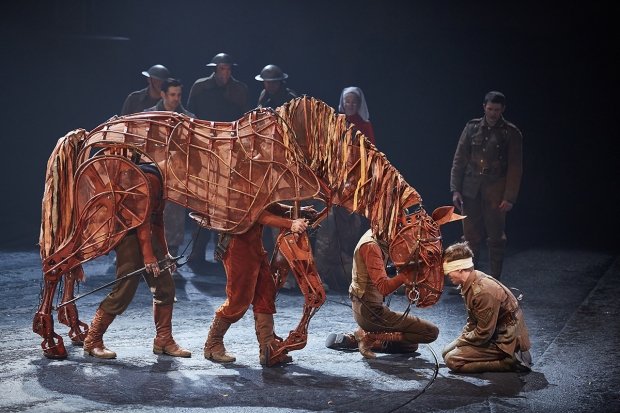
Warhorse had it’s regional première at The Lowry in 2013 and returns for the third time, fittingly as the centenary of the end of WW1 approaches. The book by Michael Morpurgo was adapted at The National Theatre in 2007 and has been hugely successful ever since with worldwide audiences of over 7 million. It is a extraordinary show in terms of scale and ambition with a use of puppetry by South Africa’s Handspring Puppet Company that is breathtakingly effective. It takes the audience on a journey from sleepy pre-war Devon countryside to the horrors and brutality of the battlefields of France. It is a poignant tribute not only to all that wasted youth and unfulfilled potential but to the animals who suffered and were slaughtered in appalling numbers.

This is a huge production relying on the puppetry effects merging with a large cast in a believable way. There are moments with the birds early on that don’t seem as effective as perhaps intended but otherwise it all works incredibly well. Moments like the puppeteers reverently stepping away from Topthorn perfectly convey the loss of the heart and soul of this proud animal. Similarly the sudden breaking of the colt to make way for the fully fledged Joey is spectacular. This is clearly a team effort with the whole cast giving their all to a very special theatrical experience.

The design work on Warhorse is astounding in its apparent simplicity. Rae Smith’s set is a bare stage using occasional props but to stunning effect. Doors appear in the dark backdrop or poles create market day or become paddock fences. Barbed wire draped at the front of the stage creates a visceral horror that is unforgettable. The brilliance of the vast overhead projection screen is incredibly special. As the performance opens it looks like a slash of white cloud across the Devon countryside but is of course a torn fragment of parchment from a soldiers sketchbook. The backdrop of images of country villages, callow youths on horseback and soldiers’ arrival in France and the battlefields of The Somme are sketched out across the screen in black and white drawings. The only splash of colour is when the screen bleeds red for a lost comrade and poignantly becomes the blossoms of poppies on The Somme.

The lighting by Paule Constable is beautifully done creating golden summer days and crisp winters before shifting into the bleak battlefields where soldiers emerge from the gloom or are blinded by the white flashes of explosions or the yellowing haze of gas attacks. The lighting has the effect of breaking the fourth wall by making the audience experience the battlefield horrors as though they are there too. The impact of the sound and visuals have created a powerfully immersive experience that lingers after the show has ended.

My grandfather was a country boy like Alfred and fought throughout the war. He was to be the sole survivor of his platoon at The Somme and initially was listed as dead. He was seriously injured, placed on a cart of dead bodies dragged back through the mud and debris by a horse such as Joey. He started to regain consciousness as the bodies of his friends were lifted off for burial. He was one of the lucky ones who came home.

This is an incredibly moving experience especially as the young soldiers go over the top and are cut down so brutally. The horrors of horses ridden into barbed wire with no escape or dragging ambulance carts or tanks through the treacherous mud. Warhorse is a potent reminder of why WW1 is rightly still remembered as a testament to the senseless cruelty of war.

The Lyric Theatre, The Lowry

13th – 30th June

Images by Brinkhoff & M Âgenburg

YOUR BEST GUESS

HOME

Written and Performed by Chris Thorpe

Directed and Performed by Jorge Andrade

Exam season is upon us and today is my daughter’s first exam. Asking her if she had a talisman, I got a quizzical look as if to say what difference would a pretty stone or a furry toy make? Last night I watched YOUR BEST GUESS, a collaboration between theatre maker and performer Chris Thorpe and Jorge Andrade Artistic Director of mala voadora. It is an exploration of the unpredictability of life, how we plan for the future with no guarantee that the anticipated event will actually happen. We are placing bets on the future and the variable outcomes are reflected in the tangible objects around us.

A concert ticket for a gig that is cancelled may be kept as a reminder of another world that never happened, rendering it possibly more precious than a replacement ticket for a rescheduled event. Andrade speaks of a whole town carefully replicated to rehouse a small community meant to be relocated to make way for a dam intended to provide water for 400,000 people. The dam was cancelled and the new town became a ghost town representing lives that may have been lived another way. Thorpe writes the goodbye letter that his wife would have written to their children if she hadn’t been in a coma from a freak aneurysm. He reflects on the speech written for President Nixon to give if the moon landing had failed. Andrade descibes the sports tops given to refugees each year that celebrate victories that never happened and so become redundant and discarded to refugee camps or sold on eBay to collectors.

Both performers have an easy familiarity with each other allowing them to challenge each other, ask difficult questions and occasionally raise a quizzical eyebrow at personal music choices. The vignettes flow and include some beautifully written descriptions that are powerfully evocative of possible life events. There is a real sense of questioning what is real and what is just a possibility in this piece which is interspersed with actual facts. Thorpe reflects on Otis Redding in a music studio whistling a verse on a song he was never destined to finish surrounded by coffee cups and everyday normality before a plane crash would claim his life. That track retains that final whistling which is now such an integral part of a much loved classic.

YOUR BEST GUESS will strike a chord deep in all of us as it perfectly encapsulate the human condition. Our curiosity and hope as we plan the future we dream off often battling with the things we do to ward off our dread and fear of the alternate future of our nightmares. Many years ago I had a ridiculously vivid nightmare of being home on holiday and my parents dying suddenly when I had nothing suitable to wear to their funerals. Looking back I think I never went home again with any “sensible” clothes as though I could ward off my worst fear. A few years later my father died in exactly those circumstances and all I had was a bright red P.V.C mac for a funeral on a rainy day. I remembered that coat last night as Chris Thorpe picked up his shiny red guitar to play an eerily beautiful rendition of Dock of the Day.

HOME 11-12 JUNE and on tour.

Happy Days

ROYAL EXCHANGE

Written by Samuel Beckett

Directed by Sarah Frankcom

In the opening minutes of Happy Days there is a strangely surreal sense of reassuring normality as Winnie methodically cleans her teeth and applies her lipstick. Yet this women is inexplicably trapped from the waist down in a mound of barren earth like the Queen of a floating island which is brilliantly evoked by Designer Naomi Dawson. Director Sarah Frankcom and Associate Artist Maxine Peake have joined forces on Samuel Beckett’s Happy Days. It is a stunningly evoked vision of some kind of absurdist prison or hellish afterlife or perhaps, simply an allegory of a marriage gone stale.

Maxine Peake draws on all her acting skills and delivers a Winnie who shimmers in the harsh sunlight and gleams as the light finally fades. She is girlish and gay or plaintive and rueful. There is quite simply nowhere to hide in this production, nor are there cues from other actors as Willie is always out of her sight even when he is near her. Peake is just sublime throughout, brittlely blithe and gay in Act 1 and pitifully sunken eyed and unkempt in Act 2. With a camera zoomed in on just her face and every tiny expression projected on monitors above her, she never wavers. Her Winnie is runny nosed with an aged voice, seemingly forgotten like an O.A.P in a sub-standard carehome.

She is the quintessential upper middle class British woman who was probably a pre-war débutante brought up to be pretty, charming and cheerful but also brave and stoic in the face of adversity. She reminded me of the Stephanie Beacham’s Rose in Tenko years ago. A delicate beauty who could still ooze pure class and glamour in rags, and who had cut glass vowels and cheekbones with a backbone seemingly formed of pure steel. Certainly Winnie keeps returning to the past to speak in the old style or recall past moments when she was young, foolish, beautiful while holding unto the classics to not forget familiar anchors. She is terrified of losing those anchors to sanity yet can also blithely ask Willie What is that unforgettable line?

It is the vulnerability of the human condition that pains Winnie more than the actual paralysis. What is most important is to be heard as a way of validating sanity and existence. She prattles away to Willie pastiming through the horror of her predicament as a coping mechanism. The maintenance of small routines and the comfort of Willie and the bag are her anchors to ensure she holds unto sanity and to gravity. Even as a husk of her former self in the second act unable to utilise these comforts she wills herself to focus on them as tangible memories, seeing Willie again and singing her song from the now out of reach music box.

This play is a study in mindfulness reminding us all how to harness our senses and focus back in on the little things. In a world where we are often surrounded by the incessant noise of people, media, memes and madness, Winnie’s plight is terrifying yet also an invitation to slow down and stay in the moment.

Royal Exchange 25 May – 23 June

Images by Johan Persson

A TASTE OF HONEY

OLDHAM COLISEUM

Written by Shelagh Delaney

Directed by Chris Lawson

Sixty years on from it’s première at Joan Littlewood‘s Theatre Royal Stratford East Helen and Jo are doing another moonlight flit as A Taste of Honey opens at Oldham Coliseum. Traipsing through the auditorium with their flimsy suitcases and cheap coats you can almost smell the whiff of stale perfume, gin and despair as they pass. The creation of 18 year old Shelagh Delaney, this gritty Northern drama was penned in two weeks as a defiant young woman gave a voice to the women around her. Salford in the late Fifties was grim and this production speaks of the harsh reality of poverty, race and homosexuality in a post war working class community. It is a celebration of strong women making the best of their assets and getting on with life regardless of what fate chucks in their path.

Director Chris Lawson clearly has great affection for the characters and seeks out their softness and humour as well as their grit and shrewish spitefulness. Gemma Dobson plays Jo as a fresh faced, teenager with traces of childish puppyfat who may despise her mother’s lifestyle but who is quick to clumsily adopt her coquettish mannerisms. The tragedy here is a child-woman growing up too fast as she seeks out a little attention and affection in a bleak environment. Dobson nicely threads the line between childish naivety and the bleak cynicism of one who has seen too much too young. Kerrie Taylor embodies the world weary Helen with a rake thin brittleness that on occasion lights up with the seductive sinuousness of Marilyn Monroe. This good time gal is bleakly aware that her 40 year old body will only do so many times around the block before it is discarded back in the gutter. There is little likelihood of cosy, happy endings for either woman yet they both retain pride and stoicism.

The traditional men here are bluff, gruff and casually cruel like Peter who Phil Rowson plays with rakish energy as a drunken Spiv. The others who have not been to war are softer and kinder. Kenton Thomas brings a sweetness to sailor Jimmie who is charmed by Jo and her acceptance of his race but leaves without ever checking if she might be pregnant. Max Runham as the kindly art student who befriends Jo is delightful as he veers between wistfully “playing house” and desperately trying to fit into societal norms while waspishly expressing his true nature.

Sammy Dobson has created a set that perfectly evokes a grimy, Northern street. All smoky brickwork and smoggy air with an interior of peeling wallpaper and nicotine colours. The threadbare furniture sags and creaks and retains its grimness even with the glamour of Helen flitting in or out, or the occasional brightness of a bunch of conciliatory flowers. The moments when the stars glitter through the roof is a clever touch bringing hope and magic into these gutters or perhaps the poignancy of fragments of broken dreams.

The music here is another snapshot of this era of post war Britain just before the freedoms of The Sixties. The use of dance and movement to the music allows the scenes to flow and the characters to escape reality while a records spins on the turntable. Sixty years on from Delaney’s triumph there are sweeping changes in society and many of Salford’s grim back streets are gone forever. Watching the revival of this play brings cosy childhood reminders of watching black and white episodes of Coronation Street, however it is also a potent statement about today’s sanctions and the unremitting destruction of our social welfare system. If writing this play today, I imagine Delaney might have Jo and Helen at a food bank and queueing for a bed at a hostel for the homeless.

At Oldham Coliseum 25th May – 9th June

Images by Joel Chester Fildes

Long Day’s Journey Into Night

HOME, Manchester

Written by Eugene O’Neill

Directed by Dominic Hill

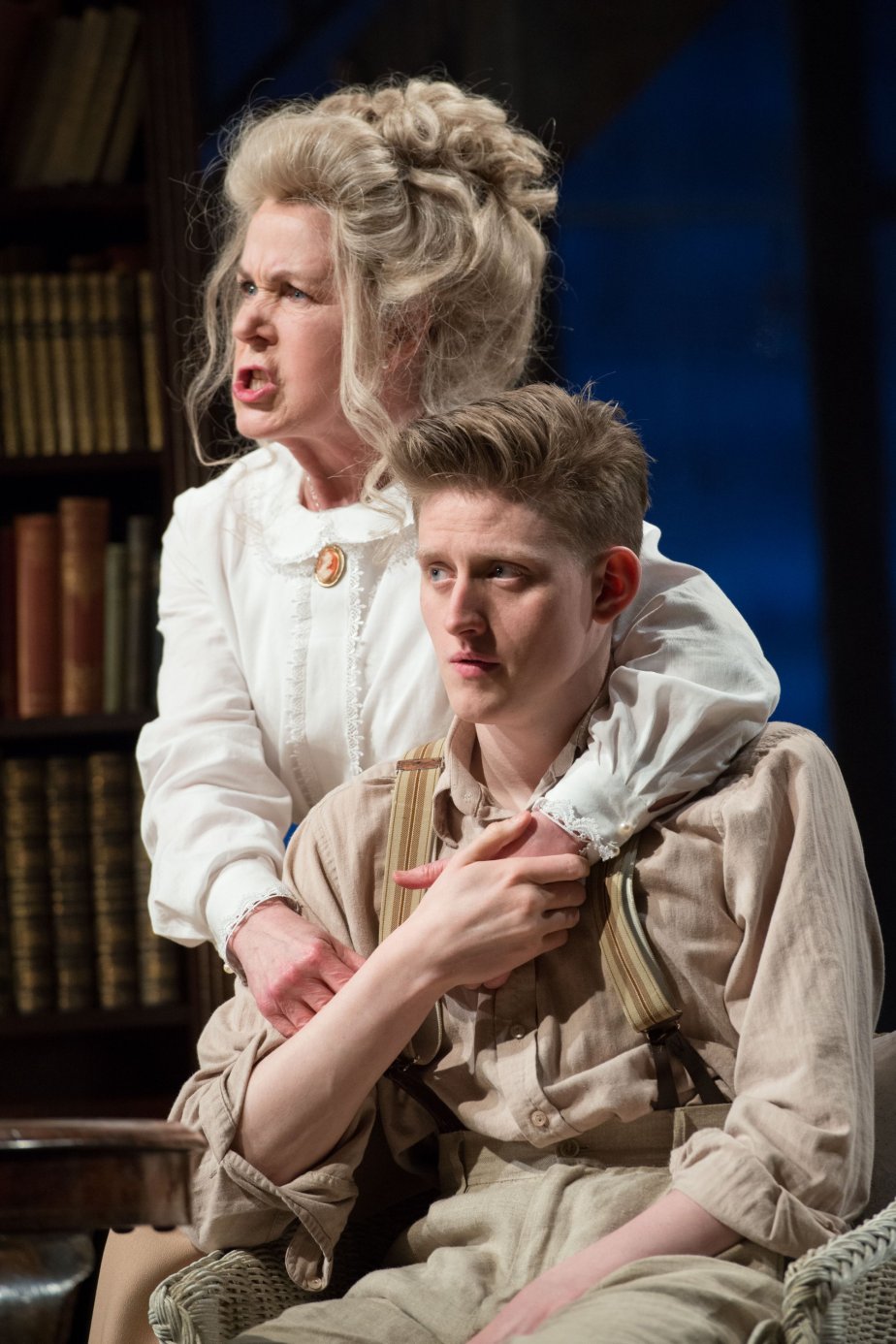
This is co-production by HOME and Citizen’s Theatre of Eugene O’Neill’s semi-autobiographical and Pulitzer award winning play. Director Dominic Hill has shaped an exquisitely raw study of a family trapped in the throes of addiction and regret. Written in 1942 it covers one fateful day in the life of the Tyrone family as they acknowledge the hopeless reality they exist in and the ways in which they each seek to escape their pain. As younger son Edmund reflects, Who wants to see life as it is, if they can help it? Each one of them is a shadow of their original selves, consumed by their addictions and in Edmund’s case; quite literally by tuberculosis.

Tom Piper has created a haunting and deeply evocative set for this production. It is the bare exposed bones of a house reflecting the exposed failings and regrets of the family. It looked unfinished like the framework of a house where the architects plans got lost or waylaid and no one had the skills or temerity to try to fill in the gaps. In a similiar fashion Mary Tyrone is such a childlike wraith she has never fully grasped her role as a homemaker, wife or mother. The foggy opaqueness of the walls echo the transparency of this family’s lies and excuses. There is nowhere to hide and as the projected sounds of restless movement or conversation echoes from rooms further back in the house, it feels like the audience has no choice but to eavesdrop just like the family do.

The design of the house also echoes the theme of the fog which prevails throughout the play. It is a potent signifier of the ways in which each of the family seek to lose themselves from reality in a fog of alcohol or morphine or memories. As Mary reflects how I love the fog, it hides you from the world…… No one can find you or touch you any more. Tellingly it is the foghorn she hates, a blessed beacon of safety for some, but for her a wretched call back to reality.

It is the profoundly narcissistic Mary who dominates the play with her desperate neediness and appalling insensitivity to the feelings and needs of her family. Bríd Ní Neachtain embodies the essence of this fluttering morphine addicted waif. She is girlish and gay or plaintive and rueful, then flits into prickly, resentful and defensive. Her performance brings alive every facet of a women who was spoilt and cosseted by her father and husband, but who has been disappointed by marriage and family life and aging. This lying dope fiend is at times truly a fiend as she deflects her own shortcomings unto her family. One son is cruelly scapegoated for the death of her middle son while the youngest gets no comfort when diagnosed with consumption but is vilified and blamed for making her worry and therefore need her morphine fix. Yet this performance by Nì Neachtain also evokes pity for this once pretty and talented young women who has become an aging embittered addict.

George Costigan does a warmly, upbeat James who desperately hopes that each trip to the sanatorium for his wife will bring a permanent cure, yet who quickly moves to defeated and despondent as he is disappointed once again. An actor who gave up artistic success for financial security, yet is trapped as his lifelong fear of penury and the poorhouse mean he cannot enjoy his wealth. Costigan fills the role, perfectly evoking James’s Irish background from the Irish Famine and poverty while delighting in his passion for Shakespeare and his boyish glee as he opens yet another fresh bottle of whisky. He also brings the meanness of an unpredictable drunk who can be despicable to his boys one minute while hugging them the next.

Sam Phillips as Jamie is a beautiful wasted drunk who has learned to be wily and full of self pity and excuses from his addict parents. The true degree of family damage is surely in his final scenes with brother Edmund when he chillingly warns his brother against himself The dead part of me hopes you won’t get well. Lorn MacDonald as Edmund is heart rending as he is in denial about his health and when the worst is confirmed he realises that no one in the family is equipped to support him. Wheezing and glistening with tears and spittle his performance is haunting and raw. This family emotionally flay each other through the course of this long day and MacDonald displays every moment of pain on his pale, anguished face. The only truly cheery spirit is the maid, a lively Dani Heron who is not contaminated by the family dynamics and is happy to join her mistress in a whisky.

This is such a bleak insight into addiction and co-dependency in a family and O’Neill was writing about his own family as the only one still alive. It reminds us all of how the echo of past family stories define the present and often the future. It was one of the last plays he wrote before becoming unable to write due to Parkinson like symptoms affected his hands. There is a brutal irony when he describes his mother’s trembling hands in the play and in recalling her drug addiction at a time when his own wife was also an addict. As Mary says The past is the present, isn’t it? It’s the future too. This is a family who need to cling on to their tragedies in order to justify their failures.

It speaks as clearly today as it did when first published of the destructive impact of addiction and unresolved grief. Performed in Glasgow and now in Manchester it is doubly pertinent today as both are cities with drug problems and a growing issue of homelessness. As James relates his fear of the poorhouse it is a sobering reminder that in Britain today there are no longer even poorhouses just pavements.

HOME 10 – 26 May

Images by Tim Morozzo

Three Sisters

Royal Exchange Theatre

By Rashdash

After Chekhov

Three Sisters is the latest show from multi-award winning Rashdash and is co-produced with the Royal Exchange Theatre with whom they are Associate Artists. This is a gutsy and vibrant challenging of the narrative conventions of the classics in theatre. In taking a play by Chekhov and experimenting with the form Rashdash are exploring who the classics are aimed at. Do they still have a relevance in theatre today? Who gets what from them and in what’s ways can we alter them to continue to get something powerful and enduring from them?

Why do the men in this play have all of the lines?

Rashdash rip up the script, burn the frumpy black dresses, bare their maidenly breasts, crank up the volume on the piano and add some strings and drums. This is Chekhov in a mash up with Vivienne Westwood and The Slits. This is sexy, vibrant, caustic and clever. Packing a hefty feminist punch and some serious theatrical clout while also remaining playful and whimsical, Three Sisters is truly a thing of joy from start to finish.

These three sisters are not muted and still. They are not passive Barbie dolls but are Action girls in crinolines. There are no sepia tones to this production, instead there is a kaleidoscope of colour. There are frequent moments where tableau scenes are staged then fractured and fragmented as the performers hold up a prism to see women as so much more than pliable, passive vessels to be moulded by male writers into their version of womanhood. These women are messy, imperfect, funny, clever and complex. They have mastered social media as well as the piano. They are cultured and educated with their own opinions, and can also cry in a supermarket and “dance it out” like they’re on Greys Anatomy. They own their own bodies and wear whatever they choose, if they strip off on stage it is their decision and has a function rather than being sexualised. They wear comfy knickers, will massage their perineums with olive oil to avoid tearing in childbirth and will rail against the passage of time as a slow, slow bastard cunt!

Performance is meshed with music,song and movement so there is always a sense of flux and change. Even in moments where there is a static snapshot of stillness there will be music or the movement of a statue or the TICKTOCK digital display flashing. Nothing stays the same. The scenes are constantly shifting as the pile of disguarded clothing gets bigger as if to say plays like bodies can be dressed or styled in an endless array of guises. The nod to Shakespeare in some of the fashion choices is a witty reminder of just how many of our classic plays were written by men and are now being revisited from a female perspective- most recently Othello at Liverpool’s Everyman.

Rashdash are all accomplished musicians and with the addition of Chloe Rianna on drums and Yoon-Ji Kim on violin and synth, they move through a range of styles from classical to trippy, punk and blues. The soundscape is as varied as the costumes and the women on stage. Olga Helen Goalen, Masha Abbi Greenland and Irena Becky Willie all sing, and they all deliver whether alluding to mainstream pop Adele and Katy Perry or spitting out a punk lyric or belting out a torch song. The lyrics are mercilessly clever, and often wickedly funny. All three deliver strong performances that have an essence of each sister.

This production works across enough levels to be a success whether you know the original or not. A Chekhov aficionado will get the references to their mother’s broken clock or the spinning top given to Irena. They will see the irony of Olga idly wishing she was more able to do something about homelessness when of course the sisters are about to lose their family home. Whereas fresh eyes see a topical issue being raised that they have probably walked past on their way to the theatre. The haze of smoke alludes to the nearby town on fire but could just as easily refer to Grenfell Towers. Masha can be a modern woman dealing with heartbreak by swiping Tinder or a sister in an unhappy marriage seeking solace within an army garrison.

Moments on stage such as Masha reading out multiple reviews of the original play or being literally squashed by volumes of the classics poke fun at our obsession with the relative safety of tradition in theatre while reminding us of the need for joyfully subversive new works. Rashdash pull back the curtains and fill the stage with fresh air and new opportunities. Three Sisters can challenge existing lovers of the classics and bring new vibrant audiences to look at established works. The Royal Exchange Theatre is currently also showing The Cherry Orchard on it’s main stage. Like a beautifully deconstructed cheesecake on Masterchef Three Sisters is a brilliant take on the original classic.

Royal Exchange Theatre, Manchester 3rd -19th May

The Yard, London 22 May – 9 June

Tobacco Factory, Bristol 12 -16 June

Images by Richard Davenport

Othello

Everyman, Liverpool

Written by William Shakespeare

Directed by Gemma Bodinetz

In this new production of Othello the past and present collide. A hand-embroidered hankerchief and a smartphone symbolise our human need to love and be loved, to accept and be accepted; and the destructive power of betrayal and fake news. Director Gemma Bodinetz and the repertory company at the Everyman have produced an Othello that is absolutely fresh and timeless. There is no sense of the frustration of a 400 year old play being shoehorned to appease or entice a modern audience. It just works from start to finish. The much heralded casting of Golda Rosheuvel as a female Othello is both exciting and intriguing. However this becomes at times almost irrevelant as it is the emotional depth and intensity of her performance that stand out as the most pertinert aspects of this casting choice.

Golda Rosheuvel is Othello as an army General that is female, black and gay. She is successful, respected and courageous. It could have been so obvious to play her Othello as a butch lesbian with a crew cut and and a jutting jaw. Instead we see a strong, intelligent woman who has the quiet certainty of being in love and feeling loved. She is not large in physical stature and is womanly whether in battle fatigues or a simple flowing gown. She is measured and reflective in all areas of her life until confronted by Iago whose thwarted ambition and jealous vilification of others conspire to destroy her faith in love and honour.

Patrick Brennan is undeniably effective as the charming manipulator dripping his poison with all the reasonableness and solicitation of a corrupt politician at a General Election. His Iago is odious as he reveals his plans to the audience and truly terrifying in his own certainty regarding his actions. He is the epitome of the reasonable white man hellbent on obliterating anyone who is “other”, as he moves around the stage spitting honeyed venom like Trump on Twitter.

Cerith Flinn plays Cassio as a taut, muscled squaddie with a heart of gold whether fighting honourably on the battlefied, carousing with a bottle in hand or wooing the winsome Bianca – a delightfully comedic Leah Gould. His Cassio is a fitting replacement for Othello as a young soldier with a pure heart and good intentions.

Emily Hughes performance is fresh and vivid. She combines girlish delicacy and youth with gritty determination to seek out fairness and equality for others. She is fair and beautiful but her character is what really defines why Othello loves her. She loved me for the dangers I had passed, And I loved her that she did pity them.

The swift unravelling of Othello’s calm reason into jealous, vengeful rage might seem at odds with this professional soldier and loving wife. Iago has broken the implicit trust essential between comrades on the battlefield and partners in a happy marriage. The result is a tortured woman stricken with epilepsy and deep emotional trauma. A modern take on this might well be an Othello suffering from PTSD (post-traumatic stress disorder) who is battle scarred and reacting to new trauma with paranoia, dissociative seizures and the hyperarousal of murderous rage.

The final scenes played out in a floaty, white gauze bedchamber are gut wrenchingly poignant. This gossamer veil highlights the ephemeral nature of life and gives a dreamlike softness to both the brutality and the tenderness of the murder scene. Such betrayal and heartbreak plays out and the emotional struggle for Othello is palpable. Even knowing the end of this 400 year old play, expectations feel suspended as if on a heartbeat the outcome might still go either way.

At pivotal points the audience are spotlit by powerful searchlights or the beam of a single torch. On reflection it feels like an invitation by Shakespeare and also by Bodinetz to look at ourselves and those around us and reflect on what we see. Perhaps there is an invitation to start accepting ourselves- regardless of gender or ethnicity as all being capable of strong and powerful emotions. That does not have to be dangerous when we recognise they can make us protective, nurturing parents, successful and happy in our relationships and productive in our work. It is only when we use labels to divide and diminish that we lessen ourselves and our humanity. Like Othello – male, female or gender neutral we are perfectly imperfect. No more and never any less.

OTHELLO Sat 28 April to Tues 10th July

Images by Jonathon Keenan