The Cherry Orchard

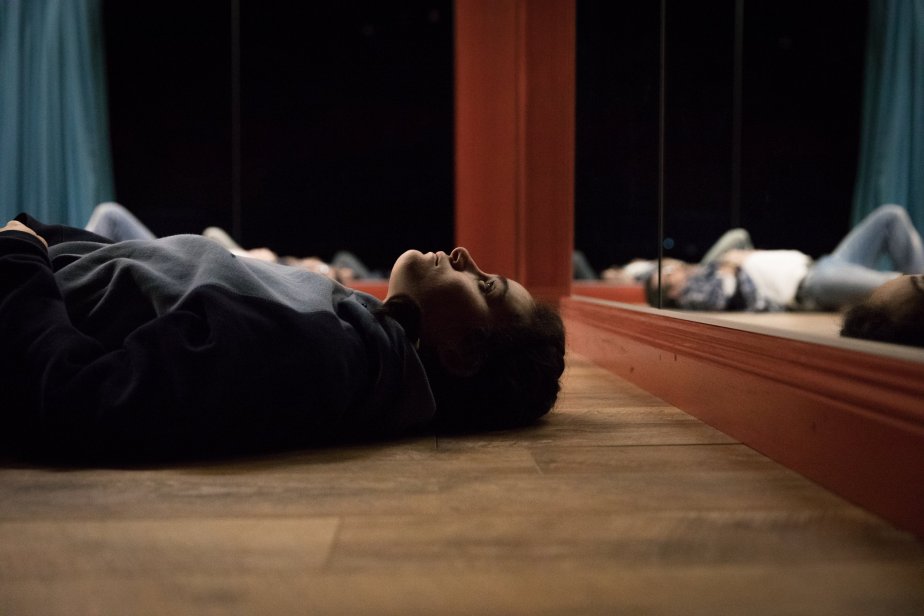
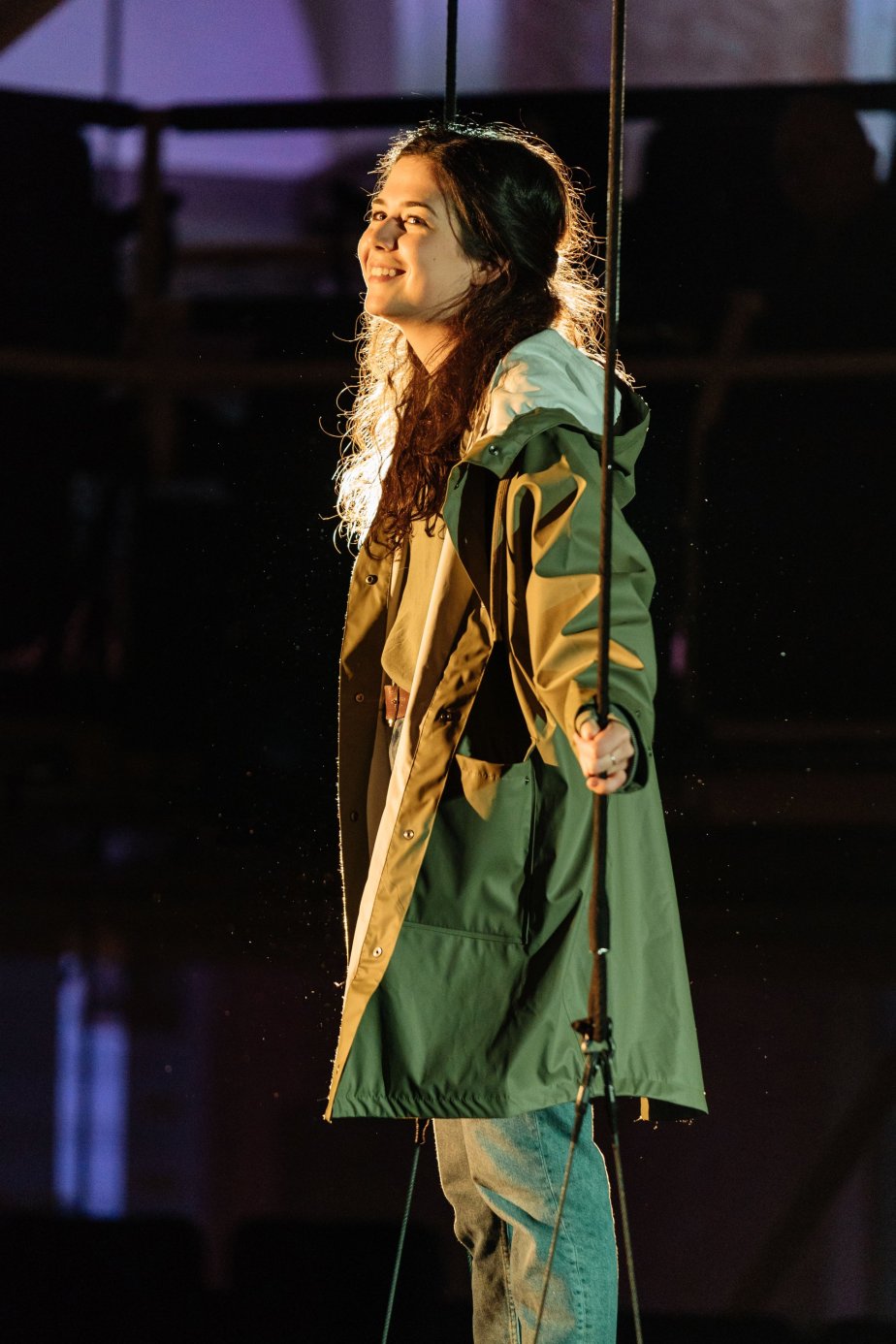
royal exchange theatre - harry oliver (grisha) - the cherry orchard-1848559962..jpgRoyal Exchange Theatre

By Anton Chekhov

Translation by Rory Mullarkey

Directed by Michael Boyd

Rory Mullarkey and Michael Boyd are the first Russian speaking Translator/Director team to pool their skills and mutual love of Chekhov to create a new British translation of The Cherry Orchard since Michael Frayn in the Eighties. The result is a success that retains and celebrates the comedic elements while also balancing the tragedy and loss from the past with the fears and hopes of a dawning new age. Little actually happens in this play but it is always engrossing as obvious outcomes and solutions are evaded in favour of unsolved problems and enigmas. Chekhov was a doctor as well as a writer and in this, his last play there are acute observations of the human condition but no diagnosis.

The most striking element of Tom Piper’s design for this production is the starkness of the set. Apart from a few falling blossoms the audience are left to imagine the lush white blooms in an orchard that is the one remarkable thing in this entire province. The once grand house is also left to the imagination as the set is a huge expanse of bare wooden floor, a single chair an occasional table and a hundred year old bookcase. The wooden floor dominates as if it hints at what will become of the soon to be felled cherry trees. It is like a blank canvas awaiting a fresh start having probably been stripped of its plush furnishings to meet the mounting debts. When Uncle Leonid makes an impassioned speech to the bookcase it is both ridiculous and poignant as it represents the grandeur of a fast diminishing lifestyle.

Despite the bareness of the stage this is a production that is full of imagery and references to colour. The orchard is the white of Lyubov’s girlish summer gown, the white of torn up telegrams, and old money. The white of a ghostly balloon moon and of innocence and purity. The blacks and greys of duty, servility and squashed hope is there in Firs’ uniform and Vavara’s drab clothing. The cherry pink of Lyubov’s velvet dress is the pink of ripened sexuality and the cherry jam of yesteryear. The yellow gold of Lopakhin’s polished shoes alluding to the brassy nature of new money. The casting choices also make a provocative colour statement about history of slaves/serfs and masters. All the family in the house are white actors while the staff or children of serfs are all actors from other ethnicities. Emma Cains also cleverly uses the trajectory of the costumes styling to reflect the move from the past towards a new age and new freedoms.

There are some especially strong performances with Kirsty Bushell as Madame Lyubov deftly portraying the fragility of a woman seared by grief whose party girl approach to heartache keeps her constantly on the move like a beautiful butterfly. This is a woman whose husband died of champagne while her little son Grisha drowned on the estate a mere six months later. Seemingly careless and insouciant she flirts and flits around giving out gold to strangers when she is about to lose her family home. If kisses were roubles this family would be debt free. At moments when her gaiety fractures Bushell is raw with tangible pain. The scene where Grisha is on the chaise longue beautifully captures the fractures in Lyubov’s life -a mother mourning at her son’s funeral wake bleeds into a riotous house party. Rosy McEwen as the disappointed and disillusioned Vavara is as pale and luminous as the haunting moon. The restraint and delicacy of her performance is beautifully balanced as she yearns to be both a wife and a nun. Jude Owusu as Lopakhin is a seamless blend of arrogant new money and success with hints of an awkward lovelorn son of a serf. A self made man who is rightly proud of his achievements yet is tongue tied and paralyzed to speak his feelings.

The threads of the past, present and future are ever present. Ancient butler Firs can only remember the past but will be the last living soul in this house. The child haunts the house in timeless fashion observing everything silently. New love affairs begin, old ones may start again and some remain as simply frustrated yearnings. Chekhov throws up possibilities like blossom petals and this production casts them up in the air with real love and delicacy.

Royal Exchange Theatre 19 April-19th May

Images Seamus Ryan

Corrido de la Sangre

HOME

The Tiger Lillies

Director Mark Holthusen

Writer Pedar Bjurman

Music and Lyrics Martyn Jacques

The Tiger Lillies have been delighting and possibly revolting audiences for nearly 30 years. This “anarchic Brechtian street opera trio” are Grammy nominated, world class purveyors of unapologetically deviant and defiant shows. Commissioned by HOME, Manchester, Corrido de la Sangre is a vivid, glorious celebration of the rip roaring circus that is the Mexican Day of the Dead. Ruthless and gruesome no one escapes unscathed as this dark and gleeful trio play their twisted tunes.

Three musicians on a stage within a stage, pasted in garish make up and suitably clad to evoke their long dead characters, this corrido band rises from hell to play again and tell the ghastly tale of their demise. From the opening number it is clear that this is no grotesque parody but is a high calibre, darkly anarchic cabaret.

The band are skilled musicians playing a range of instruments from piano and ukulele – Martyn Jacques to upright bass and musical saw – Adrian Stout and Jonas Galland on a range of drums. Martyn Jacques sings with a laconic and dispassionate falsetto that can be pure and sweet or acid sharp and vitriolic. At times it feels like Dave Vanien from The Damned has met Noel Coward in the catacombs and formed some unholy musical alliance with a mariachi band.

The lyrics of each song drive the narrative along with vivid imagery that is not for the mawkish or easily offended. Orphan is sweetly plaintive and poignant, La Bruja mournful and haunting while Scarface is a shocking and visceral description of the ghastly disfiguring of a young women. I bought the soundtrack and I’m still humming along to the bizarrely upbeat Good Doctor and the haunting Borderland.

Visually it is gorgeous. The staging is intimate, and the combination of projections, shadow puppetry and papercut artwork create a constant feeling of wonderment as reveal after reveal alters the staging like a kaleidoscope and creates a sense of the performance being peeled back through the years like Russian dolls unfolding in size. The backdrop gives a sense of the decaying splendour of old Mexico and the ragged holes suggest the disintegration of cloth like flesh from a corpse. The projection of colours and shapes from fiesta lace and flowers to the gold of icons weeping blood to Mexican skies and flames of hell is visually stunning. It evokes the magical realism of Frida Kahlo but with the scale of Diego Rivera folk art murals. Director Mark Holthusen has created a beautiful visual spectacle that pulsates like a vast beautiful beating heart.

As the good doctor says – Once you are in, you can never get out. Leaving the performance at HOME last night I was tempted to ask for a lock in and for the deadly trio to rise again and sing another corrido.

At HOME 20th April – 5th May

Viva

The Tiger Lillies

Images by Jonathon Keenan

A CLOCKWORK ORANGE : A play with music

Written by Anthony Burgess

Directed by Nick Bagnall

LIVERPOOL EVERYMAN

A few weeks ago I got the opportunity to watch a rehearsal of A Clockwork Orange taking place in The International Anthony Burgess Foundation in Manchester. It was quite fascinating to watch this young repertory company test out ideas and work on songs and choreography with director Nick Bagnall and choreographer Etta Murfitt. It was abundantly clear that this was a project spilling over with fresh juice and with no sign of any element being coldly mechanized. Thankfully this production has reached perfect fruition with its wonderfully, pithy songs and dialogue from Burgess, and excellent full bodied performances from the cast.

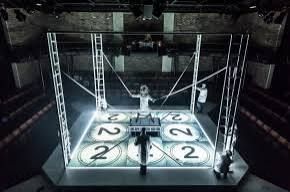
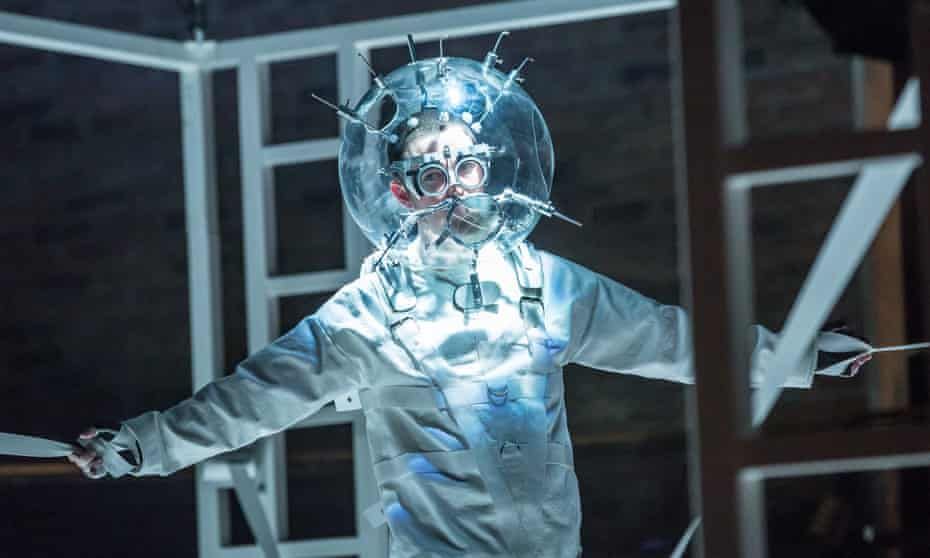
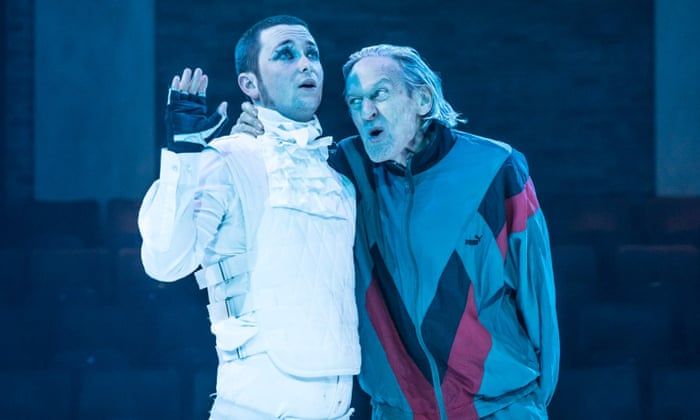
The staging looks startlingly simple with its neon lighting and milk white cube structure. Some of the cast are already on stage all clad in white. It is sleek, clean and pure in its sterility. As the music floods in and Alex starts to conduct there is so much beauty on stage it scarcely matters that he is conducting with a flick-knife rather than a baton. In the blink of an eye the floor can open up with options for grand entrances and dramatic or comic exits. Molly Lacey Davies and Jocelyn Meall have designed a set that is deceptively simple but is a treasure trove creating a myriad of moods and settings. The aversion therapy scenes are visually quite stunning. They are visceral and shocking and evoke something akin to Christ on the cross with Alex wearing the dystopian equivalent of a crown of thors as he looks down on the horrors mankind is capable off.

The Everyman Company take on a multitude of characters and breathe life and authenticity into them. There is a bloodied rape victim tied with vivid blue clothesline cord, Deltoid evoking a saturnine Alastair Sims, the writer F.Alexander is bludgeoned and his beloved wife is viciously assaulted. Amongst the brutality there are also moments of vaudevillian humour with little gems of Elvis type lookalikes, puppet wielding government ministers, and allusions to Jimmy Saville wearing a I’m a Pedo medallion and clutching a fat cigar. Alex and his Droogs are relentless in their thirst for life and all of its juice. Nothing in life, bar the music of Beethoven appears to be sacred.

Burgess created an intriguing and provocative hero who is thuggish yet also cultured and intelligent. George Caple brings a freshness and energy to Alex making his character always likable regardless of his monstrous crimes. The scenes during his treatment with the Ludovico Technique are deeply moving and hard to watch. Watching him in those scenes was chilling and reminded me of speaking to prisoners from Park Lane Hospital who went through similar classical conditioning procedures and covert sensitisation for crimes of sexual violence in the 1980s.

Richard Bremmer is always charismatic on stage whether he is threatening as Deltoid, delivering a wonderful ruddy, drunken priest or strolling across stage in a tiny satin robe with a curly pigs tail. Liam Tobin embodies the earnest writer F Alexander, and sings beautifully as he poignantly mourns his wife. Zelina Rebeiro is always engaging and especially so as she transforms into a sulty temptress to haunt a traumatized Alex. Phil Rayner from Young Everyman Playhouse(YEP) has really grown in confidence and created some great comic moments.

Nick Bagnall has honoured this play with music ensuring that the vision Burgess had in 1986 is finally realised on stage. The songs are a gleeful celebration of music hall tradition. The musicality of the lyrics make the Russian/Cockney slang of the Nadsat seem instantly more accessible and reminiscent of the joy of James Joyce’s Ulysses. The use of musician and percussionist Peter Mitchell is inspired and really adds to the look of the piece as well as the sound, in that he evokes all the youth and energy of another Droog.

A Clockwork Orange asks us to look at the power of choice. Is it better be bad of one’s own free will than be good through scientific brainwashing? In a world where we are all at risk of brainwashing through the daily assault of the internet it is vital to be challenged and reminded of how we exercise our own free will. This piece is brutally violent and yet also angelic at times. The cast move around the audience as they come and go, and address us directly at times, even inviting us to applaud the outcome of Alex’s aversion treatment. As we applaud we are of course colluding with the destruction of choice; it is a relief when Alex finally reverts to his old ways and finds his own way to redemption.

Burgess said “I do not like this book as much as others I have written. I have kept it, till recently, in an unopened jar- marmalade, a preserve on a shelf, rather than an orange on a dish.” I hope that he would approve of the vibrant juicy nature of this production.

At Everyman 14 April to 12 July

The International Anthony Burgess Foundation

All images by Marc Brenner

MINEFIELD

HOME

Written and Directed by Lola Arias

A LIFT production

A leading voice in Argentinean theatre Lola Arias has created something quite extraordinary with Minefield. Bringing together on a stage, six veterans of The Falklands War who do not speak each other’s language and who were facing each other on the battlefield in 1982. This theatrical venture is itself a potential minefield as it is a piece of lived history representing their individual, unique experiences of the war. This is not theatre retelling the history of either a war, a country, or of particular regiments in specific battles but it is a deeply personal sharing of what it is like to live through a war and forever carry the emotional consequences like a permanent kit bag.

The six men are all now veterans in their fifties. David Jackson spent the war listening and transcribing codes while sometimes keeping one ear tuned to Tony Hancock on BBC World Service. He is now a psychologist counselling veterans having himself suffered PSTD (Post traumatic stress disorder). Lou Armour was front page news in both countries when taken prisoner in The Falklands at the outbreak of the war on 2nd April 1982 . Now he teaches children with learning difficulties and may have caught the acting bug. Sukrim Rai was one of the reknown Gurkhas who now works as a security guard and can finally live in the U.K.

The Argentinians are Ruben Otero who survived 41 freezing hours in a lifeboat after the ARA General Belgrano was sunk. He wears a t shirt stating the Malvinas belong to Argentina and plays in a successful Beatles tribute band. Gabriel Sagastume was a reluctant soldier who is now a criminal lawyer and is absorbed by details of the war. Marcelo Vallejo was a mortar direction controller, who struggled with PTSD and depression. He survived addiction and a suicide attempt by drowning. After support and treatment he learned to swim and is now a successful triathlon champion.

The reality is they are neither heroes or monsters but just a group of guys sent to do a job. The major difference between them is language and the overhead subtitles are a constant reminder of how differences can be overcome.

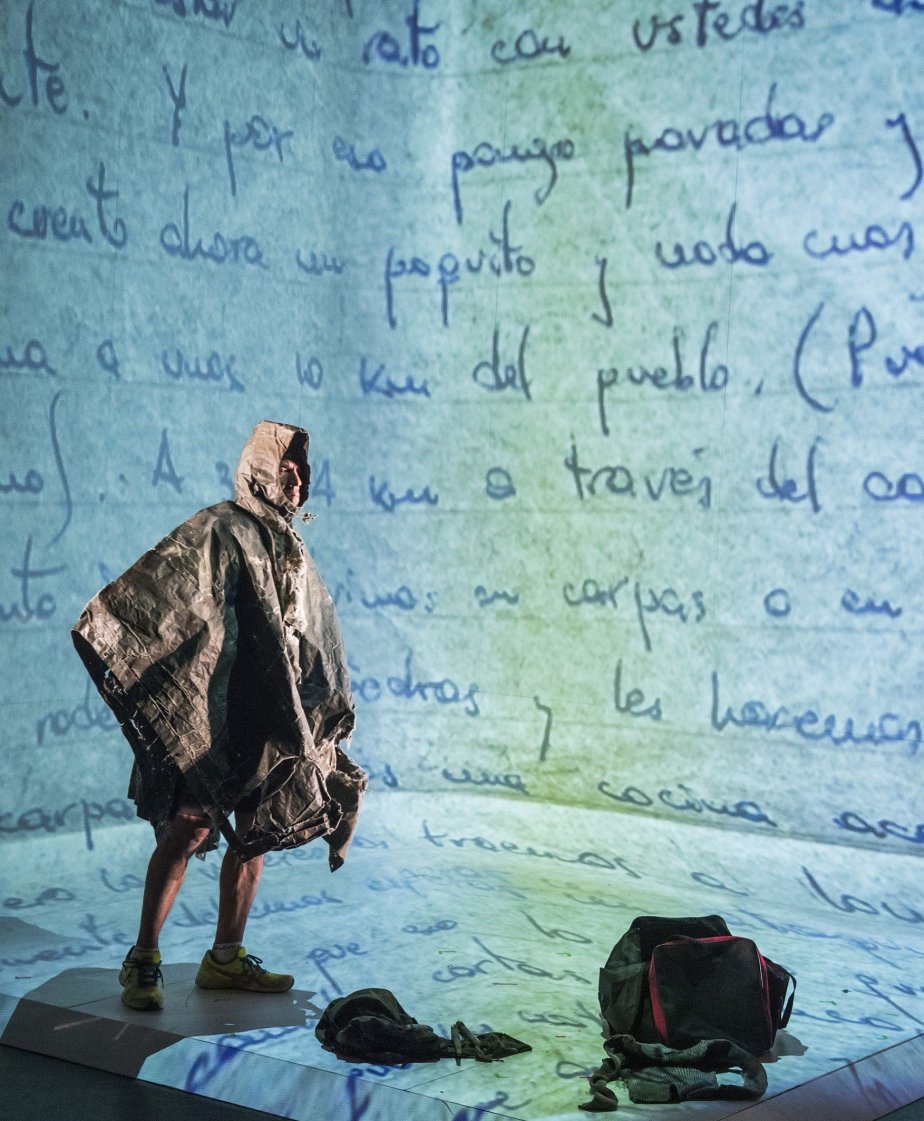
The men’s stories are told in chapters using a range of techniques. The use of rubber masks effectively put Margaret Thatcher and General Galtieri on stage. Screen projections show the exquisite minutiae of love letters to Gabriel’s wife or tiny airfix soldiers on a map retelling a story of hungry men pinching food from a farm and being blown up by a land mine. A tiny plastic leg in a stripe sock evokes the remains of a lost friend and comrade. Front page images from GENTE in Argentina show Lou after his capture. Powerful usage of sound includes the sound recording of the actual jet fighters that nearly killed David and his comrades. At other times the men become a group singing and playing guitar and drums together. There is the light relief of a squaddie’s disco or the thundering drum solo of Ruben whose shouts for help went unheeded for 41 hours. An Argentinian wallet gratefully given to a fearsome Gurkha who felt it was better to capture than kill. The poignancy of Marcelo donning the battered cape he retrieved from the Malvinas 27 years later. A close up of Lou as he remembers the death of a young soldier who in speaking English as his dying words has haunted Lou ever since.

A therapy session between David and Marcelo is a powerful reminder of how this piece has worked as group therapy for these men. Cathartic at times and also re-opening old wounds on occasions such as April 2nd, the Argentinian Remembrance day. The skill of this piece is to never preach but to seek to share, reflect and understand how our past informs our present. As a psychotherapist I appreciate the delicate balance that Lola Arias has created and maintained in this group therapy approach to this piece of unique verbatim theatre.

Minefield has brought together six men who are united by sharing the same experience of losing friends and leaving them behind on a rocky, unforgiving landscape. This war lasted ten weeks according to Google, but for these men it was 74 days because each day mattered just as each life lost, injured or mentally scarred mattered. They mattered then and they still matter now. As they perform their last song together they unite as a potent force asking their audience,

What would you fight for? Would you go to war?…..Have you ever killed anyone?… Have you watched a friend die?

The final words are from Sukrim in his native language. Translated they simply and wisely say,

Killing is never winning. Fight with the pen NOT with the bullet!! If the pen wins, fine… If not, nobody is killed.

HOME

Viva! Spanish and Latin American Festival 2018

LIFT Festival 2018

All images by Tristram Kenton

The Flying Lovers of Vitebsk

HOME

Writer Daniel Jamieson

Director & Co-Choreographer Emma Rice

Kneehigh & Bristol Old Vic

Originally performed as Birthday over 25 years ago The Flying Lovers of Vitebsk is a celebration of love and art on so many levels. The love child of writer Daniel Jamieson and director Emma Rice who also acted in the original,it was revived in 2016 and has been a hugely successful production for Kneehigh and Bristol Old Vic. This lush homage to another set of young lovers- artist Marc Chagall and his beloved muse and first wife Bella Rosenfeld paints a picture on the stage that is both sensual and transcendent.

The love story is told in flashbacks as a widowed Chagall recounts the romance over the telephone to his son-in-law, the art historian Franz Mayer. They met and fell in love in Vitebsk, Belarus in 1909 and married in 1915 when Chagall returned from successes in Paris and Berlin. Trapped in Russia because of WW1, they were to witness the Russian Revolution and Chagall established the Vitebsk Arts College and painted in the Moscow New Jewish Theatre. Bella gave birth to their daughter Ida and carried on her own writing. They later fled to Europe, before WW2 and the Holocaust forced them to escape France on 1941 for America where Bella died in 1944.

The central performances are flawless. Marc Artolin and Daisy Maywood are utterly believable and sing, dance and emote with a form of enhanced theatricality that perfectly fits this dreamy, magical piece. The sense of a place so vibrant and colourful reduced by war to memories and black and white postcards is beautifully evoked. Every movement is choreographed to create a sense of immersion in Chagall’s paintings and in their hopes and dreams, and their visual and sensory world. Also on stage throughout are multi-instrumentalists Ian Ross and James Gow who bring another layer of rich authenticity playing music with French, Yiddish and Russian influences and a definite klezmer vibe.

Magical touches like a red helium balloon floating away as a fleeting love interest blushing like a radish. Colourful hats portraying animals from his paintings and symbolic fruits like the etrog are images from a lost world as the honeymoon trunk is unpacked. The inspired wit of using puppetry chairs to allow the lovers to dance the Hora or chair dance at their wedding which symbolises that in a good marriage you always strive to go ever higher, as these soaring lovers did in so many of his paintings. There are moments where images from paintings come to life through tableau scenes like when a canvas of a rabbi is unfolded in front of Bella and her own arms come through it as life and art merge.

Designer Sophie Clist has created a set which is compressed yet airy. It allows paintings to come to life and lovers to soar. It also gives a sense of a boat at sea, a reminder of the dispossessed on the move, always either leaving or returning. The lighting by Malcolm Rippeth has all the vibrancy of classic Kneehigh productions but in this piece is even more potent. The painterly depth and richness feels almost visceral at times with the wedding scene having a neon quality. Everything here is heightened and vital, from the tick of a clock and the slow drip from the ceiling to the lily white face and blackberry curls with eyes so blue like splinters from heaven.

Rice and Jamieson have created something of timeless tenderness. A lost world is seen again as we walk in the lover’s shoes through extraordinary times in history. The unpacking of the shoes and journals is utterly poignant, a reminder of so many journeys and stories recorded, and evoking the piles of shoes in Auschwitz belonging to the Jews who couldn’t escape. Chagall comes vividly to life as a pioneer of Modernism and as one of the most famous Jewish artists of the twentieth century. His Bella is painted as he saw her long flying over my canvas guiding my art…..Love and fantasy go hand in hand.

HOME until April 7th

Tour details

Images by Steve Tanner

Miss Saigon

PALACE THEATRE

A Cameron Mackintosh production of Boubil and Schõnberg’s Miss Saigon

Directed by Laurence Connor

This smash hit production of Miss Saigon opened in London in 2014 and has been on a UK tour since July 2017. Landing in Manchester with as much drama and pizzazz as the much lauded helicopter in Act 2, this show delivers on every level. Performed all over the World since 1989, Miss Saigon is a world class production that updates the Puccini opera Madame Butterfly. It tells the story of a doomed love affair between an honourable American G.I and a young peasant girl turned prostitute during the Vietnam War.

This is a lush, Technicolour experience with a lavish set, inspired lighting, sound and projections and a huge cast who sing and dance with real passion and commitment. The energy on stage never wavers and through multiple seamless set changes the story unfolds without a single glitch.

The big musical numbers are real crowd pleasers. The Movie in My Mind highlights the dreams, aspirations and coping strategies of the girls who survive by selling their bodies to the American soldiers. I Still Believe depicts the agony of two women loving the same man as Kim (Sooha Kim) and Ellen (Zoë Doano) sing with heartfelt poignancy and raw passion. The plight of the mixed-race children ostracised after the war is told in Bui Do sung as film footage displays the plight of abandoned, fatherless children. The most hi- octane numbers are undoubtedly The American Dream with the powerhouse performance of The Engineer (Red Concepción) with a white Cadillac driving on stage.

Kim’s Nightmare is the most powerful number. The roar of the helicopters moving over the audience before appearing to land on stage to evacuate the troops is genuinely tense and exciting. This scene at the Embassy gates is powerful and the switch that allows us to experience both sides of the gates is inspired. The Vietnam War may have ended over 40 years ago but this is a timely reminder of the dispossessed and vulnerable as the Syrian refugee crisis unfolds.

The performances are strong with Ashley Gilmour epitomising the all American hero and Na-Young Jeon as a sassy, sexpot Gigi. Sooha Kim brings great emotional range to her performance as Kim. She moves fluidly from reticent, shy country girl to pragmatic prostitute and eager young bride to determined survivor and fiercely protective mother. The undoubted star is The Engineer who gleefully steals every scene. Red Concepción is an exuberant, unapologetic master of sleaze and manipulation.

I’m not a fan of musicals and approached Miss Saigon with a degree of scepticism but it is a genuine feast for the eyes and ears. It is a real spectacle to behold and the hype is well deserved. The standing ovation at the end was clearly not the first and will definitely not be the last for the powerhouse experience that is Miss Saigon.

Images by Johan Persson.

Booking for Palace Theatre until May 12th.

Tickets for Nationwide UK tour.

Frankenstein

ROYAL EXCHANGE THEATRE

By Mary Shelley

Adaptation by April De Angelis

Directed by Matthew Xia

Matthew Xia reanimates Mary Shelley’s Frankenstein 200 years after its first publication. This new adaptation by April De Angelis sticks closely to the original text and relates the story in flashbacks as the traumatised Dr Frankenstein tells his story to the Captain of the ship which rescues him from the ice. Xia turns his focus to producing a darkly Gothic exploration of the perils of dogged human ambition at the expense of family and friends. In this visceral production he also explores the vulnerability of those seen as “Other” in this World – the abandoned, the wounded and the misunderstood. The creations that don’t conform to our perception of idealized perfection or cosy sameness.

Mary Wollstonecraft Shelley wrote this extraordinary piece of literature in her late teens and was barely 20 when it was first published in January 1818. The child of the early feminist Mary Wollstonecraft, she had fallen in love with the married poet Percy Bysshe Shelley at 17. Flouting social propriety of the period she had children with him before he was free to marry her after the suicide of his first wife. Traveling in Geneva in 1816 they joined the poet Byron and together conspired to each write a ghost story. From this challenge came Frankenstein, a Gothic novel influenced by the Romantic Movement and the study of Galvanism. The themes of death and reanimation must have resonated strongly with Mary. Her own Mother had died shortly after her birth and she was to have buried two of her babies before her novel was publisher.

Opening in sheer blackness the story unfolds with Captain Walton (Ryan Gage) on stage throughout the performance as the calm and steady listener to Victor Frankenstein’s wild, frenzied story that comes to life in a series of vivid flashbacks. Trapped on his ship in the ice Walton is transfixed as audiences and readers have been for two centuries.

This storytelling honours the original book but perhaps at the cost of developing authentic and empathic relationships between the characters. The dialogue sometimes sounds ponderous and doesn’t always flow in the way natural conversation would. The scenes can appear more as static tableau scenes and therefore the power of this drama can suffer at times.

The only truly potent and memorable character on stage is the Monster. Harry Atwell looms over the rest of the cast partly due to sheer physical presence and primarily because he steals the show as this doomed, traumatised creation, abandoned and rejected like a wounded refugee from the Underworld. Atwell is all wild eyed and unkempt with more than a look of Marty Feldman, yet his sensitive nature and eagerness to learn and to love and be loved seems very much taken from the creature as portrayed in the television adaptation Penny Dreadful by Rory Kinnear.

His journey is tragic and heartrending as he starts out stammering hesitant words and twitching with movements that seem like a creature with agonising phantom limb pain as nerve endings are raw or still newly knitting together. His journey is brutal as wounded and rejected, he becomes increasingly vengeful. Yet he evolves to develop a humanity and awareness that seems greater than the men before him. His quest for knowledge and his self education are sadly not really explored in this production but the result is a fully fledged man who feels emotions and can articulate his pain. Shaped by his experiences and composed of unknown body parts he is literally Everyman.

However this production like it’s namesake is deeply flawed. The other characters never develop in a satisfactory way. Indeed some feel as wooden as the bizarre marionette used to portray William the child. This addition seems awkward and uneccessary on stage and does nothing to create the emotional potency of a child’s death. There are occasional moments where humour appears to seep in jarring the intensity. The character of Henry, Frankenstein’s friend or the introduction of The Professors creates an almost vaudeville humour that simply does not work.

Designer Ben Stones has created a set which is lush with gore and bones and limbs. Death is everywhere and escape impossible. From the trunks filled with wedding clothes or body parts to the spectacular honeymoon bed or the Frankenstein’s laboratory; detail is everything in this lavish production. The costumes are fabulous and create an almost filmic aspectic to this theatre of the grotesque.

This is visually a feast in carnage and pathos. There are some moments of real terror and genuine poignancy, yet it all feels unsatisfactory and a lost opportunity to truly chill the audience. Just as the characters are trapped on the ice, I felt trapped in my seat daring to hope but feeling ultimately doomed to disappointment.

At The Royal Exchange until April 14th

Images by Johan Persson

CIRCLE MIRROR TRANSFORMATION

HOME

Written by Annie Baker

Directed by Bijan Sheibani

Circle Mirror Transformation is the award winning second play by Annie Baker who won the 2014 Pulitzer Prize for drama. Staged in a recreation centre it covers a six week amateur drama class where five ordinary people come together through drama exercises and during refreshment breaks. The genius lies in the inherent simplicity and ordinariness of everything and everyone. Baker writes with delicacy and acute insight into the human need for connection and attachment. How we circle around each other and seek out what is familiar or attractive, how we mirror each other in order to attach and how we all experience transformation in the process.

This small town drama group has strong echoes of group therapy sessions. All five actors give great performances and director Bijan Sheibani ensures the group dynamics that Baker has nurtured get fully explored. Amelia Bullmore utterly embodies the facilitator Marty who is all sinewy energy and positive encouragement, with a lot more going on behind that calm facade. James, her husband is likable, steady and reliable yet seemimgly, easily swayed by a fresh pretty face. Lauren is sixteen and equally diffident, difficult and delightful as she grows from child to adult. Teresa is all fluid grace and beauty but internally is floundering and ambivalent about her place in the world. Con O’Neill gives newly divorced Schultz a rich blend of blundering, puppyish exuberance and affection, coupled with a whiff of hangdog desperation.

Designer Samal Blak has created a set for the community centre space that is instantly recognisable in its ordinariness and utilitarianism. The brilliance is in the mirrored wall that reflect images of the actors on stage and of the audience. In watching them we see ourselves reflected in all their interactions, in their hopes and disappointments. We see both the complexity and the often, utter randomness of how we connect in our world.

The sound and lighting sync perfectly in a way the characters never can. The nine strip lights are always in unison with the bars of sound – controlled and predictable unlike the counting exercise where the characters repeatedly fail. A perfect indicator of how difficult it is to make our mark with each other while giving others the space and security to dare to make theirs.

Circle Mirror Transformation is special because it shines a brilliant and tender light on the fragility of all of us, in our need for connection, acceptance and love. It highlights the circle of life which is in constant flux even when there is apparent stillness. Sometimes I think everything I do is propelled by my fear of being alone.

At HOME 2-17 March 2018

Brief Encounter

THE LOWRY

Adapted and directed by Emma Rice

A Kneehigh production

Ten years on from its first hugely successful staging and Emma Rice and Kneehigh have revived Brief Encounter. This musical adaptation blends the 1936 Noel Coward play Still Life and the iconic 1945 film Brief Encounter. If the originals depict ordinariness and repressed passion played “with a deliberate colourlessness”, then Rice wilfully and mischieviously paints a canvas around the lovers that is warm, vivid and earthily sensual.

The production draws you in from the start with a band (clad in old fashioned cinema ushers costumes) playing in the foyer, to striking up in the aisles and chatting randomly to audience members. Suddenly a couple in the front row burst into argument and the elegant woman flees her seat, only to rush unto the stage and through the projected screen where she becomes part of the black and white film. This is a celebratory affair and Rice has a very large bag of tricks and surprises at her disposal.

There is some great use of Noel Coward songs such as Go slow, Johnny with Jos Slovick on mandolin during the boat scene and Beverly Rudd giving her winsome version of Mad About The Boy. The music numbers feel very natural with the songs never seeming as if shoehorned into the production as in many musicals. Various background scenes tend to unfold during the songs on stage, or they are performed in front of the plush red velvet curtain almost like Vaudeville numbers.

The blend of live theatre and film is exhilarating as it is done so well. Scenes of crashing waves on screen allude to repressed passion on stage. Trains arrive and depart in spectacular ways particularly in the scene when Laura contemplates suicide. From railway station buffet menus to champagne bubbles to pressure gauges to mishaps on boating lakes, every tiny nuance is there. The use of lighting is key to mood throughout the piece from the sombre but comforting light of the standard lamp in the living room to the glorious boat house scene. This is a triumph which feels like an old black and white film has been lovingly and pain stakingly hand painted in rich Technicolor. It is no surprise that the design team involved have won so many awards for their previous work on this production.

Jim Sturgeon and Isabel Pollen embody the doomed lovers Alex and Laura with all the restraint and earnestness of the original film. The scene where they hover onto real sensuality at the boat house is the most poignant. Other moments seem too contrived and work less well such as when they literally swing from the chandeliers.

The rest of the cast are the real life blood of this production as they get to be fully fleshed out and larger than life characters. The other lovers are of course not hindered by pleasant spouses in the background and are free to express their love. Lucy Thackeray as would-be posh Myrtle Bagot and Dean Nolan as the lusty Albert are well matched as the older lovers and great to watch. Nolan also gives a lovely depth and sweetness in his other role as Laura’s husband. Beverley Rudd is a riot as the earthy and sweetly saucy young Beryl falling in love with Stanley, her devoted young suitor Jos Slovick. These characters all bring a hefty dose of bawdy humour and slapstick which is mainly infectious and joyful. There are times where the sharp contrast against the scenes with Laura and Alec can seem jarring and risk marring the emotional impact of the final scenes.

A real theatrical delight, although it sometimes feels like every item in the kitchen cupboard has been added to this 70 year old recipe, the result is a winner. Leaving the theatre you want to laugh and skip and…….remember every minute. Always.

At The Lowry until Saturday w4th Feb.

At The Old Vic 2nd March- 2nd September 2018

Images by Simon Turtle

The Almighty Sometimes

ROYAL EXCHANGE THEATRE

By Kendall Feaver

Directed by Katy Rudd

Winner of The Bruntwood Prize for playwriting 2015 this play tackles a vital social issue regarding our approach to children’s mental health, and how we support and educate families coping with mental illness. Kendall Feaver has written a beautifully balanced play that looks at the pros and cons of medication. The Almighty Sometimes puts a spotlight on fraught and complex family situations by questioning if it is possible to find a balance where we enable young people to have their independence as they grow into adulthood and still ensure we safeguard vulnerable individuals.

The writing is always engaging and Feaver skilfully takes the audience into Anna’s world where there are no certainties. She is constantly checking out what What do you think of me? Anna is complex, full of confidence and bravado yet also crippled with fears over who she really might be or could be without her medication. Feaver ensures no character is one dimensional and our perceptions and loyalties are constantly shifting. Is her mother Renee doing her very best for her daughter or is she smothering and controlling? Martyr, monster or a Mum desperately navigating CAMHS, the cash strapped NHS adolescent mental health service? Psychiatrist Vivienne appears dedicated and professional, and emotionally invested in Anna. Yet does she know enough about the drugs she prescribes to an adolescent brain which is still in development? Is it ok to publish academic books and articles about your clients when confidentiality is sacrosanct in therapy, and when your subject is too young to give consent?

Katy Rudd has clearly invested a lot of care and sensitivity in this production. She has taken a great cast of talented actors and a wonderful new script and created something really sublime and special.

Julie Hesmondhalgh as Renee epitomises the energy and lifeforce of a woman trying to keep her child alive having witnessed the horror of her attempting suicide at age seven. After years of relative calm with the aid of psychiatry and medication she is distraught to find that fragile equilibrium shattered as Anna attempts to discover who she is without her medication. As always Hesmondhalgh lights up the stage with her earthy humour and wry intelligence. Sharon Duncan-Brewster is impeccable as the Child Psychiatrist heavily invested in her young client and torn by the therapeutic rupture created by NHS policy that demands Anna move on to Adult Services. Mike Noble is wonderful as the diffident, slightly bemused young suitor. His own troubled background and sense of shame or otherness ensure he “gets” Anna’s experience of being judged. The tragedy being he needs the nurturing of her mother Renee in his life more than he needs the increasingly unwell Anna. I have had to take care of people who should have been taking care of me- Why the fuck would I sign up for one more?

Norah Holden-Lopez continues to astound and is on a real trajectory building on her recent performances in Ghosts and in Our Town. She delivers a sensitive and powerful portrayal of bipolar disorder which is never mawkish or hysterical but is perfectly pitched throughout. She moves apparently effortlessly from a medicated Anna who is managing her move to adulthood with apparent aplomb to a vicious, fractured girl wounding and controlling those who love her with a calculated suicide attempt. In the second act Lopez-Holden is barely recognisable as she further splinters and fractures. It is a terrifying and haunting spectacle and her performance is electrifying.

Designer Susanna Vize has created a glistening, watery hexagon which evokes slippery precipices. A sense of little to cling unto and lots of swirling movement under the surface like the flow of mental processes. The swings descending from the ceiling bring a lightness as Anna and Oliver get to just hang out like any young couple but also reflect the up and down cycling of Anna’s mood as she stops her medication. As Anna floats up higher and higher she is further and further away from Oliver. This new Anna wants to feel lighter and freer but risks plummeting to the ground without treatment. The cage like trap which later surrounds her is sharp and brutal with slats of light splintering around her as though in the electric force field of her own mind. Lucy Carter and Giles Thomas use light and sound respectively to build on this sense of mental torment; jarring and discordant as they wound and disorientate. The overall effect is of the slicing of synapses creating new vivid ideas but also burning through and obliterating other thoughts and feelings.

In the U.K. a tiny 6% of health research is spent on mental health yet one in four of the population will experience some degree of mental health disorder leaving many families living on a precipice. What does a diagnosis mean for their child? A label that stays with their medical records and often defines and dictates their choices in life. What will be the side effects of the drugs, even if they work? What if therapy reveals something even more terrible in a family story? With a diagnosis of diabetes or heart disease or cancer we tend to readily accept any treatment that may bring about cure or maintain life. Sadly with mental health we often reject any help through fear of social stigma. My own mother, in the grip of depression actually asked me if I minded her accepting treatment in a psychiatric unit, yet had never thought to question her right to have treatment for cardiac issues. In a modern society it is horrific that mental health is not given the same value as our physical health.

This is a play with a difficult subject matter that contains some scenes that are uncomfortable or distressing to watch. It is also a play that informs and engages and has a lightness of humour and humanity running through it. It explores what form tenderness takes in the face of adversity. It may be a mother crushing pills into her child’s food to keep her child alive, or forcing her to gag after an overdose attempt or shaving her legs for her when she wants to feel pretty. Regardless of whether we choose medication or not, it is essentially about our human need to have someone there with us in the light and also in dark times. I don’t know where I am…..You’re with me.

Royal Exchange until 24th February 2018

Images by Manuel Harlan