Blog

Warhorse

The Lowry Theatre

Written by Michael Morpurgo

Adapted for Stage by Nick Stafford

Directed by Marianne Elliot and Tom Morris

A National Theatre production

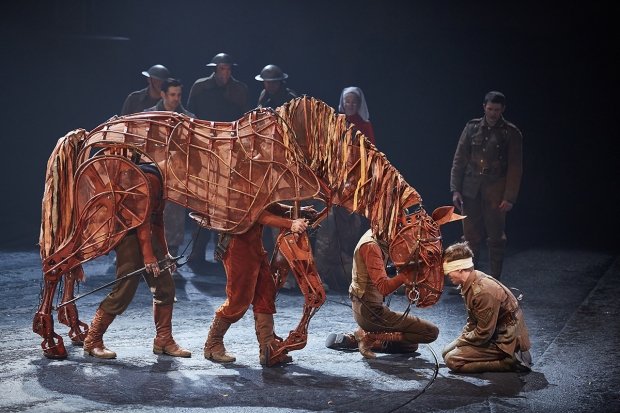
Warhorse had it’s regional première at The Lowry in 2013 and returns for the third time, fittingly as the centenary of the end of WW1 approaches. The book by Michael Morpurgo was adapted at The National Theatre in 2007 and has been hugely successful ever since with worldwide audiences of over 7 million. It is a extraordinary show in terms of scale and ambition with a use of puppetry by South Africa’s Handspring Puppet Company that is breathtakingly effective. It takes the audience on a journey from sleepy pre-war Devon countryside to the horrors and brutality of the battlefields of France. It is a poignant tribute not only to all that wasted youth and unfulfilled potential but to the animals who suffered and were slaughtered in appalling numbers.

This is a huge production relying on the puppetry effects merging with a large cast in a believable way. There are moments with the birds early on that don’t seem as effective as perhaps intended but otherwise it all works incredibly well. Moments like the puppeteers reverently stepping away from Topthorn perfectly convey the loss of the heart and soul of this proud animal. Similarly the sudden breaking of the colt to make way for the fully fledged Joey is spectacular. This is clearly a team effort with the whole cast giving their all to a very special theatrical experience.

The design work on Warhorse is astounding in its apparent simplicity. Rae Smith’s set is a bare stage using occasional props but to stunning effect. Doors appear in the dark backdrop or poles create market day or become paddock fences. Barbed wire draped at the front of the stage creates a visceral horror that is unforgettable. The brilliance of the vast overhead projection screen is incredibly special. As the performance opens it looks like a slash of white cloud across the Devon countryside but is of course a torn fragment of parchment from a soldiers sketchbook. The backdrop of images of country villages, callow youths on horseback and soldiers’ arrival in France and the battlefields of The Somme are sketched out across the screen in black and white drawings. The only splash of colour is when the screen bleeds red for a lost comrade and poignantly becomes the blossoms of poppies on The Somme.

The lighting by Paule Constable is beautifully done creating golden summer days and crisp winters before shifting into the bleak battlefields where soldiers emerge from the gloom or are blinded by the white flashes of explosions or the yellowing haze of gas attacks. The lighting has the effect of breaking the fourth wall by making the audience experience the battlefield horrors as though they are there too. The impact of the sound and visuals have created a powerfully immersive experience that lingers after the show has ended.

My grandfather was a country boy like Alfred and fought throughout the war. He was to be the sole survivor of his platoon at The Somme and initially was listed as dead. He was seriously injured, placed on a cart of dead bodies dragged back through the mud and debris by a horse such as Joey. He started to regain consciousness as the bodies of his friends were lifted off for burial. He was one of the lucky ones who came home.

This is an incredibly moving experience especially as the young soldiers go over the top and are cut down so brutally. The horrors of horses ridden into barbed wire with no escape or dragging ambulance carts or tanks through the treacherous mud. Warhorse is a potent reminder of why WW1 is rightly still remembered as a testament to the senseless cruelty of war.

The Lyric Theatre, The Lowry

13th – 30th June

Images by Brinkhoff & M Âgenburg

YOUR BEST GUESS

HOME

Written and Performed by Chris Thorpe

Directed and Performed by Jorge Andrade

Exam season is upon us and today is my daughter’s first exam. Asking her if she had a talisman, I got a quizzical look as if to say what difference would a pretty stone or a furry toy make? Last night I watched YOUR BEST GUESS, a collaboration between theatre maker and performer Chris Thorpe and Jorge Andrade Artistic Director of mala voadora. It is an exploration of the unpredictability of life, how we plan for the future with no guarantee that the anticipated event will actually happen. We are placing bets on the future and the variable outcomes are reflected in the tangible objects around us.

A concert ticket for a gig that is cancelled may be kept as a reminder of another world that never happened, rendering it possibly more precious than a replacement ticket for a rescheduled event. Andrade speaks of a whole town carefully replicated to rehouse a small community meant to be relocated to make way for a dam intended to provide water for 400,000 people. The dam was cancelled and the new town became a ghost town representing lives that may have been lived another way. Thorpe writes the goodbye letter that his wife would have written to their children if she hadn’t been in a coma from a freak aneurysm. He reflects on the speech written for President Nixon to give if the moon landing had failed. Andrade descibes the sports tops given to refugees each year that celebrate victories that never happened and so become redundant and discarded to refugee camps or sold on eBay to collectors.

Both performers have an easy familiarity with each other allowing them to challenge each other, ask difficult questions and occasionally raise a quizzical eyebrow at personal music choices. The vignettes flow and include some beautifully written descriptions that are powerfully evocative of possible life events. There is a real sense of questioning what is real and what is just a possibility in this piece which is interspersed with actual facts. Thorpe reflects on Otis Redding in a music studio whistling a verse on a song he was never destined to finish surrounded by coffee cups and everyday normality before a plane crash would claim his life. That track retains that final whistling which is now such an integral part of a much loved classic.

YOUR BEST GUESS will strike a chord deep in all of us as it perfectly encapsulate the human condition. Our curiosity and hope as we plan the future we dream off often battling with the things we do to ward off our dread and fear of the alternate future of our nightmares. Many years ago I had a ridiculously vivid nightmare of being home on holiday and my parents dying suddenly when I had nothing suitable to wear to their funerals. Looking back I think I never went home again with any “sensible” clothes as though I could ward off my worst fear. A few years later my father died in exactly those circumstances and all I had was a bright red P.V.C mac for a funeral on a rainy day. I remembered that coat last night as Chris Thorpe picked up his shiny red guitar to play an eerily beautiful rendition of Dock of the Day.

HOME 11-12 JUNE and on tour.

ME & ROBIN HOOD

HOME

Written by Shôn Dale-Jones in collaboration with Hamish Pirie

Performed by Shôn Dale-Jones

We all know variations on the story of Robin Hood and his Merry Men robbing the rich to feed the poor. If we close our eyes for a moment we can imagine it’s 800 years ago and Robin Hood is roasting pigeons and possibly even aubergines in the depths of Sherwood Forest. The magic of Shôn Dale-Jones is that suddenly it’s just as easy to see his hard-working, Thatcher loving father in his green leather chair and his wonderfully radical Gran Dilys on the sofa with his best friend Dylan while they all watch The Legend of Robin Hood in 1975. Mid Seventies pre- Thatcher Anglesey is vividly evoked and having just seen The Duke a few nights ago it all feels deliciously familiar as though opening a new volume of a great book series.

This new tale premiered at the Edinburgh Festival in 2017 and has already raised over £20,000 for Street Child United for children currently living on the street. According to United Nations there are currently over 150 million children surviving on the streets worldwide. As with The Duke Dale-Jones is using story telling to provoke dialogue about inequality and the ever widening gap between rich and poor. This tale weaves illustrates the impact of ethics and principles on young children as the seven year old Shôn is shaped by the radicalism of both Robin Hood and his Granny and how this has shaped his world view as a grown man.

This story perfectly highlights the power money has in society to give status, power and security but also to demean, humiliate and to cause immense stress for individuals. The outcomes might be skin conditions, acts of radicalism and generosity but too often can be extreme poverty, loss of homes and lives.

In Me & Robin Hood there is myth blended with fantasy and reality. The Llangefni U11 football team nearly commit a wonderfully innocent bank robbery, there are flying dolphins with huge hairy bollocks and there is a family estrangement due to politics that tragically is only resolved at the graveside. Throughout the tale Dale-Jones is constantly on the move ranging across the stage as he paints each vignette of his story. His best friend Dylan may have been the imaginative, fleet footed Ronaldo or Pelé on the football pitch but on this stage Dale-Jones moves across a pitch filled with imagery and emotional intensity, nonchalantly scoring the odd genius goal of his own.

HOME 8-9 May

To donate Just Giving Campaign http:/ /bit.ly / 2v4kDDo or Text HOOD 95

THE DUKE

HOME

Written and Performed by Shôn Dale-Jones

Storytelling predates writing as a human tool for relating to each other. It teaches listening, respect and empathy while assisting us in how we learn by connecting information to our emotions. We are living in a ever more noisy world of deadly conflicts, information overload from social media trivia and obsessive consumerism threatening our environment. It is easy to feel discombobulated and helpless to make any worthwhile changes in our world. In using this pared back medium Shôn Dale-Jones Artistic Director of Hoipolloi is weaving stories blending fantasy and reality to provoke and effect social change.

THE DUKE is his second show to win a Fringe First at Edinburgh and has also been Play of the Week on BBC Radio 4. This gentle tale weaves a family story of a porcelain ornament and what it represents in the grieving process, with the madness of American marketing crushing artistic merit, and the reality of the refugee crisis robbing vulnerable children of the safety of home and family.

It could be a worthy and rather preachy tale of “haves” and “have nots” or a madcap story of bonkers Welsh “characters”. Instead Dale-Jones engages with the audience with charm and warmth from the moment he enters the space until he shakes hands with everyone as they leave. The picture he paints balances playful with poignant and although it is never clear how much is fact based what always shines through is the performer’s committment and investment in relationships.

The relationship between him and his parents is charming and deeply touching. For any of us impacted by grief there is a real truth in valuing a remaining parent and having an acute awareness that time is precious in all significant relationships. The emotional connection with refugee children comes from an empathic place where perhaps we can only truly value family when we know what is to experience loss.

His relationship with his work also tells the story of someone who passionately cares about creating work that has truth and merit. The story also highlights how tempting it can be to sell out for hard cash and larger audiences but how hard it is to maintain artistic control of your work without having it dilluted to appeal to a wider audience or to appease the investors.

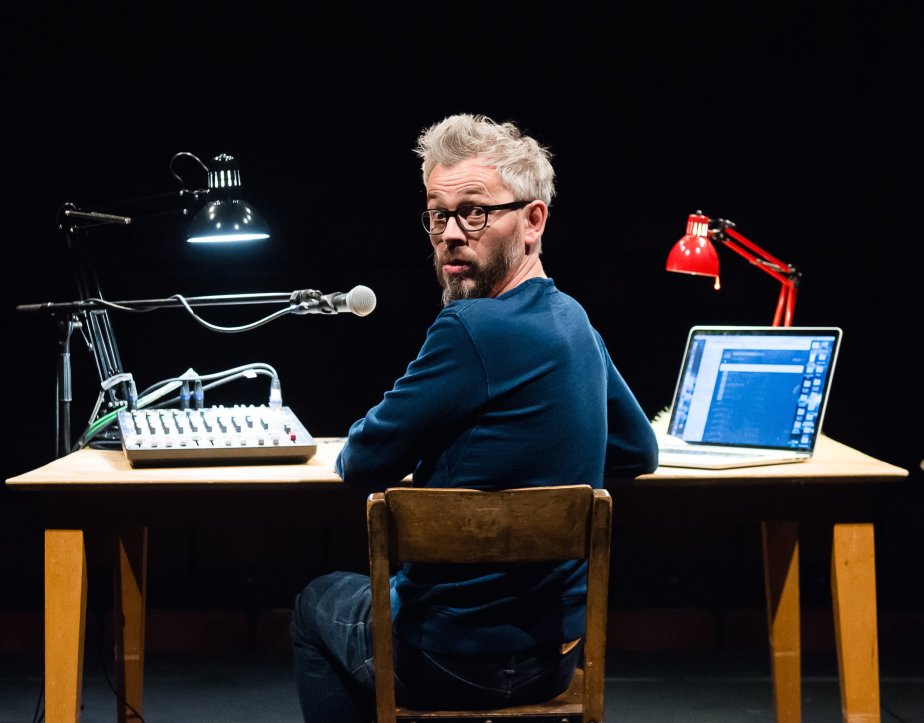
THE DUKE is tender, whimsical and thought provoking. There are no hi-tech distractions just a man sitting at a desk talking and playing snatches of some great Northern Soul. It’s genius lies in it’s apparent simplicity. In vividly evoking small moments of genuine connection between Dale-Jones and his family, it is impossible not to connect and reflect on the plight of refugee families. In scaling down to the micro it feels more possible to imagine reaĺly effecting change that helps than when overwhelmed by the the global scale of this issue. It is heartening to know how much money THE DUKE has already raised for Save The Children.

HOME 6-7 June

Happy Days

ROYAL EXCHANGE

Written by Samuel Beckett

Directed by Sarah Frankcom

In the opening minutes of Happy Days there is a strangely surreal sense of reassuring normality as Winnie methodically cleans her teeth and applies her lipstick. Yet this women is inexplicably trapped from the waist down in a mound of barren earth like the Queen of a floating island which is brilliantly evoked by Designer Naomi Dawson. Director Sarah Frankcom and Associate Artist Maxine Peake have joined forces on Samuel Beckett’s Happy Days. It is a stunningly evoked vision of some kind of absurdist prison or hellish afterlife or perhaps, simply an allegory of a marriage gone stale.

Maxine Peake draws on all her acting skills and delivers a Winnie who shimmers in the harsh sunlight and gleams as the light finally fades. She is girlish and gay or plaintive and rueful. There is quite simply nowhere to hide in this production, nor are there cues from other actors as Willie is always out of her sight even when he is near her. Peake is just sublime throughout, brittlely blithe and gay in Act 1 and pitifully sunken eyed and unkempt in Act 2. With a camera zoomed in on just her face and every tiny expression projected on monitors above her, she never wavers. Her Winnie is runny nosed with an aged voice, seemingly forgotten like an O.A.P in a sub-standard carehome.

She is the quintessential upper middle class British woman who was probably a pre-war débutante brought up to be pretty, charming and cheerful but also brave and stoic in the face of adversity. She reminded me of the Stephanie Beacham’s Rose in Tenko years ago. A delicate beauty who could still ooze pure class and glamour in rags, and who had cut glass vowels and cheekbones with a backbone seemingly formed of pure steel. Certainly Winnie keeps returning to the past to speak in the old style or recall past moments when she was young, foolish, beautiful while holding unto the classics to not forget familiar anchors. She is terrified of losing those anchors to sanity yet can also blithely ask Willie What is that unforgettable line?

It is the vulnerability of the human condition that pains Winnie more than the actual paralysis. What is most important is to be heard as a way of validating sanity and existence. She prattles away to Willie pastiming through the horror of her predicament as a coping mechanism. The maintenance of small routines and the comfort of Willie and the bag are her anchors to ensure she holds unto sanity and to gravity. Even as a husk of her former self in the second act unable to utilise these comforts she wills herself to focus on them as tangible memories, seeing Willie again and singing her song from the now out of reach music box.

This play is a study in mindfulness reminding us all how to harness our senses and focus back in on the little things. In a world where we are often surrounded by the incessant noise of people, media, memes and madness, Winnie’s plight is terrifying yet also an invitation to slow down and stay in the moment.

Royal Exchange 25 May – 23 June

Images by Johan Persson

Things We Want

Hope Mill Theatre

Written by Jonathon Marc Sherman

Directed by Daniel Bradford

One innocuous window in a set that is mainly comprised of doors. Yet this window ten stories up is the Russian roulette of double glazing. Parents, wheelchairs, VHS tapes, remote controls are hurled out and there are a few near misses with several siblings. For all its bland decor this is a high octane living room which sets the scene for this production. Three brothers who are like emotional volcanoes operating out of sync. At any one point there is usually one comatose on the couch with another erupting while a third is seemingly calm but bubbling under with something dark. The catalyst for them to swap places is usually the presence of the sunny faced but equally troubled Stella pertly played by Hannah Ellis Ryan.

Play With Fire and Swaggering Crow have chosen well with this production. The acting is full blown and fast paced as it should be in what feels like a live recording of a television sitcom. The writing is mainly slickly delivered quips and witticisms with some cracking one – liners. The strong cast make good use of this gallows humour as everyone avoids their own emotional pain with sex, drugs, booze, bonsai or psychobabble quacks like Dr Miracle. The theme of addiction and how we safely or harmfully feed our psychological pain is alluded to but never satisfactorily addressed in this quickfire trip through the mess left by a family rocked by tragedy.

There are some great performances from cast most notably Alex Phelps as Teddy as he shifts gear in the second act and moves from the autobot big brother spewing empty platitudes to the conniving train wreck on the couch. William J Holstead as Sty continues his trajectory as a great character actor with superb comic timing who is just electric when on stage. Paddy Young charms as the petulant younger brother desperate for love.

This is a well- paced play about some very dark subject matters. Director and cast are clearly having fun with a great script and packed houses at Hope Mill suggests all round success.

Hope Mill Theatre 30th May- 9th June

A TASTE OF HONEY

OLDHAM COLISEUM

Written by Shelagh Delaney

Directed by Chris Lawson

Sixty years on from it’s première at Joan Littlewoods Theatre Royal Stratford East Helen and Jo are doing another moonlight flit as A Taste of Honey opens at Oldham Coliseum. Traipsing through the auditorium with their flimsy suitcases and cheap coats you can almost smell the whiff of stale perfume, gin and despair as they pass. The creation of 18 year old Shelagh Delaney, this gritty Northern drama was penned in two weeks as a defiant young woman gave a voice to the women around her. Salford in the late Fifties was grim and this production speaks of the harsh reality of poverty, race and homosexuality in a post war working class community. It is a celebration of strong women making the best of their assets and getting on with life regardless of what fate chucks in their path.

Director Chris Lawson clearly has great affection for the characters and seeks out their softness and humour as well as their grit and shrewish spitefulness. Gemma Dobson plays Jo as a fresh faced, teenager with traces of childish puppyfat who may despise her mother’s lifestyle but who is quick to clumsily adopt her coquettish mannerisms. The tragedy here is a child-woman growing up too fast as she seeks out a little attention and affection in a bleak environment. Dobson nicely threads the line between childish naivety and the bleak cynicism of one who has seen too much too young. Kerrie Taylor embodies the world weary Helen with a rake thin brittleness that on occasion lights up with the seductive sinuousness of Marilyn Monroe. This good time gal is bleakly aware that her 40 year old body will only do so many times around the block before it is discarded back in the gutter. There is little likelihood of cosy, happy endings for either woman yet they both retain pride and stoicism.

The traditional men here are bluff, gruff and casually cruel like Peter who Phil Rowson plays with rakish energy as a drunken Spiv. The others who have not been to war are softer and kinder. Kenton Thomas brings a sweetness to sailor Jimmie who is charmed by Jo and her acceptance of his race but leaves without ever checking if she might be pregnant. Max Runham as the kindly art student who befriends Jo is delightful as he veers between wistfully “playing house” and desperately trying to fit into societal norms while waspishly expressing his true nature.

Sammy Dobson has created a set that perfectly evokes a grimy, Northern street. All smoky brickwork and smoggy air with an interior of peeling wallpaper and nicotine colours. The threadbare furniture sags and creaks and retains its grimness even with the glamour of Helen flitting in or out, or the occasional brightness of a bunch of conciliatory flowers. The moments when the stars glitter through the roof is a clever touch bringing hope and magic into these gutters or perhaps the poignancy of fragments of broken dreams.

The music here is another snapshot of this era of post war Britain just before the freedoms of The Sixties. The use of dance and movement to the music allows the scenes to flow and the characters to escape reality while a records spins on the turntable. Sixty years on from Delaney’s triumph there are sweeping changes in society and many of Salford’s grim back streets are gone forever. Watching the revival of this play brings cosy childhood reminders of watching black and white episodes of Coronation Street, however it is also a potent statement about today’s sanctions and the unremitting destruction of our social welfare system. If writing this play today, I imagine Delaney might have Jo and Helen at a food bank and queueing for a bed at a hostel for the homeless.

At Oldham Coliseum 25th May – 9th June

Images by Joel Chester Fildes

Generations

Skylight Circus Arts

Devised and Directed by Grania Pickard

Brown luggage tags are attached to every seat in the performance space at Skylight Circus Arts in Rochdale. My tag is a handwritten snapshot memory from one of tonight’s performers. The waiting audience are already interacting with each other sharing the little stories on their tags. There is a genuine feeling of community in the space and of every generation being present.

Established in 1989 this circus school focus most of their community work on people with disabilities or educational needs, older people and disengaged young people. Generations is a collaboration between young and old, showcasing the over 55’s Silver Circus Group and the Older Youth Circus Group. It is also an artistic collaboration between Martine Bradford, Artistic Director of Skylight and Grania Pickard of Bristol based Oddly Moving.

The central theme of the journeys we each take in life is beautifully evoked as the performers communicate their hopes and dreams for the future and reminisce on special memories from their pasts. There are some lovely poetic monologues delivered during the performance. All the journeys connect in celebrating that life is for living and that feeling loved and connected to others is essential to well-being.

The performance features a range of circus skills cleverly woven into the narrative and into how the monologues are showcased. A man and woman sit and happily reflect on trips to the Grand Canyon or wing walking on a Tiger Moth bi-plane while swinging on trapeze bars. Young girls share memories of the best place they have ever been to while performing up on silks or ropes. Both evoke the universal magic of the playground in childhood where we chattered to friends and swung as high in the sky as possible. At another moment one girl supports another person on her legs and becoming a human swing boat. Stilt walkers take children up on their feet as they move around as though to guide the first steps of a new generation.

A treasured suitcase reveals juggling balls like gold nuggets to be shared out, while another heavy case dragged by ropes reveals an another aerial performer when opened. All of these are revealed with a nice touch of physical comedy that evokes some classic clowning around while also maintaining the playfulness that does not leave any of us as we leave childhood.

The ebb and flow of luggage as central props neatly serves the sense of movement on the journey of life. There is a lovely scene where all the performers form a human chain stepping in and out of each suitcase as though to experience literally walking in each other’s shoes or lives. The over-riding feeling in this performance is the potency of sharing old and new experiences together as the generations co-operate.

It is fascinating watching the rigging alter on stage or see the tightrope put together as all these actions are carried out by the performers, again reminding the observer of how much skills and knowledge, trust and cooperation goes into a show like this.

Generations is a real gem weaving together young people who may struggle to feel accepted in society or to imagine what aging means to those whose youth is now just a memory with the experiences of an older generation. In placing them together in a creative process it also facilitates older people to reclaim their vigour and curiosity in order to have a fulfilling future. This is a celebration of the journey of life, whether up in the air or on the ground it honours movement. Whether it is the lightness of a child’s dancing steps or the more rolling gait of an arthritic hip it is a joyful reminder that every movement has a beauty of its own and tells a unique story. Travel sweets are handed out to the audience as we leave – a sweet reminder that we are all on a journey. Deftly juggling playful and poignant, this is a show with big ambitions and an even bigger heart.

Performed at Skylight Circus Arts 27/28th April

At The Lowry Aldridge Studio 15th July

Images by Giles Bennett

JESUS HOPPED THE A TRAIN

HOME

Written by Stephen Adly Guirgis

Directed by Jake Murray

This is the Northern première of Jesus Hopped The A Train, first performed in New York in 2000, and then at the Donmar Warehouse in London in 2002. Durham based Elysium Theatre Company have produced a startling and provocative take on this powerful play about moral responsibility and the American penal system. The themes of redemption and damnation are at the forefront of this play and Director Jake Murray ensures his terrific cast embody the complexities of finding goodness even in the most seemingly “monstrous” individuals.

The setting is Rikers Island Prison in New York. Two apparently very different men are imprisoned there and come to know each other during their shared one hour of fresh air each day. Angel is young and naive, new to the prison system he is not a hardened recidivist and seems initially bewildered by all the fuss. All I did was shoot him in the ass! it is his bad luck that Rev Kim later dies on the operating table. Lucius is awaiting the outcome of his appeal against extradition to Florida for the death penalty having murdered 8 people.

The two actors playing Angel and Lucius do a tremendous job and are perfect foils for each other. Danny Solomon is all lanky, fluid limbs and is perfectly cast as the naive, coltish youth who is initially credulous that he is actually in trouble at all. Solomon moves from his desperate fumbling prayers and cockiness toward his state-appointed lawyer to a fragile, shell-shocked rape victim and then to a coming of age as he is tutored to navigate the legal system and reflect with Lucius about the nature of freedom and redemption.

Faz Singhateh has all the on stage charisma of a cult leader such as the ill fated Rev Kim. His Lucius is larger than life and glows like the sun he has grown to love. Apparently at ease with accepting his crimes and confident of his redemption through Jesus, he is desperate to avoid the death penalty having finally found his own inner peace. Ironically he seems more free in his hour outside each day than his mean spirited guard Valdez is ever likely to be.

The other characters provide all the shades of dark and light that enhance the message of what is good or bad, right or wrong, and how do we accept or assign blame. Lucius is a mass murderer but he is kind and perceptive and has genuine empathy. He is also a victim of early abuse and has a mental health diagnosis. Does he deserve to die for his crimes or be supported in his redemption? The young lawyer wants to do good for Angel through guilt that her skills can get hardened recidivists out of jail, yet ultimately her pride and arrogance will add years to his sentence. Valdez is casually sadistic yet operates within the law. Charlie D’Amico is apparently too soft to succeed as a guard yet surely his humanity is also a positive in a prison environment.

The set design is strikingly effective in its simplicity. Louis Price has created the starkness of a high security jail while also creating a sense of personal freedom when the men are outdoors even in their cages. The slash of barbed wire fencing through the cheery brightness of the star spangled banner is a potent image.

Jesus Hopped The A Train is an excellent piece of theatre that provokes debate on many topics. It highlights the complexities of human nature and the unfairness of the lottery system in the American penal system. It also beautifully highlights how precious are the small elements of personal freedom whether we are praying on our knees, feeling the sun on our skin or watching a bird fly past. The human spirit is bigger than any concrete cell could ever try to hold or suppress. We are all capable of finding our own redemption if we look within.

HOME 16 – 19 May

Images by Mark Russell

Long Day’s Journey Into Night

HOME, Manchester

Written by Eugene O’Neill

Directed by Dominic Hill

This is co-production by HOME and Citizen’s Theatre of Eugene O’Neill’s semi-autobiographical and Pulitzer award winning play. Director Dominic Hill has shaped an exquisitely raw study of a family trapped in the throes of addiction and regret. Written in 1942 it covers one fateful day in the life of the Tyrone family as they acknowledge the hopeless reality they exist in and the ways in which they each seek to escape their pain. As younger son Edmund reflects, Who wants to see life as it is, if they can help it? Each one of them is a shadow of their original selves, consumed by their addictions and in Edmund’s case; quite literally by tuberculosis.

Tom Piper has created a haunting and deeply evocative set for this production. It is the bare exposed bones of a house reflecting the exposed failings and regrets of the family. It looked unfinished like the framework of a house where the architects plans got lost or waylaid and no one had the skills or temerity to try to fill in the gaps. In a similiar fashion Mary Tyrone is such a childlike wraith she has never fully grasped her role as a homemaker, wife or mother. The foggy opaqueness of the walls echo the transparency of this family’s lies and excuses. There is nowhere to hide and as the projected sounds of restless movement or conversation echoes from rooms further back in the house, it feels like the audience has no choice but to eavesdrop just like the family do.

The design of the house also echoes the theme of the fog which prevails throughout the play. It is a potent signifier of the ways in which each of the family seek to lose themselves from reality in a fog of alcohol or morphine or memories. As Mary reflects how I love the fog, it hides you from the world…… No one can find you or touch you any more. Tellingly it is the foghorn she hates, a blessed beacon of safety for some, but for her a wretched call back to reality.

It is the profoundly narcissistic Mary who dominates the play with her desperate neediness and appalling insensitivity to the feelings and needs of her family. Bríd Ní Neachtain embodies the essence of this fluttering morphine addicted waif. She is girlish and gay or plaintive and rueful, then flits into prickly, resentful and defensive. Her performance brings alive every facet of a women who was spoilt and cosseted by her father and husband, but who has been disappointed by marriage and family life and aging. This lying dope fiend is at times truly a fiend as she deflects her own shortcomings unto her family. One son is cruelly scapegoated for the death of her middle son while the youngest gets no comfort when diagnosed with consumption but is vilified and blamed for making her worry and therefore need her morphine fix. Yet this performance by Nì Neachtain also evokes pity for this once pretty and talented young women who has become an aging embittered addict.

George Costigan does a warmly, upbeat James who desperately hopes that each trip to the sanatorium for his wife will bring a permanent cure, yet who quickly moves to defeated and despondent as he is disappointed once again. An actor who gave up artistic success for financial security, yet is trapped as his lifelong fear of penury and the poorhouse mean he cannot enjoy his wealth. Costigan fills the role, perfectly evoking James’s Irish background from the Irish Famine and poverty while delighting in his passion for Shakespeare and his boyish glee as he opens yet another fresh bottle of whisky. He also brings the meanness of an unpredictable drunk who can be despicable to his boys one minute while hugging them the next.

Sam Phillips as Jamie is a beautiful wasted drunk who has learned to be wily and full of self pity and excuses from his addict parents. The true degree of family damage is surely in his final scenes with brother Edmund when he chillingly warns his brother against himself The dead part of me hopes you won’t get well. Lorn MacDonald as Edmund is heart rending as he is in denial about his health and when the worst is confirmed he realises that no one in the family is equipped to support him. Wheezing and glistening with tears and spittle his performance is haunting and raw. This family emotionally flay each other through the course of this long day and MacDonald displays every moment of pain on his pale, anguished face. The only truly cheery spirit is the maid, a lively Dani Heron who is not contaminated by the family dynamics and is happy to join her mistress in a whisky.

This is such a bleak insight into addiction and co-dependency in a family and O’Neill was writing about his own family as the only one still alive. It reminds us all of how the echo of past family stories define the present and often the future. It was one of the last plays he wrote before becoming unable to write due to Parkinson like symptoms affected his hands. There is a brutal irony when he describes his mother’s trembling hands in the play and in recalling her drug addiction at a time when his own wife was also an addict. As Mary says The past is the present, isn’t it? It’s the future too. This is a family who need to cling on to their tragedies in order to justify their failures.

It speaks as clearly today as it did when first published of the destructive impact of addiction and unresolved grief. Performed in Glasgow and now in Manchester it is doubly pertinent today as both are cities with drug problems and a growing issue of homelessness. As James relates his fear of the poorhouse it is a sobering reminder that in Britain today there are no longer even poorhouses just pavements.

HOME 10 – 26 May

Images by Tim Morozzo