A Long Day’s Journey into Night

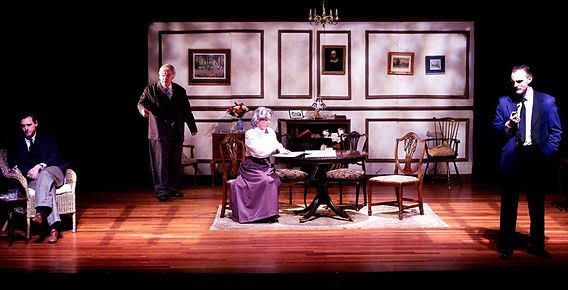
The cast of Long Day’s Journey Into Night. Image credit: Elysium Theatre Company

Written by Eugene O’Neill

Directed by Jake Murray

The Empty Space, Salford

There are family dramas and then there is Long Day’s Journey Into Night, Eugene O’Neill’s monumental autopsy of love, addiction, regret and the peculiar violence families inflict while insisting they only want what’s best. In Elysium Theatre Company’s touring production, directed by Jake Murray this American classic is stripped back and painfully exposed like an angry, infected wound.


The setting may be a Connecticut summer house in 1912, but the emotional climate is timeless: stifling, storm-heavy and thick with the fog of things left unsaid for too long. Across one increasingly unbearable day, the Tyrone family circle each other like wounded animals, armed with whiskey, morphine, recriminations and a fragile nostalgia.
Murray’s production wisely trusts O’Neill’s text, so there are no gimmicks here, no attempts to modernise or shrink the play’s formidable emotional architecture. Instead, the direction leans into the work’s bruising humanity, allowing its rhythms of affection, accusation and self-deception to unfold with agonising inevitability.


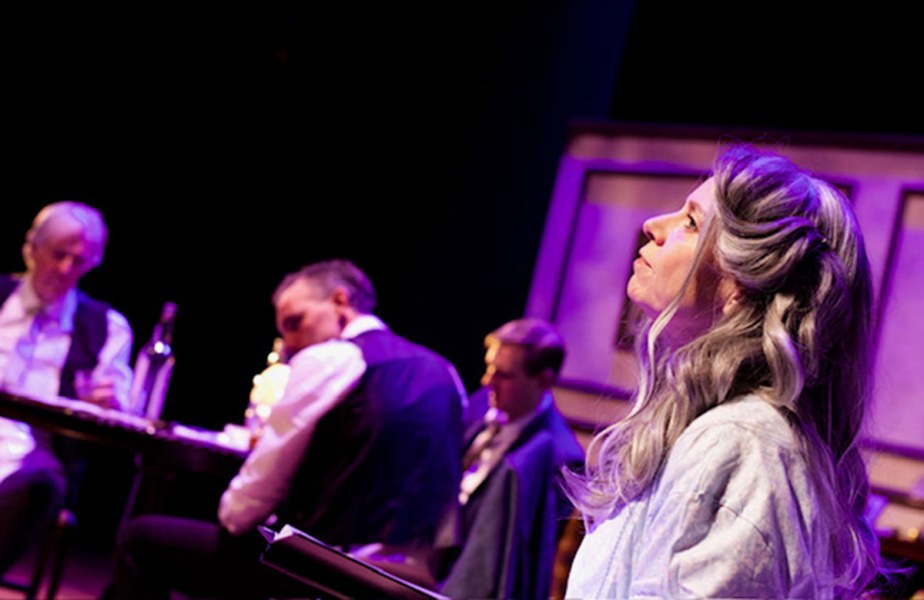
The performances carry the evening’s considerable weight. Joyce Branagh has taken on this substantial and demanding role of Mary Tyrone at short notice, so performs script-in-hand. Despite this, she captures both the ethereal delicacy and terrifying evasiveness of a woman retreating ever deeper into morphine-fogged memory. She drifts through the household like a ghost rehearsing happier versions of herself, all soft smiles, fluttering hands and tremulous denial, while grief and petulant resentment leak through the cracks.
As patriarch James Tyrone, Edmund Dehn does balance bluster with buried shame of his impoverished past and its impact on his family. Beneath the penny-pinching pragmatism lies a man haunted by compromises and squandered artistic promise. The physicality of Dehn convinces but this is a performance that never seems to fully invest in his characters’ rich Shakespearean history to fully grab his role by the teeth and run with it.

It is Elysium stalwart Danny Solomon who dives headlong into his role as elder son, Jamie embracing the cynical and self-destructive character and weaponising dark humour against bitter despair. Daniel Bradford as Edmund has a  frail and searching quality. Based on O’Neill himself, Edmund becomes the aching conscience of the piece. Bradford does a good job handling all the monologues and flitting fluidly between Baudelaire, Shakespeare and Nietzsche. Macy Stasiak adds some much needed lightness and energy as Cathleen, the family maid.


What emerges most powerfully is the terrible elasticity of familial love. The Tyrones know exactly how to wound because they know exactly where the wounds already are.
The Empty Space proves an ideal venue for this chamber piece of emotional demolition. Its intimacy denies audiences any safe observational distance.


At nearly three hours, Long Day’s Journey Into Night demands stamina and an armchair but Murrays’ production understands that O’Neill’s play must feel uncomfortably long. The title is not decorative. This is a slow descent from morning optimism into nocturnal despair, where memory becomes both refuge and prison. The past, as O’Neill reminds us, does not stay politely behind us. That said, the production ran over and that is problematic in such a lengthy piece where theatrical goodwill may start to be as watered down as the family whiskey.


A  compassionate and earnest revival that honours the grandeur of O’Neill’s masterpiece without ever losing sight of its ordinary human heartbreak.

Tour Dates

PLAYLAND

Fez Singhateh as Martinus Zulu and Danny Solomon as Gideon La Roux

Written by Athol Fugard

Directed by Jake Murray

The Empty Space

Elysium Theatre Company have once again shown what high calibre work they can produce. Great story telling from South African playwright Athol Fugard with sound direction from Jake Murray and powerful performances from both male leads ensure that this is a great piece of theatre . A journey through trauma to possible redemption, Playland explores what happens to the human psyche when men with a strong moral code find themselves doing unspeakable things and then have to find a way to live with the consequences.

Set in Playland, a travelling fairground, the action takes place on New Year’s Eve 1989 when war veteran Gideon La Roux meets the fairground watchman Martinus Zulu. Behind the gaudy splendour of the lights and wurlitzer music is the deeply reflective Martinus alone in his monastic space. This bleak setting eventually serves as a kind of confessional for both men. The absolute power of this performance is not just that it is about the unravelling of a man with PTSD, but that it is a man who fought in a war of Apartheid where soldiers were forced to take a vow of silence and where truth was white washed or blacked out. Somehow Gideon is pulled towards another man who is guarding his own secret pain and who has also broken the sixth commandment.

Danny Solomon as Gideon La Roux

This is a perfectly balanced double act from two actors who were both also excellent in a previous Elysium production Jesus Hopped the A Train. Danny Solomon is veteran Gideon, a man whose initial bonhomie hides deep psychological wounds that slowly start to surface as the clock ticks down to a new year. Solomon is all nervous energy and keen, darting eyes while he attempts to engage the recalcitrant security guard. He is engaging and charming as he tells stories of his pigeons and his childhood but effortlessly shifts into menace and madness as he attempts to gaslight his reluctant companion into violence. He increasingly reminds me of early Jack Nicholson in the ways he can play with energy, tempo and mood.

Fez Singhateh as Martinus Zulu

Faz Singhateh counters Solomon with a wonderfully controlled and restrained performance. Stiff with righteous indignation, every sinew is coiled as his Martinus watches and waits like a wary, wounded animal. The growing tension between both men slowly builds, becoming palpable as their stories are told and they find common ground in their actions but struggle with their opposing perceptions of redemption and forgiveness.

The writing is evocative and brutal in its description of the horrors of the Border War, but is also tender as it reveals the youthful innocence of childhood. Simple but effective staging with rich lighting and a fabulous fairground soundscape add additional pleasure to this production. Everything is thoughtfully and sensitively done, ensuring that 30 years on this tale of redemption and forgiveness still feels timely and relevant.

Empty Space 31st Oct – 2nd Nov 2019

Black History Month

Images by Victoria Wai Photography

JESUS HOPPED THE A TRAIN

HOME

Written by Stephen Adly Guirgis

Directed by Jake Murray

This is the Northern première of Jesus Hopped The A Train, first performed in New York in 2000, and then at the Donmar Warehouse in London in 2002. Durham based Elysium Theatre Company have produced a startling and provocative take on this powerful play about moral responsibility and the American penal system. The themes of redemption and damnation are at the forefront of this play and Director Jake Murray ensures his terrific cast embody the complexities of finding goodness even in the most seemingly “monstrous” individuals.

The setting is Rikers Island Prison in New York. Two apparently very different men are imprisoned there and come to know each other during their shared one hour of fresh air each day. Angel is young and naive, new to the prison system he is not a hardened recidivist and seems initially bewildered by all the fuss. All I did was shoot him in the ass! it is his bad luck that Rev Kim later dies on the operating table. Lucius is awaiting the outcome of his appeal against extradition to Florida for the death penalty having murdered 8 people.

The two actors playing Angel and Lucius do a tremendous job and are perfect foils for each other. Danny Solomon is all lanky, fluid limbs and is perfectly cast as the naive, coltish youth who is initially credulous that he is actually in trouble at all. Solomon moves from his desperate fumbling prayers and cockiness toward his state-appointed lawyer to a fragile, shell-shocked rape victim and then to a coming of age as he is tutored to navigate the legal system and reflect with Lucius about the nature of freedom and redemption.

Faz Singhateh has all the on stage charisma of a cult leader such as the ill fated Rev Kim. His Lucius is larger than life and glows like the sun he has grown to love. Apparently at ease with accepting his crimes and confident of his redemption through Jesus, he is desperate to avoid the death penalty having finally found his own inner peace. Ironically he seems more free in his hour outside each day than his mean spirited guard Valdez is ever likely to be.

The other characters provide all the shades of dark and light that enhance the message of what is good or bad, right or wrong, and how do we accept or assign blame. Lucius is a mass murderer but he is kind and perceptive and has genuine empathy. He is also a victim of early abuse and has a mental health diagnosis. Does he deserve to die for his crimes or be supported in his redemption? The young lawyer wants to do good for Angel through guilt that her skills can get hardened recidivists out of jail, yet ultimately her pride and arrogance will add years to his sentence. Valdez is casually sadistic yet operates within the law. Charlie D’Amico is apparently too soft to succeed as a guard yet surely his humanity is also a positive in a prison environment.

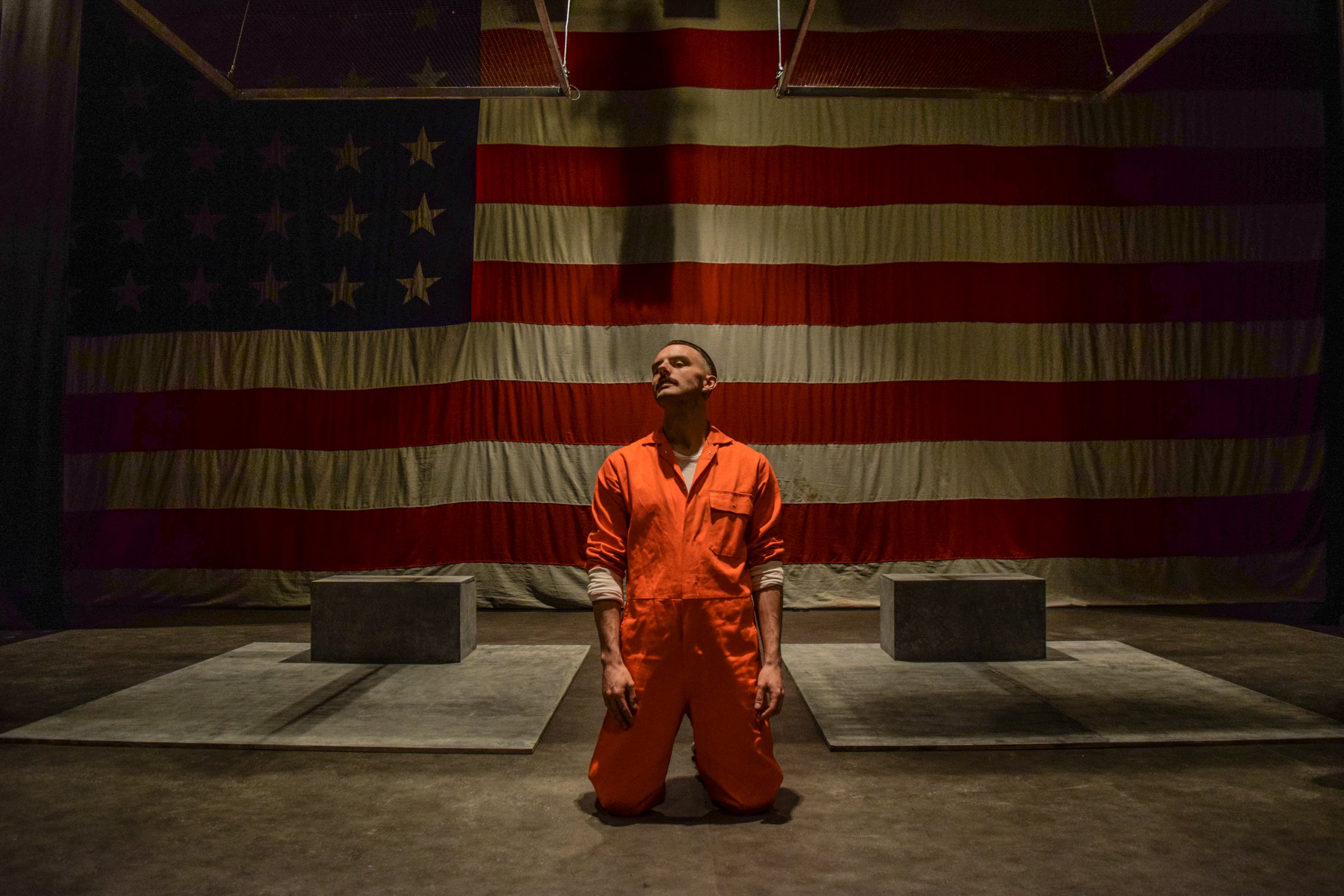
The set design is strikingly effective in its simplicity. Louis Price has created the starkness of a high security jail while also creating a sense of personal freedom when the men are outdoors even in their cages. The slash of barbed wire fencing through the cheery brightness of the star spangled banner is a potent image.

Jesus Hopped The A Train is an excellent piece of theatre that provokes debate on many topics. It highlights the complexities of human nature and the unfairness of the lottery system in the American penal system. It also beautifully highlights how precious are the small elements of personal freedom whether we are praying on our knees, feeling the sun on our skin or watching a bird fly past. The human spirit is bigger than any concrete cell could ever try to hold or suppress. We are all capable of finding our own redemption if we look within.

HOME 16 – 19 May

Images by Mark Russell