A Long Day’s Journey into Night

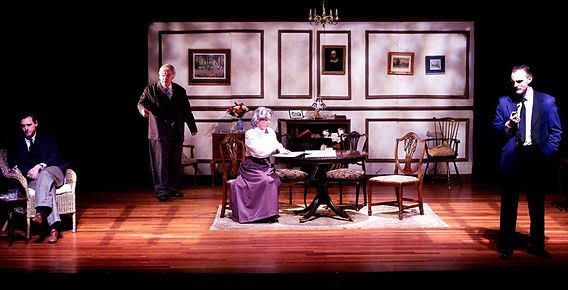
The cast of Long Day’s Journey Into Night. Image credit: Elysium Theatre Company

Written by Eugene O’Neill

Directed by Jake Murray

The Empty Space, Salford

There are family dramas and then there is Long Day’s Journey Into Night, Eugene O’Neill’s monumental autopsy of love, addiction, regret and the peculiar violence families inflict while insisting they only want what’s best. In Elysium Theatre Company’s touring production, directed by Jake Murray this American classic is stripped back and painfully exposed like an angry, infected wound.


The setting may be a Connecticut summer house in 1912, but the emotional climate is timeless: stifling, storm-heavy and thick with the fog of things left unsaid for too long. Across one increasingly unbearable day, the Tyrone family circle each other like wounded animals, armed with whiskey, morphine, recriminations and a fragile nostalgia.
Murray’s production wisely trusts O’Neill’s text, so there are no gimmicks here, no attempts to modernise or shrink the play’s formidable emotional architecture. Instead, the direction leans into the work’s bruising humanity, allowing its rhythms of affection, accusation and self-deception to unfold with agonising inevitability.


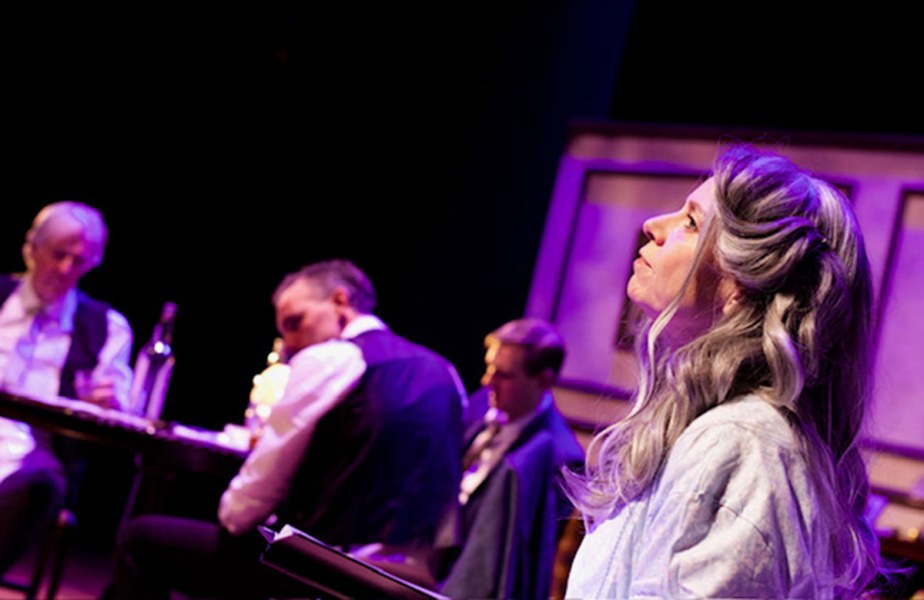
The performances carry the evening’s considerable weight. Joyce Branagh has taken on this substantial and demanding role of Mary Tyrone at short notice, so performs script-in-hand. Despite this, she captures both the ethereal delicacy and terrifying evasiveness of a woman retreating ever deeper into morphine-fogged memory. She drifts through the household like a ghost rehearsing happier versions of herself, all soft smiles, fluttering hands and tremulous denial, while grief and petulant resentment leak through the cracks.
As patriarch James Tyrone, Edmund Dehn does balance bluster with buried shame of his impoverished past and its impact on his family. Beneath the penny-pinching pragmatism lies a man haunted by compromises and squandered artistic promise. The physicality of Dehn convinces but this is a performance that never seems to fully invest in his characters’ rich Shakespearean history to fully grab his role by the teeth and run with it.

It is Elysium stalwart Danny Solomon who dives headlong into his role as elder son, Jamie embracing the cynical and self-destructive character and weaponising dark humour against bitter despair. Daniel Bradford as Edmund has a  frail and searching quality. Based on O’Neill himself, Edmund becomes the aching conscience of the piece. Bradford does a good job handling all the monologues and flitting fluidly between Baudelaire, Shakespeare and Nietzsche. Macy Stasiak adds some much needed lightness and energy as Cathleen, the family maid.


What emerges most powerfully is the terrible elasticity of familial love. The Tyrones know exactly how to wound because they know exactly where the wounds already are.
The Empty Space proves an ideal venue for this chamber piece of emotional demolition. Its intimacy denies audiences any safe observational distance.


At nearly three hours, Long Day’s Journey Into Night demands stamina and an armchair but Murrays’ production understands that O’Neill’s play must feel uncomfortably long. The title is not decorative. This is a slow descent from morning optimism into nocturnal despair, where memory becomes both refuge and prison. The past, as O’Neill reminds us, does not stay politely behind us. That said, the production ran over and that is problematic in such a lengthy piece where theatrical goodwill may start to be as watered down as the family whiskey.


A  compassionate and earnest revival that honours the grandeur of O’Neill’s masterpiece without ever losing sight of its ordinary human heartbreak.

Tour Dates

The Effect

Oldham Coliseum

Written by Lucy Prebble

Directed by Jake Murray

Play With Fire Productions

The U.K. has the fourth highest level of antidepressant prescribing in the Western world with prescription levels tripling since the millennium. Yet a study published in The Lancet earlier this year on the efficacy of these drugs suggests at least a million more Britons should be taking antidepressants. With mental healthcare becoming an increasingly important topic of discussion, Fire Productions brings the award winning The Effect to the North West. This Lucy Prebble play is about a clinical study on the effects of an unlicensed antidepressant on non-depressed, paid volunteers. The play explores whether Love really is the drug or if artificially elevated dopamine levels are indeed Viagra for the heart.

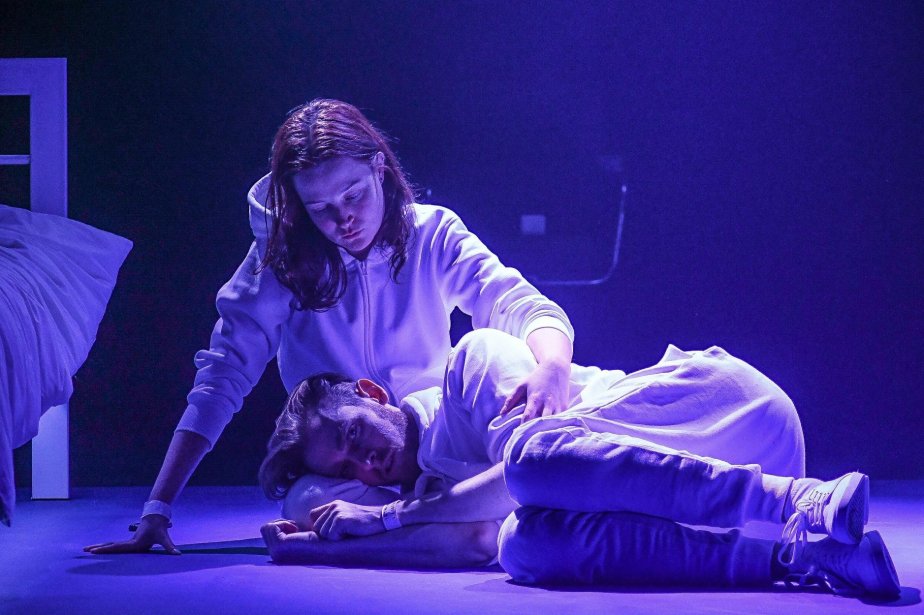
Striking stage design by Louis Price creates a sleek and effective set that coupled with lighting by Adam Murdoch ensure that the production looks as good as the onstage performances. Scenes flow smoothly and concisely in this highly structured amd cerebral piece. The order and precision of the early scenes at the research facility are a smart foil to the messiness that unfolds as heightened emotions takeover.

The direction by Jake Murray ensures empathy, passion and tenderness are infused into every scene whether it is dopamine infused euphoria or dopamine deprived despair. In this double blind study the lovers, young and old are under the spotlight as the audience observe the empirical and the more qualitative research approaches. Is this elevated mood and loss of appetite due to the dopamine in the drug or is it due to the exhilaration of falling in love? Does a relationship breakdown trigger a reactive depression or does a chemical imbalance in the brain cause depression and if left untreated can it cause the breakdown of a relationship?

The young couple are utterly believable in their growing attraction and resultant confusion as they grapple with what is placebo and what is real in their relationship. As Connie, Elaine McNicol is all process driven, reflective and cautious as the curious, young psychology student whose emotional world starts to rapidly expand. Daniel Bradford really shines as Tristan. His Northern Irish accent totally fooled me and I’m from N.I! He brings a genuine lust for life to his character that is always engaging and when the drama unfolds he is truly mecurial in this role. He absolutely lives in the moment so when his character becomes trapped in the moment, it is painfully poignant to see all that joy and passion snuffed out; just as it can be in episodes of serious depression.

The two doctors are middle aged and differ in their approach to the subject matter. Toby is the trial director who favours the science and sees medication as an effective means of regulating brain chemistry whereas Lorna sees things from a deeply personal perspective and wonders if depression can be a useful pain informing us that we need to change our lives. Both perspectives have validity as without enough dopamine in the brain we struggle to have the motivation to effect change which in itself can cause depression.

Karren Winchester is wonderful as Lorna showing dry humour and resilience, she is always intensely believable as the deeply, emotionally invested psychiatrist. In the second act she excels as depression sets in and in her scene talking to the human brain she is chillingly reflective. Her portrayal of the toxicity and dissociation in depression is startlingly accurate. This is wonderful writing for any actor but Winchester really uses every word to self-flagellate. It is not surprising that many individuals suffering depression do not seek help as the voice in their own head can be so punitive that they simply don’t see themselves as worthy of assistance.

The mysteries of the human heart and mind are enduringly complex and as interwoven as the formation of the brain itself. The Effect raises more questions than it answers but this is a conversation that will always fascinate and divide in equal measure.

Oldham Coliseum 25 – 27th September

Images by Sophie Giddens

Things We Want

Hope Mill Theatre

Written by Jonathon Marc Sherman

Directed by Daniel Bradford

One innocuous window in a set that is mainly comprised of doors. Yet this window ten stories up is the Russian roulette of double glazing. Parents, wheelchairs, VHS tapes, remote controls are hurled out and there are a few near misses with several siblings. For all its bland decor this is a high octane living room which sets the scene for this production. Three brothers who are like emotional volcanoes operating out of sync. At any one point there is usually one comatose on the couch with another erupting while a third is seemingly calm but bubbling under with something dark. The catalyst for them to swap places is usually the presence of the sunny faced but equally troubled Stella pertly played by Hannah Ellis Ryan.

Play With Fire and Swaggering Crow have chosen well with this production. The acting is full blown and fast paced as it should be in what feels like a live recording of a television sitcom. The writing is mainly slickly delivered quips and witticisms with some cracking one – liners. The strong cast make good use of this gallows humour as everyone avoids their own emotional pain with sex, drugs, booze, bonsai or psychobabble quacks like Dr Miracle. The theme of addiction and how we safely or harmfully feed our psychological pain is alluded to but never satisfactorily addressed in this quickfire trip through the mess left by a family rocked by tragedy.

There are some great performances from cast most notably Alex Phelps as Teddy as he shifts gear in the second act and moves from the autobot big brother spewing empty platitudes to the conniving train wreck on the couch. William J Holstead as Sty continues his trajectory as a great character actor with superb comic timing who is just electric when on stage. Paddy Young charms as the petulant younger brother desperate for love.

This is a well- paced play about some very dark subject matters. Director and cast are clearly having fun with a great script and packed houses at Hope Mill suggests all round success.

Hope Mill Theatre 30th May- 9th June