The Newspaper Boy

53Two

Written by Chris Hoyle

Directed by Simon Naylor

A Dibby Theatre production

Part of Queer Contact 2018

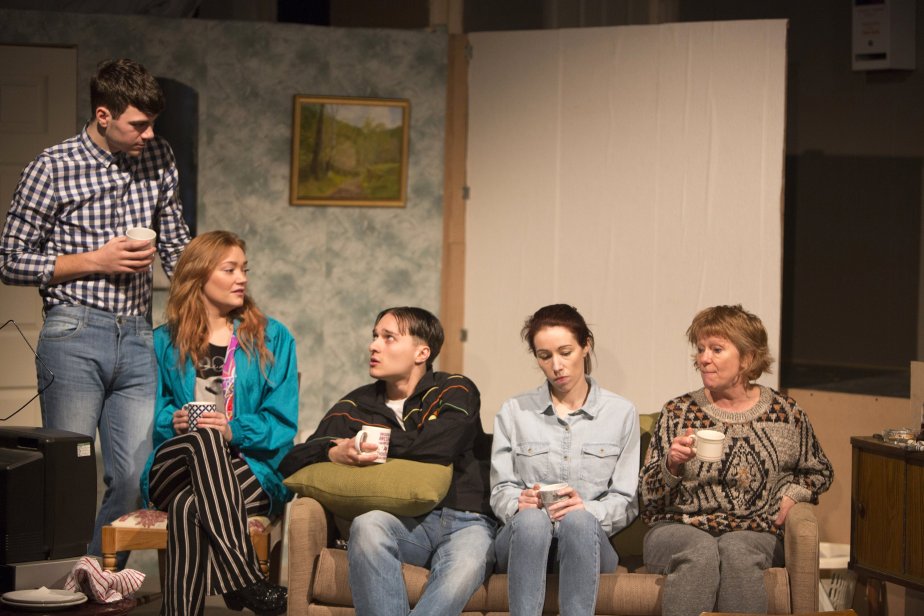
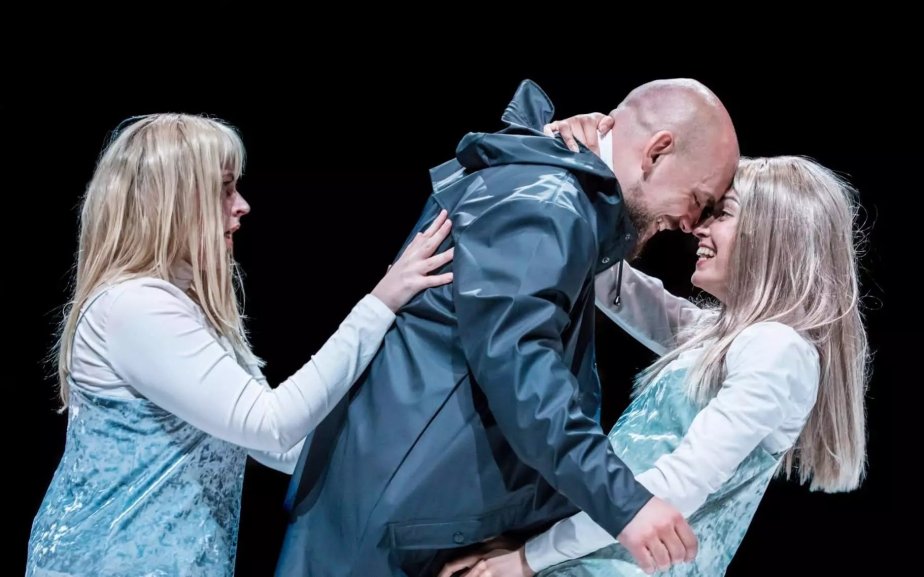
From start to finish The Newspaper Boy is a real joy to watch. Writer Chris Hoyle has such a natural ear for dialogue and a genuine affection for his characters ensuring they are all warm, earthy and colourful. The look and feel of this production is absolutely 1992 from the iconic television ads to the music of New Order and the clothes by John Richmond and Comme des Garçons. This is a real labour of love and perfectly evokes the joy and the anguish of coming out in the Nineties.

The cast do a great job as an ensemble. Christian is on a high speed trajectory from Moston to Didsbury via the nation’s tv screens and Daniel Maley is great as the naive, awkward boy who may be growing up too fast but is having a brilliant time until the newspapers break the scandal. He has the super confident soap veteran Mandy as his ballsy guide to drugs, clubs and fashion. Hollie-Jay Bowes is totally believable as the sweet ingenue/spoilt brat/faghag who just wants to get wankered and not have another cute guy love her like a fucking sister!! The fifteen year old Christian falls in love with the older boy Max who Sam Retford embodies with charm and genuine honour and sweetness.

Director Simon Naylor directs the sex scenes with genuine tenderness . This is a coming of age in a really special and joyful way that is later brutalized and cheapened by an ignorant media obsessed with the moral high ground and the desire to sell newspapers. When Christian says I’m proud of us it is said with a naivety about the personal, social and possible legal repercussions. Regardless of this Chris Hoyle has written young love in a joyous way that anyone could be proud off.

The older cast members bring additional depth to this story and of course were young people in the Nineties so can draw on their experiences. Eve Steele gives a chilly television executive in Burberry and heels but blisters with her genius take on a Manc drug dealer on the club scene. Samantha Siddall as Christian’s Mum is perfectly cast as the proud parent basking in the glory of a famous child while still worrying for his well-being. Karen Henthorn is just brilliant as the feisty, chain smoking Gran who adores Christian. Her performance shifts from impish to red eyed and broken, with the stuffing knocked out of her as the scandal unfolds.

The staging works really well and built over several levels allows for creative space to move the action on stage across a range of settings. The family home in Moston to soap star Mandy’s place in Didsbury via Flesh night at The Haçienda and the Granada studio offices and the set for famous soap Mancroft Walk. The energy ramps up a gear as a throng of tv crew thrust through the audience to film another scene on set. The audience are watching this unfold on stage while overhead monitors play out the filmed scene. A large tv screen above Christian’s bed shows scenes from the soap as the family watch Christian and Mandy on scene as the young lovers. Interspersed with iconic Nineties ads for Gold Blend and Milky Way the feeling of slipping back 25 years becomes stronger and stronger. It is a clever and impressive use of this small, bustling theatre. 53Two is quickly becoming a hugely exciting space to see theatre in Manchester.

Based on some of Hoyle’s personal experience as a child actor on Coronation Street, this play highlights the hypocrisy of television programming that storylines teenage pregnancy by a teacher but baulks at teenage gay sex with another young man. Staged as part of Queer Contact 2018 this is a funny and poignant take on an important subject.

Images by Richard Kelly

At 53Two until Saturday 24th February

The new space at CONTACT Interview with Matt Fenton. 

I recently met with Matt Fenton Artistic Director and Chief Executive of CONTACT. He was brimming with enthusiasm over news that the global charitable foundation Wellcome was funding £600k towards a special new venue  within the £6.5 million redevelopment of the building. This additional funding is intended to create a space for health and wellbeing projects and will also fund an new production post for the next three years.

For the last 10 years CONTACT has been producing work around health challenges and inequality, particularly young peoples issues where their voice is quiet but the issue really affects them. Shows like Crystal Kisses about child sexual exploitation really gave a voice to the experience of one of the young people. Rites was co-produced with National Theatre of Scotland. About F.G.M (Female Genital Mutilation) it tried to look at the issue without demonising or alienating communities where it is practised but still viewing it as a young peoples Human Rights issue putting their voices at the foreground of the conversation about F.G.M. Our Young Company have made numerous works supported by Wellcome -e.g. one about sexuality with Stacy Makishi Under The Covers, another about the experience of young people around cancer  care- There is a Light.


Ah that was with Brian Lobel. I did some stuff with him for The Sick of The Fringe.

Yes. We also made a piece about honour abuse called Not In My Honour by Aisha Zia which was developed with Levenshulme High School. There are numerous shows about Arts and Mental Health – currently one with Demi Landro charting mental health isssues affecting 3 generations of women in her family. Wellcome have supported quite a few of those and we were in conversation with Wellcome saying how we see them as a really strong partner- they have connected us to researchers who have often been in the room when we are developing shows. They’ve brought ethicists to the process, medical specialists and other health professionals so they’ve been this connector for us not just a Funder. In talking to them about our ambitions with our projects and about the new building, it was Wellcome who suggested we scale up our plans and come back to them with a really ambitious proposal- a new arts and health space.

So where will that be in the building?

Its going to use the space we are sat in now. This whole café space will be workshop space making the best use of our location. We are right next to the N.H.S hospitals, the Universities and the local communities so we are perfectly placed to bring all those people together to talk about health inequalities, health challenges……workshops, with Artists, R&D, scratch events etc. All these different ideas populating the space with a new specific Arts and Health Producer on the team.

The old 1969 building is coming down with the new building having a larger floor plan. The pillar in the café will go, as will all the offices over there and the space will be dividable off from the main space with the new café and bar in the centre.

So CONTACT will have a bar space that is no longer hidden!

We get that so often!! Lunchtime today the café was packed but from the front door the place looked empty with nothing happening! There is that thing of threshold anxiety especially in Arts organisations and CONTACT does so much to counter that. It has young people up front at the doors to make sure you get a welcoming smile. The use  of glazing in the new space will ensure you can see “there’s people in there, we can go in”.

Where do you find the young people to bring in and engage with?

CONTACT has a huge throughput of young people and it happens in lots of different ways. We run weekly free workshops – some delivered core and in-house :- in technical theatre and in drama drop-in, in musical production, media production. Social workers, pupil referral units, teachers, charities, young carers, homelessness charities and a whole host of organisations in the city signpost young people to our activities. A lot of young people come with support workers if they need extra help to come. We also work in partnership with organisations like Young Identity who are based here and we host their activities. Their young writers and poets do workshops in schools and in Assemblies which also signpost back here.

We also run creative leadership projects like Future Fires which is for Community Arts practitioners who want to skill up and deliver an Arts project in their local community. The Agency is a social entrepreneur project which we run in North  Manchester. A lot of these projects are roughly 50% recruited from within the free week in/week out activities and the other 50% audition or apply – the same with Contact Young Company. This means the groups are highly diverse and often include a large number of young people who are not in educational training but have come through other referrals or recommendations. The groups are absolutely diverse in terms of social economics but they all thrive and excel equally within the building. If you look at Reece Williams and Afreena Islam who are now on our Board they have been with CONTACT for years as young people – Reece since he was 13. Keisha Thompson who runs CYC, first performed with us when she was about 14. These are long progression experiences which become taking on leadership roles.

It sounds almost like a big extended family.

Yeah I guess for some people it feels like that, but its also constantly refreshed with new people auditioning. I think we do the really difficult bit which is getting young people involved and engaged early on, when their teenage peers are not doing music, acting, poetry or spoken word. Its not a new thing though- we have always done it. Look at  Lemn Sissay and Louise Wallwein and Yusra Warsama. This model works brilliantly because it does exactly what it says on the tin. We put faith in young people as decision-makers. My role is to facilitate that, not to tell them what to do.

They are developing a wide range of skill sets. Its not just an opportunity to go somewhere, to do something, to be heard….. It is also real opportunities that can lead to other things.

I think that’s it. Totally. If you look at the Future Fires or The Agency cohorts have gone on to do over the years. Loads stay in the Arts, but lots don’t, but they still take that agency, those skills they’ve developed, that confidence, those networks for young people……they take all of that and engage politically as social workers, teachers, politicians, you name it. CONTACT classically does not make it all about making more theatre. If something is going to become a radio project about homelessness or a baking project for families who access food banks or a basketball project then that’s what gets creatively developed. We never go “Lets make a play about that.”

Is a lot of the work delivered outside the building?

The Agency is primarily in Moston and Harpurhey. With Future Fires the training and development happens here but the actual projects happen where those young people live. The premise being that they know best what is or is not available in that community so they are the best people to deliver and fill that gap. For example Lucy wanted to run a female only poetry slam so she created LipSync’d. Reform Radio are two women who met on Future Fires and wanted to tackle homelessness- 4 years later they have a fully funded operation. Amazing.Its interesting to think about what is our audience at CONTACT. It is the people listening to that radio station or at that poetry slam – we can’t report those numbers because they’re not bums on seats but actually that is part of our reach as we are integral to supporting those projects in their early stages. For us that’s as important as producing new shows, though we like to do that as well!!

Are there ever tensions in communities delivering projects that certain local people might not want?

In Future Fires we ask them to get 100 signatures from their local community which is a brilliant methodology. It forces them to go to their local shop, or pub or neighbours on their street.

So its about connection and validation?

Yes. They have to explain their idea so by the 100th time the idea is clearer and you have heard 100 people say that’s a good idea. The Agency projects are warmly received as young people are seen doing something creative and positive and its real world – they each get £2000 to develop their project, a business plan to attract further funding so the projects quickly become real, and in some cases very impressive. That’s a very positive thing within that community. I think there can be tension with some of the shows we present. Mawaan Rizwan who made the BBC show How Gay Is Pakistan? is very out and vocal as a British Asian comedian. Demi Nandhra explores taboos around mental health and medication when some people feel she should stay quiet. R.E Trip was a piece about unplanned pregnancies. I just watched the rushes of the television version and that’s going to be broadcast very soon. To see those young women saying those verbatim words about those experiences. We haven’t seen that before in a mainstream media context and we’re aware that will stir up debate and criticism.

Is there safeguarding in place if tensions arise and individuals need support?

Yes, we have very clearly defined safe guarding measures in place so we can protect young people in all our projects. We’re not healthcare professionals or social workers but we seek out the appropriate help when needed. Suzie Henderson who is our Head of Creative Development heads up all our staff working in direct engagement with young people, and is very experienced around safeguarding.

Will the new space be geared to meet a wide range of special needs?

Throughout the design stage we have consulted with the Manchester Disabled Peoples Group and with Graeae Theatre in London to ensure that the new part of the building will be up to purpose and also to ensure we incorporate any adaptations we can make to the part that’s not being touched. This is actually a very confusing building that is visually overloading and has barriers everywhere. We are using capital to address this to make the new building much more open, clear and accessible. Our young peoples group working on the capital project is called Construct and we have young disabled people in that group advising us. We went to Lodon to see the Graeae building which was brilliant – an Arts building designed by disabled artists, so we came back with loads of ideas.

So what will happen while the building is closed next year….. to programming and to the weekly projects you deliver?

They will continue to run. Our brief for the location of our new base is not a performance space but somewhere to house all of our young peoples activities and it will be in walking distance of CONTACT. The much bigger impact is to our What’s On programme – the ticket buying bit. That will be much smaller than normal so we will do about 10 events where we might normally do 100 in a year, but they will be much bigger, higher profile events in some unexpected places.

So you won’t consider something site specific on the building site with the audience in hard hats?

No. We won’t be doing that! However we are doing two really exciting site specific pieces in Spring and we’re nearly ready to announce that….

A few weeks after this interview I met Matt again at Central Reference Library for the big reveal for the closure plans and the FebMay 2018 programme. The old building closes at Christmas for the renovation work which will run throughout 2018. The staff and all projects they run and host will relocate to the Millennium Powerhouse in Moss Side.

IN THE CITY Part One is packed full of great events. The 10 year anniversary of Queer Contact festival includes large scale productions at The Palace Theatre with Dancing Bear by Jamie Fletcher & Company and a House of Suarez Vogue Ball at Manchester Academy. Contact Young Company are working with the brilliant Sh!t Theatre to bring a largescale immersive performance to The Museum of Science and Industry. She Bangs the Drums will celebrate the 100 year anniversary of women and working men getting the right to vote. The second site specific production will happen in an actual working sari shop on Curry Mile in Rusholme. Handlooms by RASA sounded wonderful when Rani Moorthy was describing it. Award winning show BRANDED by Sophie Willan will have a oneoff gala performance hosted by The Lowry.

In writing up this interview, I’m recalling the absolute passion and commitment of Matt Fenton to every aspect of CONTACT’s programming and youth projects, and thinking about the exciting plans for CONTACT in 2018 and beyond. In the context of Austerity measures and the savage funding cuts to the Arts, Mental Health Services and provision for Young Peoples Services, it is a real testament to the range and quality of services delivered by CONTACT that this redevelopment project has been funded. There is still a remaining portion to be fundraised throughout 2018 so dig deep Manchester is really lucky to have CONTACT. 


DUCKIE 

CONTACT
Writer/ Performer – Le Chocolat Gateau
Produced/Developed – In Company Collective
There are moments when I wish I could rewind time with my children and go back to when they were very young. Today was such a day, watching the gorgeous DUCKIE I wished my teenage darlings were ten years younger and there in the audience with me. This show is a wonderfully deft merging of cabaret, children’s theatre, fairy tale reimagining and a big dollop of old Hollywood magic.
Cabaret performer and Opera singer Le Gateau Chocolat takes the much loved tale of The Ugly Duckling by Hans Christian Anderson and goes to the circus to seek out soulmates for this lonely misfit, the runt of the litter. To the delight of the child in all of us, the mischievious performer portrays a duck who cannot quack but belches instead. His lonely duckie can’t quack or dance, he is too small to be a muscleman and too big, too yellow, too tall…… DUCKIE would seem to be a duck who is seriously down on his luck.
The voiceover which speaks to DUCKIE and at times the audience is soothing and reassuring- a bit like having Judy Dench voicing your bedtime story. The rest is simply the gorgeous baritone voice of Le Gateau Chocolat which is like having your senses bathed in warm chocolate fondant. The songs often tweaked to fit the story range from Disney classics through to The Pussycat Dolls Don’t cha and La Cage Aux Folles I am what I am to Cyndi Laupers Girls just want to have fun.
Visually the set is deceptively simple but with dressing up clothes tucked away and bright umbrellas popping out it holds gems of surprise. The lighting design is magical and reminds me of the country village circus tours of my childhood. Throughout his costume changes there is always the fluid physicality, warmly, gleaming eyes and glittery lips. This is a performer who is totally at ease with his audience, both young and simply young at heart. It would be hard not to be drawn into DUCKIE’S world and empathise with his plight.
When the insults come increasingly thick and fast and the voicing of them sounds more and more like children the true dark background to the story shines through. DUCKIE is rendered small, wounded and vulnerable as he looks out in confusion at a world that will not let him belong. His salvation through a beautifully rendered little mouse is touching and ensures a fairytale happy ending. We shun or ridicule what is “ugly” not because it’s ugly but simply because it is different. DUCKIE delivers a message of acceptance and tolerance that resonates with adults and sews a seed in young children that hopefully blossoms in every new generation.
CONTACT 24-25 OCTOBER

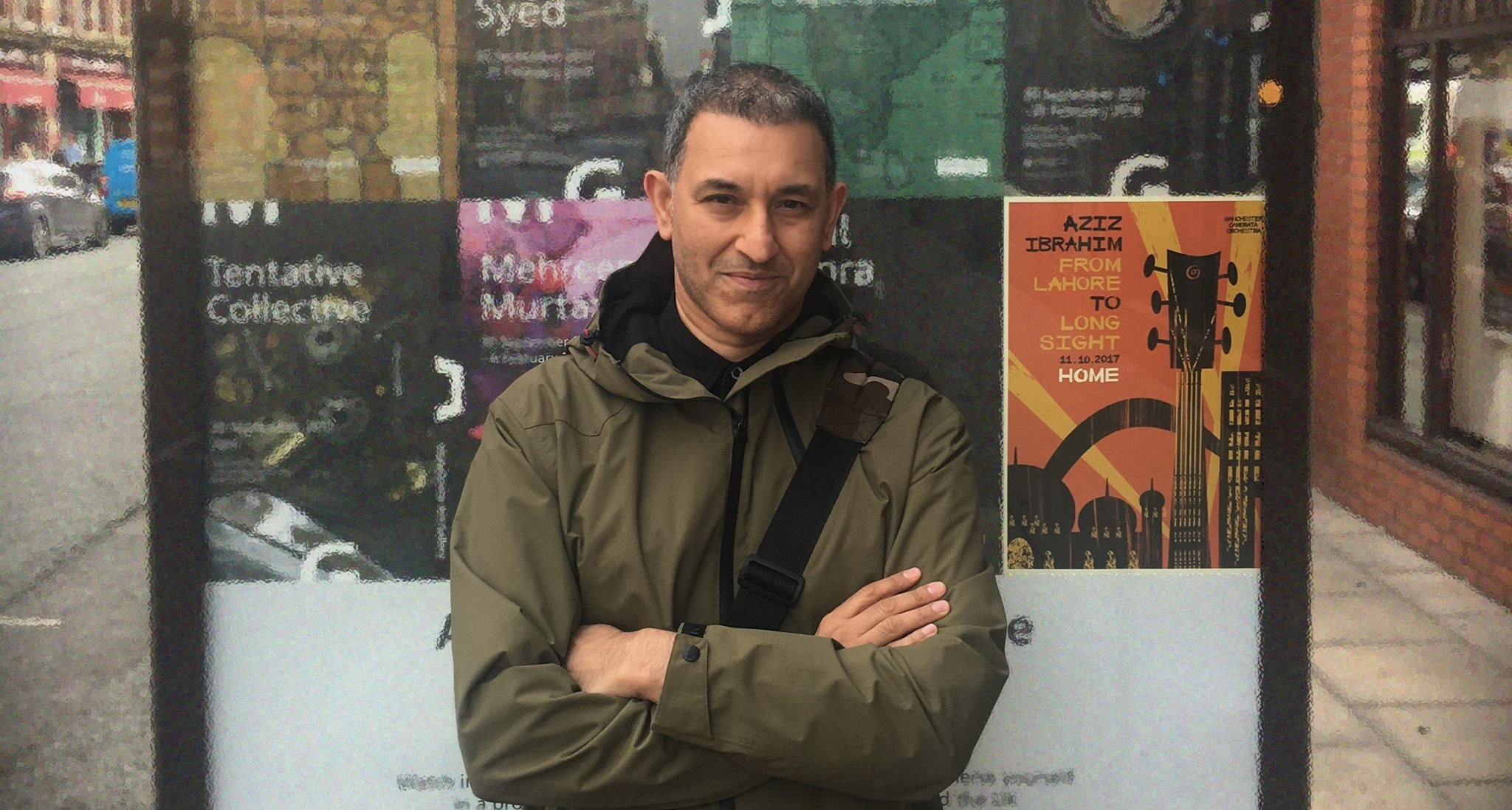
Interview with Aziz Ibrahim

HOME in partnership with Manchester Camerata present Lahore to Longsight as part of the Upclose series. This will be a multi-media realisation of the cult album by Aziz Ibrahim about his father’s journey to Britain after Partition; and will also feature Dalbir Singh Rattan (tabla).

Sitting in the bar at HOME with Aziz Ibrahim, we start off chatting about the famous C18th Scottish map maker Colin MacKenzie who had one of the largest Indian artefact collections in the world. This leads to conversation about the impact of The East India Company on the history of the British Empire and Aziz’s involvement with his old friend Dalbir Singh Rattan on an Arts Council project in Stornaway about 70 years of Partition. Several hours and a parking ticket later I know a lot more about a Pakistani Muslim from Longsight who has toured the world with artists such as The Stone Roses and Simply Red, collaborated with artists like Paul Weller and Mike Joyce (The Smiths) but who is equally happy playing guitar in a prison or a hospice. A guy who may love basketball more than music and who once played The Star Spangled Banner during a boxing match between The Staffordshire police and the N.Y.P.D. despite having been refused a visa to enter the U.S.A.

Was history always a big interest?

I was interested in history at school but I didn’t feel a connection as it was a very one sided history from an English perspective; later on I realised the history of this “wonderful” Empire was filled with blood, trauma and slavery.

The whole principle of identity and how we identify ourselves as being that culture, this religion, that city was actually brought about by The East India Company and The British Empire. Divide and Rule has segregated communities for centuries, made us feel a certain way about culture, religion and gender. Prior to colonialism people had fuzzy borders. Indians lived next to Muslims, next to Sufi. We are still perpetuating principles that were used to kept us apart. It happened to South Asians, Africans, Chinese, The Irish and Celtic communities. I’m looking at music as in how does music bring people together.  

Growing up in Northern Ireland there was a lot of segregation. In school we were taught different histories, cultures and music depending on religion. Being asked your name could define how you were treated.

I’ve been refused visas because of my name.

You missed out on a big world tour because of that, didn’t you?

Yes. My whole life changed. The knock on  effect- so many things happened after that like a domino effect- many things fell apart. 

Do you think being refused a visa shook your sense of your own identity?

It shook something!!! It made me question what is identity. Why are people identified in this way? Being perceived in a different way made me ask more questions. Why do I think in this way? I have dual heritage in that my parents came over here and I’m a Mancunian born Muslim who lived in an inner city council estate. I like to draw on all the strengths of different cultures and communities. Music is the key through which I communicate with people. 

Maybe with a curious mind comes openness to different things…outlooks?

Oh yeah, I’m definitely curious. I’m intrigued how I get ideas from different cultures, personalities, instruments – like  how they’re played then trying to mimic them on guitar to create a new voice. I’ve always thought about individual voices, our uniqueness. How do you express that in any art form? My way was incorporating other voices into the guitar. Then I became a lyricist inspired by my father and the stories he told me about India, Pakistan and Britain. Train journeys, the jungle, his army training…..hence how Lahore to Longsight came about.

What age were your parents when they left Lahore?

I dunno, they don’t know. There was no formal record keeping in the villages. My father estimated his age when he applied for the army. He was about 86 when he passed away in 2006. 

So he had a long history in India before he left after Partition?

He had a long life in India. That begs the question – Am I actually Indian, am I Pakistani, what am I?

So how did this collaboration with Manchester Camerata come about?

I was introduced to them my mate Mike Joyce from The Smiths. Mike and I have a group together which we started just playing for fun- it involves spoken word, narrative, visual art – called Azmik. 

I told them about my philosophy of music and what I’m doing. They were thinking about a Reimagining India project for the 70 years of Independence and asked if I was interested in collaboration. It came out of the blue.

Ah, so the Universe provides. Right place, right time.

Absolutely. I suggested the concept behind the album which is a partition story. A personal story about my father, a simple person from Indian roots, the story of how we lost family during Partition and resettling in Pakistan. It reflects how life was for a generation of people who went through such a traumatic experience and didn’t speak of it, who didn’t have a platform or a voice to be able to tell their story. It is not about finger pointing- my Mother always said, ” When you point a finger, there are three more pointing back at you.”

What’s it like working with the Camerata?

They are a contemporary, forward thinking orchestra. I like working and arranging with Tim Crooks (Arranger and Conductor) – he is very quick, efficient, creative. I’m aiming towards involving the orchestra in my music, exploring how we interact- not just telling them which parts to play. I’m testing them and they are testing me so it’s a sharing process. I don’t want them to be confined to the notes on a score sheet. I want them to feel they can improvise.

So you basically want to create a jamming session with an orchestra?

When two very different perspectives come together how do they work together? Like a marriage- you don’t want to be exactly alike and like the same things. That’s boring. I like the difference of opinion and perspective. Different contributions bring about new things.

The Camerata and you seem like a very natural fit. They work on projects based around mental health and dementia, and you are involved in a wide range of community projects.

Image: Mudkiss Photography. 

It’s that relationship with music and other arts. The government can withdraw funding from the Arts like it is less important than other areas of investment. I think when times are tough people rely upon the Arts to lift their spirits. It’s about engaging with people not preaching at them, and giving opportunities on an equal footing. For instance allowing a hurt child to express in music what they can’t in words. Giving young third and fourth generation South Asians respect- engaging in what interests them, asking what do they want?

Working in prisons, hospices, special needs schools and with Crisis, has made me think music is key in mental health. It is more important for people to engage and express themselves than have the correct notes. That beautiful freedom of expression and positivity even when it has maybe started from a negative place.

What do you want people to take away from this event at HOME?

That anything is possible. I’m a British Pakistani Muslim from Longsight, from a really poor family yet my journey has been so exciting. If it can happen for me it can happen for anyone. As long as you try there is always the possibility of change. The only way humanity succeeds is through perseverance. I think if HOME and Camerata can continue to develop projects like this more young people from the inner city will come through the doors of HOME etc.

Will you have family at the gig?

For the first time since 1987 my Mum is coming – she came to GMex for Simply Red and never came again! 

My brothers Ejaz and Abdul are performing with me as special guests. Its nice to have them participate as they are part of this story.

Which instruments do they play?

They play guitar and Abdul, my older brother plays all sorts of instruments – he’s on Ian Brown’s My Star – not many people even know that! 

My parents came from poor villages and worked hard their whole lives. They motivated us all to achieve academically. I wanted to be a doctor but music chose me and Simply Red offered me a career.

What do think  your Mum will be thinking?

Get a proper job!!

Still?

Yeah absolutely 100%!

This will be the first time she hears something that relates to a husband she lost in 2006. It’s honouring him. I also wanted to do this concert so she feels happy about my father’s contribution. How much we cared about him. What he did for me when I could easily have been running with gangs. Their guidance and nurturing – it’s honouring someone’s love and commitment.

That’s a life well lived, isn’t it? You have to create that. It didn’t just happen.

Absolutely. 

So what is next for you?

I hope this leads to further work with orchestras. I like the idea of creating film scores like South Asian composers like A.R. Rahman and Adi Burman. I’ve got an Arts Council grant to explore music and identity and the use of digital orientated projects  called PROJECT 70 ASIAN BLUES. It is about accessing new audiences using new tools and my mentors NAE (New Art Exchange) and people like Dave Moutray from HOME have been very supportive.

I wanted to do projects like this just so I might widen that door, so maybe others follow what I’m doing and see there are opportunities for them too. They can be younger, more talented, better looking. I want them to see they could achieve more than I could. If HOME and Camerata  are listening then others will follow.

HOME OCT 11.

PEOPLE, PLACES & THINGS

HOME

Written by Duncan Macmillan

Directed by Jeremy Herron                          with Holly Race Roughan

Almost 2 years after it’s world premiere at the National Theatre’s Dorfman Theatre Headlong open the first UK tour of People, Places  & Things at HOME. The play retains the original set, but has a new cast and is updated to include reflect recent major political events.

The stark white set is like a tabula rasa before the sudden ear splitting plunge into period drama with Emma as the fragile Nina from Chekhov’s The Seagull. Seconds later and time fractures again like a skipping cd and the seamless shift to the reception area of a rehab unit reveals a second audience facing us with traverse like staging. This device toys with the layers we may all sometimes hide behind. It also  manages to convey that sense in therapy that someone literally  has your back.  In many respects the seating of the audience serves as a second circle of trust in this therapeutic space.

If there is a huge amount of pressure on Lisa Dwyer Hogg to follow the award winning performance of Denise Gough it is not apparent. She delivers a wonderfully brittle, fractured addict trying to survive her many demons. The frequent use of gallows humour sits well with her Northern Irish accent and places her securely in a family of distant fathers and relentlessly harsh mothers.

Her Nina/Emma/Sarah is “excellent at being other people and totally useless being myself.” Like so many addicts she displays a toxic combination of low self esteem and grandiosity, doubting herself as an actress while challenging her doctor to “be cleverer than this. I need you to match me.”

Bunny Christie’s set facilitates the craziness of withdrawal. Aspects of the walls and floor move and shift like prisms and open up to reveal floating images, and alternate Emmas fragment and appear through walls and furniture like ants crawling on skin during withdrawal. 

The therapy space reveals the raw vulnerabilities of those in recovery seeking to deal with pain, make amends in the 12 step programme and ‘practice’ ways to avoid the triggers of people, places and things. As a therapist I can vouch for the authenticity of these characters, the fragility of their sobriety and the beauty of those ‘lightbulb moments’ when new truths are revealed.

The closing scenes are brutal and harrowing as a family explores honesty and their separate truths. Therein lies the painful reality that sometimes the people, places and things we most yearn for are truly the most dangerous. The final moment on stage sees a fragile survivor seeking acceptance from us the audience. 

Booking details

22nd Sept- 7th Oct.

Gutted – HOME

So glad I saw this with you Caroline😊

unrestrictedviews's avatarUnrestricted views

Gutted - High-Res Image

Watching Liz Richardson in ‘Gutted’ puts me in mind of that old Roberta Flack classic: “Killing me softly with his song, telling my whole life with his words …” In a performance which is both subtle and brutally frank, Liz tells the story of her personal experience with ulcerative colitis – all of which feels horribly familiar to me, having myself been a victim of this disease a couple of decades ago.

The stage is set with three toilet bowls, from which, at various points, Liz extracts pro-biotic yoghurts: ‘good for the gut,’ she is told – as if they could halt the progression of this relentless disease. She presents her story largely through the voices of people she knows or meets – friends, relations, colleagues, nurses, strangers. With gentle humour and an extraordinary lightness of touch, she charts the life-disrupting hospital stays, the endless indignities, the pain, the shame…

View original post 304 more words

GUTTED

HOME MCR

Performer Liz Richardson

A co-production between The Conker Group and HOME

I first saw GUTTED in May 2016 and it was one of my favourite pieces at HOME last year. This is a show about the impact of ulcerative colitis on a young womans life On stage is Liz with some bunches of flowers and three gleaming porcelain toilets filled with food items. I’m fairly squeamish and I don’t especially like yoghurt or ketchup or brown sauce, yet here I am back to see this show again.

It feels impossible not to be drawn in by Liz Richardsons performance. She is understated and charming on stage, and wickedly adept at mimicry of friends, family and NHS staff. The performance is never preachy and perhaps also protects the performer by relying on much of Richardsons experience being relayed through the conversations of others and the messages on cards from her Partner and her Mother which are read out by audience members. Its striking that the whole performance feels deeply personal yet avoids the performer ever saying “I” or “My.”

Instead the audience is fed beer and cake while Liz scoffs probiotic yoghurt and draws her digestive system on her bare tummy and shows us how an ileostomy bag functions. Throughout this frank and funny performance runs the darker thread of pain, frustration and fear. This is an illness that is ruthless and wretched yet when drug or surgical options succeed it can bring hope and be positively life changing.

This is a show that is likely to pick up terms like “brave” or “life affirming”,and it is. I suspect it is also honed from the generosity of spirit that shares experience so we can all learn and be the better for it. GUTTED packs a hefty punch in that it paints a messy picture of what can happen when our bodies fail but it also reassures. Regardless of serious illness and multiple surgeries Richardson looks great, has a loving relationship and a child and is doing a job she clearly enjoys.

Chatting in the bar after the performance it’s clear how important this show is in speaking for many sufferers and their families. The show has been touring in both theatres and hospitals to patients and healthcare professionals. It opens up lively discussion about a taboo subject and I found myself remembering my glamourous Grandma who throughout the 1960s wore her lipstick and her ileostomy bag with the style and panache of someone who refused to be defined by her illness.

2nd-13th August – Pleasance Dome, Edinburgh

What Is The City But The People?

Opening Ceremony M1F17

A free public event in Piccadilly Gardens

June 29th 2017

Idea by Jeremy Deller

Directed by Richard Gregory

Piccadilly Gardens is sunny and crowded. Friends bump into each other and strangers talk for the first time. Above us is an 80 metre long raised walkway, two giant projection screens and a stage.

MIF17 opens with a single figure walking the runway to the pounding beat of DJ Graham Massey and assorted local buskers and musicians. The same man closes the show, he is homeless and sells The Big Issue

In between, 149 other city dwellers strut their stuff. Dog walkers, lovers, drag queens, protesters, famous Mancunions, The taxi drivers who turned off their meters on the night of the recent bomb in the city. A brand new baby and a Mancunian in her 100th year. Different cultures, creeds and social stratas. Manchester.

This is an artistic statement that celebrates diversity and community. Manchester is one of the most ethnically diverse districts in Greater Manchester. It is the only authority outside London with residents within each of the 90 detailed ethnic groups listed in the Census.

Manchester is growing rapidly with a 19% increase between 2001 and 2011. The population is expected to exceed 550,000 by 2021. It is a city which prides itself on welcoming new people. It is also a city with rapidly increasing numbers of rough sleepers, up 41% in the last year. Some of our newer residents struggle to find a home and have to be creative with hidden, disused spaces. Organisations such as Coffee for CraigThe Booth Centre and The Brick Project are all doing great work. Andy Burnham recently pledged 15% of his salary as Lord Mayor to an appeal intended to end homelessness by 2020.

Post the explosion on 22nd May the city feels kinder and more empathic. The Manchester Values focus on what we have in common and how we all contribute to Manchesterthose who are newly arrived and those who have always lived here. 

As we remember that Muslim taxi drivers turned their meters off and homeless men cradled injured children and carried them to safety. Let’s hope that Dellers vision on the walkway remind us all to be a little kinder and practice empathy.

The walkway took several weeks to build but overnight it was removed after the ceremony. It could have been a great temporary roof for Manchester’s rough sleepers to rest under as well as walk over.

(AD)

What If I Told You?

Written and Performed by PAULINE MAYERS

Directed by CHRIS  GOODE 

The Studio, The Royal Exchange 

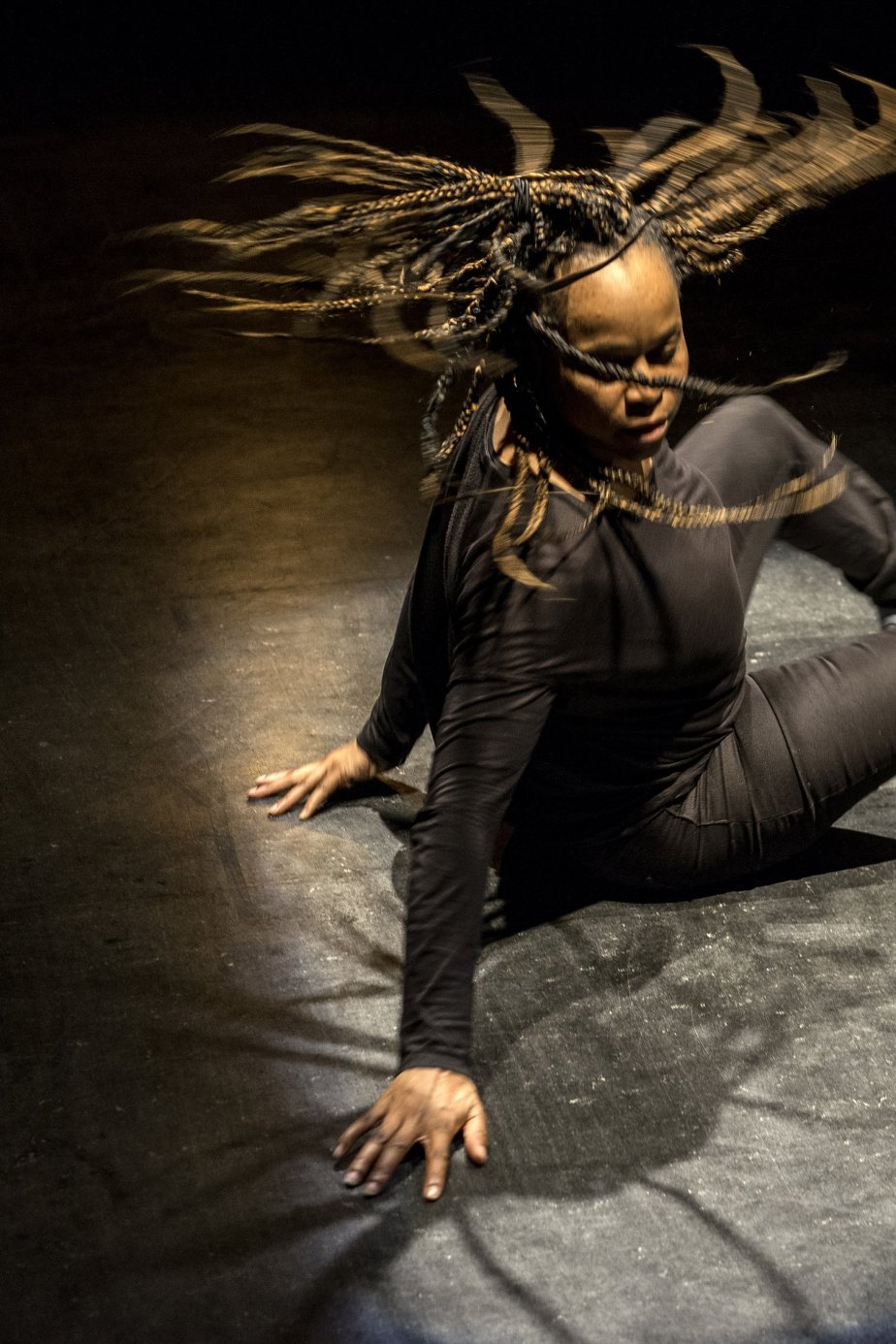
Pauline Mayers is a Rambert Ballet trained dancer, a choreographer, a writer and a theatre maker. She is a Hackney girl who has travelled the World as a dancer. She is a women of a certain age who has lived through significant  physical injuries and the emotional pain of depression.  She is a performer and an experimenter and an explorer. She is a black woman who has had a mixed response from the dance world about having a black body  to channel ballet through. More recently she has also experienced the closed doors that often greet an older dancer.

Talking to her in interview recently and watching her perform this  evening there is an undoubted warmth and engagement with others that is striking. As she opens the show her gaze attempts to connect with each member of the audience with a white hot intensity. This will draw in many audience members but for some may prove uncomfortable to fully engage with.

What If I Told You? uses theatre, movement and dance to explore prejudice and the conscious and unconscious assumption around skin colour. The piece weaves elements of her personal history and dance experience with the story of Dr J.Marion Sims often referred to as the father of modern Gynaecology. 

Dr Sims practised medicine in the nineteenth century and made major discoveries in the field of Gynaecology. His work was and remains highly controversial as he used black slave women as his subjects and refused to use anaesthetic deeming them less able to feel pain than white women.

The piece uses audience interaction and participation throughout. It is most powerful as we recreate a montage of a painting of Sims with Anarcha (a patient he experimented on many times), and two other white doctors observing while two tramatised black women peek through a curtain to see what awaits them. This is the impact of the piece that has stayed with me. Imagining that Anarcha might have been Pauline and seeing a lovely young black woman I know who could have been waiting her turn. Sims and another doctor were portrayed by white middle class men I also knew. It was deeply unsettling to imagine whose shoes we might walk in, in another place or time. 

There are some very rich moments to observe and there are some lovely interactions and connections as the audience participate in the movement of the piece. There is however a frustration that in weaving these elements together so much there is a risk that the piece loses some of its impact. An hour limits some of the storytelling when we also are participants. Pauline is so engaging I wanted more of her and less of me!!

Koan is a Japanese word for public thought. Its the audience thinking and speaking and reflecting together. Its a radical act of self care and empowerment. 
The Koan completes the second half of the show and is led by poet Khadijah Ibrahiim. Koan is a Japanese word for public thought. This is an important part of the piece as it is an exploration of subjective experience and a continuation of sharing what is “sameness” as opposed to “otherness”. 

The genuine hope in What If I Told You? is that each of us leaves the space with a keener and more empathic perspective on our neighbours. 

“There are periods of history where skin colour is used as a means to separate and disconnect us. I really feel what hurts you, hurts me. We are all human beings. There is only one race.”
This is a very personal piece. Pauline says it is an invitation to walk in her shoes for an hour. As with any subjective experience this will be more potent for some than for others. This is undoubtedly painful and chilling at times however it is also celebratory. Having stubbornly fought to be recognised as a black dancer and struggled with the loss of that career this show is also a homecoming. Theatre has welcomed her as a performer and story teller and her joy and appreciation is evident in this piece.

SHOWING 19/20 JUNE


Persuasion

wp-image-1261629296.jpg

Caroline Moroney, Samuel Edward-Cook and Cassie Layton in Persuasion. Credit Johan Persson

Royal Exchange, Manchester

By Jane Austen

Adapted by Jeff James with James Yeatman

Directed by Jeff James

Persuasion might just be close to Perfection. This modern take on a two hundred year old Jane Austen novel by Jeff James is a gloriously uplifting froth fest. In the beautiful old Royal Exchange building sits a perfectly placed modern theatre and inside it James amps up the volume on a brilliant Frank Ocean soundtrack and ditches the bonnets for bikinis and the breeches for speedos.

“Penelope, turn the music down! I can hardly hear myself think over your harpsichord!” The opening line sets the tone for this production. This is a sharply observed perceptive rom com which uses Austen’s analysis of constancy in love and marriage. Married Mary is shrewish and discontented,  true to the original and yet as easily at home in John Lewis or the Knutsford Aldi. Sir Walter is narcissistic and fighting his advancing years like a bare-chested Mick Jagger strutting round Cannes rather than taking the waters in Bath. The deliciously carefree Louisa and Henrietta are every naïve young girl out for a good time seduced by the idea of love rather than the reality.

Alex Lowde has created a stunning lightbox platform which scissors out to function as a a kind of fashion catwalk for a sports/luxe collection S/S2017 and an Essex nightclub. The high point being when the tide comes in and high spirits and wanton ways flood the stage in a stunning spectacle which probably has most of the audience contemplating joining the cast on stage.

The strong sense of camaraderie is apparent from early on. The cast sit in the auditorium merging into the audience and casually strip down and change costumes so it seems like  we have joined them in their dressing rooms. The result is spontaneous applause as Anne and Wentworth finally get it together.

The whole cast seem to be having a blast. Man mad Cassie Layton and Caroline Moroney  can sparkle and fizz with energy or sway on the dance floor like mannequin autobots.  Samuel Edward-Cook and Lara Rossi are convincing as the lovers hoping to reunite even as Anne struggles to “want to want again”. The whole production has great comic timing and uses Austen’s dry wit to great effect.

Love and Constancy win the day as a mature, reflective Anne who can also dance like a demon and flick irritants off the stage, gets the relationship she wants. Persuasion is all about the love and the importance of trusting ourselves in decisions of the heart. That is as relevant today as in Austen’s lifetime.

At The Royal Exchange until 24 June