Hobson’s Choice

Shalini Peiris and Esh Alladi in Hobson’s Choice. Credit Marc Brenner

Written by Harold Brighouse

Adapted by Tanika Gupta

Directed by Atri Banerjee

In this new adaptation of the 1915 classic, Tanika Gupta has moved the setting from a cobbler’s shop in Salford to a tailor’s shop that is vibrant with silk saris. Set in Eighties Ancoats, Hobson and his three daughters are Asian Ugandans who fled the regime of Idi Amin and have spent the last 15 years building a life and a business in the Britain of Ted Heath who had welcomed 30,000 refugees. Using sparkling dialogue and a clear understanding of the original Gupta honours the familial relationships established by Brighouse while ensuring that the societal themes remain fresh and current.

The set design by Rosa Maggiora blasts colour and a keen sense of detail into this production. Director Atri Banerjee brings a lightness of touch to this production insuring that the witty dialogue sparkles throughout. His experience at the Royal Exchange is evident in how he uses the space. He creates an intimacy and a sense of participation for the audience. Wedding favours are shared out during the interval creating a lovely sense that we are participants in the wedding celebration. The catwalk triumph of Asian Chic serves as a joyful finale and also as a celebratory parade of all the actors.

This is a really strong cast that brings an absolute authenticity to this production. We see young women wearing mini skirts and dancing in The Hacienda, rebelling against a father who tells them to “Live within your boundaries. It’s a Man’s World.” There is the destructive theme of racism from Enoch Powell’s Rivers of Blood speech that still resonates today. Hobson has slipped into alcoholism and his best tailor works for a pittance because he “is the lowest of the low”, staying because “Your Papa has my passport.”
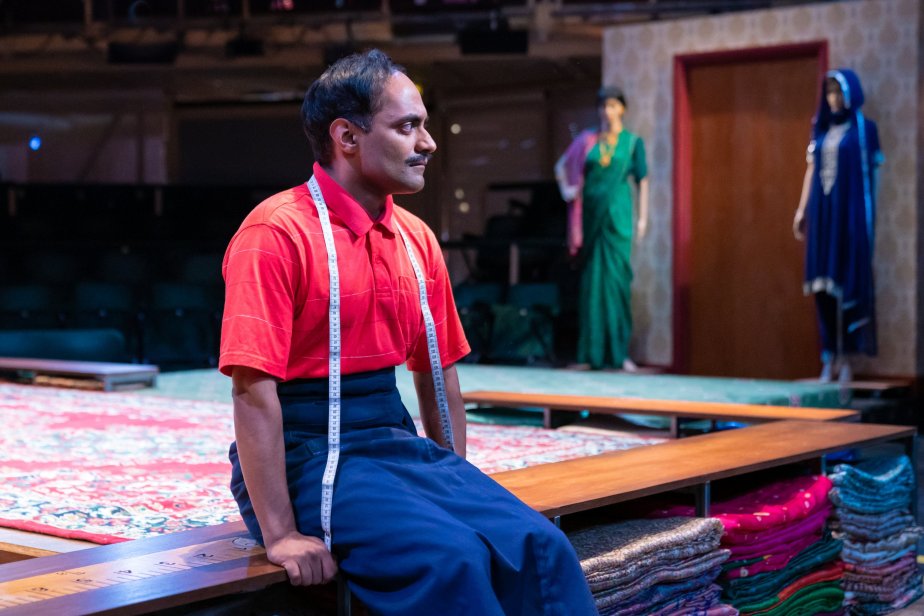
Esh Alladi as Ali Mossop. Credit Marc Brenner

Esh Alladi is utterly engaging and believable as the shy downtrodden worker full of twitches and tremors. There is real delight in watching him grow in confidence from tentative bridegroom to a loving husband and a budding entrepreneur. Shalini Peiris as Durga Hobson is cooly decisive and resourceful. There is no self pity for her situation instead she ensures the best possible outcome for herself and her sisters. Peiris skillfully balances being both a funny and blunt force of nature with the delicacy and vulnerability of being a new bride on her wedding night.

Tony Jayawardena as Hobson gives a performance full of bluster, self-pity and patriarchal arrogance. He embodies a man living in complete denial who has slipped into alcoholism and is facing bankruptcy and the loss of his family. Even when Hobson is at his most outrageous Jayawardena still brings enough warmth and charm to his character that his daughter’s return involves residual affection and not just duty or ambition.

This new adaptation is a real success that brings the issues of intergenerational conflict, class snobbery, alcoholism and immigration into sharp focus while never feeling preachy or worthy. Over one hundred years since the original opening night, Hobson’s Choice remains relevant, engaging and thought provoking.
Royal Exchange 31 May – 6 July 2019

GRAND FINALE

Choreography and Music by Hofesh Schechter

Performed by Hofesh Schechter Company

HOME

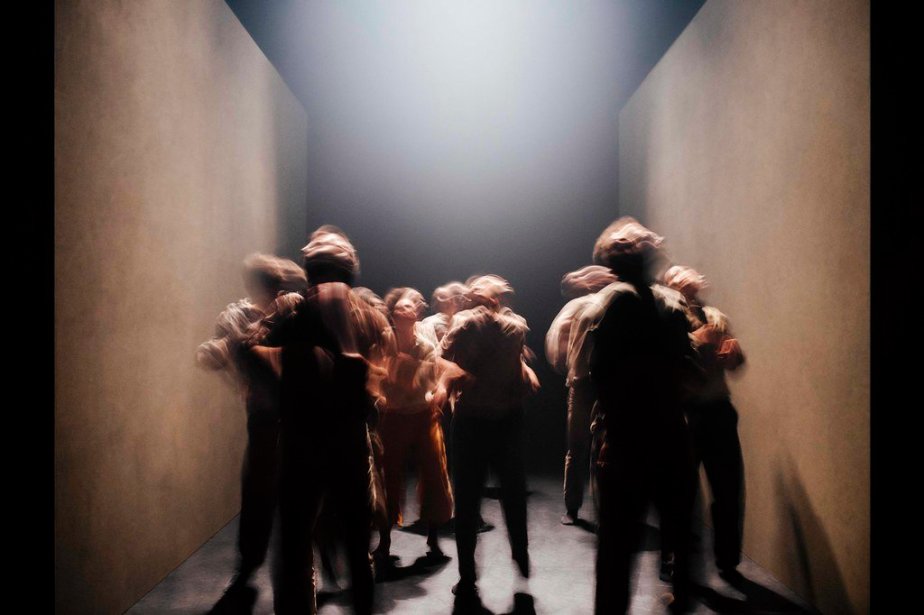
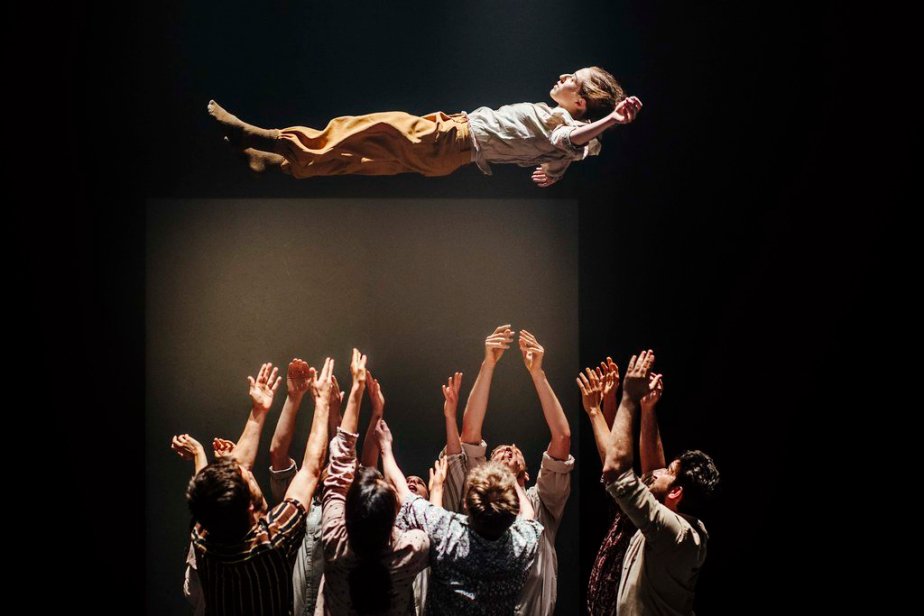
Hofesh Schechter has created a world both nightmarish and blissfully optimistic in Grand Finale. His latest work is defiant, mischievous and brutally beautiful. Part gig with a small orchestra onstage; dance and theatre merge with the same seamless fluidity that allows monolithic slabs to both create a sense of endless time and club land rave scenes. Grand Finale is both an anguished salute to lives lost in destruction and war, and two fingers held up to the doomsday predictors. The musicians are integral to the flow of the piece. Ever present though always on the move, they are formally attired and one even sports a life jacket as if to allude to the musicians who played on as Titanic sunk.

We can all dance to the same beat but sometimes we may hear a different unique beat in the same music and so we separate as individuals and respond in a myriad of ways. So it is with Grand Finale, Schechter’s dancers come together and replicate movements, their bodies harmonizing in unison and at another times they clash and jar with seemingly murderous intent.

Perhaps Schechter‘s greatest skill is in how he uses dance and music as unifiers. There is a universal commonality in the throbbing beat that seems to connect with one’s own body – the movements you see on stage can feel as though they are simultaneously experienced in your own muscle memory. Moments from rave scenes feel intensely familiar then flow into Celtic dance or Maori Haka or riotous dance to klezmer music. This is modern yet ancient, ageless and current.

The blend of sound and light by Schechter and lighting designer Tom Visser is beautiful. Beams of light illuminate upturned faces as though kissed By the sun. Grey gloomy mist can signify Dawn or the dry ice of a nightclub. At other times it seems like there is the red dust of African plains which may be the fires of Dante’s Inferno. They are glorious playful moments as hundreds of bubbles drift down like snowflakes unto the battlefields of No Man’s Land at Christmas time. Here figures dance like marionettes and later with gay abandon to Franz Lehár’s Merry Widow Waltz as worries are cast aside culminating in a chilling end piece as a pile of bodies grows at the side of the stage and is silently saluted.

Scenes start to get smaller and more specific as they fragment into tableaux scenes that echo snapchat or Instagram poses. Figures embrace, party or pray as the dance slows down and the orchestra gets softer and starts to fade. Are these open mouthed figures aghast in horror or yawning with ennui as everything changes and yet still remains the same?

Grand Finale 22nd – 25th May 2019

Hofesh Schechter Company

Images by Rahi Rezvani

RICHARD III

Written by William Shakespeare

Directed by John Haidar

Shakespeare’s tale of the “undigested and deformed lump” that is his Richard III is considerably tweaked in this version by John Haidor for Headlong. Here we see a man more emotionally stunted than physically restricted by his disability. Tom Mothersdale delivers a Richard whose twisted body is as fluid as his nature is mercurial. The hall of mirrors that dominates the set serves as judge and jury to Richard’s lack of conscience and reflects back to the audience as a means of drawing us into this tale of political greed, narcissistic ambition and false news.

Mothersdale manages to repulse and charm in equal measure. His capacity for brutal acts and honeyed words is that of a true sociopath or charming manipulator. Moments of visceral violence as he bites his victims with the suddenness of a deadly spider sit uncomfortably alongside humour as he mischievously addresses the audience close up or prances with a makeshift crown like a gleeful child ransacking the dressing up trunk. For all his cunning and remorseless violence there is the vulnerability of a child who recognizes his mother is ashamed of his twisted body and repulsed by his twisted nature. Director Haidar ensures that we see this wounded child who has long ago decided that if he cannot have the love and admiration of others, he will command their hate and fear. Mothersdale captivates throughout in what is a truly demanding role. Rarely off stage he is never less than electrifying especially in the second act when demented by jeering ghosts he sees his fleeting success melt away on the battlefield. Bloodied and mud stained he smears mud across the reflected ghosts as if to wipe out any hint of his own wrongdoings.

Chiara Stephenson has designed a set that is gloomy and forbidding in its grey ramparts and dungeons but cut through with reflective mirrored archways. These arches allow actors to move rapidly between scenes while also creating depth to the set as the ghosts appears behind them and the audience is reflected in them looking at ourselves just as Richard examines himself in these multiple looking glasses.

Haidar makes use of every possible dramatic element that can be drawn from this gothic castle. Stony grey yet pulsating with life and bloodied by death this is a building that echoes its history in every mirrored arch reflecting lives once there and now just ghosts in the fabric of the building. The use of light and sound by Elliot Griggs and George Dennis provide striking flourishes that give the murders and battles scenes slashes of colour and sound that evoke video game violence- perhaps to suggest Richards own childlike lack of awareness of the real consequences of his actions. If at times elements appear overplayed or exaggerated they encapsulate Shakespeare’s original exaggeration of the real man. Whether you love it or not the impact of the attention seeking design elements and directorial flourishes are as in your face as Richard himself.

This feels a very fresh and timely revisiting of Richard III. There is a truly monstrous quality to this character in his relentless quest for political power. The wily cunning off an ambitious man who exalts in having neither pity love or fear is a chilling reminder of some of our politicians who make decisions for us based on their own fragile narcissistic egos and lust for power. Like Richard they strut across the world stage daring us, the audience, in how much we will allow them to destroy before we revolt and them down. Personally there are quite a few political anti heroes I would love to see buried under a carpark in Leicester!

Headlong

HOME 30 April – 4 May 2019

Images by Marc Brenner

West Side Story

ROYAL EXCHANGE THEATRE

Directed by Sarah Frankcom

Initially conceived by Jerome Robbins in 1949, WEST SIDE STORY finally arrived on Broadway in 1957. A resounding hit, it was made into a movie in 1961 and has remained an iconic and groundbreaking musical ever since. New versions are in production for Broadway and cinema, but the first big production to makes changes to the choreography and score is this Sarah Frankcom version.

Based on star-crossed lovers Romeo and Juliet, this tale of thwarted love amidst gangland violence and knife crime is as horribly relevant in modern British cities as it was in 1950s Manhattan. It speaks so vividly of young people adapting to their burgeoning independence in a world where they may struggle for acceptance. This tale of gangs is evergreen in that it perfectly depicts the human quest for social identity. We all seek a sense of belonging and to affirm this we adhere to an in group which might be family, social class, a gang or a football team. To increase self esteem we discriminate against the out group, the more prejudice and seperateness then the greater enhancement of self image. The beauty and the tragedy of this has resonated throughout the ages and in every culture. In my teenage years it was Catholics and Protestants in Northern Ireland where boys were knee capped and girls tarred and feathered if they dared to fall in love with someone outside their religion.

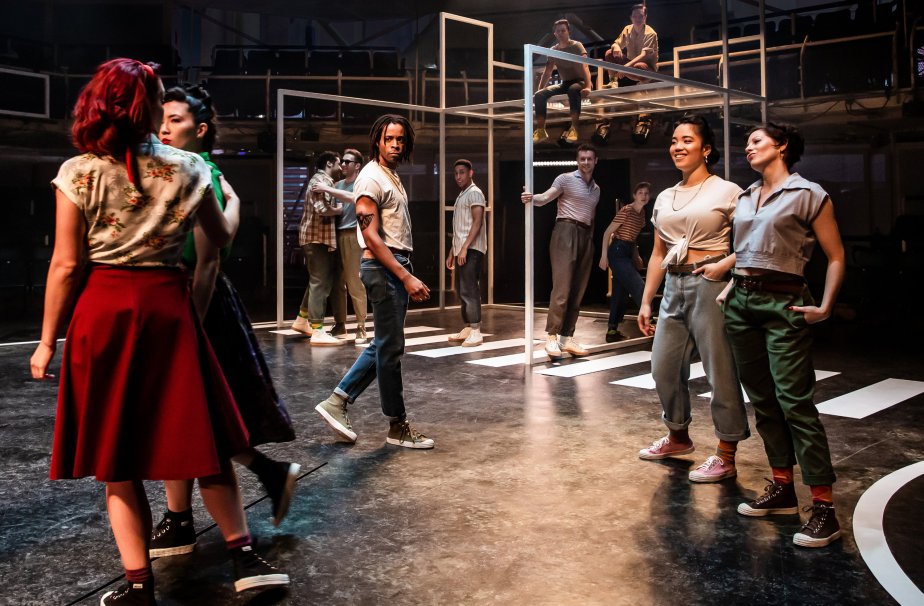
The set design by Anna Fleischle is all clean stark lines of white steel and glass, like possible staging for A Clockwork Orange. Although beautiful in a minimalist manner it initially seemed too cold for this tale of passion. There is no context or sense of location which is disconcerting yet highly effective as a potent reminder that this story is ongoing – here in the theatre and outside in every town and city.

This set also works brilliantly with the new choreography by Aletta Collins. She has kept the beauty of the original but adapted it for the round stage and added a fresh athletic element that sees the performers really use the multi levels of the set with cat like grace and agility so there is almost an element of Parkour in the choreography.

Jason Carr has ensured that the music really is the star of this production with an orchestra concealed outside the theatre itself delivering a glorious version of Bernstein’s score. Every note seems flawless and crystal clear as though the orchestra was actually centre stage.

The cast exude the confidence and youthful exuberance of teenagers with a lust for life and a casual disregard for the brutal reality of death until tragedy actually strikes. There are some great vocal performances. Gabriela García as Maria has a pure soaring operatic vocal while Andy Coxon as Tony has a rich warm voice which grows in confidence throughout the show. Gang leader Riff Michael Duke is a powerful dancer but it is his lover Anita, Jocasta Almgill who steals the show. A brilliant singer and dancer, it is also her stage presence which ensures she exudes both passion and compassion.

The central protagonists Coxon and García have do have great chemistry as the lovers torn between two worlds. The love scenes are full of tenderness and the reckless passion of teenage hormones. The rumble scenes and resulting deaths are impactful and exude horror and regret at the wasted young lives. The overall feel of this production is that it is a beautiful and lovingly crafted yet I left feeling curiously flat. Perhaps as Maria says It’s not Us, its everything around us, the knowledge that our young people appear destined to keep repeating the same mistakes in an unyielding world.

Royal Exchange Theatre 6 April – 25 May 2019

Images by Richard Davenport: The other Richard

KINGDOM

HOME

Created by Àlex Serrano, Pau Palacios, and Ferran Dordol

Agrupación Señor Serrano

HOME has a marvellous flair for showcasing pieces of theatre that excite and assault the senses. KINGDOM is a perfect example of irreverent, loud and brilliantly clever theatre that ramps up the energy and has a theatre audience feel like they have just come out of a hi-energy gig. Co-produced by HOME this UK premiere of this Señor Serrano show is a fabulous and fruity part of the 25th VIVA! Festival.

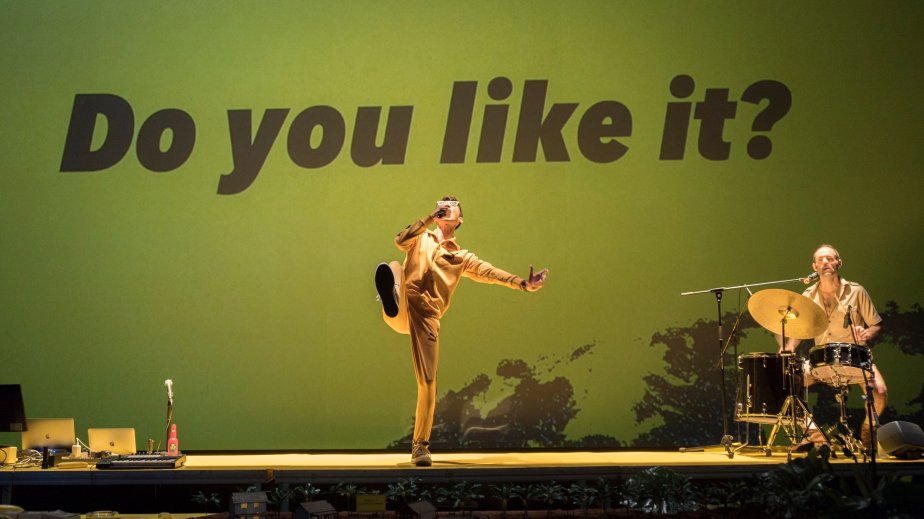
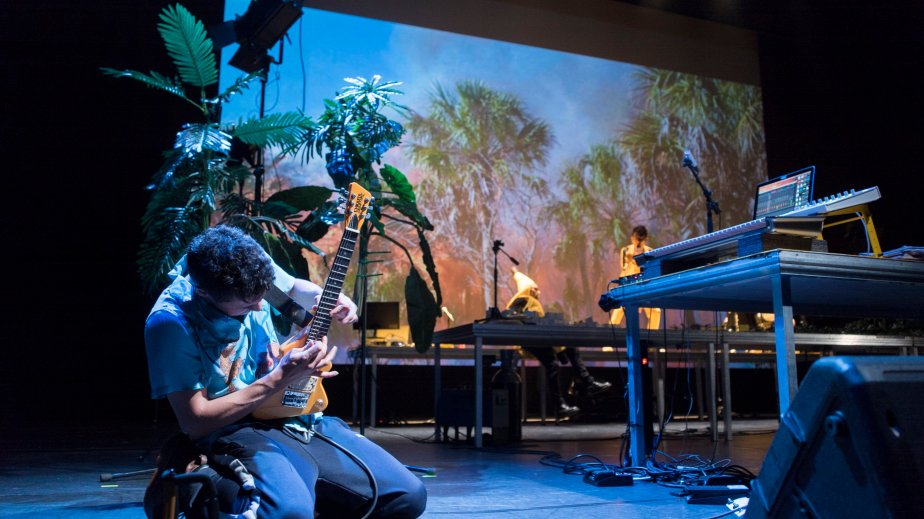
Staged with long tables of archaeological or architectural like exhibits, alongside fruits, foliage, booze and fags with chain smoking macho men in front of a giant projection screen. The performers’ casual demeanor suggests no rush to even start the show yet the overall effect is gripping. Before anything even happens all eyes are on the stage attempting to drink in all the props and their possible uses.

This is a story of the cycle of demand, consumption, crises and insatiable desire. The history of the humble banana, its discovery by Minor Cooper Keith in 1876 and its introduction to the Western world and subsequent growth as a plantation crop leading to overproduction, crop blight and world financial crises. The growth of the banana from fruit to iconic superfood, mans’ fascination with King Kong and machismo are threaded through the growth of capitalism and consumerism. So many ideas and concepts packed into a one hour show should produce an scrambled mess yet somehow what emerges is thought provoking and energizing.

Using a unique blend of video, performance, scale models,dance and live music Señor Serrano are masters of their craft – creating cinema-in-real-time. The skill and artistry and nonchalant ease with which they intricately film tiny models of railroads and bananas highlighting the onward march of consumer greed. The impudent glee as a human hand starts moving into the footage or a performer sprays himself with a plant mister to appear sweaty in the jungle foliage. Old newspaper covers with moving film images in the columns and TIME magazine covering celebrating everyone from King Kong to Hitler, Tarzan and JFK. Every tiny movement is meticulously accounted for yet simultaneously these performers are playing instruments and dancing around with infectious energy.

The result is phenomenal as this tale of greed and disaster grows so too does the energy and pace of this piece. By the end the stage is filled with more bare chested posturing macho men dancing to an ever louder beat as confetti cannons shoot euros into the audience. Is this theatre or a utterly brilliant night on Canal Street? It’s certainly memorable and as we are repeatedly told, Estamos bien, estamos bien.

HOME 9th – 13th April 2019

Señor Serrano

Images by Vicenç Viaplana

Barber Shop Chronicles

ROYAL EXCHANGE THEATRE/CONTACT

Written by Inua Ellams

Directed by Bijan Sheibani

Ropes of light like tresses of a weave overlap and knot into bunches as they encircle the gallery of the Royal Exchange – the result is a kind of messy beauty that intrigues. Untangle it and it might be neat and tidy but somehow less than it was before. Such are the tales from 6 barber shops ranging from Peckham in London to Lagos, Johannesburg and Kampala. Writer Inua Ellams understands the value of the barbers’ chair as a confessional and uses it to chronicle the communality of black male global experiences. In a trip that criss- crosses timezones and cultures Ellams takes a razor sharp look at mental health stigma and the struggle with identity, racism and integration.

Barber Shop Chronicles is a riotous, colourful affair full of life and bristling with energy. There is music, singing, dancing, universally familiar bar room jokes, and there are haircuts to fit births, deaths marriages and job interviews. Every shop has the obligatory chair and mirror in which to relax and contemplate your inner world and your outer appearance. Every shop has men chatting about football and their favourite team, reminiscences about countries left behind or expectations about those to be visited. Politics and politicians are scrutinised and families are spoken of with affection or with hurt and frustration. The brilliance of this beautifully constructed drama is the little stories told and the small kindnesses demonstrated that are always present in every shop in every city.

At the heart of this work is the need for communication and the sharing of experiences. It is a basic human requirement for good mental health. Sadly statistics suggest that in Britain black men are 17 more times likely than their white equivalents to be diagnosed with a serious mental illness and young black men are six times more likely to be sectioned. At one point a young man questions how to appear as a strong black man while acknowledging the absence of his own father since he was six. Emmanuel, his barber quietly reflects on the core of this dilemma as he speaks of men living outside our countries often failed by our fathers and our politicians. In understanding the value of vulnerability when letting someone touch you with a razor Ellams approaches his characters like a barber, from “a place of delicacy, of gentleness, of absolute trust.” The result is a perfectly pitched script that speaks a language as universally valuable as the Nigerian Pidgin that cuts through any need to go through English to understand each other.

Royal Exchange Theatre and CONTACT

Co-produced by Fuel, the National Theatre and Leeds Playhouse

Royal Exchange Theatre 7th – 23rd March 2019

Images by Marc Brenner

Wise Children

HOME

By Angela Carter

Adapted and Directed by Emma Rice

An Old Vic and Wise Children production

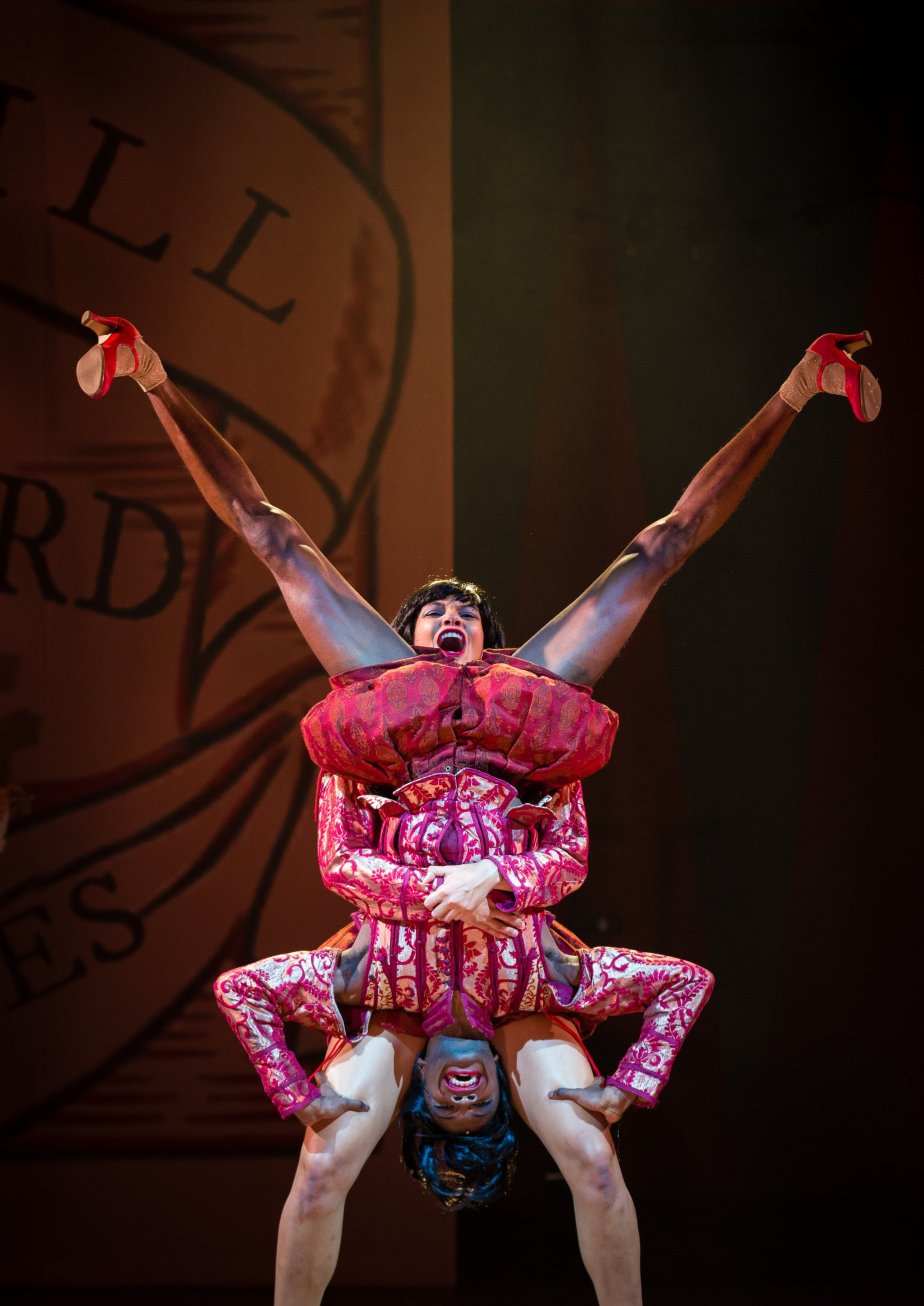
Wise Children is the first production from Emma Rice’s new company, also named Wise Children. Eagerly awaited after her huge success at Kneehigh Theatre and her departure from Shakespeare’s Globe; this production packs a hefty punch of gleeful mischief and playful exuberance. A huge fan of Angela Carter’s magical realism, Rice clearly delights in bringing this sprawling tale to the stage. It is a love letter to the theatre, to family, to Shakespeare and to growing old disgracefully.

Just like the characters depicted on stage, the stage design and costumes are teaming with vivid colour and layers of detail. Designer Vicki Mortimer has created a magical world that centres around a delightfully retro caravan that encapsulates the life and the history of Nora and Dora Chance. Ever present and ever changing it is a treasure trove that excites and enthralls with each reveal. The costumes are beautifully detailed and bring alive not just a history of theatre on stage but a history of life running through two world wars.

The actors on stage act, sing, dance, play instruments and use puppetry with all the enthusiasm and flair one might expect of the vaudevillian theatre era they are celebrating. This is an incredibly talented and generous cast that look like they are having a blast onstage. The story has the characters aging through 100 years of this theatrical dynasty using a blend of puppetry to actors of different ages, sexes and ethnicities to represent all the twins. Playfully alluding to Shakespeare’s love of switching the sexes in so many roles, Rice also demonstrates that the ageing process comes to all of us and what we look like on the surface is eventually irrelevant in this carnival of life.

The choreography by Etta Murfitt blends slick dance routines with circus gymnastics while the sex scenes are an earthy mix of outrageous smut and joyous tenderness. The musical numbers range from Sinatra to The Andrews Sisters to Eddy Grant and Cyndi Lauper. Each track chosen, perfectly encapsulates a scene and its era. There are some beautiful vocals particularly on the more poignant numbers.

This sprawling tale flows like the champagne and stout so frequently imbibed as it moves north and south of The Thames and front and back of stage guzzling up life events both sublime and agonising. Carter and Rice are both true wise children as they share the capacity to capture tiny moments and shine a light on them that is both hyper real and magical.

At HOME 26 Feb – 2 March 2019

Images by Steve Tanner

A Skull in Connemara

Oldham Coliseum

Written by Martin McDonagh

Directed by Chris Lawson

A Skull in Connemara is a fine example of Martin McDonagh’s use of gallows humour to portray the brutal realities in small town life. He has an uncanny flair for making the ordinary seem extraordinary by placing vivid characters in subversive situations to create unnerving dramas that absorb and captivate. First shown in Galway in 1997, this new production directed by Chris Lawson is a deeply satisfying watch and is beautifully staged.

There are four characters on stage each one vividly brought to life by a very strong cast, and then of course there are all the additional characters invoked by their skulls with each one telling their own story. This is a small rural community where fact and fiction are often blurred and never get in the way of a good story. Everything about this production looks and feels and sounds authentic. Having myself grown up in a rural part of Ireland the characters are instantly recognisable as are the bleak tales of deaths caused by alcoholism or from farming accidents with slurry tanks and combine harvesters.

This is a world where 5 year olds are not easily forgiven for peeing in the cemetery and are described by Maryjohnny as a pack of whores clearly destined to burn in hell as she happily sups poteen and shares the comfort of a peat fire with a man who she believes has murdered his wife. Such are the constant disparities in this piece which deftly throws curve balls at the audience with the same regularity that Mick digs up corpses.

John O’Dowd is perfectly cast as the tightly coiled, inscrutable widower Mick who is tasked with the ghastly task of digging up his own wife. Impossible to pin down what he truly thinks or feels, he allows the other characters the space to relax and reveal their own truths. The interplay between him and the naive, younger men still grappling for excitement and validation is beautifully played out. The genius moment perhaps being the skull battery scene played out over a soundtrack of Dana singing All Kinds of Everything only matched in film terms by Tarantino’s ear scene in Reservoir Dogs.

Katie Scott who recently did such a clever job with the set design on Sparkplug has perfectly captured an old Irish kitchen complete with distempered walls an peat fire. The trapdoors and mounds of dark earth make this graveyard eerily real as the spade thuds down on decaying coffins. The scene shifts between kitchen and ghostly graveyard with lopsided Celtic gravestones is startling and truly beautiful.

This is fabulous story telling with a rich, meaty dialogue filled with Irish profanities and colloquialisms. Directed with a real understanding of McDonagh’s work this is an assured production that can charm and repel in equal measure but will always enthrall.

Oldham Coliseum 22nd February – 9thMarch 2019

Images by Joel Chester Fildes

Mother Courage

Royal Exchange Theatre

Written by Bertolt Brecht

Adapted by Anna Jordan

Directed by Amy Hodge

The 1939 Brecht original is a searing indictment of capitalism and an unemotional view of how individual characters respond in an unrelenting warzone. There is little space for warmth, humanity or collaboration in Mother Courage. This new production is born from writer and new mother Anna Jordan wanting to adapt the play and collaborate with Director Amy Hodge from Headlong and Julie Hesmondhalgh who had approached Sarah Frankcom about playing this iconic role. This is a collaboration of strong, feminist women and perhaps a timely reminder that we are all stronger pulling together than at war.

The outcome is a Mother Courage that is at times almost unbearably complex. Strong and sassy as hell, an immoral opportunist, a slippery wheeler/dealer, a proud, protective mother that can suffocate and infantilize her children but who cannot empathize with suffering and can only demonstrate her love through providing functional things rather than emotional warmth. The sheer complexity of her character is intentionally uncomfortable forcing the viewer to ask of themselves “What would I do in that situation? What am I capable off?”

Julie Hesmondhalgh has a huge undertaking as her natural warmth could easily feel at odds with Mother Courage. However there is no doubt that she relishes the role. At times unbearably heartless to those who get in the way of her ruthless and desperate pursuit of financial security, she is always a pragmatic Mother and the ultimate survivor. Bartering for her son and ultimately causing his death appears unforgivable yet it is a “Sophie’s Choice” as with no money and no van then the family would all perish. Though utterly distasteful in her lust for the next big deal, there is something unbearably childlike in her capacity to find a thread of good in the bleakest of circumstances. When Kattrin is raped and disfigured, her mother “comforts” her that now she is ugly no one will rape her again, while herself utterly alone and dragging the husk of the van, she reflects that bereft of all children it is lighter to pull.

Director Amy Hodge draws some strong performances from the cast and they all benefit from a wonderfully naturalistic script by Anna Jordan. However the standout performance is from the mute Kattrin played by deaf actress Rose Asling-Ellis. “Her heart is a shining star,” and that is evident as we see the world reflected through her eyes in the midst of all the misery. Her performance is just glorious, conveying more than words could possibly express in the smallest of gestures. A scene where action carries on elsewhere, she sits in the van side of stage carefully arranging her hair to cover her scars and every movement is perfection.

Anna Jordan shifts the action from the 17th century 30 year war to a dystopian future where its 2080 and both Europe and technology have vanished. This is a bleak, barren setting where the red and blue armies fight for space on a grid. With the demise of the E.U. there are no longer emotional connections to countries just a nameless land mass. Striding through this unforgiving setting is the eponymous Mother Courage with her 3 kids – 4 if you factor in her beloved van. Rough hewn cardboard sheets above the stage inform of each scene as do the disparate characters who introduce the action ensuring in true Brechtian fashion that the audience is not misled about what is about to unfold.

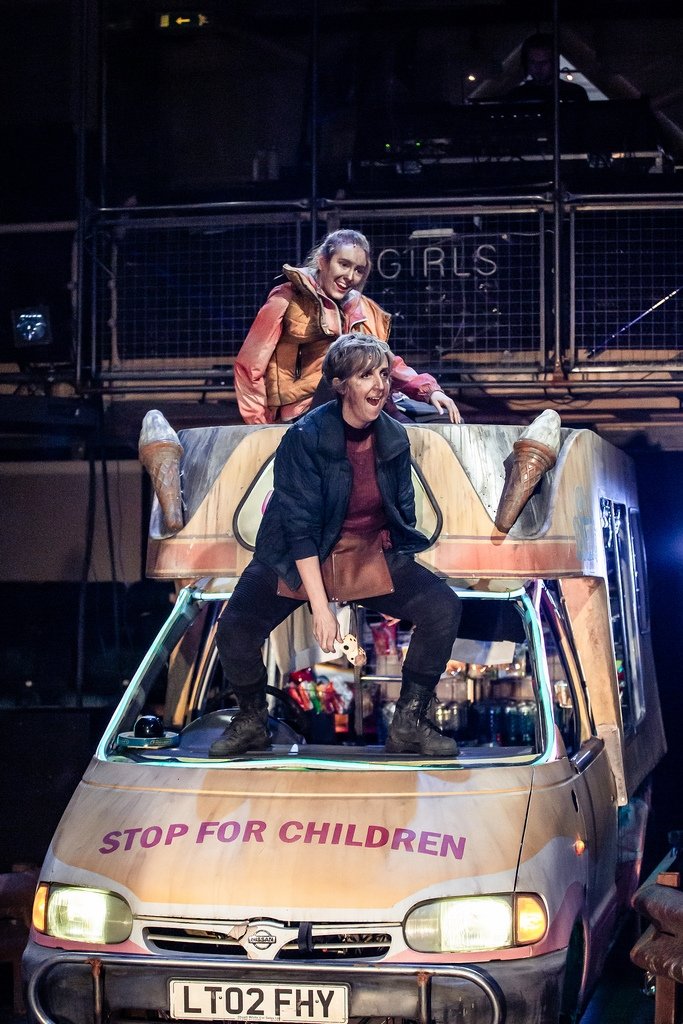
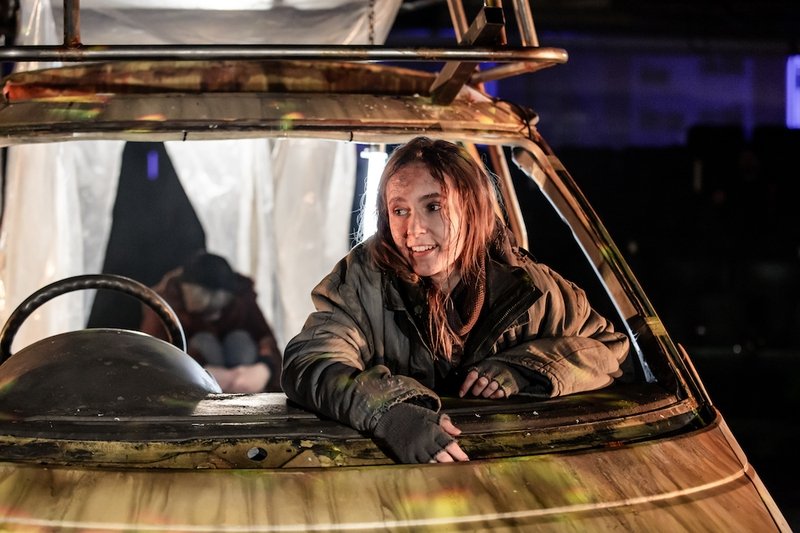
The set design by Joanna Scotcher works really effectively. The battered ice cream van is an inspired choice being a welcome reminder of childhood and safer times yet a sinister refuge that is also burger van, provisions cart, brothel and armoury. The course of the war is perfectly reflected as it is gradually stripped back to a skeletal husk. The oil drum effectively serves as podium for Hedydd Dylan’s insouciant whore, and later in the most beautiful scene it burns brightly as Mother Courage has her final poignant moments with Kattrin.

There are issues with this production, mainly the jarring nature of some of the musical numbers which although are intended as discordant often simply just don’t work at all. The musical number prior to Kattrin’s ruin feels really unpleasantly at odds with that scene. Overall this production of Mother Courage is meaty and full of life- which is more than can be said for the bird MC tries to flog to the army chef!!

Royal Exchange 8th Feb – 2nd March 2019

Images by Richard Davenport

The Animals and Children took to the Streets

HOME

Written & Directed by Suzanne Andrade

Film & Animation by Paul Barritt

Music by Lillian Henley

There is nothing remotely “little” about the technical skill and artistic merit of what 1927 call “our little show”. The Animals and Children took to the Streets is a dark, cautionary tale cleverly combining story-telling with animation, performance and live music in an almost magically seamless manner. Performers and animated children and animals blend together to create a visual theatrical spectacle that is part graphic novel/part Pop-Up or Lift the flap children’s book.

The inhabitants of The Bayou Mansions on Red Herring Street are a disparate bunch of dissolute characters ranging from a man living with his horse, to another who sniffs women’s bicycle seats, to a 21 year old granny and pirate Zelda who leads one of the many gangs of children roaming the neighbourhood. Into the mix comes the pure hearted Agnes who arrives with her sweet little daughter Evie; hoping to save the local children with love and découpage. This naivety to the scale of the problem of children reared on vodka, borscht and tears ensures there will be no fairy tale ending to this particular story.

The story here is simple, but its brilliance lies in the stylistic delivery and the visual feast created by Paul Barritt’s film and animation coupled with the three performers’ seamless interactions with the animated characters. The audience appear spellbound by this picturebook story just as children might listening to The Pied Piper of Hamlin. In this instance the children are lured away by a sinister ice cream van and Granny’s Gumdrops which are a chemical cosh akin to a hefty dose of Ritalin.

Performers Felicity Sparks, Genevieve Dunne and Rowena Lennon each play a range of characters that they bring vividly to life. Despite the period look stylistically, there is a very current feel to this show that does not need to mention Grenfall Towers. The colour palette and use of live music creates the feel of an old silent movie. The delivery of the local characters is filled with acerbic wit and drips with the acidic knowledge that if you’re born in the Bayou, you’ll die here. Agnes Eaves radiates a hopeful innocence and then a growing terror that is reminiscent of Clara Bow while the mournful delivery and physical performance of The Caretaker evokes something very Chaplinesque.

This is an ambitious and assured production that hits all the right notes on the plink plonk piano in that window in The Bayou. It perfectly highlights the inherent unfairness of a Society where the odds are always stacked against the poor and the dispossessed. It is darkly subversive and yet it has warmth and charm as it also shines with the compassion and humour of humanity still present despite such a bleak environment.

HOME 6th- 16th February

1927 are an Associate Company of HOME

1927

All images by 1927