Blog

Letters To Morrissey

HOME

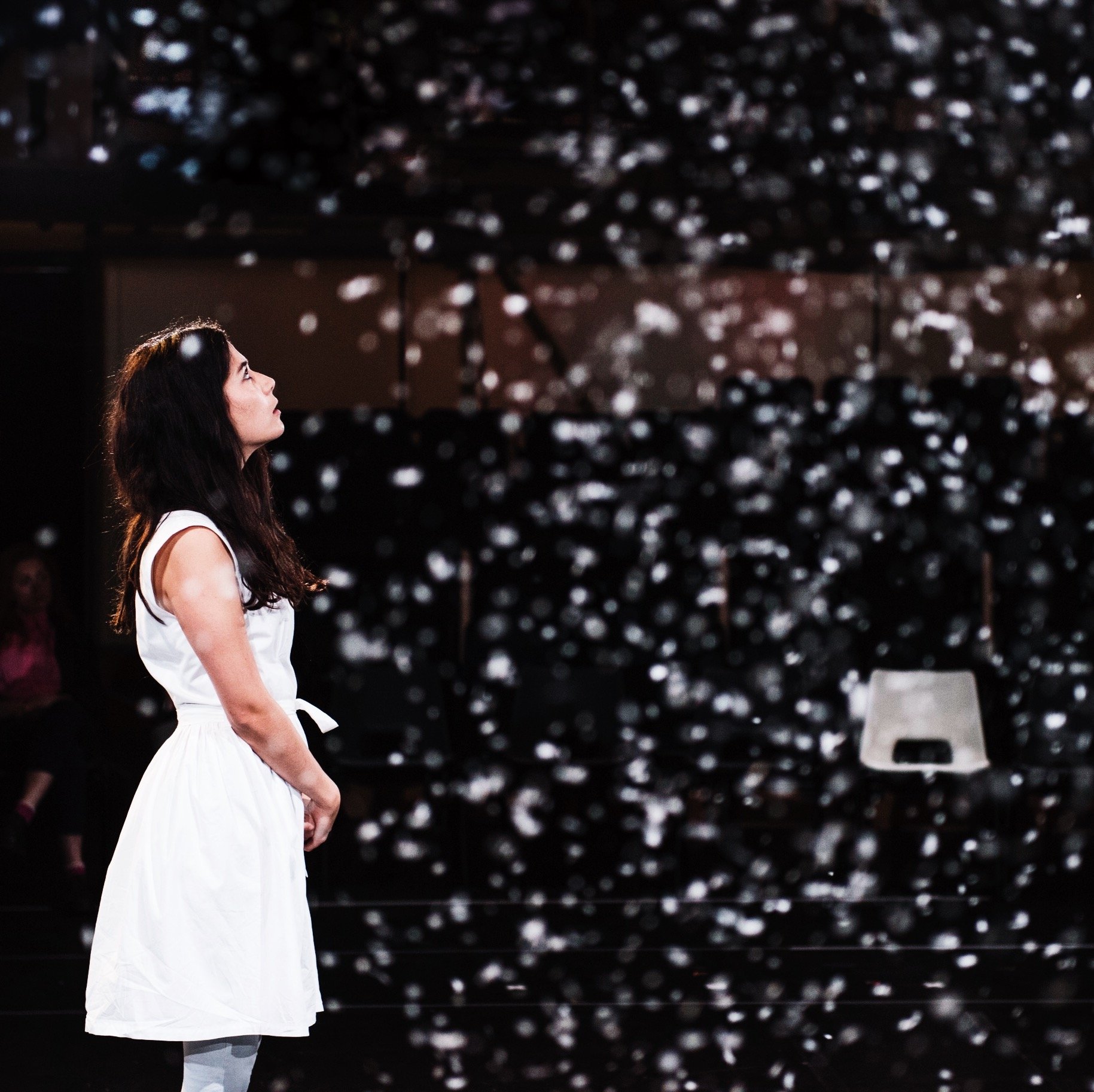
Letters To Morrissey is a poignant and acute observation of teenage angst and the internal world of a social misfit. Love him or loath him Morrissey has always evoked strong reactions and this 15 yr old writes letters to him in the desperate hope that his idol will guide him through an especially difficult period of his life. 

McNair does not shy away exploring and exploring the awkwardness and discomfort of a 15 yr old boy known in school as “Inky Pubes”. He is deft in his delivery of all his characters except the frustratingly elusive Tony who remains an unknown quantity. Perhaps the authenticity of McNairs’ delivery is such that it is too painful, too raw to truly bring alive this lost boy who is now forever lost.

Sitting at the Erskine Bridge looking back on his youth, a story unfolds of the hope of an always open door, “Come round anytime, you’re always welcome” to the loss of innocence and two friends either side of a door now firmly shut. The story telling is deft and warm and sweet and painful. If Billy Connolly had written and performed plays instead of stand up comedy then I think he might have aimed for something akin to this.

There is a delicious evocation of his enforced sessions with his School Counsellor who is perceptive but also shockingly indiscreet. He breaks all rules of confidentiality and overshares which creates some great bittersweet humour but also reassures an isolated boy that he is not alone in his uncertainty and distress. This creates an opportunity for McNair to open up on paper. These letters are never fandom but are expressions of confusion and fear. The desired reply never comes but the result is the same. By the process of writing answers are found and resolutions are enacted. As in therapy the process is about finding your own voice and being true to Self; having faith that sometimes doing a bad thing does not make you a bad person.

The staging is both simple and startling. The bedroom is filled with a beanbag chair, a record player, carefully tended albums and books on Oscar Wilde. The background of posters of Morrissey are dimly backlit and at other times dramatically illuminated with powerful flashing lights. This is most effective as Director Gareth Nicholls evokes Morrisseys’ Barrowland Ballroom gig in such a way that it feels like you are there standing in the moshpit with McNair and Jan the Lesbian.

This is a deserving winner of a Scotsman Fringe First award. It is an authentic insight into the teenage mind and a reminder of the fragility of the young mind in a time when mental health and arts provision funding is being decimated by our government. McNair reflects on his story by Erskine Bridge where more than 15 people commit suicide each year (£3.5 million has been spent on suicide barriers). Morrissey sang about “a light that never goes out”, perhaps as long as this play is touring that light is safe.

HOME Until September 16th

The Beggar’s Opera 


Image by Mark Carlin

STORYHOUSE, Chester.

Walking in to this brand new space is a delight. Wall to wall books surround huge tables to eat at and cosy spaces to sprawl in. The space is bright, airy and lively. Here to see the theatre, the rest is an unexpected pleasure; and also includes community meeting spaces, a story telling space for kids and a cinema. The theatre space does not disappoint. Welcoming and cosy it is in 500 seat mode surrounding a large stage, but can alter to accommodate 800. 

The glowing candelabras lower and a musician starts to play the harpsichord. A raucous Irishman ruptures the elegant period moment by lunging unto the stage as though stumbling in from the street and so opens The Beggar’s  Opera. Soon the stage starts to fill from all directions and the energy ramps up as Caolan McCarthy’s beggar leads this 18th century ballad opera firmly into 21st century Chester courtesy of  electric guitars and drums etc. The impact is vibrant and eclectic and feels like Vivienne Westwood, Tim Burton and Adam Ant are in the wings feeling delighted with this bawdy party.

Writer Glyn Maxwell  and composer  Harry Blake do a good job creating a modern day relevance to the piece and the audience are warmly receptive to the local references. The vocal performances are mainly strong however there are a few points when it is difficult to grasp all the lyrics particularly when singing en masse seem to blur the clarity of the vocals.

The staging is very effective and the lighting is perfectly atomospheric in every scene. The costumes are a joy and I’m tempted to see if you can check out costumes as well as books at The Storyhouse!

The performances are gutsy, visceral and ribald as befits these raffle taggle blend of thieves, whores and henchmen. Standing out is the earthy honesty of Lucy Lockit the pregnant jailers daughter who shines in the portrayal by Nancy Sullivan and her comic foil is Polly Peachum, the pretty and vacuous ingénue convincingly played by Charlotte Miranda-Smith.

As in the original the menfolk are weak dandies like the Captain or deplorable villains like Peachum and the jailer. The women are no better but their desperate circumstances remind us there are often limited choices in a society built oncapitalist greed and social inequality.

Artistic Director Alex Clifton has launched his programme for The Storyhouse with a bold and familiar tale and ensured that the story resonated with the local community. It is a really promising start in a great space for the largest repertory company aside from The RSC and The National Theatre. This is a promising opening chapter for The Storyhouse.

Leaving the bright and modern theatre on a busy Saturday night was a stark reminder of an unequal society. Passing noisy bars with drunken groups on stag nights and homeless men begging on the cobbles it felt like The Storyhouse performance had left the building and become a promenade performance  through the quaint dark streets of Chester.

From 11 May – 19 August


Gutted – HOME

So glad I saw this with you Caroline😊

unrestrictedviews's avatarUnrestricted views

Gutted - High-Res Image

Watching Liz Richardson in ‘Gutted’ puts me in mind of that old Roberta Flack classic: “Killing me softly with his song, telling my whole life with his words …” In a performance which is both subtle and brutally frank, Liz tells the story of her personal experience with ulcerative colitis – all of which feels horribly familiar to me, having myself been a victim of this disease a couple of decades ago.

The stage is set with three toilet bowls, from which, at various points, Liz extracts pro-biotic yoghurts: ‘good for the gut,’ she is told – as if they could halt the progression of this relentless disease. She presents her story largely through the voices of people she knows or meets – friends, relations, colleagues, nurses, strangers. With gentle humour and an extraordinary lightness of touch, she charts the life-disrupting hospital stays, the endless indignities, the pain, the shame…

View original post 304 more words

GUTTED

HOME MCR

Performer Liz Richardson

A co-production between The Conker Group and HOME

I first saw GUTTED in May 2016 and it was one of my favourite pieces at HOME last year. This is a show about the impact of ulcerative colitis on a young womans life On stage is Liz with some bunches of flowers and three gleaming porcelain toilets filled with food items. I’m fairly squeamish and I don’t especially like yoghurt or ketchup or brown sauce, yet here I am back to see this show again.

It feels impossible not to be drawn in by Liz Richardsons performance. She is understated and charming on stage, and wickedly adept at mimicry of friends, family and NHS staff. The performance is never preachy and perhaps also protects the performer by relying on much of Richardsons experience being relayed through the conversations of others and the messages on cards from her Partner and her Mother which are read out by audience members. Its striking that the whole performance feels deeply personal yet avoids the performer ever saying “I” or “My.”

Instead the audience is fed beer and cake while Liz scoffs probiotic yoghurt and draws her digestive system on her bare tummy and shows us how an ileostomy bag functions. Throughout this frank and funny performance runs the darker thread of pain, frustration and fear. This is an illness that is ruthless and wretched yet when drug or surgical options succeed it can bring hope and be positively life changing.

This is a show that is likely to pick up terms like “brave” or “life affirming”,and it is. I suspect it is also honed from the generosity of spirit that shares experience so we can all learn and be the better for it. GUTTED packs a hefty punch in that it paints a messy picture of what can happen when our bodies fail but it also reassures. Regardless of serious illness and multiple surgeries Richardson looks great, has a loving relationship and a child and is doing a job she clearly enjoys.

Chatting in the bar after the performance it’s clear how important this show is in speaking for many sufferers and their families. The show has been touring in both theatres and hospitals to patients and healthcare professionals. It opens up lively discussion about a taboo subject and I found myself remembering my glamourous Grandma who throughout the 1960s wore her lipstick and her ileostomy bag with the style and panache of someone who refused to be defined by her illness.

2nd-13th August – Pleasance Dome, Edinburgh

Cotton Panic!

Upper Campfield Market

Created by Jane Horrocks Nick Vivian and Wrangler

The old Victorian market space works perfectly as a space for a gig or for an immersive theatre piece. Giant screens either side of the stage project ephemeral images interspersed with close ups of actress and activist Glenda Jackson and other storytellers. On stage is the tiny and feisty Jane Horrocks fizzing with passion and energy. Behind her is a translucent screen projecting  more images and seemingly super-imposed behind that is the band Wrangler  and their analogue synthesizers.

A mix of folk music and clog dancing blend into tracks such as Billie Holidays “Strange Fruit” and Grace Jones “Slave to the Rhythm” with synth music and story telling of the poverty and political struggle weave together to celebrate our working class heritage in the North West.

Walking through the space feels exciting and quite special. The sense of urgency and energy is intoxicating and moving sporadically from the back of the space I soon find myself front of stage. Watching Horrocks’s character descend into wretched poverty and dependency on the kindness of others is a sharp reminder of the problems inherent in misinformed aid assistance. How often do we make assumptions about the needs of others? When we buy a homeless stranger a sandwich do we check first if they are vegetarian or gluten-intolerant or do we simply expect their gratitude? If we give money for aid do we want to meet a specific need or one which we feel is appropriate? 

This is the story of the cotton industry in Lancashire from riches to rags in the industrial carnage that arose from the American Civil War (1861-1865). It is a timely reminder of how any growing economy is intensely vulnerable to over dependency on a single commodity. The lack of cotton arriving in the 1870s crippled Lancashire and created mass unemployment and poverty. It would be good to think we have learned valuable lessons from our social and economic history yet sadly we continue to waste valuable resources and make poor electoral decisions such as Brexit.

Emerging from this performance into the evening sunshine on Deansgate many of the crowd dispersed to nearby bars and restaurants. A lovely way to end a sociable evening. Perhaps the sobering thought being in a coffee or wine shortage how quickly would we be inconvenienced or potentially economically ruined?

Lancashire Cotton Failure

Manchester austerity and homelessness 

Ethics and Aid
Potential impact on Manchester of Brexit

10,000 Gestures

Image Tristram Kenton

MAYFIELD BUILDING

Choreography Boris Charmatz

This is a stunning sensory experience. The cavernous disused space is all shadows and shade. The floor glistens like a still pool waiting for the dancers to plunge in or gracefully thread water. The music by Mozart (Requiem in D minor K.626) is breathtakingly beautiful apart from the occasional puncuations of screams, howls and frantic number counting.

As the dancers flood the space in varying degrees of undress there is a sharp sense of Movement, Movement, Everywhere and not a drop to drink in. 10,000 gestures is ambitious and gloriously absurd in its celebration of the impermancy of movement. There is simply too much to process. Even counting the ebb and flow of the 23 dancers felt impossible at times.

The audience are audibly shocked and discombobulated as the dancers clamber over aisles, seats and audience like semi naked marauding ants then later scatter like ephemeral butterflies. 

There may have been 10,000 claps at the end. It was the only standing ovation I’ve seen at M1F17. 

My tribute to Charmatz- 10,000 Gestures in 60 words. One for each minute of the running time.

RED. SEQUIN. CIRCUS. GUTTURAL. PLAYFUL. CHEEKY. SWIMMERS. HARLEQUIN. BIKINI. SPEEDOS. BOILERSUITS. MASKS. GRACEFUL. FLUIDITY. FLEXIBILITY. DEXTERITY. JUMPING. LEAPING. GYMNASTICS. GOOSESTEPPING. SPLITS. INDULGENT. LUNACY. SKIPPING. KISS. GLISTENING. SHOUTING. CLAMMERING. DEAFENING. GAGGING. ASYLUM. SCREAMING. WRITHING. DRAGGING. GRABBING. DRAGGING. WRITHING. TWISTING. STILL. DARK. SLOW. AWAKENING. CHANTING. COUNTING. CLAMBERING. MARAUDING. SCRATCHING. TWITCHING. ANARCHIC. TRIUMPHANT. INQUISITIVE. INTENSE. SCISSORING. SCATTERING. STAGGERING.BALLETIC. MUSCULAR. PURE. SPINNING. SPLITS.

Until 15 July

Party Skills for the End of the World

Centenary Building, Salford

Written and Directed by Nigel Barrett and Louise Mari with Abigail Conway 

An apocalyptic party with dodgy cocktails  but thankfully no rabbit vol au vents. This is party planning overkill with labryinths of classrooms teaching childish or frivolous arts and crafts or more sinister survival skills. This feels like being trapped in a Butlins holiday camp at the end of days, or a Freshers Week gone horribly wrong. 

Sirens and explosions are the soundscape as people stroll or lurch around the corridors and stairwells. There is a sense of confusion and nervous curiosity that is I suspect only partly what the creators intended. Later as we are herded into the dimly lit basement a more authentic sense of urgency is evoked.

The band are playing in the disused storeroom where plastic wrapped corpses are stored and tiny bottles of water cost £2. Our leader takes to the stage to give a speech as we sit obediently on the grubby floor. He talks of many of our worst fears and nightmares. It was utterly depressing and bleak; as a psychotherapist I was seriously concerned for anyone emotionally vulnerable who was present. 

Party Skills raises the question what skills might we need to survive? Would we man up and make that trap then kill and skin a rabbit? Would we revert to child and make balloon animals, or turn up the volume and party? 

Party Skills for the End of the World is cause for reflecting on  what we skills or knowledge we might actually need.   Wandering round it was interesting to think what survival skills Life has already given me.

Vegetarian for over 30 years yet I suddenly recall  how to catch fish and wring a chickens neck from growing up in the country. Coming from Northern Ireland I know to open the windows wide in a bomb scare, and clean up a village shop if that bomb explodes. I know how to make tea and sandwiches if a platoon of soldiers land a helicopter at the bottom of the garden. As a parent I can always entertain bored children or mend cut knees with the contents of my handbag. As a Psychotherapist I know the things to say to lessen suicidal thoughts.

Party  Skills felt unfocused and disjointed as though it had been rapidly altered as a response to the Manchester Arena bombing. Perhaps the best testament we can give to those affected is to embrace our strengths and learn from all our past experiences. A celebration of our resilience in adversity is truly a cause for a party.

 Running til 16 July

Links

Survival Skills. Making a trap.

How to skin a rabbit

End of World anxiety

The Northern Irish Border

BALLOT BOX

Kings Arms Theatre

Written by Emily Parker-Barratt

Performed by Emily Parker-Barratt                                       Keri Bastiman

The staging of this piece is a good opening indicator of how invested Tea & Tonic Productions are in bringing their show to life. The attention to detail throughout is terrific from the frequent costume changes to the great soundtrack. The Cath Kidson throw and the Yorkshire Tea teapot really brought alive the North/South backgrounds of these two young actresses. 

Two out if work young actresses renting a tiny flat in London, dodging their landlord and squabbling over telly choices and politics while drinking copious amounts of tea. This could easily have veered into Sh!t Theatres  Letters to Windsor House territory but instead this takes a fresh spin on sofa politics.

Parker-Barrett and Bastiman are good foils for each other and their timing is impeccable. One is bright, brittle and politically aware, The other more warm, earthy and initially blissfully politically naive. Lydia and Molly share some great pithy one liners, several of which I’m tempted to pinch.

The core of the piece is the exploration  of their political beliefs in the run up to Brexit. It cleverly  highlights the political fissures that opened up in many homes, families and friendships last Summer. It also serves to remind up all of the growing awareness of the power of the young vote.

The relationship between the two reaches breaking point when tragedy strikes. This is the moment when both actresses shine. The raw grief was authentic and beautifully played. The dramatic shift allowed for a really powerful end to the piece. The grieving portrayed, perfectly echoed the grief of many of the 48% Remainers.

Going to Edinburgh Fringe

What Is The City But The People?

Opening Ceremony M1F17

A free public event in Piccadilly Gardens

June 29th 2017

Idea by Jeremy Deller

Directed by Richard Gregory

Piccadilly Gardens is sunny and crowded. Friends bump into each other and strangers talk for the first time. Above us is an 80 metre long raised walkway, two giant projection screens and a stage.

MIF17 opens with a single figure walking the runway to the pounding beat of DJ Graham Massey and assorted local buskers and musicians. The same man closes the show, he is homeless and sells The Big Issue

In between, 149 other city dwellers strut their stuff. Dog walkers, lovers, drag queens, protesters, famous Mancunions, The taxi drivers who turned off their meters on the night of the recent bomb in the city. A brand new baby and a Mancunian in her 100th year. Different cultures, creeds and social stratas. Manchester.

This is an artistic statement that celebrates diversity and community. Manchester is one of the most ethnically diverse districts in Greater Manchester. It is the only authority outside London with residents within each of the 90 detailed ethnic groups listed in the Census.

Manchester is growing rapidly with a 19% increase between 2001 and 2011. The population is expected to exceed 550,000 by 2021. It is a city which prides itself on welcoming new people. It is also a city with rapidly increasing numbers of rough sleepers, up 41% in the last year. Some of our newer residents struggle to find a home and have to be creative with hidden, disused spaces. Organisations such as Coffee for CraigThe Booth Centre and The Brick Project are all doing great work. Andy Burnham recently pledged 15% of his salary as Lord Mayor to an appeal intended to end homelessness by 2020.

Post the explosion on 22nd May the city feels kinder and more empathic. The Manchester Values focus on what we have in common and how we all contribute to Manchesterthose who are newly arrived and those who have always lived here. 

As we remember that Muslim taxi drivers turned their meters off and homeless men cradled injured children and carried them to safety. Let’s hope that Dellers vision on the walkway remind us all to be a little kinder and practice empathy.

The walkway took several weeks to build but overnight it was removed after the ceremony. It could have been a great temporary roof for Manchester’s rough sleepers to rest under as well as walk over.

(AD)

The Marriage of Kim K

Music by Stephen Hyde

Libretto by Leoe Hyde

53Two

real live actual couple sit on a sofa drinking wine and bickering over what to watch on telly. A string quartet and a barefoot keyboard player play Mozart. It could be Gogglebox The Opera. Indeed it might have been if Leoe &  Hyde had thought of it.

Instead these intrepid boys weave centuries old opera with popular celebrity culture. The Marriage of Figaro meets A marriage of Kim Kardashian. This should be a car crash affair of which the least said the better. Thankfully the end result is fresh, fun and really rather clever.

The music moves well between genres and sounds great. Echo Chamber are a talented bunch who I heard earlier this year at a MIF17 Festival in my Home. The overall impact is polished and impressive. The piece would really shine in a larger venue to allow for better acoustics for such a big sound

The staging is very effective with the central sofa and telly creating the focus of the piece. If we use populist reality docusoaps as a means of escape are we just relaxing or are we disengaging from our lives? 

Real life couple Amelia and Stephen may or may not squabble over the remote control in private but like most couples they will sometimes stop listening with their hearts because their heads are full of stressful thoughts.

When all 3 couples occupy the stage the performance is at times sublime and surreal. It can also frustrate as clever lines get lost as couples are singing over each other. This works as a device to demonstrate the cacophony of our modern media obsessed world but at times detracts from some fine performances. 

Visually it’s fab and frothy. The central couple are authentic and well developed with Amelia Gabriel giving a standout performance. Kim and Kris are suitably trashy and raunchy and played with OTT relish- great fun. The Count and Countess look and sound stunning, and the costumes are fabulous. The attention to detail is really impressive and adds real depth to how the show looks on stage.

By combining Kim Kardashian and Kris Humphries 72 day lovefest/marital car crash with the Count and Countess in The Marriage of Figaro we see nothing really changes. Two hundred plus years on we still fall in love, we still disappoint and are disappointed. We will always have lavish peacocks and steadfast wrens. The music may vary but at its heart the beat remains the same.

Showing July 3,4,10,11,15,16,17 July

Moving to Edinburgh Fringe