How My Light Is Spent

Royal Exchange Theatre

By Alan Harris

Directed by Liz Stevenson

Cast Rhodri Meilir and Alexandria Riley


1494696103301217673071.jpg

How My Light Is Spent. Royal Exchange, Manchester. Photo by Jonathon Keenan.

A phone connection at precisely 7.30pm every Wednesday evening  for precisely nine minutes has become the only meaningful social connection in the life of 34 year old Jimmy living at home with his mother in Newport. Kitty, a telephone sex worker saving up to study to be a Psychologist is his only conduit into an existence where he matters and he feels fully alive.

Winner of the Judges Award in the 2015 Bruntwood prize this is a darkly comedic look at social disengagement and how easy it is to literally disappear without the social constructs of family, work and interpersonal relationships.  This two-hander could be thoroughly bleak and grim but the whimsical introduction of an actual vanishing man brings a lightness to the play.  Rhodri Meilir is excellent, giving Jimmy a fully fleshed character who is socially clumsy, lugubrious and still desperately eager to open his big Welsh heart to love.  Alexandria Riley is simply wonderful as a  bruised but never broken woman with big dreams and limited options, however her character would benefit from further development as the role of Kitty is equally important to this play.

Both actors  also very effectively voice the other characters in the play bringing alive Rita as the mother who can engage with The Salvation Army but struggles to communicate with her son except by phone or through the bedroom door. Kitty’s topiary obsessed Landlord Stevo is a small divorced man who collects porcelain dolls as fragile as his hope of buying Kitty’s love. Mallory is the brittle, gobby daughter Jimmy was estranged from who swings in the park waiting for the light to go out at home before she returns to a disinterested mother. All reflect the themes of loneliness and invisibility and dispossession.

Staged in traverse this cleverly divides the audience while ensuring we are forced to look at each other as well as at the actors. Fly Davis  has created a stark bridge which both maintains a sense of   separateness acting as a barrier to connecting and a kind of stepping stone to reaching out to others. The use of sounds of keyboards tapping and swings moving in the breeze and naff music are really evocative and allow us to see the invisible and wish to connect.The lighting crucial in a piece about invisibility delivers on every level. The closing scene brought all these together under Director Liz Stevensons sensitive eye  to create a little bit of magic that  made my arms tingle like Jimmys.

I left the theatre wondering what became of the widowed lady who I used to chat to at the local supermarket before her job  vanished to be replaced by a hideous self service till just as Jimmy’s job vanished to be replaced by a coin bin. This piece is timely because it reflects the general misery of the reality of Austerity for the working class as redundancies and relationships breakdowns create a non-class of invisible souls while reminding us of how brightly any soul can shine if nourished an nurtured.

SHERMAN THEATRE until 27 May

THEATRE BY THE LAKE 31May- 24 June



TANK

HOME

DIRECTED BY Billy Barrett and Ellice Stevens

WRITTEN BY Billy Barrett, Joe Boylan, Craig Hamilton, Ellice Stevens and Victoria Watson

This is the kind of theatre experience that might leave an audience dumbstruck at times but is guaranteed to generate conversation in the bar afterwards. BREACH have produced a piece of partly verbatim theatre that can shock and provoke but is also a sensitive and moving portrayal of how inhumane humanity can be.

In the midst of Sixties Cold War paranoia NASA funded a ridulously indulgent experiment into animal neuroscience. John Lilley headed up a laboratory on St Thomas experimenting with 3 dolphins in captivity. The main protagonists of this true story are Margaret Howe Lovatt and Peter a young male dolphin. There seemed to be little emphasis on hard science as Margaret had no qualifications as a researcher other than she was curious and liked dolphins. Lilley was also curious, mainly about what effect LSD might have on a huge brain- it might be useful to mention his best mate directed all the Flipper movies! The aim was to teach the dolphins to speak English and so improve Mankinds chance of communicating with extra terrestials should we ever meet any.

The high or low point of five years of research was a 10 week period in which Margaret and Peter cohabited in a watery home. Peter did not learn to speak English but Margaret did learn how to masturbate a dolphin so maybe not an entire waste of time!

TANK uses dried out tapes of some surviving recordings of this research to illustrate this fishy tale and lo fi microphones to reproduce Peters attempts at language. The large video screen is used to show the underwater film of Peter and Margaret while the four actors on stage work to create a prism like take on what really occurred in the lab.

The actors bicker on stage as to the detail of the actual events. Margaret was “ruggedly feminine” and wore heels or boots or ….. Pam the dolphin had dried out traumatised skin or was covered in concealed blood. This is an odd couple love story or it’s a girl wanking off a gigantic dolphin cock. At the centre of this piece is the many facets of the story. Love, science, philosophy- how do we each perceive an event and how does experience colour our viewpoint? Here the women are wearily sensible  and frustrated by the men who sexualise  events like smutty schoolboys.

Joe Boylan is superb as Peter. He physically evokes the power and curiosity of the young dolphin. His is a totally believable performance and as he dances with the others the vibrancy and naughtiness bubbling through is totally infectious. Sophie Steer as Margaret vibrates with passion and despair as she attempts to communicate with Peter. There is an innocence and a whimsy to her that makes her masturbation of this dolphin seem sensuous and natural rather than sexualised which is exactly how the research assistant described her actions years later.

There are some delicious moments as they all sensuously dance together with blank faces or as they strip down and  Boylan puts on his dolphin mask. The air of menace is never far way as they fantasize about Margarets ruination and death at the fins of a dolphin army.

This is raw and edgy and joyous, it is dark theatre. It reminds us just how crazy humans can be but there can sometimes be a little magic in the crazy. TANK is good crazy.

POSTSCRIPT:

Twenty years after these experiments I spent a summer in Windsor researching parenting and attachment behaviours in dolphins. Two mother and their babies and I got to observe and play with them. It was heaven on earth.   

I Capture the Castle

Octagon Theatre, Bolton

Book : Dodie Smith

Adaptation and Lyrics : Teresa Howard

Music : Steven Ellis

Director  : Brigid Larmour

Five years in development this is the musical adaptation of a much loved coming of age novel. It is surprising that it has taken almost 60 years to produce a musical on stage as Smith herself an accomplished playwright adapted her book as a ‘play with musical notes’ in 1954. A labour of love by Larmour and her collaborators it is an enjoyable affair but sadly not terribly satisfying. 

Set in Suffolk in the mid 1930s it is narrated by its heroine the sweet but fiercely perceptive Cassandra. She aspires to be a writer and through her journal seeks to literally ‘capture’ the crumbling castle and its inhabitants. Her family the Mortmains are an eccentric bunch in the book but here they become faded characters stepping bleary eyed from the dusty pages of the original book.

James Mortmain, Cassies father, hides away in the turrets struggling with chronic writers block. Author of a successful and revered piece of literature he has written nothing for 10 yrs. Topaz his wild and bohemian  second wife is a former artists model who floats around making oatcakes to feed her impoverished family. The actors are severely limited by the script. When a major song for Ben Watson suggests his passion and adoration for his ‘very particular girl” it jars as though it speaks of characters from another stage. There is little sign of the delicious Topaz floating around wearing nothing but her boots or of a frustrated genius who has written the equivalent of Joyce’s Ulysses. This weakens the plotline. We never really get to see what Cassie sought to capture or understand the importance of nurturing a great second book beyond monetary gain.

Lowri Izzard is delightful in her professional debut singing beautifully and capturing the essence of Cassie. She shines and this coupled with weaknesses in the script and in the performances of her sister, their American suitors and her friend Stephen mean that it is hard to care about the other younger characters. The older women blaze a trail across the stage bringing energy and waspish humour. The standout number has to be ‘They’re only men’ delivered with gusto by Julia St John and Shona White. 

 The music is always good and effectively evokes both the countryside and the castle, and the glamour of the city.  The dance routines and use of physical theatre do not always work. They can  seem under rehearsed or poorly conceived especially when they are all in London dancing barefoot and Stephen is just wearing an overcoat like a would be flasher or when we see a randon human gargoyle who looks more like a hoodied thief trying to raid the castle.

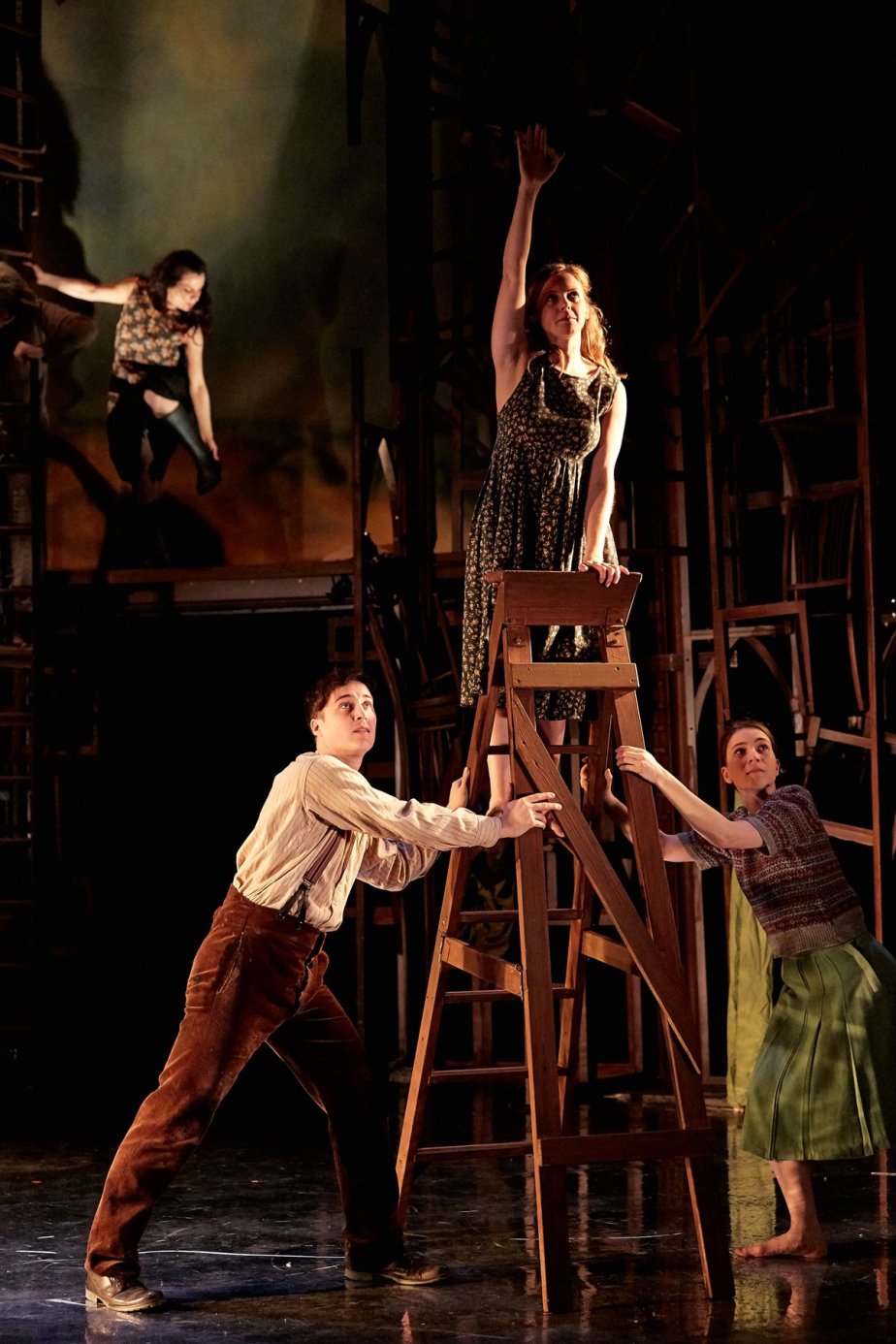
The visual portrayal of the castle is a chaotic heap of old spindly furniture which is witty and memorable. It towers over the performers like a crazy croque-en-bouche at a buffet.

There is a lot to enjoy but it somehow fails to deliver what was originally intended. This was intended to take a classic book and give it the flavour of LaLa Land success with a nod to An American in Paris and Oklahoma. Good intentions but perhaps too many ingredients and cooks in the mix. 

At Oxford Playhouse 16-20 May

Cyrano

QUAY THEATRE, THE LOWRY 

NORTHERN BROADSIDES/ NEW VIC THEATRE

Adaptation of  Edmund Rostand’s Cyrano de Bergerac by Deborah McAndrew

Saturday afternoon in a box right by the stage. Great view of audience and cast. It is a piece of period French drama. It is pantomime but with an audience of old people and a 12 week old baby. It is a musical. It has the ghost of Geraldine McEwan on a balcony in a crinoline. Please let me face the Spanish forces with a wooden sword and let the equally wooden young Christian stay to listen to Roxanne instead of me.

In this production Cyrano is much younger than how he is usually portrayed. This works on some levels and Christian Edwards portrays him with energy and conviction. Amongst the poets and soldiers he convinces, however the casting of Roxanne makes it harder for him to seem as passionate in the love scenes. Northern Broadsides have built a sound reputation casting using regional accents and staging in unusual locations. It can be a winning combination but not in this instance. The set is very pedestrian and uninspiring and the Northern accents are fine though become uneasily frenchified when discussing patisserie. The big problem is the strident cut glass Edinburgh voice of Roxanne. Closed eyes and  Cyrano and Christian are wooing Miss Jean Brodie in her prime. It creates a dissonance and ruptures belief in Roxanne (Sharon Singh) as a credible love interest for the clever and complex Cyrano.

The addition of lots of singing and dancing and men in women’s clothes with tiers of pastries under their skirts and baps hidden in their bras distract from the original play and create the farce of pantomime instead. There is even an pickpocket/nun of small stature to add to this bewildering spectacle.

The cast bring lots of energy and enthusiasm to this production. However the staging and direction makes it feel more am/dram than this cast deserve.

The closing scene of the death of Cyrano is a blessed release for all concerned bar the wretched Roxanne who will no longer have the local gossip told to her  in an engaging way. Where in Deborah McAndrews  script is the quick wit of Roxanne that so beguiled Cyrano?  Four autumn leaves fall from the sky to herald the passing of poor lovelorn Cyrano – a props misfunction or no budget left for leaves after buying in so much pastry? 

It is ironic that Cyrano should speak so eloquently for Northern Broadsides ethos 

Shall I hide my roots, and change my voice. Modulate my vowels to fit in?

Sadly in the case of a Scottish Roxanne it would have been welcome.

Letters to Windsor House

HOME

By Sh!t Theatre

This the very best kind of pick and mix entertainment. Someone else on stage doing the karaoke, social and political commentary that never seeks to preach and an open letterbox giving a candid view of life for those at the more vulnerable end of the renting crisis in London.

20170419_194527.jpg

Rebecca Biscuit and Louise Mothersole are Sh!t Theatre and this is their very personal experience of  renting a sh!t flat in Windsor House, Hackney, North London. They share this two bedroom council flat with their friend Ruth who plans to move out to a houseboat and with Reggie the cat. The cramped space includes a pigeon sh!t splattered balcony and a hallway which has been converted to a makeshift garden. They pay nearly £500 each per month but have no contract so have no real security to safely call this home, especially when their curiosity reveals they are actually renting a sublet council flat.

Curled up on a sh!tty sofa as the audience walk in these best friends chat, sprawl and break into song just as they probably do around their home. The set also includes a disco ball, a cheery cotton rug and a pile of cardboard boxes. A projection screen is on the wall behind them with front of stage their mike stands connected to a loop pedal and two red cardboard post boxes.

Everything happens on stage in an endearing way that seems both childishly haphazard and skilfully engineered to fill this hour to achieve maximum impact. Using photos and video they walk us out of their cramped home unto the streets of this N4 neighbourhood. There are noisy Romanian neighbours they do sonic battle with at 7am, there is the local chippy #hashtag Fish & Chips, and the sometimes very loud St Johns Deaf Centre. Windsor House is one of 4 regally named blocks of council flats behind which is The Finsbury Park Homeless Family Project. Images of this rundown and depressing area appear on screen accompanied by a slick voiceover selling the merits of the new kids on the block. Woodberry Park is the second new private development to sit on the foundations  of the old council estates now demolished. These new properties are not for local families but are glossy six figure luxury flats with gyms and 24 hour concierge facilities.

Becca and Louise film themselves viewing a home they are unlikely to ever own as they are part of Generation rent. This is a moment where they fantasise about cushions in a £925,000 apartment. Back in their flat where the thin walls allow them no illusions about each others personal habits there is an ever growing sense of desperation about their future and an ever growing mound of mail representing the past lives of previous tenants.

It is human nature to be curious and often to prevaricate. Sh!t Theatre do both very well. Thanks to a quaint legal loophole they can start opening the mail. Like all our Christmases together the letters reveal colourful hints of other lives lived in Windsor House. A kaleidoscope of song, dance and social media feeds reveal Rob Jecock the adult baby or grief stricken single father, Daisy Murray and her magazine loving dad and Saad Madras who gambles his way into debt with the Turkish mafia. They buy aspirational shirts from catalogues like The House of Bruar. They cheerfully stalk their old neighbours in attempts to help them though no one appears to be interested in supporting or reassuring them re their own rental rights. In their search they are irrepressible singing silly songs, switching accents and clambering over sofas to build cardboard houses. This could have been an unholy mess.

There is a very different energy present when they break up their search to don the anonymity of their red cardboard post boxes. Here they read each other heartfelt personal letters from the sanctity of the post box as confessional. It is these moments which highlight the social housing crisis in a way that transcends shocking statistics. Ordinary loving friends who are both petrified of change and desperate to embrace new opportunities. Windsor House is for now both a refuge and a prison.

Postscript:

Ruth moves to a houseboat.

Becca moves out after a row.

Louise still lives in Windsor House.

Friendship survives.

Sh!t Theatre continues to develop new work.

The shirts from House of Bruar cost £65 each and are sh!t quality according to Louise.


Moth

Hope Mill Theatre

large_e99370a4-6030-4e9f-9551-b45af2b668d9.png

Sometimes theatre yields a little bit of magic. There was a buzz and a whizz and and and…….. Imagining how Claryssa and Sebastian would have reacted if they were in the audience for Moth instead of on the stage tonight. This is the stuff of nightmares whether we were once bullied as teenagers or we fear our children might be. Declan Greene creates a sense of the horrors of being teenage misfits and bravely portrays the two young actors  to the audience with no attempt to engage our sympathy or affection.

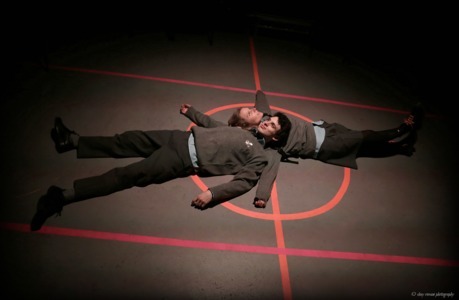
This is a great production by Ransack Theatre which is visually stunning. The seating of the audience is akin to sitting either side of a gym hall or sports field so we are quickly immersed in the school setting. Floodlights at one end plus a giant cocoon-like duvet and an elaborate cave structure of lights and strobes at the other end. The lighting by Matt Leventhall is seriously impressive for a smaller theatre and is used brilliantly by director Piers Black-Hawkins to convey the disintegration of relationships and ultimately of sanity.

Charlotte Gascoigne is perfect as emo Claryssa who likes poetry and kind of tolerates Sebastian but also rages at the world and can flit from acts of kindness to vicious acts and violence. Sebastian is that weird, hyperactive kid who smells different to us as though our animal selves know to either separate from or simply annihilate such individuals. Interestingly Schizophrenia is one of a handful of medical conditions humans can detect by smell and in early onset often manifests with visual illusions. The strangely tender yet dispassionate moments of spitting into the handkerchief also suggest a sickly boy who may be suffering from cystic fibrosis. This is not going well for Sebastian or Claryssa with or without the gleaming moth of Saint Sebastian.

This is at times confusing and frustrating but somehow that doesn’t really matter. The audience will probably tell very varied stories of what actually happens on stage. The end result is still a brilliantly constructed piece with some stunning physical theatre that pulsates with the light and soundscape. Not to be missed.

Running until April 22nd

The Tenant of Wildfell Hall


The Bolton Octagon

033017boltonoctagontenantofwildfellproductionphotos068

This was how I imagine dinner theatre might feel but without tables and without food. Anne Brontë wrote this gritty portrayal of married life in 1848 in which she spoke passionately about domestic abuse, alcoholism and women’s rights. Two hundred years on those issues are still relevant and still require our consideration, however a modern audience is perhaps much harder to shock. Deborah McAndrew has done a very effective job of adapting this weighty classic for the stage however it a solid rendering rather a stimulating and passionate portrayal.

Phoebe Pryce is very believable as the stoic and driven Helen. She is an intelligent and independent woman who is determined to shield her young son from the excesses of his fathers hedonistic lifestyle. The first half of the play sees her disguised as the widow Mrs Graham who in her desperation to remain hidden is so unsociable that she generates a storm of gossip and speculation in the quiet rural community around Wildfell. Prickly and intelligent she is a world away from the dull and vapid females who sip tea and delight in local gossip rather than art or literature.

In the second half we revisit her unhappy marriage through the device of her lovelorn suitor reading her diary. Here we see an immature young woman infatuated with her new husband the charming but dastardly Arthur played with aplomb by Marc Small. Unlike her friends Helen is not prepared to accept a bad marriage and escapes with her only financial security being her ability as a landscape artist. Set in the 1820s this is the act of a strong and deeply wounded women so it is difficult to believe either her quickly falling for another man or her choice to return to Grassdale Manor to nurse her ailing husband.

Gilbert Markham initially appears dull and dependable but is perhaps stifled by the society he is surrounded by – epitomising a man whose best friend truly is his dog. Michael Peavoy is well cast as the quietly handsome farmer who finds his love and admiration finally reciprocated. It is very telling that the rather fabulous Sancho the sheepdog is discarded in the second act as the farmer falls more deeply in love.

The other performances are all reliable and rise to the challenge of playing dual roles as the action moves to Grassdale Manor. The younger females are mainly either sweet and vapid or vindictive and petulant whereas the older women are bossy and opinionated or careworn and stoic. The menfolk are also a mixed bag of flawed characters. The local cleric stood out as adding a comedic element as an ale loving Irish buffoon. Colin Connor kept the audience amused though at times his performance felt too much like a nod to Ian Paisley and Mrs Brown.

The set was disappointing as the fake dry stone walls felt more suited to Wuthering Heights. The fire was a cosy touch of the safety of home and hearth but the move to portray Helens marital home felt lazy  and did little to convey the luxury  she gave up in order to have her independence.

It is a clever move to adapt  a classic for the stage as it often acts to reassure a prospective audience that their investment of time and money is a safe one. This is especially apt as this piece still has a lot to say in modern society and it may create curiosity as it is written by the lesser known but most radical Brontë sister. Anne was only 29 when she died and this her last novel was published less than a year before her death. It was a brave and shocking novel for its time and after her sisters death Charlotte Brontë chose to suppress a proposed third edition citing the subject matter as inconsistent with her sisters “reserved and dejected nature”. Perhaps living in her own  claustrophobic community with an opinionated Northern Irish cleric as a father and a carousing alcoholic for a brother she had good reason to feel dejected and frustrated. Like her heroine she sought financial independence through her own artistic abilities so thumbs up to Deborah McAndrew and Artistic Director Elizabeth Newman for allowing her to speak to a new audience.

At The Bolton Octagon until April 22nd, then touring.

The People Are Singing

Royal Exchange Theatre Studio

Text by LIZZIE NUNNERY

Directed by TAMARA TRUNOVA

This new work by Lizzie Nunnery makes for uneasy viewing. We flinch as 12 year old Irina plays with a skipping rope that seems to scourge her flesh. As she chalks out Hopscotch or bounces over rope we reconnect with the universality of play. Mother and child are hungry and vulnerable. Songs, games and rituals are all that hold them to sanity in a mad world where no one can be trusted and nothing is quite what it seems.

20170407_205136

Cora Kirk is wonderful as the young Irina. She is on stage throughout the performance and handles this demanding role with apparent ease. The characters are well chosen to give a sense of  fighters – Mikhailo (Sam Redway) the embittered and disillusioned revolutionary and Dima (Graeme Hawley) who is excellent as the Russian soldier who  is a loving father turned monster by this war. The other women embody mothers driven mad by war. Katya (Chloe Massey) is the stoic mother feeding her starving child imaginary Borsch and Olena (Kate Coogan) as a grief stricken woman who has watched her son die in a landmine explosion.

The use of physical theatre is wonderful and there are some very deft moments – especially the use of the elastic rope. In the yellow and blue of the Ukrainian flag it allows some great moments on stage while cleverly reminding the audience of how pliable our sense of  truth and physical borders can be.

The creative staging allows the actors to conceal themselves in a range of ways. The sliding doors illuminated with church candles serves to move the actors on and off the stage while evoking a candle lit heaven or hell for the dead.

The use of song and music is central to Nunnery’s work. The singing of Russian and Ukrainian folk songs move the story along and give a sense of history and national pride. The tragedy for mankind is when our songs no longer fits our borders. What survives? Do we write new songs or sing the old ones louder?

This World Stages project brings together Nunnery and Ukrainian director Trunova gathering stories from the local Ukrainian community. They share a passion for story telling and the desire to give a voice to marginalised people. The themes of who we are in wartime and what choices we make when struggling to survive are prevalent in this piece. This is a brave production with a lot to say. There are some standout moments however it requires some editing especially towards the end where it risks becoming muddled and losing its focus. A case of too many ingredients in an excellent Borsch.


The Suppliant Women

The Royal Exchange Theatre Manchester;


I was quite wary about seeing this production. I wanted to like it but quite frankly I was concerned that the linking of a 2500 year old Greek play and our current refugee crisis might end up seeming forced or rather too worthy. As The Lord Mayor of Manchester joins the choir of local volunteers to give the traditional thanksgiving I was intrigued by this piece of theatrical archaeology. The libation wine is poured slowly and evenly around Lizzie Clachan’s stark breezeblock stage;  then the choir  re enter with their suppliant branches forming a human boat sailing gracefully into Argos. Exquisite pure harmonies flood the space and I’m hooked.

Written by Aeschylus; this new version by David Grieg opened his first season as Artistic Director at The Royal Lyceum, Edinburgh. His intention to use theatre as a “democratic space” works well in a space like The Royal Exchange. Here the stage is often crowded but movement remains fluid and effective – perhaps a clever nod to how many countries can adapt successfully to accommodate refugees should they chose to.

The women sing in unison as they beseech King Pelagrus to heed their request for sanctuary reminding him that Argos is home to their ancestors Io who later sought sanctuary in Egypt and to Zeus; and reminding the audience that migration of people is central to our survival as a species. The local choir of 26 young women represent the 50 suppliant daughters of Danaos fleeing Egypt to avoid forced marriage to their 50 cousins. The central dilemma is “if we help we bring trouble if we don’t we invite shame”. This is a democracy so this King asks his people to decide the fate of these young women who have sung so passionately for their right to choose virginity over forced marriage. Sanctuary is granted but there will eventually be a heavy cost as the proprietary, prospective husbands sail into Argos.

This is a play about what do we do when we exercise choice. Are we selfish or altruistic; and either way is there always a price to pay? Beyond the issues of our stance on forced marriage or the refugee situation are other murkier issues that remind us of how complex the decision making process is. These are educated high born women of Egypt seeking asylum from forced marriage. They expect that asylum regardless of the risk to the citizens of Argos who face the fury of The Egyptians. They are shocked when the citizens suggest local marriages which would of course bring fresh blood and new wealth to the local community. It would seem that these steadfast virgins are somewhat disingenuous to the reality that in this life we rarely get something for nothing.

Director Ramin Gray ensures this production is bold and rhythmic and effective. The clever use of ancient instruments, staccato clapping and singing that beguiles, exults and wails laments invite the audience to start to breathe with the performance. Choreographer Sasha Milovic Davies and Movement Director Josephine Hepplewhite do an amazing job of ensuring that the very simple staging remains fluid and gloriously memorable. The human boat moves like it is on water and the simple use of the women’s scarves to form the bovine shape of Io is magical. Gemma May Rees as chorus leader soars vocally and is a luminous presence on stage as she leads the sisterhood of brightly clad suppliants.

It is however the chorus of local volunteers who are the living flesh of this performance. They are our teenage daughters or sisters or pupils clad like Greenham Common protesters or fans of The Levellers. I suspect their vigour and energy will leave a echo in this space long after the play moves on to another city; I’m sure Aeschylus would approve.