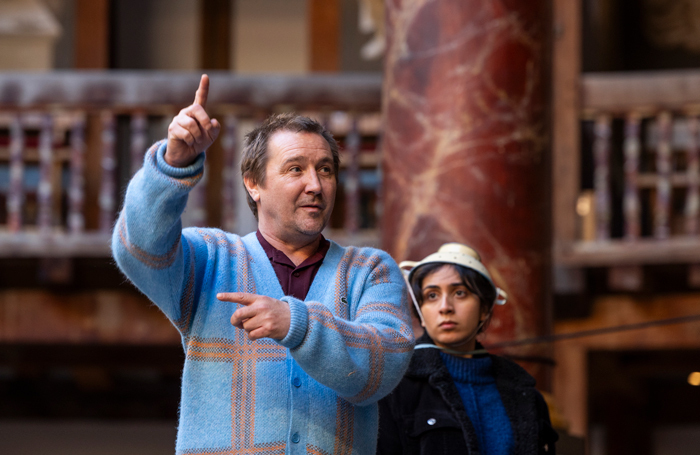
At a time when theatres across the country are fighting hard to remain relevant, resilient and rooted in their communities, Oldham Coliseum is doing something rather more ambitious: rebuilding from the ground up. Into this pivotal moment in its nearly 140 year history, steps Nick Bagnall as the theatre’s new Creative Director. He brings real passion backed up by more than 30 years of experience and a clear belief in the transformative power of live performance. With the Coliseum’s much-loved Fairbottom Street home due to reopen in 2027, and a programme already taking shape beyond its traditional walls, Bagnall arrives with both an opportunity and a considerable responsibility. I chatted with him about his own theatre journey and about Oldham, working-class voices, the future of regional theatre, and why this next chapter should be about much more than simply reopening the doors.
What was your first experience of actually being in a theatre and what age were you? Can you remember what you saw?
It was Animal Crackers in the Vernon Street library in Scarborough and I must have been 4 or 5. When I was 8 years old I went to play five-a-side football at the local YMCA and I ended up being cast as Oliver Twist! From 8 years old till about I was 14 I was in Pantomime every Christmas and in open air theatre shows every summer.
So more time on stage than in an audience!
Indeed! I left school without qualifications and went to Harrogate College of Arts and Technology to do a B Tech in Performing Arts.
I didn’t really know that theatre was for me until my drama teacher gave me a play called ROAD by Jim Cartwright. It blew my head off and it was one of those things where I went Oh my fuck… it’s speaking to me, the content, the world, the mess of it, well it felt like it was written about people I knew. It was like all of a sudden there’s this working class lad in Scarborough who had no connection to Shakespeare or any of that and this play just unlocked everything for me. Then I read Joe Orton’s Ruffian on the Stair, and those two plays had the most profound effect on me and made me want to be an actor or a director. I also remember at 16 going to see Mark Rylands playing Romeo in a gymnasium in Ripon with the RSC. I remember leaving that performance of Romeo and Juliet thinking…Oh my God, theatre can be really sexy!
So how did you transition from acting into directing?
I did a project at Harrogate where I directed ROAD. I gave myself the role of Scullery but I also directed it. At that point I kind of knew that I really liked whatever directing meant and that I quite liked steering my own ship.
Then I went to Guildhall to train as an actor which gave me gave me discipline, tools, skills that I’ve needed for the career I’ve since had. I had a very really satisfying career as an actor but I always knew in the back of my head I wanted to direct.
I was really good pals with Kathy Burke at the time and she was a huge fan of Joe Orton and I spoke to her about me directing Ruffian on the Stair at the Old Red Lion in Islington which is obviously a really iconic venue in London. I begged and borrowed money I asked famous actors and designers and creatives to come on board and I directed the play. I just loved every single thing; all the challenges, being in a room creating and having a really brilliant time in the rehearsals space. The Joe Orton Estate came to see it and the play was extended so it was like all of a sudden I was having conversations with artistic directors.
How did you finally choose directing over acting?
Gemma Bodinetz who I’ve got a long-standing relationship with and who I was the Associate for at the Liverpool Everyman under her tenure as Artistic Director gave me a workshop project directing at The National Youth Theatre. Then I was working at Birmingham Rep for a good few years, so I was a working actor.
I finally decided that I no longer wanted to juggle being an actor and a director when I directed Entertaining Mr Sloan in the West End with Imelda Staunton. I remember being kind of fed up of doing both and I was chatting to Imelda saying I want to concentrate on one or the other and that I really loved directing and she said “Well just do it then!!”
I wanted to ask you a little bit about what it was like reviving the Rep Company at Liverpool Everyman? Personally I thought they were two absolutely golden years when theatre goers could experience really engaging with a cast and see those same actors in a range of roles in very different plays. You were there as an associate and directed a number of them, including one of my favorites A Clockwork Orange.
Yeah, well the rep season to me was probably one of the most thrilling times of my career. I absolutely agree with you 100%. I think we created something so special and so impactful. I learned more about being a director and that I wanted to run a building in that time. Of course it was exhausting, we made mistakes in that first season but in the second season we ironed them out and then I genuinely think we should have been given a third season because I think we just found our feet in how this could work as a sustainable model. I did some of some of the greatest plays I’ve ever done such as Conquest of the South Pole which for me is my proudest achievement. A German play which resonated so profoundly in Liverpool, a play about people who have nothing in their life, they’ve not got a pot to piss in and they decide to conquer the South Pole. It was just one of those proper little hotspots in your career and it allowed me to do flex my muscles as a director.
In A Clockwork Orange I was the first person who was allowed to use Anthony Burgess’s lyrics and score so I stuck so tightly to what Anthony Burgess Foundation wanted and of course it was really, really tricky. I had a brilliant bunch of actors to explore that play with. My default setting as a director is usually open-hearted and I think that to create a heartfelt show about something so dark felt really exciting to explore. As a director I like to lean the power of suggestion in theatre, so we don’t see her get raped on stage but we know that once they’ve taken her underground that’s what’s going to happen. I played with a load of Shakespearean techniques which is do the killing off stage and let our imaginations go to the places we want to go to.
Jumping forward to Oldham Coliseum… how did becoming Artistic Director come about?
It came out of the blue and via the amazing Julie Hesmondhalgh when she wanted me to be involved in some site-specific shows around Oldham. Then the announcement went out that they’re looking for a new artistic director and I’d kind of fallen in love with Oldham at this point. I was ready for a new adventure so I threw my hat into the ring and I did the first interview and then spent a month or so it just totally filled my boots with everything Oldham before the second interview. I did every bit of research, I was there all the time and I really started to fall in love with the idea of it feeling like a new beginning but where we can’t ignore the past and why would we ignore the past. It felt really exciting… the idea of creating really good big nights out in a town which politically and socially is really on a knife edge. So it felt like going into that second interview I couldn’t have been more I clear about what I’d bring to the table and then I got the job and they wanted me to start a few months after and I said no I want to start on Monday!! We’ve achieved so much in so little time and I genuinely couldn’t be happier and more in love with the job.
Had you been in the theatre space when it was open or did you first walk into the space as a building site?
We haven’t got the keys yet to open the door but we’re gonna get those next year so I’ve only been in that building once at the moment. I stood on a little safety plank and in front of me was a matrix of scaffold which was keeping the building up while they were doing lots and lots of big excavation work in there so it was really it was such a profound moment.
We’re doing this bridge season which I felt it was really important that we started to have more visibility and impact in the town before we reopened the building. Macbeth is that first big project for me and then next year there’ll be a couple of other large scale projects in the community before we move into the building. I think for a number of reasons it’s really exciting to be rebuilding an audience.
I love this idea! It seems very much not just keeping the idea of a theatre in Oldham alive but actually it’s bringing people into new spaces in the community. It’s a model that worked wonderfully well at Contact theatre where they did loads of site specific stuff in garages and sari shops, etc. It’s a really interesting way of connecting people and in terms of the threshold anxiety, you know you might be more likely to get somebody having a first theatre experience going into a nightclub they’re familiar with who may never have thought of stepping into a theatre.
We’ve got these really gorgeous little pop-up shows happening which are really exciting but I think what I feel is really important now is to step it up impact wise and capacity wise. I didn’t think I’d do Macbeth as my first stop but we’re doing it in a space called Liquid and Envy which is a working nightclub in the town. It’s extraordinary and this building is the biggest character in the play. I mean you don’t have to do anything with it as everything else is just leaning into the character of that space with its lit up dance floor and red leather seating and mirror balls everywhere. It’s just evocative of a time when people were out and about having great big nights out. I intend to take people upstairs for the final section of the piece which really couldn’t be more different in atmosphere…a much more bleak, barren space with no kind of airs and graces. Once we get into that final act and it’s a barren landscape for a sleepwalking Lady Macbeth and McDuff being killed. It’ll be a really profound and a really intriguing offer for an audience.
I hope for young people coming to see Macbeth in a nightclub in their town where I’ve shaped it in a way that will be a really dynamic night for them. I mean I wish I’d had that as a kid being introduced to Shakespeare you know even just the event itself walking through those nightclub doors so for me it’s serving so many exciting purposes in the sense of new audiences coming in. For me, the narrative of Macbeth in that town couldn’t fit any more perfectly.
I’m so obsessed with Shakespeare’s tragedies and I think this is his most unique tragedy in its kind of experimental form, in the sense of how do you find sympathy in a monster? I think placing it in a nightclub in the late 70s in Oldham when the town was alive and flourishing but some of these places were sometimes being run by gangsters. It was run by fear and threat and intimidation so it’s not kings and crowns that I’m playing with but instead it’s territory and turf wars. Really leaning into the nightclub life has unlocked all of that for me so I think it sits really beautifully in there.
You are inviting the audience to choose to be seated or move around the action?
Yeah I mean it’s going to be an interesting one in that you’re blending being seated with being able to be fluid. I’m using the whole building but the downstairs is one room which I think I’m going to have to focus the play in, so it will obviously all work out in rehearsals. The promenade thing will actually happen because I’m going to have to lead everybody upstairs for the second Act.
You were talking about Jim Cartwright earlier and I heard you might have a project at Aviva Studios working with Jim Cartwright?
Jim and I have worked together a lot and a few years back we did something as part of Wigan Casino’s 50th anniversary. Jim and I developed a piece called Northern Soul which played in a huge warehouse in Wigan and we had this idea of continuing this journey of Northern Soul. One of my favorite people on the planet is John McGrath who is Artistic Director at Aviva Studios and he has been really supportive and proactive about moving this forward as a kind of association with or connected to Factory but there’s nothing set in stone. Currently it’s a project that’s in development which I’m very excited about.
Going back to to Macbeth It sounds like a great cast…
Oh my God I mean it’s amazing! I’ve worked with Andy Sheridan at The Globe. He’s one of the most exciting unpredictable actors in that what you get is really exciting and rich and dynamic and honest. I mean he’s going to be the most perfect Macbeth but then placing him alongside Erin (Shanigher) who I think is one of the most exquisite actresses. I saw her in Beginnings at the Royal Exchange Theatre …so brilliant that I was blown away by her. She’s also one of the nicest and funniest people. She’s just so sharp and she so gets who this woman, Lady Macbeth is. I love Reuben Johnson, I’ve never worked with him before but with his agility and physicality…he’s just got a guttural response to the work which I think is really necessary with Shakespeare. Dean Nolan was in Conquest of the South Pole and he played Bottom for me in my first production at the Everyman. He will have audiences in the palm of his hand. Amy Drake who’s basically playing everything for me in Macbeth is just somebody from that I’ve just admired from afar.
A cast full of Northern voices…that’s a really encouraging sign.
It was really important that there were northern voices, Greater Manchester voices. I’ve got also I’ve got 6 or 7 brilliant Oldham Theatre Workshop guys coming in to work with us as well, and not just coming in to be filling crowd gaps but actually having really meaty roles.There’s a nice balance between the young setting off on their careers with some really exciting heavyweight actors. So yeah, as you can probably tell, I’m pretty excited about the cast. I think I just always want to work with bloody great actors. You know, to get this calibre of cast on the first outing for me is really really flattering. Also, like what you’ve just said, it sends really positive ripples about the kind of work we want to do and with the people we want to make work with.
So how do you how do you see the Colosseum in let’s say 5 years time? Is there a plan?
These are the questions that actually we need to be asking, plus listening and responding to the work I’m doing at the moment and how that’s resonating with the town so we know what people want. I know we’ve got a core group of people who can’t wait to get back into the Coliseum but beyond that we need to make the space work for new people as well. How do we get those people in there? I want to celebrate this sleeping giant of a theatre so for my first season, I want it to be about celebration and joy and I want to open those doors and I want to put great big stories with a great big heart on stage. I’m learning from Kevin Shaw’s tenure and how he balanced his seasons. Making sure that the Panto is there which is sometimes our first introduction to theatre and then making sure that the well made plays are in there with the big open-hearted plays and the musicals.
I think what’s brilliant about this position is I’ve currently got that little bit of time to be able to listen and respond to how the town is responding to us but in 5 years I want to produce in-house, creating really great Oldham based theatre so we’re producing plays from our building and we’re co-producing with really exciting coal producers nationally and internationally.
We already have an artist’s development program which is flying and is really exciting. It’s about creating a theatre where people want to come and work for us and share work. We’ve got some really exciting people coming to join us and we’ve got Julie on board which is just fucking amazing.
The romance is alive at the moment you know and that will take us through that first season. The tricky thing will be 28/29 and that’s for me to be really engaging with at the moment. Ensuring what the artist development looks like and having a building which can rapidly respond to the world around us. I think the dream is to be creating great nights out which is missing in Oldham now and also to get that night-time economy breathing life back into the town.
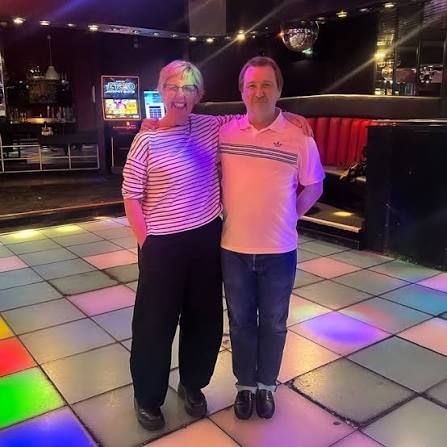
Bagnall’s vision for the Coliseum will start to take tangible shape later this month in the forthcoming production of Macbeth. It promises to be a fitting marker for a theatre entering a new chapter: familiar Shakespeare, but with fresh ambition and a distinctly contemporary sense of place. If Bagnall’s enthusiasm is anything to go by, the future of Oldham Coliseum may be every bit as compelling as its past.

