Theatre chat with Nick Bagnall, Artistic Director at Oldham Coliseum

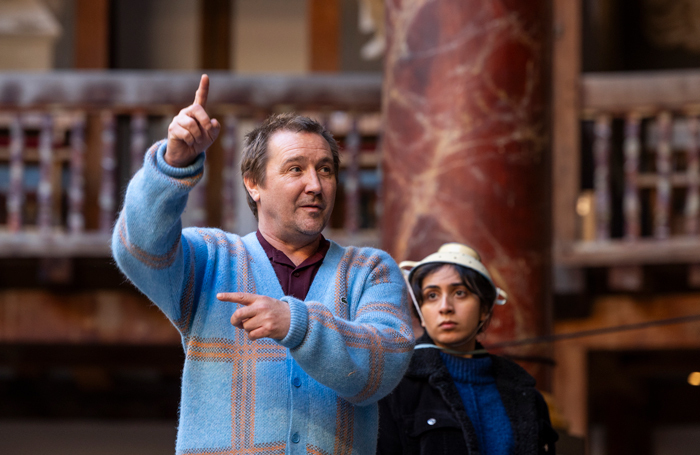
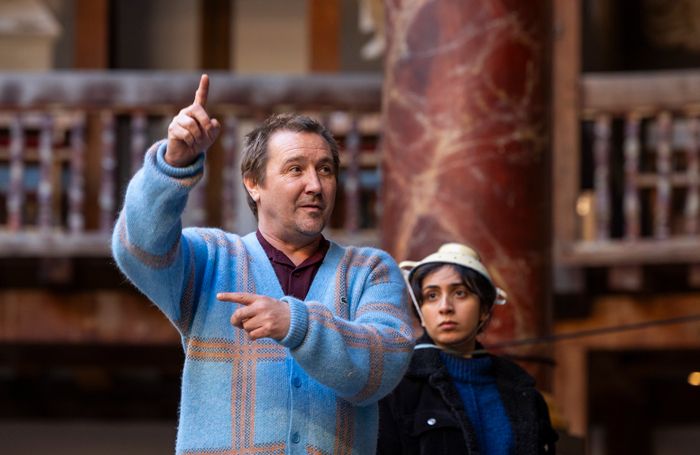
Nick Bagnall. Photo credit: Ellie Kurttz

At a time when theatres across the country are fighting hard to remain relevant, resilient and rooted in their communities, Oldham Coliseum is doing something rather more ambitious: rebuilding from the ground up. Into this pivotal moment in its nearly 140 year history, steps Nick Bagnall as the theatre’s new Creative Director. He brings real passion backed up by more than 30 years of experience and a clear belief in the transformative power of live performance. With the Coliseum’s much-loved Fairbottom Street home due to reopen in 2027, and a programme already taking shape beyond its traditional walls, Bagnall arrives with both an opportunity and a considerable responsibility. I chatted with him about his own theatre journey  and about Oldham, working-class voices, the future of regional theatre, and why this next chapter should be about much more than simply reopening the doors.

What was your first experience of actually being in a theatre and what age were you? Can you remember what you saw?

It was Animal Crackers in the Vernon Street library in Scarborough and I must have been 4 or 5. When I was 8 years old I went to play five-a-side football at the local YMCA and I ended up being cast as Oliver Twist! From 8 years old till about I was 14 I was in Pantomime every Christmas and in open air theatre shows every summer.

So more time on stage than in an audience!

Indeed! I left school without qualifications and went to Harrogate College of Arts and Technology to do a B Tech in Performing Arts.
I didn’t really know that theatre was for me until my drama teacher gave me a play called ROAD by Jim Cartwright. It blew my head off and it was one of those things where I went Oh my fuck… it’s speaking to me, the content, the world, the mess of it, well it felt like it was written about people I knew. It was like all of a sudden there’s this working class lad in Scarborough who had no connection to Shakespeare or any of that and this  play just unlocked everything for me. Then I read Joe Orton’s Ruffian on the Stair, and those two plays had the most profound effect on me and made me want to be an actor or a director. I also remember at 16  going to see Mark Rylands playing Romeo  in a gymnasium in Ripon with the RSC. I remember leaving that performance of Romeo and Juliet thinking…Oh my God, theatre can be really sexy!

So how did you transition from acting into directing?

I did a project at Harrogate where I directed ROAD. I gave myself the role of Scullery but I also directed it. At that point I kind of knew that I really liked whatever directing meant and that I quite liked steering my own ship.
Then I went to Guildhall to train as an actor which gave me gave me discipline, tools, skills that I’ve needed for the career I’ve since had. I had a very really satisfying career as an actor but I always knew in the back of my head I wanted to direct.
I was really good pals with Kathy Burke at the time and she was a huge fan of Joe Orton and I spoke to her about me directing Ruffian on the Stair at the Old Red Lion in Islington which is obviously a really iconic venue in London. I begged and borrowed money I asked famous actors and designers and creatives to come on board and I directed the play. I just loved every single thing; all the challenges, being in a room creating and having a really brilliant time in the rehearsals space. The Joe Orton Estate came to see it and the play was extended so it was like all of a sudden I was having conversations with artistic directors.

How did you finally choose directing over acting?

Gemma Bodinetz who I’ve got a long-standing relationship with and who I was the Associate for at the Liverpool Everyman under her tenure as Artistic Director gave me a workshop project directing at The National Youth Theatre.  Then I was working at Birmingham Rep for a good few years, so I was a working actor.

I finally decided that I no longer wanted to juggle being an actor and a director when I directed Entertaining Mr Sloan in the West End with Imelda Staunton. I remember being kind of fed up of doing both and I was chatting to Imelda saying I want to concentrate on one or the other and that I really loved directing and she said “Well just do it then!!”

I wanted to ask you a little bit about what it was like reviving the Rep Company at Liverpool Everyman? Personally I thought they were two absolutely golden years when theatre goers could experience really engaging with a cast and see those same actors in a range of roles in very different plays. You were there as an associate and directed a number of them, including one of my favorites A Clockwork Orange.

Yeah, well the rep season to me was probably one of the most thrilling times of my career. I absolutely agree with you 100%. I think  we created something so special and so impactful. I learned more about being a director and that I wanted to run a building in that time. Of course it was exhausting, we made mistakes in that first season but in the second season we ironed them out and then I genuinely think we should have been given a third season because I think we just found our feet in how this could work as a sustainable model. I did some of some of the greatest plays I’ve ever done such as Conquest of the South Pole which for me is my proudest achievement. A German play which resonated so profoundly in Liverpool, a play about people who have nothing in their life, they’ve not got a pot to piss in and they decide to conquer the South Pole. It was just one of those proper little hotspots in your career and it allowed me to do flex my muscles as a director.

In A Clockwork Orange I was the first person who was allowed to use Anthony Burgess’s lyrics and score  so I stuck so tightly to what Anthony Burgess Foundation wanted and of course it was really, really tricky. I had a brilliant bunch of actors to explore that play with. My default setting as a director is usually open-hearted and I think that to create a heartfelt show about something so dark felt really exciting to explore. As a director I like to lean the power of suggestion in theatre, so we don’t see her get raped on stage but we know that once they’ve taken her underground that’s what’s going to happen. I played with a load of Shakespearean techniques which is do the killing off stage and let our imaginations go to the places we want to go to.

Jumping forward to Oldham Coliseum… how did becoming Artistic Director come about?

It came out of the blue and via the amazing Julie Hesmondhalgh when she wanted me to be involved in some site-specific shows around Oldham. Then the announcement went out that they’re looking for a new artistic director and I’d kind of fallen in love with Oldham at this point. I was ready for a new adventure so I threw my hat into the ring and I did the first interview and then spent a month or so it just totally filled my boots with everything Oldham before the second interview. I did every bit of research, I was there all the time and I really  started to fall in love with the idea of it feeling like a new beginning but where we can’t ignore the past and why would we ignore the past. It felt really exciting… the idea of creating really good big nights out in a town which politically and socially is really on a knife edge. So it felt like going into that second interview I couldn’t have been more I clear about what I’d bring to the table and then I got the job and they wanted me to start a few months after and I said no I want to start on Monday!! We’ve achieved so much in so little time and I genuinely couldn’t be happier and more in love with the job.

Had you been in the theatre space when it was open or did you first walk into the space as a building site?

We haven’t got the keys yet to open the door but we’re gonna get those next year so I’ve only been in that building once at the moment. I stood on a little safety plank and in front of me was a matrix of scaffold which was keeping the building up while they were doing lots and lots of  big excavation work in there so it was really it was such a profound moment.
We’re doing this bridge season which I felt it was really important that we started to have more visibility and impact in the town before we reopened the building. Macbeth is that first big project for me and then next year there’ll be a couple of other large scale projects in the community before we move into the building. I think for a number of reasons it’s really exciting to be rebuilding an audience. 

I love this idea! It seems very much not just keeping the idea of a theatre in Oldham alive but actually it’s bringing people into new spaces in the community. It’s a model that worked wonderfully well at Contact theatre where they did loads of site specific stuff in garages and sari shops, etc. It’s a really interesting way of connecting people and in terms of the threshold anxiety, you know you might be more likely to get somebody having a first theatre experience going into a nightclub they’re familiar with who may never have thought of stepping into a theatre.

We’ve got these really gorgeous little pop-up shows happening which are really exciting but I think what I feel is really important now is to step it up impact wise and capacity wise. I didn’t think I’d do Macbeth as my first stop but we’re doing it in a space called Liquid and Envy which is a working nightclub in the town. It’s extraordinary and this building is the biggest character in the play. I mean you don’t have to do anything with it as everything else is just leaning into the character of that space with its lit up dance floor and red leather seating and mirror balls everywhere. It’s just evocative of a time when people were out and about having great big nights out. I intend to take people upstairs for the final section of the piece which really couldn’t be more different in atmosphere…a much more bleak, barren space with no kind of airs and graces. Once we get into that final act and it’s a barren landscape for a sleepwalking Lady Macbeth and  McDuff being killed. It’ll be a really profound and a really intriguing offer for an audience.

I hope for young people coming to see Macbeth in a nightclub in their town where  I’ve shaped it in a way that will be a really dynamic night for them. I mean I wish I’d had that as a kid being introduced to Shakespeare you know even just the event itself walking through those nightclub doors so for me it’s serving so many exciting purposes in the sense of new audiences coming in. For me, the narrative of Macbeth in that town couldn’t fit any more perfectly.

I’m so obsessed with Shakespeare’s tragedies and I think this is his most unique tragedy in its kind of experimental form, in the sense of how do you find sympathy in a monster? I think placing it in a nightclub in the late 70s in Oldham when the town was alive and flourishing but some of these places were sometimes being run by gangsters. It was run by fear and threat and intimidation so it’s not kings and crowns that I’m playing with but instead it’s territory and turf wars. Really leaning into the nightclub life has unlocked all of that for me so I think it sits really beautifully in there.


You are inviting the audience to choose to be seated or move around the action?

Yeah I mean it’s going to be an interesting one in that you’re blending being seated with being able to be fluid. I’m using the whole building but the downstairs is one room which I think I’m going to have to focus the play in, so it will obviously all work out in rehearsals. The promenade thing will actually happen because I’m going to have to lead everybody upstairs for the second Act.

You were talking about Jim Cartwright earlier and I heard you might  have a project at Aviva Studios working with Jim Cartwright?

Jim and I have worked together a lot and a few years back we did something as part of Wigan Casino’s 50th anniversary. Jim and I developed a piece called Northern Soul which played in a huge warehouse in Wigan and we had this idea of continuing this journey of Northern Soul. One of my favorite people on the planet is John McGrath who is Artistic Director at Aviva Studios and he has been really supportive and proactive about moving this forward as a kind of  association with or connected to Factory but there’s nothing set in stone. Currently it’s a project that’s in development which I’m very excited about.

Going back to to Macbeth It sounds like a great cast…

Oh my God I mean it’s amazing!  I’ve worked with Andy Sheridan at The Globe. He’s one of the most exciting unpredictable actors  in that what you get is really exciting and rich and dynamic and honest. I mean he’s going to be the most perfect Macbeth but then placing him alongside Erin (Shanigher) who I think is one of the most exquisite actresses. I saw her in Beginnings at the Royal Exchange Theatre …so brilliant that I was blown away by her. She’s also one of the nicest and funniest people. She’s just so sharp and she so gets who this woman, Lady Macbeth is. I love Reuben Johnson, I’ve never worked with him before but with his agility and physicality…he’s just got a guttural response to the work which I think is really necessary with Shakespeare. Dean Nolan was in Conquest of the South Pole and he played Bottom for me in my first production at the Everyman. He will have audiences in the palm of his hand. Amy Drake who’s basically playing everything for me in Macbeth is just somebody from that I’ve just admired from afar.

A cast full of Northern voices…that’s a really encouraging sign.

It was really important that there were northern voices, Greater Manchester voices. I’ve got also I’ve got 6 or 7 brilliant Oldham Theatre Workshop guys coming in to work with us as well, and not just coming in to be filling crowd gaps but actually having really meaty roles.There’s a nice balance between the young setting off on their careers with some really exciting heavyweight actors. So yeah, as you can probably tell, I’m pretty excited about the cast. I think I just always want to work with bloody great actors. You know,  to get this calibre of cast on the first outing for me is really really flattering. Also, like what you’ve just said, it sends really positive ripples about the kind of work we want to do and with the people we want to make work with.

So how do you how do you see the Colosseum in let’s say 5 years time? Is there a plan?

These are the questions that actually we need to be asking, plus listening and responding to the work I’m doing at the moment and how that’s resonating with the town so we know what people want. I know we’ve got a core group of people who can’t wait to get back into the Coliseum but beyond that we need to make the space work for new people as well. How do we get those people in there? I want to celebrate this sleeping giant of a theatre so for my first season, I want it to be about celebration and joy and I want to open those doors and I want to put great big stories with a great big heart on stage. I’m learning from Kevin Shaw’s tenure and how he balanced his seasons. Making sure that the Panto is there which is sometimes our first introduction to theatre and then making sure that the well made plays are in there with the big open-hearted plays and the musicals.
I think what’s brilliant about this position is I’ve currently got that little bit of time to be able to listen and respond to how the town is responding to us but in 5 years  I want to produce in-house, creating really great Oldham based theatre so we’re producing plays from our building and we’re co-producing with really exciting coal producers nationally and internationally.
We already have an artist’s development program which is flying and is really exciting. It’s about creating a theatre where people want to come and work for us and share work. We’ve got some really exciting people coming to join us and we’ve got Julie on board which is just fucking amazing.
The romance is alive at the moment you know and that will take us through that first season. The tricky thing will be 28/29 and that’s for me to be really engaging with at the moment. Ensuring what the artist development looks like and having a building which can rapidly respond to the world around us. I think the dream is to be creating great nights out which is missing in Oldham now and also to get that night-time economy breathing life back into the town.
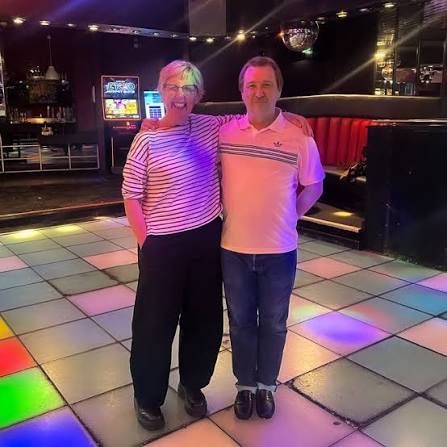
Julie Hesmondhalgh, Guest Curator with Nick Bagnall, Artistic Director in Liquid and Envy.

Bagnall’s vision for the Coliseum will start to take tangible shape later this month in the forthcoming production of Macbeth. It promises to be a fitting marker for a theatre entering a new chapter: familiar Shakespeare, but with fresh ambition and a distinctly contemporary sense of place. If Bagnall’s enthusiasm is anything to go by, the future of Oldham Coliseum may be every bit as compelling as its past.

Macbeth at Liquid and Envy. 23rd October- 7th November 2026

Interview with Tim X Atack. Winner of The Bruntwood Prize 2017.

The 2017 Winner of the Bruntwood Prize for Playwriting was announced last week at a ceremony at The Royal Exchange Theatre. Tim X Atack was awarded the £16,000 prize for his play Heartworm. The Bristol based composer and sound designer has already had success as a playwright with works such as The Bullet and The Bass Trombone, Dark Land Light House and The Morpeth Carol and has his own company Sleepdogs.

Heartworm was one of 1,898 entries and there were also three Judges Prizes and two commendations. The biennial prize is Britains biggest playwriting competition. It has previously been won by playwrights such as Duncan Macmillan, Alastair McDowell and Katherine Soper. Heartworm will be developed and staged at The Royal Exchange and The Royal Court.

So, a week on, how are you feeling?

Still really elated, it feels pretty surreal as I didn’t expect to get this far. It feels really great to be starting to work on developing it at some point in the New Year.

You say you didn’t expect to get that far, but you submitted almost every time – is this your fifth time?

Yes, this is the fifth.

So there must be something motivating you…..

I think The Bruntwood Prize has always been a kind of deadline in the diary for every grassroots playwright. So I’ve written something nearly every single time but I haven’t necessarily expected it to be better than previous years – it was the same with this play.

So when you look back now over previous submissions and you compare with Heartworm – for you – would Heartworm be the winner?

(Laughs) I think they all have different qualities and I’m surprised that Heartworm connected with so many people and got as far as it did in The Bruntwood. I think it’s surprising in that some of my other plays aren’t as insidiously strange as Heartworm. Some of the others have more of a ring of authorial statement to them, especially the ones I wrote many years ago. In some respects they are the kinds of plays you might expect to connect a little bit more with the language we currently use in playwriting. I’m still working on a few of the others, developing further drafts to hopefully go on to production.

Ah I was hoping you might answer like that! I tend to think of writing plays and nurturing words like bringing up children so you wouldn’t want to favour one over another!!

No, I think that’s absolutely right. I really enjoy working on things over a long period of time. The band I’m in usually release an album about every 6 or 7 years – and the first thing I did when I got back to Bristol after winning was to record some vocals for a song that’s about 12 years old! I like letting things percolate for a while and seeing if they stand the test of time before releasing them into the world. Heartworm took about 2 years to write on and off, but I’ve entered The Bruntwood Prize before with things I’ve been working on for a decade or so in different ways.

So you’re in a band as well?

Yeah, I started my career as a composer and also did other things such as stand up comedy but throughout all that I’ve been in a band – about 23/24 years. Its a radiophonic pop group called Angeltech.

You already know The Royal Exchange as you’ve been working on the sound production for Jubilee….

That’s right. Its been an astonishing production to work on, it really felt like a very, very progressive show to be a part off. I was very proud of it, and it was also a riot of fun to do too…..

Fun in terms of the cast? Or working with Chris Goode?

Working with the cast, working with Chris, working with The Royal Exchange which was a fantastic theatre to do this in – it really feels like we’ve been given the run to do whatever we need to do for that particular production. Chris Goode runs an amazing rehearsal room. He’s a very collaborative person and it is really shows in the way he invites his cast and creatives in to put a lot of themselves into what’s happening in the rehearsal room.

I interviewed Pauline Mayers in June, she said exactly the same about him. We are lucky to have him at The Royal Exchange……So was this your first time working there?

I was at The Studio space while on tour a few years ago with my own company, Sleepdogs. It was a one man show called The Bullet and the Bass Trombone about a symphony orchestra that gets caught in a city during a military coup.

How did it feel to be currently working here and then accepting the Bruntwood on the same stage?

It was like a weird cheese dream especially when I saw people I’d been working with up in the tech desk. Some of the cast came to the ceremony so I could hear cheers from the gallery and recognise their voices because I’d been working with them for so long.

You have a very good ear for voices, sounds… does that give you an extra dimension as a writer when it comes to pacing and dialogue?

Yeah, I think it does. If there’s one thing I can say I definitely have as a writer is a kind of musical attitude to putting stuff together. I really enjoy soaking up the way that people talk and transferring that into the words I create. There’s always a sense of finding counterpoint melodies and textures that work interestingly opposite each other in the same way as if you mixed a piece of music. One of the reasons a lot of what I write has a kind of culture clash at the heart of it is because I’m always fascinated by what happens when these different kinds of music collide. I think that probably comes from growing up in Rio de Janeiro. Brasil is one of the world’s great melting pot cities – all kinds of voices and approaches to life there.

So Tim, all those possible voices – who would be your dream cast for Heartworm?

Laughs. I‘m going to annoy you now. I don’t tend to think about stuff like that. I love collaborating and I enjoy the surprises that come from the casting process. There are several things in particular about Heartworm such as I’ve stipulated in the script than none of the cast are white. The casting will require finding performers who are at ease around the dreamlike language that the play uses. I can already imagine about 10 -15 ways of performing Joni K who is the most vocal character in the play. I’m really looking forward to seeing what people do when they sink their teeth into the script.

How would you describe Joni K? Who is she?

I’m reluctant to expand on much detail which is not always the case with my plays. A lot of my works have definitely had thematic concerns but Heartworm is genuinely an exception to that. The weird thing about Joni is kind of the only definitive question that the play seems to be asking over and over again is – “Who is she?” I‘m really keen that the audience have the chance and the space to answer that in their own personal ways.

I was intrigued by the extract I saw at the awards ceremony. There are all sorts of thoughts going on wondering what was pulling her back to her childhood home.

The room that she is standing in is the bedroom she grew up in, in what is ostensibly a house belonging to complete strangers. I was intrigued by the questions that might race through your mind in that moment if you were the couple renting out that room. That’s what I wanted to explore.

I recently had the chance to go back and see my childhood home and the changes made to it. The thought made me feel almost physically sick.

The idea of seeing your childhood painted over makes you feel woozy doesn’t it? The idea came from thoughts of heading back to Brazil again. I’ve been once since childhood but was thinking of going for longer this time. When looking at staying in AirBnBs I found myself looking closer and closer to the street I grew up on, and thinking how weird it would be if I was able to see the flat I shared with my family.

I used that premise with Joni as a starting point to explore some complicated emotions that were bubbling up in ways I couldn’t quite put my finger on. I decided to follow almost a dreamlike process with absolutely no idea where it would lead. I wrote it in linear fashion from start to finish and was genuinely surprised myself by some of the turns it took. It was like an improvisatory process of what I might like to see on stage and I allowed myself to go wherever it felt right to go, no matter how disconcerting or self-revealing it might be. Looking back I can see some of the influences and broad emotions – the main ones being grief and loss.

Did it feel cathartic writing it?

Absolutely. If there are two kinds of human rituals – those of confirmation and those of transformation then I tend to focus on the transformatory. I prefer to write about what could this be?….. What might this be?….. Isn’t the Universe strange….

Do you think that might have been what connected the Judges to this piece?

Maybe. I’ve no idea. The judging process remains closed to me apart from what was said at the ceremony.

What would your advice be to anyone thinking of submitting for The Bruntwood Prize?

To just write, keep on writing, keep on entering. I think I’d particularly encourage an idea of writing something you would like to see on a stage no matter what the implications of that are. No matter how you think plays are produced, or normally look on stage – if there’s something you’d like to feel or experience on stage put it on paper and send it to The Bruntwood Prize. I thought I was writing something particularly personal and strange, yet it turns out of all the things I submitted that this has been the most successful.

Interview with Pauline Mayers


Getting a sense of Pauline Mayers before her new show What If I Told  You opens at The Royal Exchange Studio ahead of going to The Edinburgh Festival. Warm, funny and sharply intelligent. 

What led you into dance? Did you start from an early age? 

I’ll give you two versions because there’s what I remember and what my Mother remembers. There’s being 13 and although I had a very happy childhood, things were not going quite so well at 13/14. And the only way I could be out of the house was to do something constructive so I went along with a friend to the White Lion Youth Centre in Islington….My Mum would say from an early age 7/8 she remembers me trying to tap dance. I would try to emulate Gene Kelly laughs. My Mum,”You always wanted to be a dancer.” There’s what I remember and what my Mother witnessed. So somewhere in between.

I’m actually a Psychotherapist. That’s really typical of how we remember our past and how others define our past. Often they are very different, very different stories indeed. 

YES! There’s also something about what you remember and what you tell yourself you remember laughs based on scant pieces of information you kinda make a whole- “Oh that must be what happened”…..I think memory and history are all tied up with subjectivity, almost never objective and coming from various different angles. I kind of imagine it as a big 360 degree motion capture thing. There’s yourself in the middle and you have all these cameras swirling around you and depending on where the camera is people remember that part or version of you……Certainly doing the show, this piece; and looking back on photographs of me at Secondary School. I remember me as a very quiet child yet pictures show 13 year old me with my leg cocked up as high as I could get it so I clearly was not the shy child I recall!!

Perhaps you were a shy child but movement released something in you?

I think that’s definitely true, I do, there’s an absolute exhilaration and freedom. Movement was also like a Rubik cube, a challenge to unlock and solve, and I enjoyed trying to get my body round these tricky ways of moving. The getting up and performing was always secondary to the act of developing myself as a physical being. That curiosity of what happens if I do this? It’s the absolute laboratory laughs I used to absolutely love that.

So you eventually went to The Rambert School?

My training was intense, amazing  and wondrous; also terrifying, depressing and lonely. A few teachers had a very fixed idea of what dancers should look like and I didn’t fit the look of the dancer that they were imagining in their heads.

How did you cope with that?

It was my drive to be the thing that I wanted to be. My philosophy was I’m paying the same amount of fees as everyone else so I’m going to take your information and I’m going to be like a sponge and be this thing that you say I can’t be!!

That makes sense from a psychological perspective. We tend to adapt or rebel!

Absolutely! A teacher saying “Oh Pauline dear. Go to the back of the class. You really can’t do this.” I remember saying, “I can’t do it yet but the point of being here is that you teach me so I can!”

You were clearly there for a reason…

I think I felt if I didn’t do the dancing I would die…..It was a matter of life and death. How I felt when I danced was euphoric, falling in love, it was like I could be me….. I’ve tried to leave dance a number of times in the last few years. I can’t do anything else- not in a negative way but in a – I would not be me if I don’t do it.

You left dance in 2011 and moved into choreography. Was that about what’s happens to dancers at a certain age?

Absolutely. It’s a very big question especially for certain forms of dance. I came up against a wall of NO. I had all these amazing experiences dancing travelling around the World. I had an extensive set of skills and yet I was being told NO.. I was 41 and I’ve done this thing called Dance but I’m not being respected for that. I wasn’t being listened to. I wasn’t even being acknowledged.

That can happen to women of a certain age and you weren’t that old!!!

When it comes down to people of colour it’s like the Highlander effect. There can be only One! It really felt like I wasn’t that one. It felt like me coming in and wanting to tell unique stories was not needed because we’ve already got our person. I needed to walk away for my own sanity. In 2011 I shut the door on dance. It felt like theatre welcomed me with absolutely open arms. I had all these extraordinary collaborations. I realised I can contribute, The ideas I have in my head create value to any collaboration I do. So between 2011-2015 I worked solidly whereas 2005-2011 I was constantly on the dole!!!

So the rules in dance and theatre seem very different?

In the theatre I was just this curious bird who just wanted to find things out from people and that was ok. I could investigate like in a laboratory. In dance arenas only certain people were given permission to frame those questions. 

I’m intrigued- through out our conversation you’ve mentioned terms like experimenting, investigating, curiosity. I know you mention Dr J Marion Sims in the piece- what made you reference his experiments?

His experiments had an air of theatrics. He wanted an audience and doctors came from all over to see him create these tortuous gynaecological  experiments or mutilations on black women. He thought they felt no pain so used no ether. Even for his time what he did was extreme. He was a celebrity surgeon using black slave women as they were not valued.

How do you move between such a grim story and the lighter moments in your show?

I think it’s  humour. My own story could be seen as really grim laughs Right- young girl from Hackney leaves home at 15, ended up being a dancer til 30, then being freelance then 7 years having no money and bailiffs at the door, having depression and then the last 6 years full of amazing work. I love laughing and the joy of hearing people laugh.

So how did you come to work with Chris Goode?

Huge laughter…I had decided to go into theatre. I had a Twitter account but no real idea of its  power. I was up at 1am and this tweet from West Yorkshire Playhouse said first person to tweet back gets a wristband for TRANSFORM 2011. Chris was doing something called ‘open house’-based around Our Town come and join- you can observe or take part. I hadn’t noticed last bit and being a dutiful dancer turned up with notebook and pen.I thought I’d be observing how theatre is made but I opened the door to Chris and a group of actors sat in a circle. He gave me the biggest smile and said “Hello would you like to come and join us?” Before I knew what was happening I was involved with all the experimentation with the actors and then performed with them that night!! I went back another 2 nights and it was the most exhilarating thing I had done in a really long time.

Amazing!

Chris is extraordinary. He never leads the way you would imagine.The people in the room have all the skills and the attributes within them. They just need a space explore that so Chris was holding the space for all of us to meet, to be curious and to experiment and look at questions-What if….? Shall we…..? Such beautiful open language .. He then invited me to work with him again at Mayfest in Bristol and again at TRANSFORM 2012. It’s the curiosity. Nothing is quite as it seems because its not.

I find that process fascinating. Like light bulb moments.

Yes absolutely. I think he has a very unique gift. Virtually everyone I have met who works with him have opened out and jumped forward. It’s quite spectacular the way he brings people together at a crossroads in their lives. They are somehow transformed working with him. Working with him felt like the Universe opened up for me in a way I’d never seen before…And it continues to do this to this day and I feel it’s from that very first experience of working with him.

In “What if I told you?” are you aiming to facilitate that kind of experience for the audience?

Yes I suppose in a way.

Your show sounds like full on audience partipation.

 It is. I prefer to term it as an experience of walking in my shoes.

Ok

Audience participation can be limiting. You can ask them to do a task and they may or not do it. I feel we are all being story tellers in the space. We are creating and recreating moments from my life and moments from the past to inform where we go from this moment on. We are creating a memory together. That what the show does is the conduit to the Koan which is the second half of the show and is more important.

Koan?

Koan is a Japanese word for public thought. It’s the audience thinking and speaking and reflecting together. It’s a radical act of self care and empowerment. The space is held by a facilitator who leads the discussion, the poet Khadijh Ibrahiim. It enables people to have a space to pause and reflect – Now I’ve seen this what does it mean to be human?

Are you present in the room during the Koan or do you step away?

I’m nowhere to be seen!!!laughs That‘s a very conscious thought. I’ve done my bit! I’ve given my experience and had the audience live in my shoes for an hour.

Perhaps you need time to process that too…..

 What I want is for the audience to come to their own conclusion. They already have a sense of the idea of colour prejudice as ridiculous. Yet we are still dealing with the complexities of it. We are using a very loaded term by using the term race. We are imagining it far bigger and greater than the actual act of racism is. The slave trade was about making money and eventually racism was tied into that. There are periods of history where skin colour is used as a means to separate and disconnect us. I really feel what hurts you, hurts me. We are all human beings. There is only one race.

Slavery went on for 400 years, The mass movement of people from an entire continent in a machine-like way. It sought to eradicate the history and culture if a continent and replace it with something that never came from there.

When something happens on that huge a scale for that long it can almost start to lose its true impact. It’s too big.

Absolutely. In What If I Told You I want to say to people we are human beings first and foremost. We love. We hate. We forgive. We have empathy and  compassion in equal measure. What’s your experience? What’s mine? How do they connect? What’s the common denominator? And then move forward from that- we might have a chance to really talk about this in ways that we need to talk in order to heal.

If one person goes to What If I Told You  and is changed by that experience and says “I’m thinking differently about skin colour and I want to share that with others” then I have done exactly what I set out to do.

It feels like a really timely piece to be performed especially here in Manchester.

We love and we hate. It’s a piece that grows with time not diminishes. It’s a piece to reflect on. People are surprised by the horror of it, by the joy of it, by the challenge of it.

I look forward to seeing it Pauline. Good luck with taking it to The Edinburgh Festival.

Thanks.
SHOWING AT THE ROYAL EXCHANGE STUDIO 19/20  JUNE  

Interview with Pauline Mayers 

Getting a sense of Pauline Mayers before her new show What If I Told  You opens at The Royal Exchange Studio ahead of going to The Edinburgh Festival. Warm, funny and sharply intelligent. 

What led you into dance? Did you start from an early age? 

I’ll give you two versions because there’s what I remember and what my Mother remembers. There’s being 13 and although I had a very happy childhood, things were not going quite so well at 13/14. And the only way I could be out of the house was to do something constructive so I went along with a friend to the White Lion Youth Centre in Islington….My Mum would say from an early age 7/8 she remembers me trying to tap dance. I would try to emulate Gene Kelly laughs. My Mum,”You always wanted to be a dancer.” There’s what I remember and what my Mother witnessed. So somewhere in between.

I’m actually a Psychotherapist. That’s really typical of how we remember our past and how others define our past. Often they are very different, very different stories indeed. 

YES! There’s also something about what you remember and what you tell yourself you remember laughs based on scant pieces of information you kinda make a whole- “Oh that must be what happened”…..I think memory and history are all tied up with subjectivity, almost never objective and coming from various different angles. I kind of imagine it as a big 360 degree motion capture thing. There’s yourself in the middle and you have all these cameras swirling around you and depending on where the camera is people remember that part or version of you……Certainly doing the show, this piece; and looking back on photographs of me at Secondary School. I remember me as a very quiet child yet pictures show 13 year old me with my leg cocked up as high as I could get it so I clearly was not the shy child I recall!!

Perhaps you were a shy child but movement released something in you?

I think that’s definitely true, I do, there’s an absolute exhilaration and freedom. Movement was also like a Rubik cube, a challenge to unlock and solve, and I enjoyed trying to get my body round these tricky ways of moving. The getting up and performing was always secondary to the act of developing myself as a physical being. That curiosity of what happens if I do this? It’s the absolute laboratory laughs I used to absolutely love that.

So you eventually went to The Rambert School?

My training was intense, amazing  and wondrous; also terrifying, depressing and lonely. A few teachers had a very fixed idea of what dancers should look like and I didn’t fit the look of the dancer that they were imagining in their heads.

How did you cope with that?

It was my drive to be the thing that I wanted to be. My philosophy was I’m paying the same amount of fees as everyone else so I’m going to take your information and I’m going to be like a sponge and be this thing that you say I can’t be!!

That makes sense from a psychological perspective. We tend to adapt or rebel!

Absolutely! A teacher saying “Oh Pauline dear. Go to the back of the class. You really can’t do this.” I remember saying, “I can’t do it yet but the point of being here is that you teach me so I can!”

You were clearly there for a reason…

I think I felt if I didn’t do the dancing I would die…..It was a matter of life and death. How I felt when I danced was euphoric, falling in love, it was like I could be me….. I’ve tried to leave dance a number of times in the last few years. I can’t do anything else- not in a negative way but in a – I would not be me if I don’t do it.

You left dance in 2011 and moved into choreography. Was that about what’s happens to dancers at a certain age?

Absolutely. It’s a very big question especially for certain forms of dance. I came up against a wall of NO. I had all these amazing experiences dancing travelling around the World. I had an extensive set of skills and yet I was being told NO.. I was 41 and I’ve done this thing called Dance but I’m not being respected for that. I wasn’t being listened to. I wasn’t even being acknowledged.

That can happen to women of a certain age and you weren’t that old!!!

When it comes down to people of colour it’s like the Highlander effect. There can be only One! It really felt like I wasn’t that one. It felt like me coming in and wanting to tell unique stories was not needed because we’ve already got our person. I needed to walk away for my own sanity. In 2011 I shut the door on dance. It felt like theatre welcomed me with absolutely open arms. I had all these extraordinary collaborations. I realised I can contribute, The ideas I have in my head create value to any collaboration I do. So between 2011-2015 I worked solidly whereas 2005-2011 I was constantly on the dole!!!

So the rules in dance and theatre seem very different?

In the theatre I was just this curious bird who just wanted to find things out from people and that was ok. I could investigate like in a laboratory. In dance arenas only certain people were given permission to frame those questions. 

I’m intrigued- through out our conversation you’ve mentioned terms like experimenting, investigating, curiosity. I know you mention Dr J Marion Sims in the piece- what made you reference his experiments?

His experiments had an air of theatrics. He wanted an audience and doctors came from all over to see him create these tortuous gynaecological  experiments or mutilations on black women. He thought they felt no pain so used no ether. Even for his time what he did was extreme. He was a celebrity surgeon using black slave women as they were not valued.

How do you move between such a grim story and the lighter moments in your show?

I think it’s  humour. My own story could be seen as really grim laughs Right- young girl from Hackney leaves home at 15, ended up being a dancer til 30, then being freelance then 7 years having no money and bailiffs at the door, having depression and then the last 6 years full of amazing work. I love laughing and the joy of hearing people laugh.

So how did you come to work with Chris Goode?

Huge laughter…I had decided to go into theatre. I had a Twitter account but no real idea of its  power. I was up at 1am and this tweet from West Yorkshire Playhouse said first person to tweet back gets a wristband for TRANSFORM 2011. Chris was doing something called ‘open house’-based around Our Town come and join- you can observe or take part. I hadn’t noticed last bit and being a dutiful dancer turned up with notebook and pen.I thought I’d be observing how theatre is made but I opened the door to Chris and a group of actors sat in a circle. He gave me the biggest smile and said “Hello would you like to come and join us?” Before I knew what was happening I was involved with all the experimentation with the actors and then performed with them that night!! I went back another 2 nights and it was the most exhilarating thing I had done in a really long time.

Amazing!

Chris is extraordinary. He never leads the way you would imagine.The people in the room have all the skills and the attributes within them. They just need a space explore that so Chris was holding the space for all of us to meet, to be curious and to experiment and look at questions-What if….? Shall we…..? Such beautiful open language .. He then invited me to work with him again at Mayfest in Bristol and again at TRANSFORM 2012. It’s the curiosity. Nothing is quite as it seems because its not.

I find that process fascinating. Like light bulb moments.

Yes absolutely. I think he has a very unique gift. Virtually everyone I have met who works with him have opened out and jumped forward. It’s quite spectacular the way he brings people together at a crossroads in their lives. They are somehow transformed working with him. Working with him felt like the Universe opened up for me in a way I’d never seen before…And it continues to do this to this day and I feel it’s from that very first experience of working with him.

In “What if I told you?” are you aiming to facilitate that kind of experience for the audience?

Yes I suppose in a way.

Your show sounds like full on audience partipation.

 It is. I prefer to term it as an experience of walking in my shoes.

Ok

Audience participation can be limiting. You can ask them to do a task and they may or not do it. I feel we are all being story tellers in the space. We are creating and recreating moments from my life and moments from the past to inform where we go from this moment on. We are creating a memory together. That what the show does is the conduit to the Koan which is the second half of the show and is more important.

Koan?

Koan is a Japanese word for public thought. It’s the audience thinking and speaking and reflecting together. It’s a radical act of self care and empowerment. The space is held by a facilitator who leads the discussion, the poet Khadijh Ibrahiim. It enables people to have a space to pause and reflect – Now I’ve seen this what does it mean to be human?

Are you present in the room during the Koan or do you step away?

I’m nowhere to be seen!!!laughs That‘s a very conscious thought. I’ve done my bit! I’ve given my experience and had the audience live in my shoes for an hour.

Perhaps you need time to process that too…..

 What I want is for the audience to come to their own conclusion. They already have a sense of the idea of colour prejudice as ridiculous. Yet we are still dealing with the complexities of it. We are using a very loaded term by using the term race. We are imagining it far bigger and greater than the actual act of racism is. The slave trade was about making money and eventually racism was tied into that. There are periods of history where skin colour is used as a means to separate and disconnect us. I really feel what hurts you, hurts me. We are all human beings. There is only one race.

Slavery went on for 400 years, The mass movement of people from an entire continent in a machine-like way. It sought to eradicate the history and culture if a continent and replace it with something that never came from there.

When something happens on that huge a scale for that long it can almost start to lose its true impact. It’s too big.

Absolutely. In What If I Told You I want to say to people we are human beings first and foremost. We love. We hate. We forgive. We have empathy and  compassion in equal measure. What’s your experience? What’s mine? How do they connect? What’s the common denominator? And then move forward from that- we might have a chance to really talk about this in ways that we need to talk in order to heal.

If one person goes to What If I Told You  and is changed by that experience and says “I’m thinking differently about skin colour and I want to share that with others” then I have done exactly what I set out to do.

It feels like a really timely piece to be performed especially here in Manchester.

We love and we hate. It’s a piece that grows with time not diminishes. It’s a piece to reflect on. People are surprised by the horror of it, by the joy of it, by the challenge of it.

I look forward to seeing it Pauline. Good luck with taking it to The Edinburgh Festival.

Thanks.
SHOWING AT THE ROYAL EXCHANGE STUDIO 19/20  JUNE