Image credit: Johan Persson
Some musicals leave you humming a catchy tune on the journey home. Fun Home leaves you quietly sifting through your own memories, wondering how families can be built from equal measures of love, silence and misunderstanding. Director Sarah Frankcom returns to The Royal Exchange with this deeply affecting production to embrace that complexity with grace, intelligence and emotional precision.
Based on Alison Bechdel’s celebrated graphic memoir, Fun Home traces the cartoonist’s journey through childhood, adolescence and adulthood as she attempts to understand both her own identity and the enigmatic father she lost too soon. Rather than following a straightforward chronology, memories collide, overlap and revisit each other, reflecting the way recollection really works. It is less a story and more an excavation of the childhood memories that flood in as we unpack the boxes of possessions that so often come to represent the lives of our loved ones after death. For any of us who have grappled with delving through the personal objects of family members there is the joy of reconnecting but also the shock at what new insights may be revealed. Here there is the added poignancy of watching Alison grapple with these memories as she stands on the cusp of being the same age as her father when he chose to end his life.
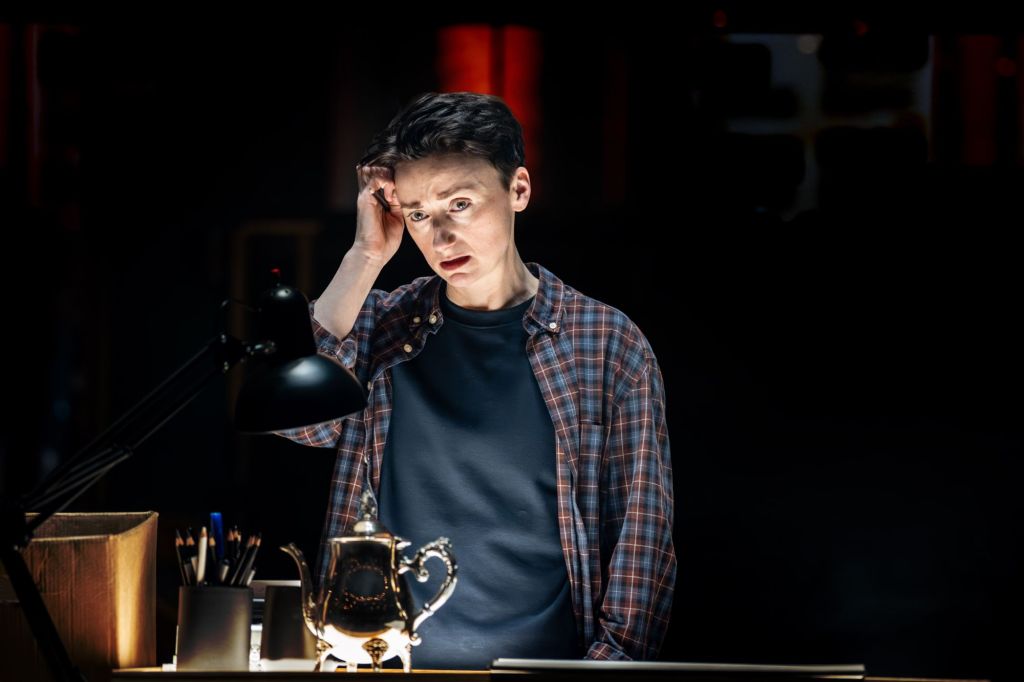
The Royal Exchange provides an ideal setting for such intimate archaeology. Its in-the-round staging places the audience almost inside Alison’s memories, close enough to catch every flicker of uncertainty and every carefully concealed hurt as the adult Alison sensitively portrayed by the wonderful Jodie McNee looks back at her past.
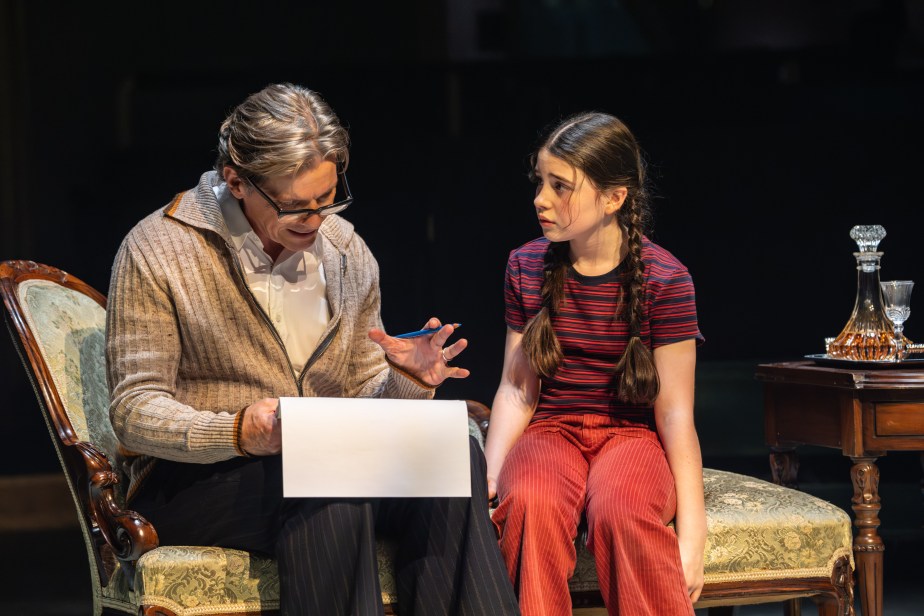
The performances are all very strong , with each of the three Alisons capturing different shades of the same searching soul. Their transitions between childhood curiosity, teenage awakening and adult reflection feel seamless, allowing the audience to witness a life gradually assembling itself from fragments. There is a rotating cast of 3 ensembles playing the children and Harriet O’Shea sets the bar very high as young Alison delivering a phenomenal performance. Her rendition of Ring of Keys is a gorgeous portrayal of a pivotal moment of self-recognition.
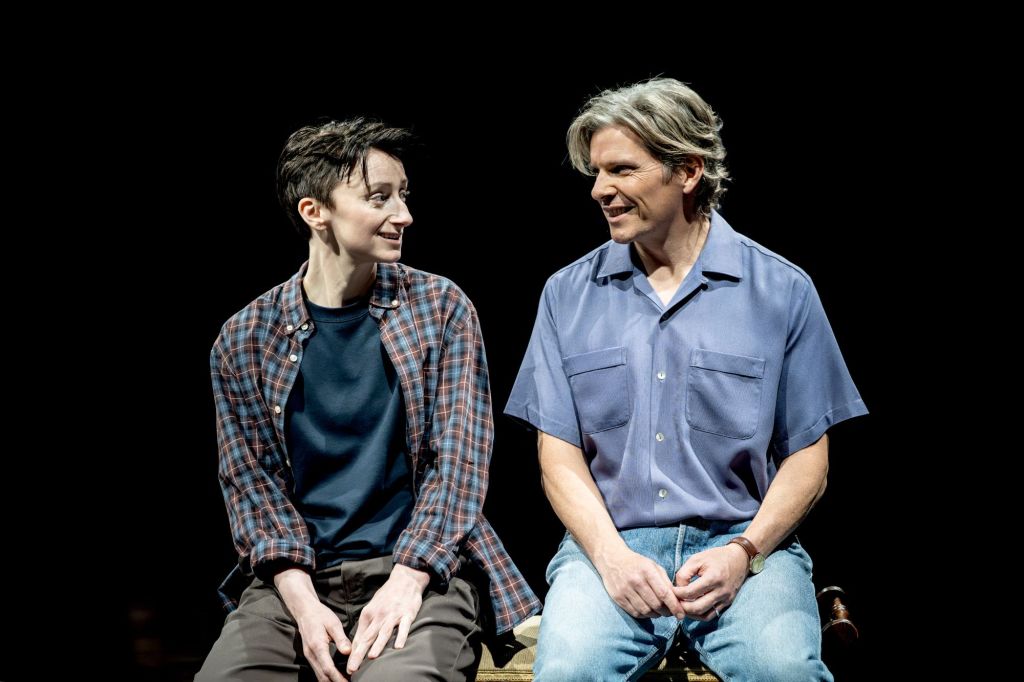
At its emotional centre stands Bruce Bechdel, a complex man grappling with his own sexuality and penchant for very young men. Nigel Harman portrays this troubled perfectionist as both vulnerable and loving yet emotionally unreachable. He is a man trapped by expectations that slowly become impossible to sustain as his secret life starts to bleed through into his immaculately constructed persona. His relationship with Alison unfolds not through grand revelations but through fleeting moments that, with hindsight, carry enormous weight. It is a heartbreaking reminder that understanding often arrives after the opportunity for conversation has disappeared.
Jeanine Tesori’s richly textured score avoids theatrical bombast, instead allowing emotion to emerge naturally from the characters’ inner lives. Lisa Kron’s book is witty, perceptive and quietly devastating, balancing moments of genuine humour with profound sadness. There is the painfully haunting Days and Days as a mother reflects on a fractured marriage, but also the joyous coffin scene with Come to the Fun Home where the kids make a commercial for their family funeral Home which has an infectious Car Wash feel.
The production resists sentimentality, trusting its audience to sit with ambiguity rather than resolve it. McNee is a good conduit for that level of emotional delicacy as we watch her witness and absorb her memories, although there are points where its frustrating to see such a fine actress often on the sidelines. The light touch pays off and Frankcom clearly understands that grief is not always loud; often it whispers through remembered conversations, unfinished sentences and questions that linger for decades.
Fun Home ultimately becomes less about sexuality or family secrets than about the universal longing to be truly seen by the people we love. It acknowledges that parents are complicated, children can be unreliable historians of their own lives, and forgiveness is rarely complete.
This exquisite Royal Exchange production is compassionate without becoming sentimental, emotionally rich without manipulation, and its impact continues to resonate long after you leave the theatre. It doesn’t simply tell Alison Bechdel’s story. It gently invites us to reconsider our own and those of our parents and of our children.
★★★★☆