FUN HOME

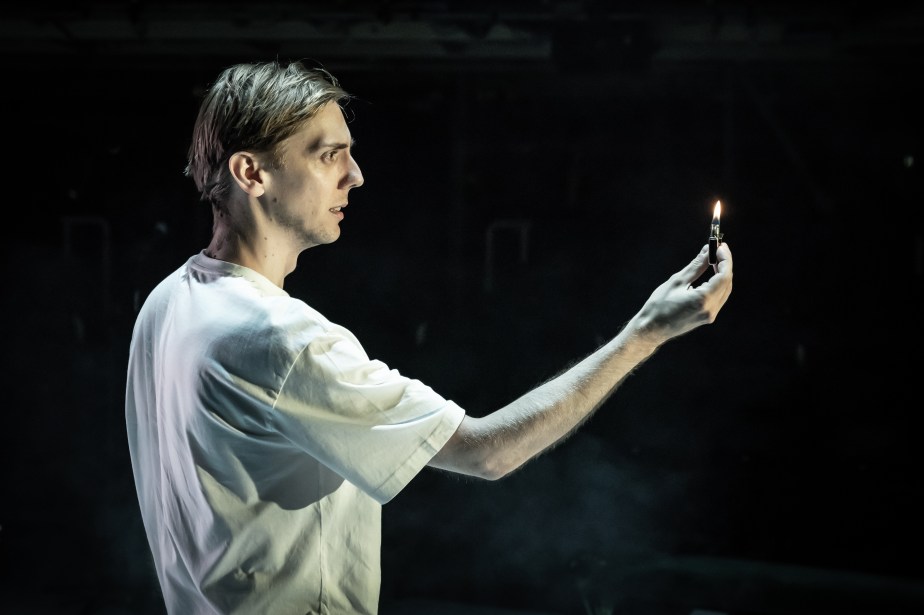
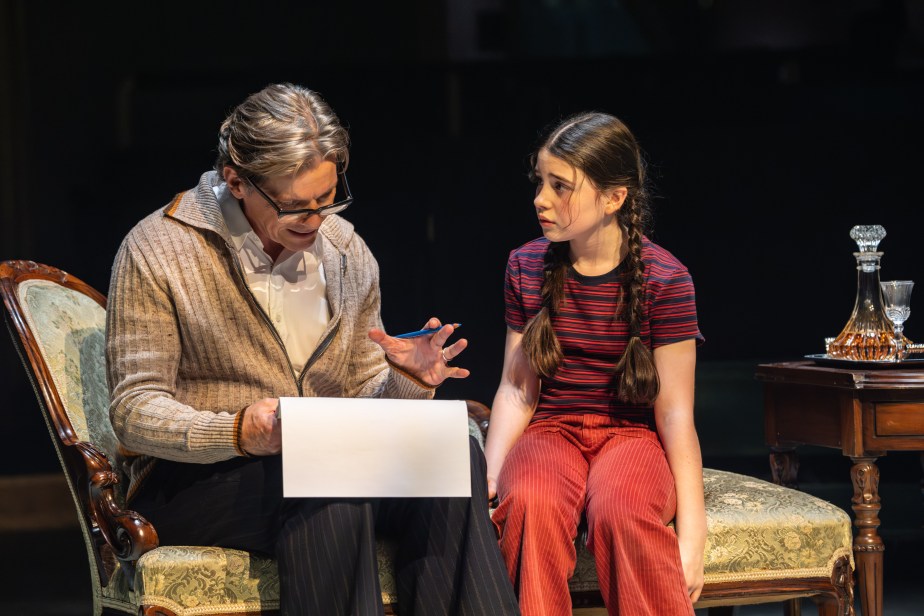
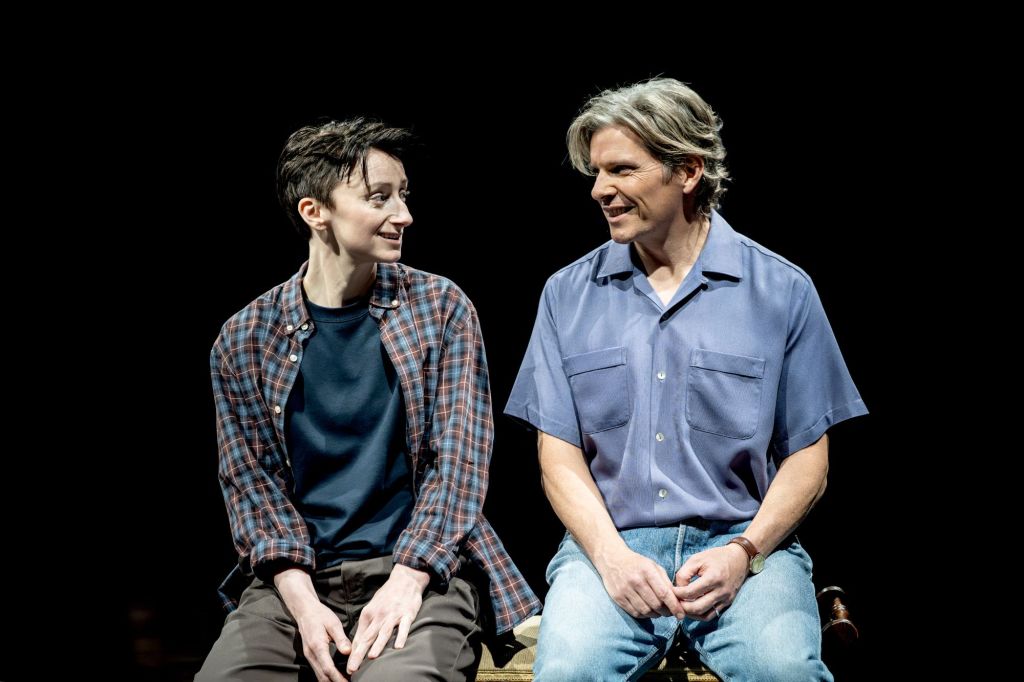
Jodie McNee and Nigel Harman in Fun Home at The Royal Exchange Theatre.
Image credit: Johan Persson

Some musicals leave you humming a catchy tune on the journey home. Fun Home leaves you quietly sifting through your own memories, wondering how families can be built from equal measures of love, silence and misunderstanding. Director Sarah Frankcom returns to The Royal Exchange with this deeply affecting production to embrace that complexity with grace, intelligence and emotional precision.

Based on Alison Bechdel’s celebrated graphic memoir, Fun Home traces the cartoonist’s journey through childhood, adolescence and adulthood as she attempts to understand both her own identity and the enigmatic father she lost too soon. Rather than following a straightforward chronology, memories collide, overlap and revisit each other, reflecting the way recollection really works. It is less a story and more an excavation of the childhood memories that flood in as we unpack the boxes of possessions that so often come to represent the lives of our loved ones after death. For any of us who have grappled with delving through the personal objects of family members there is the joy of reconnecting but also the shock at what new insights may be revealed. Here there is the added poignancy of watching Alison grapple with these memories as she stands on the cusp of being the same age as her father when he chose to end his life.

The Royal Exchange provides an ideal setting for such intimate archaeology. Its in-the-round staging places the audience almost inside Alison’s memories, close enough to catch every flicker of uncertainty and every carefully concealed hurt as the adult Alison sensitively portrayed by the wonderful  Jodie McNee looks back  at her past.

The performances are all very strong , with each of the three Alisons capturing different shades of the same searching soul. Their transitions between childhood curiosity, teenage awakening and adult reflection feel seamless, allowing the audience to witness a life gradually assembling itself from fragments. There is a rotating cast of 3 ensembles playing the children and Harriet O’Shea sets the bar very high as young Alison delivering a phenomenal performance. Her rendition of Ring of Keys is a gorgeous portrayal of a pivotal moment of self-recognition.

At its emotional centre stands Bruce Bechdel, a complex man grappling with his own sexuality and penchant for very young men. Nigel Harman portrays this troubled perfectionist as both vulnerable and loving yet emotionally unreachable. He is a man trapped by expectations that slowly become impossible to sustain as his secret life starts to bleed through into his immaculately constructed persona. His relationship with Alison unfolds not through grand revelations but through fleeting moments that, with hindsight, carry enormous weight. It is a heartbreaking reminder that understanding often arrives after the opportunity for conversation has disappeared.

Jeanine Tesori’s richly textured score avoids theatrical bombast, instead allowing emotion to emerge naturally from the characters’ inner lives. Lisa Kron’s book is witty, perceptive and quietly devastating, balancing moments of genuine humour with profound sadness. There is the painfully haunting Days and Days as a mother reflects on a fractured marriage, but also the joyous coffin scene with Come to the Fun Home where the kids make a commercial for their family funeral Home which has an infectious Car Wash feel. 

The production resists sentimentality, trusting its audience to sit with ambiguity rather than resolve it. McNee is a good conduit for that level of emotional delicacy as we watch her witness and absorb her memories, although there are points where its frustrating to see such a fine actress often on the sidelines. The light touch pays off and Frankcom clearly understands that grief is not always loud; often it whispers through remembered conversations, unfinished sentences and questions that linger for decades.

Fun Home ultimately becomes less about sexuality or family secrets than about the universal longing to be truly seen by the people we love. It acknowledges that parents are complicated, children can be unreliable historians of their own lives, and forgiveness is rarely complete.

This exquisite Royal Exchange production is compassionate without becoming sentimental, emotionally rich without manipulation, and its impact continues to resonate long after you leave the theatre. It doesn’t simply tell Alison Bechdel’s story. It gently invites us to reconsider our own and those of our parents and of our children.

★★★★☆
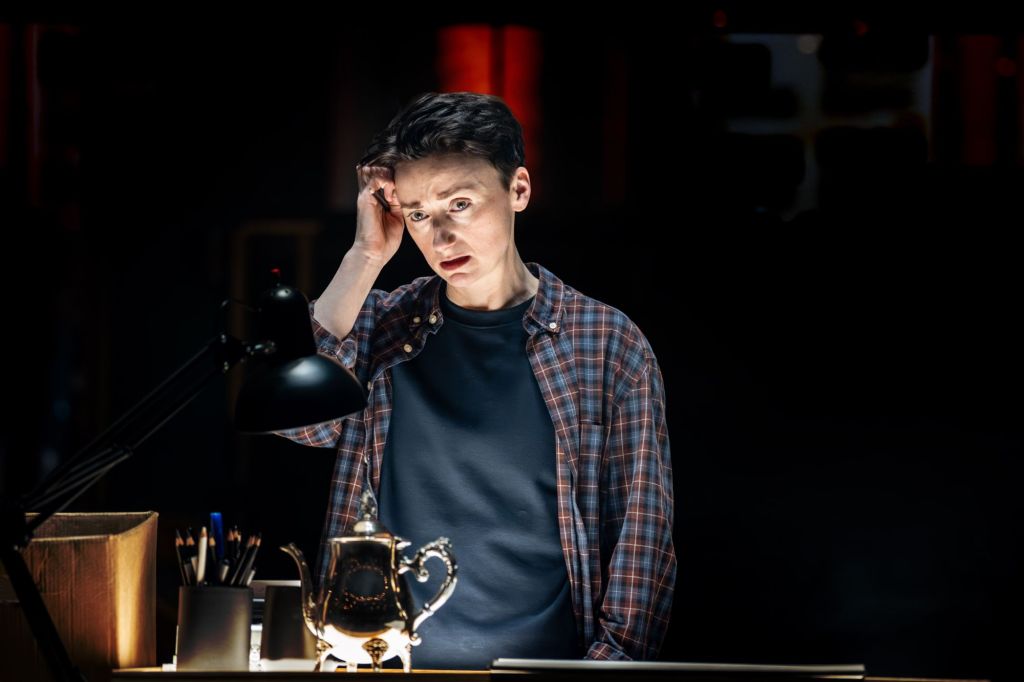
Jodie McNee as Alison in Fun Home at The Royal Exchange Theatre. Image credit: Johan Persson

The Royal Exchange Theatre 3rd July – 1st August 2026

THE GLASS MENAGERIE

Joshua James and Rhiannon Clements as Tom and Laura. Photograph: Marc Brenner

Written by Tennessee Williams

Directed by Atri Banerjee

ROYAL EXCHANGE THEATRE

Like so many other productions delayed or impacted by the Pandemic, Atri Banerjee’s vision for The Glass Menagerie altered over the last two years. We will never know exactly what this production might have looked like in early 2020 but it is hard to imagine it being better than this current reimagining of the Tennessee Williams‘ poignant classic. Our personal experience of lockdowns in our homes lends itself perfectly to this claustrophobic image of a home constrained by unfulfilled desires. Like Williams, Atri Banerjee understands love in its many flawed manifestations and allows the intense emotional pain in the writing to be illuminated with the warm glow of empathy.

The claustrophobia of lockdown for so many mirrors Tom who is trapped at home with his Mother and Laura with his true nature stifled and all his hopes for the future in limbo. In contrast his deeply introverted sister is actually more content cloistered within the home than she ever could be in the outside world, as were so many introverts who actually thrived during lockdown. In this memory play, the Mother takes all her solace from the past as this faded Southern belle relives past glories when she graciously received gentlemen callers on her parents’ porch. The visitor Joe is the first caller of note and as such is both a breath of fresh air in this stale environment and inevitably the catalyst for radical change.

All four performances are uniformly excellent. Joshua James as Tom is weary and hollow eyed, bitter and despondent, trapped in a job that serves only to support his family but dreaming of escape and excitement. Frequent evenings spent in the cinema allude to a secret life, further hinted at when he gives his sister a rainbow scarf from his evening sojourns. James is utterly believable with his Southern drawl and dry whip smart retorts. He embodies the tortured young man equally capable of casual cruelty and genuine tenderness. Rhiannon Clements as Laura exudes the palpable discomfort of a young woman far more socially hindered by her neuro diversity than by her physical impairment. It is a thing of quiet magic to observe as she blossoms with the positive and genuine admiration from Joe. Eloka Ivo has little to actively do or say in the first Act yet this actor ensures he maintains an absorbing presence throughout. His performance illuminates the second Act like the glow of candles which Tom lights all around the stage. He has an energy and a physicality that separates him from the others and serves effectively drive the narrative. Geraldine Somerville is perfectly cast as Amanda, the relentless mother whose love can appear monstrous yet comes from the heart of a lioness seeking security for her cubs. Her performance is as brittle as the delicate glass in the Menagerie yet as a Mother she has a core of steel.

Geraldine Somerville as Amanda and Rhiannon Clements as Laura.
Photograph: Marc Brenner
Eloka Ivo as Joe. Photograph: Marc Brenner

This is a gorgeous production where less is always more bar one brief dance scene with Laura and Joe that jars with the overall tempo and pacing of the play. The design by Susanna Vize is stripped back to basics where even the glass menagerie is subtly alluded to rather than centre stage. The simple wooden chairs, the candles and the evoked heavy scent of flowers evoke theatre and home as church like manifestations of weddings, baptisms and funerals. The multiple vases of pale flowers which overshadow Laura’s glass animals also serve to allude to the floral tokens received from all 17 of her Mothers gentleman callers. The heightened drama of the set is the huge illuminated sign saying ‘PARADISE’ which turns through the performance and echoes the church like feel as though a metaphor for Christ on the cross giving up his life for us…just as Tom is being expected to for his family. The staging is complemented by wonderful lighting from Lee Curran and a dreamy soundscape from Giles Thomas.

The Glass Menagerie cast at The Royal Exchange.
Photograph: Marc Brenner

The Glass Menagerie is the 1944 play that was the breakout success for Tennessee Williams and it continues to be a classic that doesn’t date. The themes of family bonds, duty, responsibility and love are intrinsically bound up in the complexities of being different or not wishing to fit with normative values. Atri Banerjee directs this production with intelligence, compassion and perhaps his own personal experience of what love and duty may look like within a family unit. He certainly nails the pain and the passion of love that seeks to find its own way to flourish. Like Williams whose beloved sister is celebrated in Laura, Banerjee is celebrating difference as all the nicer and nothing to be ashamed off.

THE ROYAL EXCHANGE 2nd September- 8th October 2022