The House Party

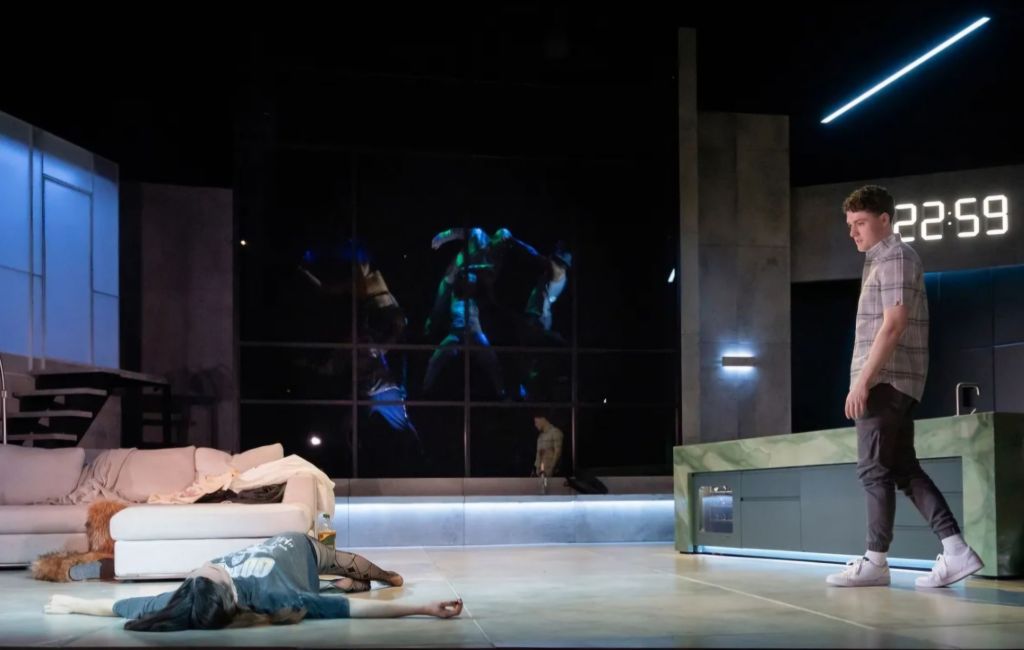
Synnøve Karlsen and Tom Lewis in The House Party Image credit: Ikin Yum

Adaptation by Laura Lomas

Directed by Holly Race Roughan

HOME MCR

August Strindberg wrote Miss Julie as a naturalistic play in 1888. This classic upstairs/downstairs drama explored themes of class, privilege and aspiration and has been subsequently adapted for stage and screen many times. Almost 150 years on Laura Lomas reimagines the play as The House Party where a group of teenagers gather for a hastily arranged 18th birthday party that unfolds as part wild rave, part a night of heady secrets revealed and part kitchen sink drama…albeit in a very fancy kitchen.

This production sees Artistic Director of Headlong, Holly Race Roughan take the reins in a collaboration with Frantic Assembly. The result is a vibrant, pacey deep delve into youth culture observing what can build strong bonds for teenagers or splinter apart these often fragile relationships. The coupling of these two high calibre theatre companies is a much more successful enterprise than anything achieved by the messy ménage à trois of Julie, Christine and Jon. This production looks great with a clever and sophisticated set design by Loren Elstein and highly impactful lighting by Joshua Pharo and Joseph Hornsby. The riotous party scenes that puncuate the production are beautifully executed by Movement Director Scott Graham from Frantic Assembly. This drives the narrative by both ramping up the tension and vividly illuminating the joy and sense of belonging found on the dance floor.

The House Party cast
Image credit: Ikin Yum.


In this production the three main protagonists are reimagined as Generation Z teenagers who connect over shots and selfies and wield their power through sex and revenge porn. Julie is pretty and privileged and Synnøve Karlsen imbues her with a chameleon quality that allows her to flit between winsome and  charming or caustic and loathsome. Weaponising her pain in shocking ways, her capacity to destroy those she loves and sabotage her own happiness is quite the thing to observe. Sesley Hope as Christine is an excellent foil as the best friend from a working class background. Whereas Julie appears quite unhinged by her past trauma, Christine is grounded and much more robust despite her own challenging family background. Tom Lewis is Jon who professes love for Christine but once harboured desire for Julie watching her grow up. He deeply resents her hold on Christine and  how he went unnoticed as the son of the family cleaner.

Three teenagers with hopes and aspirations are all equally trapped in their own harmful  patterns. Julie only knows how to get attention through destructive behaviours, Christine sabotages her chance to go to Cambridge University and Jon aspires to be a perfect boyfriend yet for all his genuine care he displays callous and misogynistic qualities.  All the performers in lead roles give strong and convincing performances though  Lomas definitely seems more at home writing authentic female characters.

This punchy drama aims high and is a searing insight into the impact of fast paced, digital culture where lives can be destroyed by simply pressing Send or Share and sentiments are reduced to vacuous soundbites. Unlike the original Miss Julie, this adaptation has a coda   which takes place ten years on from the shocking events of the party. I’m unsure how necessary or indeed successful this is as the huge digital clock races forward in time to reveal what happens in the aftermath. As a dramatic device it may have been more effective used as an opener to the production then rewinding back to the party and its explosive sequences.
HOME MCR 25th- 29th March 2025

Tour Dates

A Raisin in the Sun

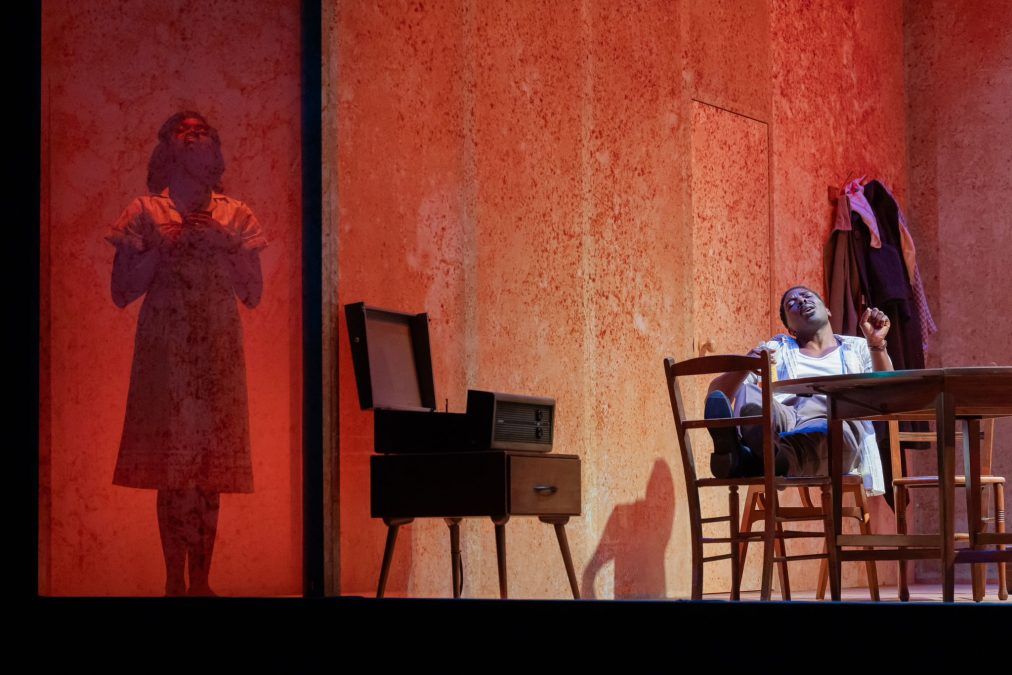
Cash Holland as Ruth and Solomon Israel as Walter Lee in A Raisin in the Sun at Leeds Playhouse. Image credit: Ikin Yum.

Written by Lorraine Hansberry

Directed by Tinuke Craig

A Headlong, Leeds Playhouse, Lyric Hammersmith Theatre and Nottingham Playhouse co-production

“Her creative ability and her profound grasp of the deep social issues confronting the world today will remain an inspiration to generations yet unborn.” These were the words of Martin Luther King Jnr spoken in 1965 at the funeral of playwright and activist Lorraine Hansberry. Almost 65 years on, her seminal play A Raisin in the Sun remains just as powerful as it was when originally produced as the first play by a black woman on Broadway. This new production directed by Tinuke Craig celebrates the writing of the hugely talented Hansberry as successfully as  her production of August Wilson’s Jitney in 2022.

This production has all the elements of a classic kitchen sink drama as three generations of the Younger family are crammed into a roach infested apartment with paper thin walls and a shared bathroom in Chicago. Times are changing and so are the  fortunes of this family who are waiting on a life insurance payout. The Matriach, Lena aspires to buy a small home with a yard to plant flowers and finance her daughter through college. Walter Lee, her son is a dissatisfied dreamer who sees the money as a way out of his job as a chauffeur and into a life as an owner of a liquor store with a fleet of cars on his own driveway. His weary wife Ruth wants nothing more than to get out of this cramped apartment and soak in her very own bathtub. Beneatha, the daughter imagines a bright future as a doctor. Grandson, Travis would simply be happy with a bedroom rather than sleeping on the living room couch each night.

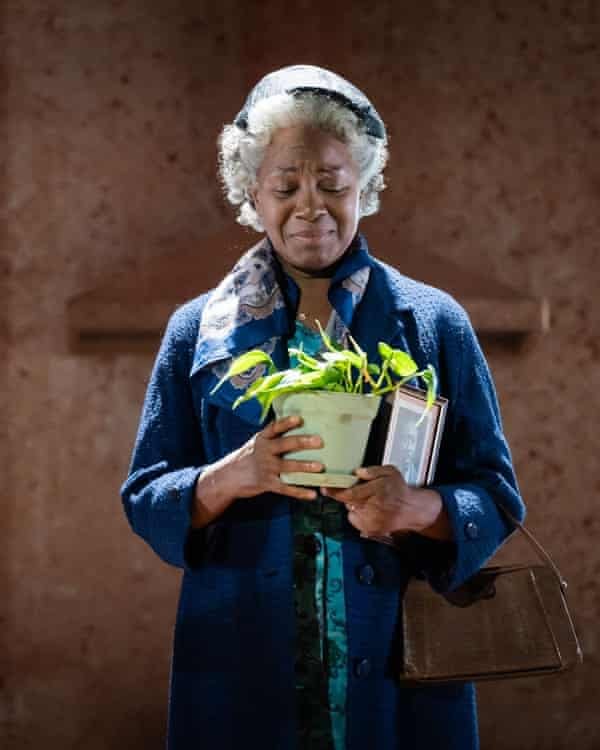
The issues confronting this family are  societal racism, poverty and how it restricts our choices and the politics of housing which remain just as relevant today. Each character is fully fleshed out and has complexity and depth. Doreene Blackstock as Lena exudes grace and resilience as she attempts to tend to her children while struggling to understand their very different desires. There is a yawning chasm between a woman who once saw freedom as not being lynched and a yearning to own rather than be owned and the very different aspirations of her children. Solomon Israel as her son is not afraid to play the greedy hapless dreamer who eventually finds some honour. He moves fluidly between casual cruelty and drunken misogyny to moments of real tenderness as he tries to navigate being the man of the house and doing right by his family. Joséphine-Fransilja  Brookman brings a  light comic touch to her portrayal of Beneatha. At times a flouncing, petulant teenager with as many aspirational hobbies as boyfriends there is also emotional depth as a young woman desiring a career rather than a husband, and who has more faith in herself than in a God. Cash Holland may sometimes lean too much into the melodrama but is very believable as a young wife living with her husband’s family and desperate to escape the cramped living  conditions. One of three sharing in his role as Travis, Josh Ndlovu is excellent as the young boy in the midst of all the family drama.

Image credit: Ikin Yum

The set design by Cécile Trémilières adds a dreamy realism. The sparse but perfectly clean furnishings illustrate the pride these women take in making the best of what is available to them, while the paper thin transparent walls highlight the lack of privacy and the tenuous nature of renting in an impoverished tenement. The dreamy, almost ghostly aspects of characters lit within the other rooms is highly evocative and perfectly alludes to the generations gone before who also dreamt of ownership and security.

The second Act looks at the repercussions of Lena buying property in a white area of Chicago. Ironically this is the most affordable option but it heralds a knock on the door from the politely “acceptable” face of racism as Karl from the Clybourne Park welcome committee offers to buy back the home from the family. Faced with the options to recoup the money Walter Lee has lost or have a home of their own despite the risks, the Younger family must make yet another monumental decision. A Raisin in the Sun was inspired by the poem Raison by Langston Hughes who asked What happens to a dream deferred? There will always be a multitude of answers to this question but this production gives its own response, and it is as powerful as Lorraine Hansberry first intended in 1959.

Leeds Playhouse 13th -28th September 2024

Lyric Hammersmith 8th Oct – 2nd Nov 2024

RICHARD III

Written by William Shakespeare

Directed by John Haidar

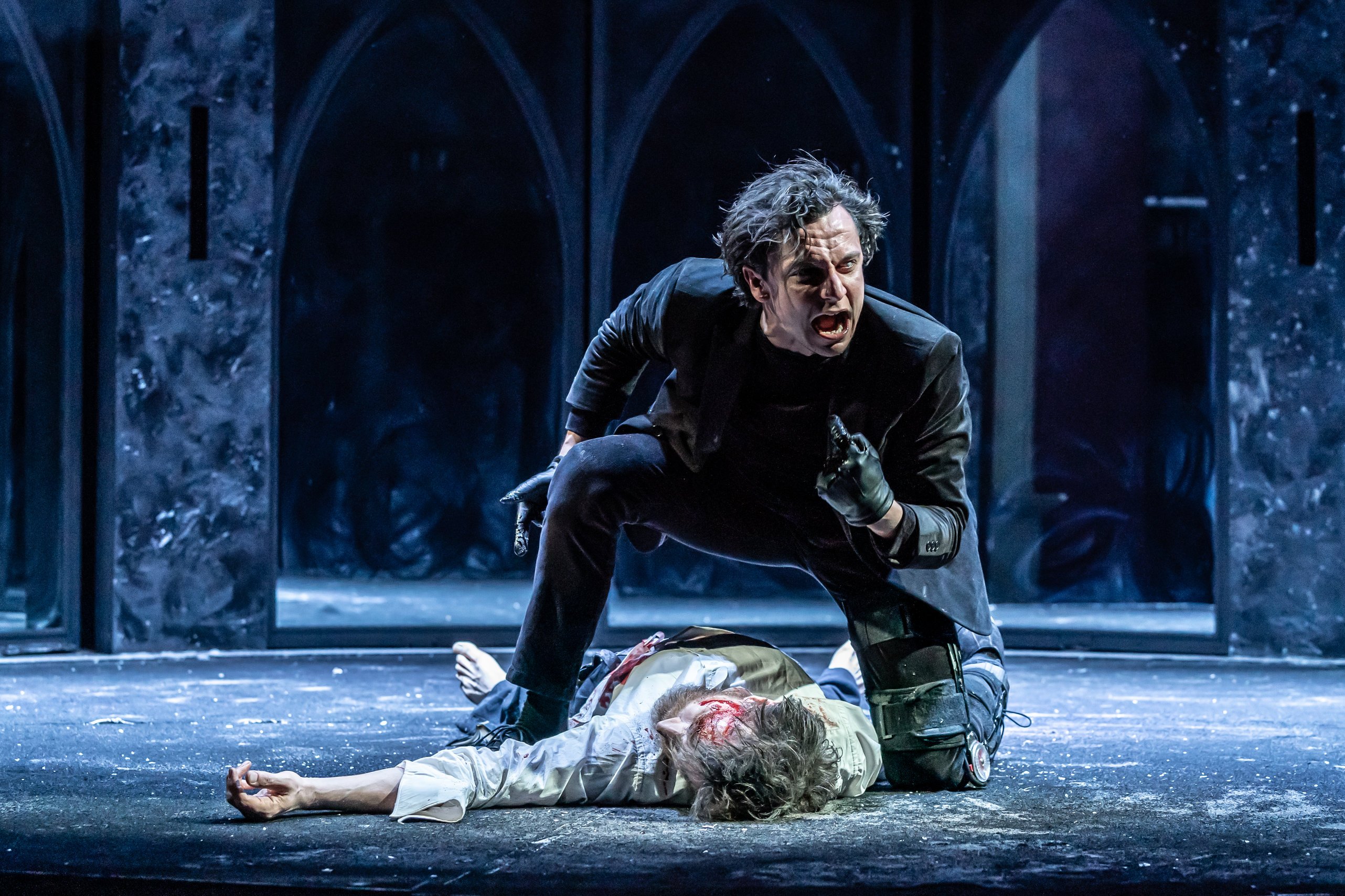
Shakespeare’s tale of the “undigested and deformed lump” that is his Richard III is considerably tweaked in this version by John Haidor for Headlong. Here we see a man more emotionally stunted than physically restricted by his disability. Tom Mothersdale delivers a Richard whose twisted body is as fluid as his nature is mercurial. The hall of mirrors that dominates the set serves as judge and jury to Richard’s lack of conscience and reflects back to the audience as a means of drawing us into this tale of political greed, narcissistic ambition and false news.

Mothersdale manages to repulse and charm in equal measure. His capacity for brutal acts and honeyed words is that of a true sociopath or charming manipulator. Moments of visceral violence as he bites his victims with the suddenness of a deadly spider sit uncomfortably alongside humour as he mischievously addresses the audience close up or prances with a makeshift crown like a gleeful child ransacking the dressing up trunk. For all his cunning and remorseless violence there is the vulnerability of a child who recognizes his mother is ashamed of his twisted body and repulsed by his twisted nature. Director Haidar ensures that we see this wounded child who has long ago decided that if he cannot have the love and admiration of others, he will command their hate and fear. Mothersdale captivates throughout in what is a truly demanding role. Rarely off stage he is never less than electrifying especially in the second act when demented by jeering ghosts he sees his fleeting success melt away on the battlefield. Bloodied and mud stained he smears mud across the reflected ghosts as if to wipe out any hint of his own wrongdoings.

Chiara Stephenson has designed a set that is gloomy and forbidding in its grey ramparts and dungeons but cut through with reflective mirrored archways. These arches allow actors to move rapidly between scenes while also creating depth to the set as the ghosts appears behind them and the audience is reflected in them looking at ourselves just as Richard examines himself in these multiple looking glasses.

Haidar makes use of every possible dramatic element that can be drawn from this gothic castle. Stony grey yet pulsating with life and bloodied by death this is a building that echoes its history in every mirrored arch reflecting lives once there and now just ghosts in the fabric of the building. The use of light and sound by Elliot Griggs and George Dennis provide striking flourishes that give the murders and battles scenes slashes of colour and sound that evoke video game violence- perhaps to suggest Richards own childlike lack of awareness of the real consequences of his actions. If at times elements appear overplayed or exaggerated they encapsulate Shakespeare’s original exaggeration of the real man. Whether you love it or not the impact of the attention seeking design elements and directorial flourishes are as in your face as Richard himself.

This feels a very fresh and timely revisiting of Richard III. There is a truly monstrous quality to this character in his relentless quest for political power. The wily cunning off an ambitious man who exalts in having neither pity love or fear is a chilling reminder of some of our politicians who make decisions for us based on their own fragile narcissistic egos and lust for power. Like Richard they strut across the world stage daring us, the audience, in how much we will allow them to destroy before we revolt and them down. Personally there are quite a few political anti heroes I would love to see buried under a carpark in Leicester!

Headlong

HOME 30 April – 4 May 2019

Images by Marc Brenner

Mother Courage

Royal Exchange Theatre

Written by Bertolt Brecht

Adapted by Anna Jordan

Directed by Amy Hodge

The 1939 Brecht original is a searing indictment of capitalism and an unemotional view of how individual characters respond in an unrelenting warzone. There is little space for warmth, humanity or collaboration in Mother Courage. This new production is born from writer and new mother Anna Jordan wanting to adapt the play and collaborate with Director Amy Hodge from Headlong and Julie Hesmondhalgh who had approached Sarah Frankcom about playing this iconic role. This is a collaboration of strong, feminist women and perhaps a timely reminder that we are all stronger pulling together than at war.

The outcome is a Mother Courage that is at times almost unbearably complex. Strong and sassy as hell, an immoral opportunist, a slippery wheeler/dealer, a proud, protective mother that can suffocate and infantilize her children but who cannot empathize with suffering and can only demonstrate her love through providing functional things rather than emotional warmth. The sheer complexity of her character is intentionally uncomfortable forcing the viewer to ask of themselves “What would I do in that situation? What am I capable off?”

Julie Hesmondhalgh has a huge undertaking as her natural warmth could easily feel at odds with Mother Courage. However there is no doubt that she relishes the role. At times unbearably heartless to those who get in the way of her ruthless and desperate pursuit of financial security, she is always a pragmatic Mother and the ultimate survivor. Bartering for her son and ultimately causing his death appears unforgivable yet it is a “Sophie’s Choice” as with no money and no van then the family would all perish. Though utterly distasteful in her lust for the next big deal, there is something unbearably childlike in her capacity to find a thread of good in the bleakest of circumstances. When Kattrin is raped and disfigured, her mother “comforts” her that now she is ugly no one will rape her again, while herself utterly alone and dragging the husk of the van, she reflects that bereft of all children it is lighter to pull.

Director Amy Hodge draws some strong performances from the cast and they all benefit from a wonderfully naturalistic script by Anna Jordan. However the standout performance is from the mute Kattrin played by deaf actress Rose Asling-Ellis. “Her heart is a shining star,” and that is evident as we see the world reflected through her eyes in the midst of all the misery. Her performance is just glorious, conveying more than words could possibly express in the smallest of gestures. A scene where action carries on elsewhere, she sits in the van side of stage carefully arranging her hair to cover her scars and every movement is perfection.

Anna Jordan shifts the action from the 17th century 30 year war to a dystopian future where its 2080 and both Europe and technology have vanished. This is a bleak, barren setting where the red and blue armies fight for space on a grid. With the demise of the E.U. there are no longer emotional connections to countries just a nameless land mass. Striding through this unforgiving setting is the eponymous Mother Courage with her 3 kids – 4 if you factor in her beloved van. Rough hewn cardboard sheets above the stage inform of each scene as do the disparate characters who introduce the action ensuring in true Brechtian fashion that the audience is not misled about what is about to unfold.

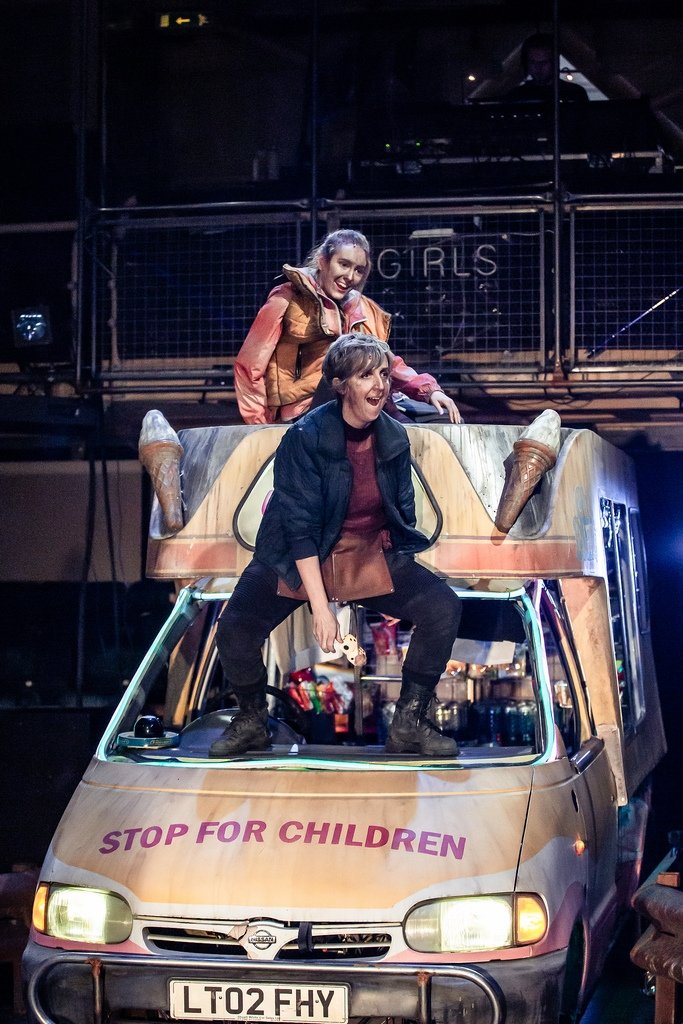
The set design by Joanna Scotcher works really effectively. The battered ice cream van is an inspired choice being a welcome reminder of childhood and safer times yet a sinister refuge that is also burger van, provisions cart, brothel and armoury. The course of the war is perfectly reflected as it is gradually stripped back to a skeletal husk. The oil drum effectively serves as podium for Hedydd Dylan’s insouciant whore, and later in the most beautiful scene it burns brightly as Mother Courage has her final poignant moments with Kattrin.

There are issues with this production, mainly the jarring nature of some of the musical numbers which although are intended as discordant often simply just don’t work at all. The musical number prior to Kattrin’s ruin feels really unpleasantly at odds with that scene. Overall this production of Mother Courage is meaty and full of life- which is more than can be said for the bird MC tries to flog to the army chef!!

Royal Exchange 8th Feb – 2nd March 2019

Images by Richard Davenport

PEOPLE, PLACES & THINGS

HOME

Written by Duncan Macmillan

Directed by Jeremy Herron                          with Holly Race Roughan

Almost 2 years after it’s world premiere at the National Theatre’s Dorfman Theatre Headlong open the first UK tour of People, Places  & Things at HOME. The play retains the original set, but has a new cast and is updated to include reflect recent major political events.

The stark white set is like a tabula rasa before the sudden ear splitting plunge into period drama with Emma as the fragile Nina from Chekhov’s The Seagull. Seconds later and time fractures again like a skipping cd and the seamless shift to the reception area of a rehab unit reveals a second audience facing us with traverse like staging. This device toys with the layers we may all sometimes hide behind. It also  manages to convey that sense in therapy that someone literally  has your back.  In many respects the seating of the audience serves as a second circle of trust in this therapeutic space.

If there is a huge amount of pressure on Lisa Dwyer Hogg to follow the award winning performance of Denise Gough it is not apparent. She delivers a wonderfully brittle, fractured addict trying to survive her many demons. The frequent use of gallows humour sits well with her Northern Irish accent and places her securely in a family of distant fathers and relentlessly harsh mothers.

Her Nina/Emma/Sarah is “excellent at being other people and totally useless being myself.” Like so many addicts she displays a toxic combination of low self esteem and grandiosity, doubting herself as an actress while challenging her doctor to “be cleverer than this. I need you to match me.”

Bunny Christie’s set facilitates the craziness of withdrawal. Aspects of the walls and floor move and shift like prisms and open up to reveal floating images, and alternate Emmas fragment and appear through walls and furniture like ants crawling on skin during withdrawal. 

The therapy space reveals the raw vulnerabilities of those in recovery seeking to deal with pain, make amends in the 12 step programme and ‘practice’ ways to avoid the triggers of people, places and things. As a therapist I can vouch for the authenticity of these characters, the fragility of their sobriety and the beauty of those ‘lightbulb moments’ when new truths are revealed.

The closing scenes are brutal and harrowing as a family explores honesty and their separate truths. Therein lies the painful reality that sometimes the people, places and things we most yearn for are truly the most dangerous. The final moment on stage sees a fragile survivor seeking acceptance from us the audience. 

Booking details

22nd Sept- 7th Oct.