PALMYRA

HOME ORBIT2017

Written and Performed by Bernard Lasca and Nasi Voutsas

Bert and Nasi performed their 2016 show Eurohouse about an hour ago so it feels like I already know these two charming pals or clowns or maybe I’m just beginning to have a sense of what they could be capable off. 

The stage is set as simply as before with two chairs set far apart. What enfolds is on a larger scale than EUROHOUSE and adds a ladder, boards on wheels and china plates, in fact boxes and boxes of broken china plates. Oh and there is a hammer too.

Hauntingly beautiful music inspires a dance where Bert and Nasi literally glide to the music. There is scuffling, destruction and bargaining. This is bigger than the hopeful formation of the European Union and its subsequent splintering as seen in EUROHOUSE. Instead  Palmyra is a painful look at the making and breaking of an ancient civilisation. The piece looks at how complicit we all are in the preservation or devastation of a community, a society or a culture. 

Bert and Nasi flit in and out of civility, acts of  intimidation and literally trying to brush the ugliness and damage out of sight. What started out in EUROHOUSE as disturbingly dark clowning is rapidly becoming more violent and unpredictable in this piece. When one of them threatens the other with a hammer it is then offered to an audience member for safe keeping. Choices become central. Who do you choose to entrust it with? I was contemplated and duly rejected. The keeper of the hammer is faced with what to do next or who to give it back to. 

These two are lovely guys or they might just be Tom & Jerry in human form. Their work together is exciting and provocative creating much needed dialogue about the world we live in.

Palmyra will never be glued back together like a broken plate, nor can those lost lives be revived. Yet we can still react and respond. We can defy expectation and we can try to be better. Perhaps there is still hope for us all if we can still hand some stranger a hammer and anticipate empathy and goodwill rather than large scale carnage.

EUROHOUSE

HOME, ORBIT2017

Created and performed by Bertrand Lesca and Nasi Voutsas

Co-produced by FellSwoop Theatre

From the moment they step on stage it is clear that Bert is a just a little bigger, more confident and sophisticated in every way than the delightfully sweet Nasi. The audience is swiftly engaged in greeting them and each other, before we all hold hands. The jovial assumption being that this will be good for all of us. Tellingly I happily hold hands with the lovely Nasi but soon my arm starts to ache held up at an unfamiliar angle. He smiles. I smile. I show no sign of discomfort. It is a lovely concept that is ultimately unsustainable.

This is EUROHOUSE. The clowning, running and dancing together is joyous and mainly harmonious until a darker edge starts to appear. Competitive elements in our personal and national psyches start to infilitrate the piece. Run fast, yes really fast but not too fast- never go faster than me and I will reward you.

Bert happily shares his sweets with Nasi encouraging and delighting in greedy pleasure. Later almost menacing he asks where the sweets are and clearly wishes them returned. It starts to feel claustrophobic in the space as Nasi has less and less options. There remains the bare vestiges of civility while food is literally taken from his mouth and the clothes from his back. The bonhomie of this functional friendship is cracking and Nasi starts to assert his individuality.

The show had opened with Bert confiding that he will be controlling the sound and lighting for the evening as if to give the nice staff at HOME a break. It is now apparent that the agenda here is control not support.

This is cleverly illustrated by the music choices played ad finitum by Bert who insists on a cloying diet of Sardou’s classic Comme d’habitude (My Way) and Kraftwerks Europe Endless. As an audience we are invited to also choose a song, as is Nasi, though neither get played by the charming Bert. When Nasi defiantly ramps up the volume on Fleetwood Mac’s Go Your Own Way I want to sing along- something I never do! It is a momentary small victory but it feels so good.

The spirit of EUROHOUSE is in sharing and playing and growing just like in the playground when we start to make the friends or enemies we must share a classroom with for the rest of our education. EUROHOUSE brings together performers from France and Greece who met in Scotland. They were part of two different companies FellSwoop and ANTLER. This performance is a bittersweet warning for us all in the aftermath of Brexit. We all need support and friendship but at what cost?

BRAVADO

HOME

Part of Orbit 2017

Written and Directed by Scottee

Entering The Briton’s Protection pub on a busy Saturday night felt intimidating. It was heaving with men out for the night, men on stag do’s, men in football scarves and men already pissed. A perfect setting for performance artist Scottee to stage Bravado as part of Orbit 2017.

Upstairs in the pub a room is set up with 3 flickering and crackling analog screens, a mike and a teleprompter. Tension builds in the room as we wait for someone, anyone, to break the stalemate awkwardness and embarrassment filling the space. We need a volunteer from the audience to stand up and deliver the text, to man up and speak up about Blood, Spit, Tears and Cum. We need a perpetrator or a victim, a male presence to speak the words that Scottee has lived. A different voice each night for a story that remains unchanged and timeless.

This is a visceral and vicious account of working class men at their most brutal and brutalized. It is set against a backdrop of blokish telly of the Nineties like WWE wrestling, The Mitchell brothers in Eastenders and Bullseye. Each segment is broken up with an Oasis song which could be sung by tonight’s bloke. Ours honours the text with real tenderness and compassion but baulks at singing. Yet another insight into the complexity of the male psyche as he reads out such painful experiences but cannot sing the familiar lines of Look Back in Anger.

The content of the text is not easy to hear but the writing is a delight. The emotional pacing and the delicate attention to such brutal details are incredible. Bravado is a lesson in both how not to be a man and a testament to the potential beauty in every man.

PEOPLE, PLACES & THINGS

HOME

Written by Duncan Macmillan

Directed by Jeremy Herron                          with Holly Race Roughan

Almost 2 years after it’s world premiere at the National Theatre’s Dorfman Theatre Headlong open the first UK tour of People, Places  & Things at HOME. The play retains the original set, but has a new cast and is updated to include reflect recent major political events.

The stark white set is like a tabula rasa before the sudden ear splitting plunge into period drama with Emma as the fragile Nina from Chekhov’s The Seagull. Seconds later and time fractures again like a skipping cd and the seamless shift to the reception area of a rehab unit reveals a second audience facing us with traverse like staging. This device toys with the layers we may all sometimes hide behind. It also  manages to convey that sense in therapy that someone literally  has your back.  In many respects the seating of the audience serves as a second circle of trust in this therapeutic space.

If there is a huge amount of pressure on Lisa Dwyer Hogg to follow the award winning performance of Denise Gough it is not apparent. She delivers a wonderfully brittle, fractured addict trying to survive her many demons. The frequent use of gallows humour sits well with her Northern Irish accent and places her securely in a family of distant fathers and relentlessly harsh mothers.

Her Nina/Emma/Sarah is “excellent at being other people and totally useless being myself.” Like so many addicts she displays a toxic combination of low self esteem and grandiosity, doubting herself as an actress while challenging her doctor to “be cleverer than this. I need you to match me.”

Bunny Christie’s set facilitates the craziness of withdrawal. Aspects of the walls and floor move and shift like prisms and open up to reveal floating images, and alternate Emmas fragment and appear through walls and furniture like ants crawling on skin during withdrawal. 

The therapy space reveals the raw vulnerabilities of those in recovery seeking to deal with pain, make amends in the 12 step programme and ‘practice’ ways to avoid the triggers of people, places and things. As a therapist I can vouch for the authenticity of these characters, the fragility of their sobriety and the beauty of those ‘lightbulb moments’ when new truths are revealed.

The closing scenes are brutal and harrowing as a family explores honesty and their separate truths. Therein lies the painful reality that sometimes the people, places and things we most yearn for are truly the most dangerous. The final moment on stage sees a fragile survivor seeking acceptance from us the audience. 

Booking details

22nd Sept- 7th Oct.

We’re Not Really Here – A Football Opera

CONTACT, MANCHESTER 

Knowing nothing much about football and having been to an actual match once (Manc Utd vs Chelsea 30 years ago), I admit to having major reservations about We’re not really here.

I met the co-creator Yahya Terryn at CONTACT in July and I was intrigued by his curiosity about what goes on in the stands and how the footballers experience the crowd from the pitch. He has created these performances in various countries and last night Manchester City picked up the baton/ball/whatever.

CONTACT was crackling with energy and waiting in the foyer felt how I might imagine waiting to come out the tunnel. The audience sat on the Stage while the performers/actual City fans faced us from the stands. As they spill out unto the terrace and the music pumps there is a tangible feeling of anticipation. 

This is exciting theatre regardless of how anyone views football or its fans. The shouting, chanting and singing is phenomenally powerful. At times joyful and infectious, but in other moments warlike, tribal and intimidating. The action is full on interspersed with freeze frame moments where snapshots of the fans reveal  them as individuals but also their personal motivations for being part of this tribe. 

This felt like a authentic take on the fans. Single blokes of all ages, young women snacking on crisps and hotdogs, families kitted out in all the gear, dads bonding with their lads with squabbles and hugs in equal measure. The end result is mainly heart warming and infectious but the speed at which things can potentially turn nasty is sobering and slightly unnerving.

The overall experience is brilliant and the concept creates a genuinely stimulating theatre experience. Further development of the individual interactions and personal stories would help to more fully develop this piece.

Did it work as a response piece? I think Yahya Terryn got his answer last night – ex Man City player Paul Lake who kicked off proceedings was sat directly in front of me with his family. He seemed to be loving every moment and sitting beside his young son was mirroring another father and son on stage. As for me I might not wait another 30 years before my next football match. Result!!

Until September 23rd

OUR TOWN

Royal Exchange Theatre

Thornton Wilder’s 1938 OUR TOWN is often perceived as a cosy, nostalgic view of happier days when life was simpler and slower. Sarah Frankcom’s ensures that Wilder’s original frustration at “the aggressive complacency of the middle class” is more  evident than simply a depiction of small town New Hampshire life before WW1.

The Stage Manager (an excellent Youssef Kerkour) involves the audience throughout  the three acts depicting Birth, Marriage and Death with an actual sense of  real time collaboration. In the opening act Frankcom goes a step further and places some of the audience on stage amongst the actors. We sit and watch life in Grovers Corners much like the dead do from their white chairs on the hill. The effect will differ for the individual. Some will be bored or irritated by the minutiae of daily life and others will be absorbed in the tiny details of everyday rituals.

On the surface the characters are unremarkable and lead insignificant lives. Emily is “naturally bright” yet naive as to the opportunities open to her beside marriage and family. Her father is a journalist yet seems to think the only news of value is local and parochial. Dr Gibbs sees illnesses but is blind to his own wifes’ hopes and dreams. Almost everyone bar the town drunk has a sense of propriety and order to the extent of almost seeming like autobots in a tidy town. When strong emotions crack the surface they seem as dangerous and undesirable as the unwanted automobiles which will literally not sleeping dogs lie.

The tension gradually builds as characters respond to larger life events. The marriage highlights family stresses most of us recognise. Fear of change, last minute bridal nerves, mother’s fears for children leaving the nest, a fathers resignation over giving away his terrified daughter are all beautifully realised. Norah Lopez Holden as Emily is excellent throughout, and the quietly distraught Graeme Hawley as her father soothing her bridal jitters while twisting his fingers in anguish is heart rending.

The final act brings together the dead from past and present. The standout moment in a set so devoid of props is beautifully realised and quite exquisite. The resounding message is do not “spend and waste years like you had a million to waste.” Pay attention to the smallest detail (notably one of the few props at the start and the close is a simple sunflower), as life is so precious and so fleeting.

I grew up in a small town where everyone knows each other, and the local shop is visited daily for supplies of milk, bread and gossip. The graveyard is home to my parents, grandparents and ancestors; to neighbours, friends and local gentry. Visiting last month I imagined them all together chatting and reminiscing on the hill above the deerpark. I like to think they would agree with Wilder and want us all to live each day like it really matters. The here and now may be the very best of what is to come.

Until October 14th 

THE WEDDING

HOME


Gecko opened their tour of The Wedding at HOME and the space has been buzzing all week. Last night was no exception and Gecko delivered a frenetic performance which was high on energy and buzzing with ideas and concepts.

The performance opens in darkness and noise starts to whoop behind and above the heads of the audience and moves swiftly round the theatre. Clever use of sound creates a vivid sense of what is about to happen as a performer bursts out of a chute in his underwear into a pile of teddies. Picking one up he rather reluctantly exchanges it for a wedding dress. It evokes the end of childhood freedoms and the donning of adult constraints. This exchange is officiated over by a stern woman in business dress clutching a clipboard. In this way the stage is set for Creator Amit Lahav to realise his “dystopian world in which everyone of us is a bride, wedded to society.”

The show is a blend of set dance pieces, physical theatre, circus performance and puppetry. There is always a lot happening on stage whether it is inferred from one immigrants face appearing from a suitcase to the exuberance of a Jewish wedding party. There is frequent shifts of musical styles, languages and cultures. We are all wedded to whatever society or culture or religion we are born into. The rupture of divorce from lover, job, culture or community is usually brutal whether we choose it or it is imposed upon us.

Blanked out bureaucratic faces look down from a height at office workers suffocating in endless stale routines, and often the dance reflects the jerking spasms of marionettes whirring into submission. At another point veils are torn away and we simply see another human being hiding his ordinariness behind giants stilts- no bigger or greater than anyone else on stage.

This is a piece that will probably continue to change and develop. It feels chocoblock with ideas like children spilling out of a play chute pumped full of E numbers. There is too much to take in to fully appreciate everything on stage. 

The end piece is triumphant as everyone comes together in a marriage of love rather than a wedding to state. The singing, clapping and stomping fill the theatre til it is booming with life. Home is where the heart is and last night Gecko truly put their hearts into the core of HOME.

Letters To Morrissey

HOME

Letters To Morrissey is a poignant and acute observation of teenage angst and the internal world of a social misfit. Love him or loath him Morrissey has always evoked strong reactions and this 15 yr old writes letters to him in the desperate hope that his idol will guide him through an especially difficult period of his life. 

McNair does not shy away exploring and exploring the awkwardness and discomfort of a 15 yr old boy known in school as “Inky Pubes”. He is deft in his delivery of all his characters except the frustratingly elusive Tony who remains an unknown quantity. Perhaps the authenticity of McNairs’ delivery is such that it is too painful, too raw to truly bring alive this lost boy who is now forever lost.

Sitting at the Erskine Bridge looking back on his youth, a story unfolds of the hope of an always open door, “Come round anytime, you’re always welcome” to the loss of innocence and two friends either side of a door now firmly shut. The story telling is deft and warm and sweet and painful. If Billy Connolly had written and performed plays instead of stand up comedy then I think he might have aimed for something akin to this.

There is a delicious evocation of his enforced sessions with his School Counsellor who is perceptive but also shockingly indiscreet. He breaks all rules of confidentiality and overshares which creates some great bittersweet humour but also reassures an isolated boy that he is not alone in his uncertainty and distress. This creates an opportunity for McNair to open up on paper. These letters are never fandom but are expressions of confusion and fear. The desired reply never comes but the result is the same. By the process of writing answers are found and resolutions are enacted. As in therapy the process is about finding your own voice and being true to Self; having faith that sometimes doing a bad thing does not make you a bad person.

The staging is both simple and startling. The bedroom is filled with a beanbag chair, a record player, carefully tended albums and books on Oscar Wilde. The background of posters of Morrissey are dimly backlit and at other times dramatically illuminated with powerful flashing lights. This is most effective as Director Gareth Nicholls evokes Morrisseys’ Barrowland Ballroom gig in such a way that it feels like you are there standing in the moshpit with McNair and Jan the Lesbian.

This is a deserving winner of a Scotsman Fringe First award. It is an authentic insight into the teenage mind and a reminder of the fragility of the young mind in a time when mental health and arts provision funding is being decimated by our government. McNair reflects on his story by Erskine Bridge where more than 15 people commit suicide each year (£3.5 million has been spent on suicide barriers). Morrissey sang about “a light that never goes out”, perhaps as long as this play is touring that light is safe.

HOME Until September 16th

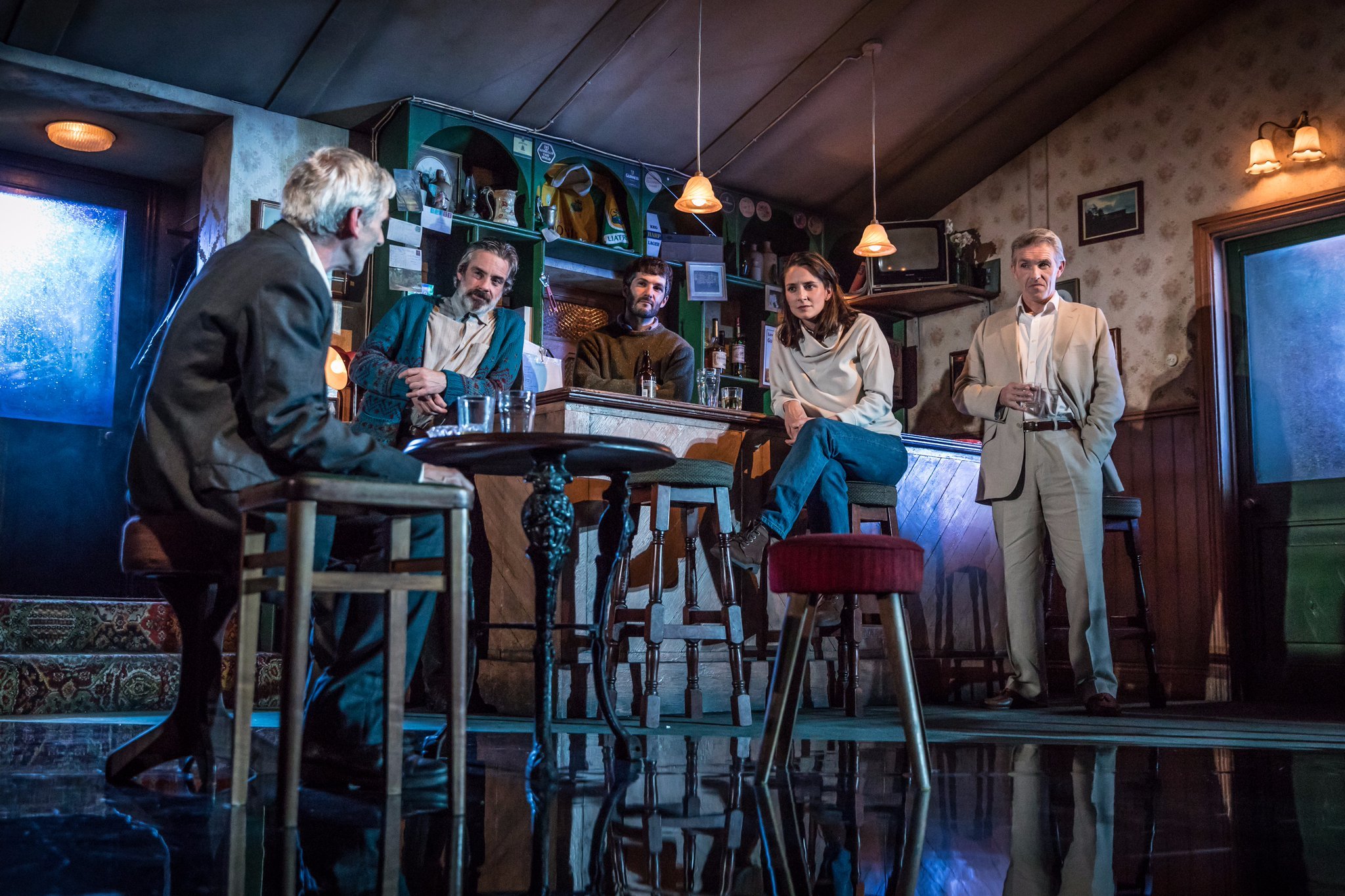
The Beggar’s Opera 


Image by Mark Carlin

STORYHOUSE, Chester.

Walking in to this brand new space is a delight. Wall to wall books surround huge tables to eat at and cosy spaces to sprawl in. The space is bright, airy and lively. Here to see the theatre, the rest is an unexpected pleasure; and also includes community meeting spaces, a story telling space for kids and a cinema. The theatre space does not disappoint. Welcoming and cosy it is in 500 seat mode surrounding a large stage, but can alter to accommodate 800. 

The glowing candelabras lower and a musician starts to play the harpsichord. A raucous Irishman ruptures the elegant period moment by lunging unto the stage as though stumbling in from the street and so opens The Beggar’s  Opera. Soon the stage starts to fill from all directions and the energy ramps up as Caolan McCarthy’s beggar leads this 18th century ballad opera firmly into 21st century Chester courtesy of  electric guitars and drums etc. The impact is vibrant and eclectic and feels like Vivienne Westwood, Tim Burton and Adam Ant are in the wings feeling delighted with this bawdy party.

Writer Glyn Maxwell  and composer  Harry Blake do a good job creating a modern day relevance to the piece and the audience are warmly receptive to the local references. The vocal performances are mainly strong however there are a few points when it is difficult to grasp all the lyrics particularly when singing en masse seem to blur the clarity of the vocals.

The staging is very effective and the lighting is perfectly atomospheric in every scene. The costumes are a joy and I’m tempted to see if you can check out costumes as well as books at The Storyhouse!

The performances are gutsy, visceral and ribald as befits these raffle taggle blend of thieves, whores and henchmen. Standing out is the earthy honesty of Lucy Lockit the pregnant jailers daughter who shines in the portrayal by Nancy Sullivan and her comic foil is Polly Peachum, the pretty and vacuous ingénue convincingly played by Charlotte Miranda-Smith.

As in the original the menfolk are weak dandies like the Captain or deplorable villains like Peachum and the jailer. The women are no better but their desperate circumstances remind us there are often limited choices in a society built oncapitalist greed and social inequality.

Artistic Director Alex Clifton has launched his programme for The Storyhouse with a bold and familiar tale and ensured that the story resonated with the local community. It is a really promising start in a great space for the largest repertory company aside from The RSC and The National Theatre. This is a promising opening chapter for The Storyhouse.

Leaving the bright and modern theatre on a busy Saturday night was a stark reminder of an unequal society. Passing noisy bars with drunken groups on stag nights and homeless men begging on the cobbles it felt like The Storyhouse performance had left the building and become a promenade performance  through the quaint dark streets of Chester.

From 11 May – 19 August


Gutted – HOME

So glad I saw this with you Caroline😊

unrestrictedviews's avatarUnrestricted views

Gutted - High-Res Image

Watching Liz Richardson in ‘Gutted’ puts me in mind of that old Roberta Flack classic: “Killing me softly with his song, telling my whole life with his words …” In a performance which is both subtle and brutally frank, Liz tells the story of her personal experience with ulcerative colitis – all of which feels horribly familiar to me, having myself been a victim of this disease a couple of decades ago.

The stage is set with three toilet bowls, from which, at various points, Liz extracts pro-biotic yoghurts: ‘good for the gut,’ she is told – as if they could halt the progression of this relentless disease. She presents her story largely through the voices of people she knows or meets – friends, relations, colleagues, nurses, strangers. With gentle humour and an extraordinary lightness of touch, she charts the life-disrupting hospital stays, the endless indignities, the pain, the shame…

View original post 304 more words