A Christmas Carol

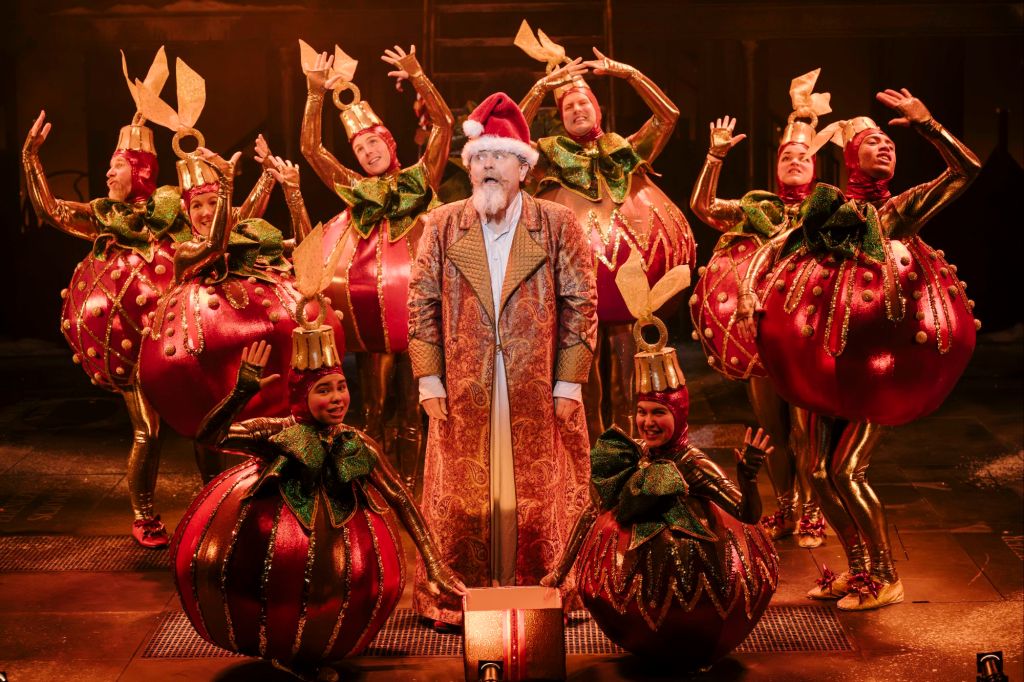
Reece Dinsdale as Ebenezer Scrooge with the ensemble cast in A Christmas Carol at Leeds Playhouse
Image Credit: Helen Murray

Adapted by Deborah McAndrew

⭐️⭐️⭐️⭐️

A warm, witty, and wonderfully human A Christmas Carol seasoned with some Yorkshire grit.

Leeds Playhouse once again unwraps its annual festive treat, and this year’s A Christmas Carol is a glowing, golden bauble of a production. Set in Victorian Yorkshire wool mill, it’s traditional enough to satisfy the purists, yet peppered with just enough invention to keep the tale feeling spry, spirited, and surprisingly fresh.

From the moment the ensemble spills onto the stage, singing carols with crisp winter harmonies, there’s an infectious sense of festive togetherness. The production leans into the story’s communal heart: figures materialise from the shadows to become narrators, townsfolk, ghosts, and even Scrooge’s own conscience, creating a fluid world where past, present and future overlap like swirling snowflakes.

At the centre of it all is Reece Dinsdale as a sharply etched, quietly devastating Ebenezer Scrooge. The performance is refreshingly understated; rather than a cartoon miser, we’re given a man worn down by choices, loss, and habit. This gives the eventual thawing of that famously icy heart real emotional heft and makes his giddy transition into festive joy all the more delightful.

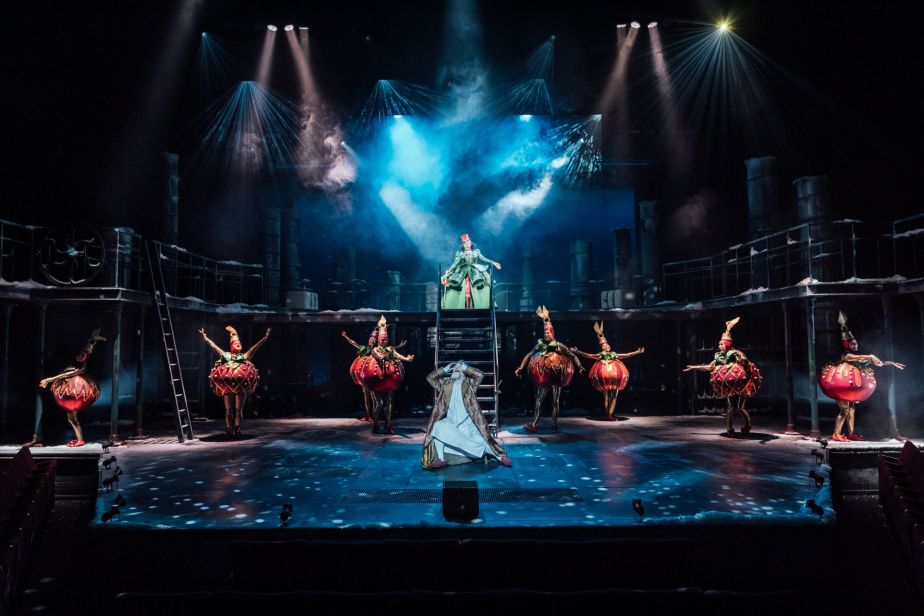
The Ghosts are a particular triumph.  Bea Clancy as The Past arrives with a gentle, moonlit glow, weaving memory and melancholy together with a dancer’s grace. Claudia Kariuki bursts in with boisterous charm, a living embodiment of abundance and goodwill, sweeping the audience into laughter with every generous gesture. Their performance is a real scene stealer and when surrounded by the human dancing baubles, this is a real highpoint in this production that evokes part big Hollywood musical, part grand burlesque production. And the wraithlike Ghost of Christmas Future is evoked with spare, elegant, and utterly silent drama that is visually haunting and remains chilling in its simplicity, a reminder that even the most festive tale has its shadows.
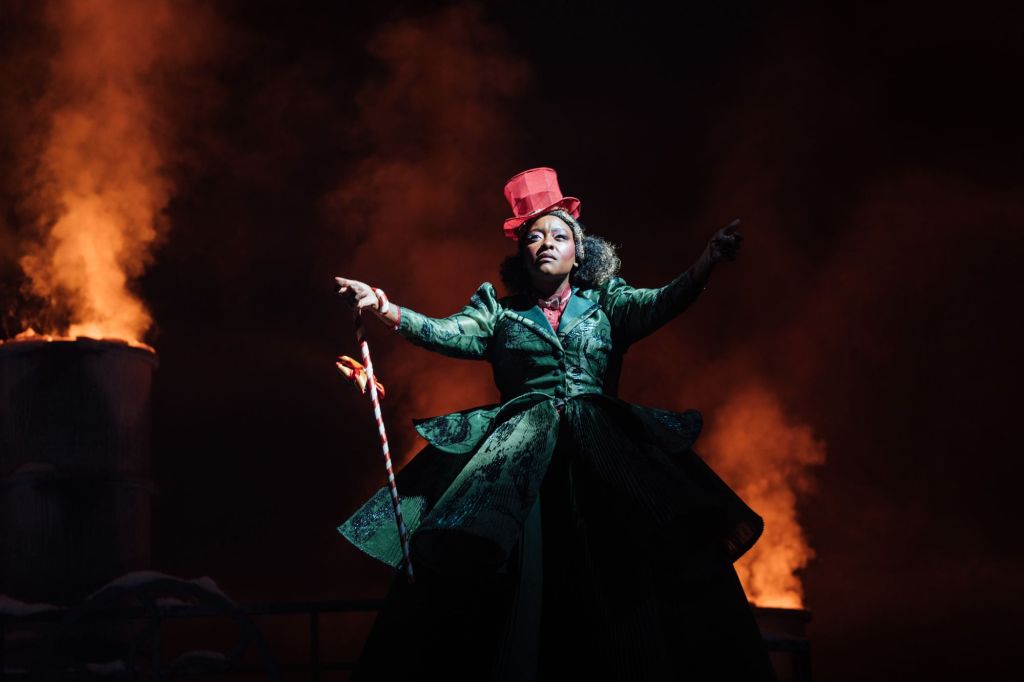
Claudia Kariuki as The Ghost of Christmas Present. Image credit: Helen Murray

The Cratchit family, The Fezziwigs and Scrooge’s nephew, Fred are all the embodiment of good nature and strength in adversity. Their scenes perfectly highlight everything that Scrooge has loss in his quest for financial success. The deaf actors in the Cratchit family are highly effective giving some beautiful moments such as Nadia Nadarajah giving a silent but deadly takedown of Scrooge while Stephen Collins brings a gentle warmth to every scene as Bob.


Visually, this production is a feast. The set design by Hayley Grindle conjures Victorian Leeds with warm lamplight, crisp silhouettes, and a set that expands and contracts like the folds of a storybook. Costumes shimmer with earthy, Dickensian texture, while clever lighting shifts the tone from cosy hearthside scenes to eerie graveyard gloom in an instant. Music plays a starring role with brass band music in the background and live accompaniment on stage threading through the piece, giving it the feel of a carol concert wrapped in theatrical magic.

If there’s the occasional moment where the pacing softens or a sentimental beat lingers a little too long, it’s easily forgiven in a production that so wholeheartedly embraces the season’s spirit. This isn’t a radical reinvention, nor does it try to be. Instead, it’s a lovingly crafted, community-minded Christmas retelling that understands exactly why audiences return to Dickens year after year. Director Amy Leach knows the Playhouse audience well from her tenure as Associate Artistic Director and as always is a deft hand at creating work that is incredibly inclusive which never veers into tokenism.

Warm, witty, and full of heart, Leeds Playhouse’s A Christmas Carol is a festive hug in theatrical form. A show that sends you back out into the night believing, just a little bit more, in kindness, generosity, and second chances.
LEEDS PLAYHOUSE 20th Nov ’25 – 17th Jan ’26

The Rock’n’Roll Panto 2025: Jack and The Beanstalk

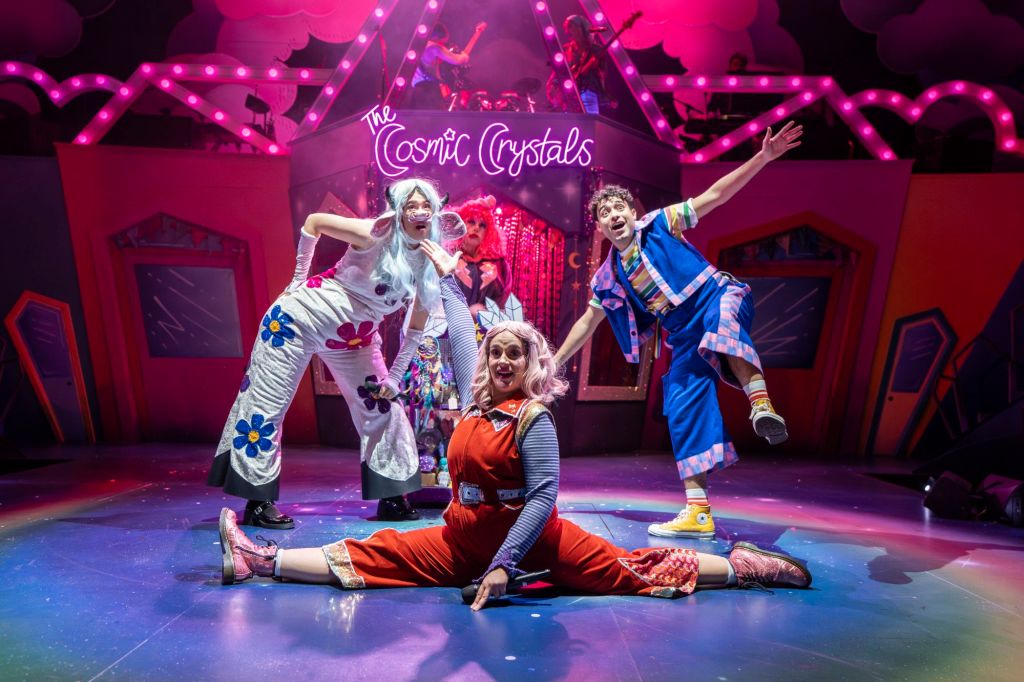
Jack and The Beanstalk at Liverpool Everyman. Image credit: Ellie Kurtz

Written by Chloe Moss

Directed by Kash Arshad

LIVERPOOL EVERYMAN

Review: Jack and the Beanstalk at Liverpool Everyman – a riotous, rebellious beanstalk bonanza.

Liverpool Everyman‘s annual rock ’n’ roll panto has always been more punk spirit than polished pageant, and Jack and the Beanstalk is no exception. In fact, this year’s offering may be the purest distillation yet of the theatre’s trademark magic: equal parts gleeful anarchy, local in-jokes, powerhouse vocals and the kind of good-natured silliness that could thaw even the frostiest Merseyside December.

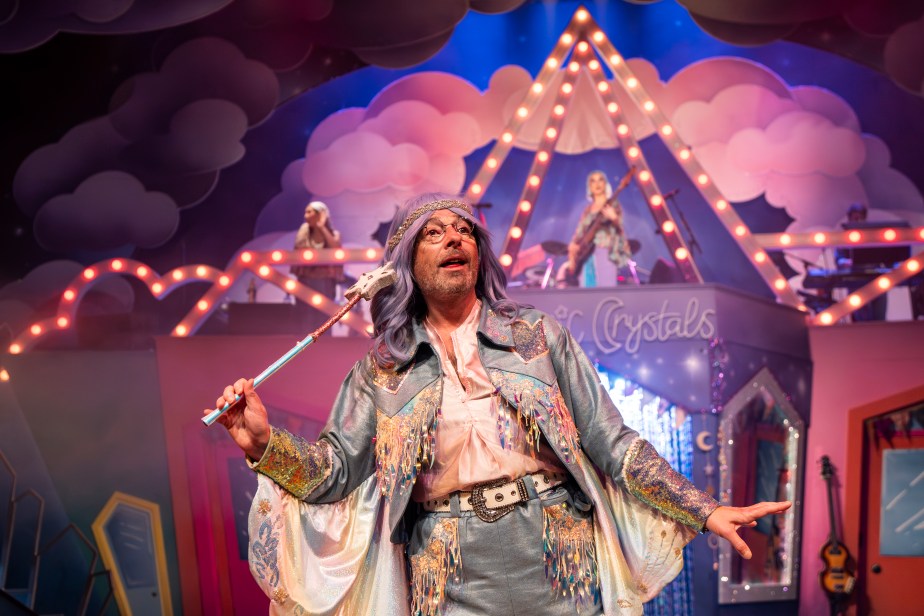
From the moment the fabulous Adam Keast bursts onstage as Fairy Spacecake, it’s clear we’re in very safe and very outrageous hands. This is a show that doesn’t so much break the fourth wall as tickle it, tease it, and invite it on a night out down Hardman Street. The ensemble, every one of them actor-musician dynamos, bounce between instruments with the casual swagger of people who can absolutely shred a guitar solo and belt out a big ballad without breaking a sweat despite the non breathable costumes and the plethora of wigs.

Liam Tobin as Vera in Jack and The Beanstalk at Liverpool Everyman.
Image Credit: Ellie Kurtz

Malek Alkoni as Jack our hero is a hapless dreamer who initially seems less at home in panto than his comrades but gains confidence as the show progresses. Liam Tobin is the Everyman panto dame, Vera, who turns up in outfits loud enough to be seen from space and delivers zinger after zinger with sharp comic precision.  Amy Bastani is delightful as Jill and delivers some great vocals and harmonies. Even Daisy the cow (Elaine Hua Jones) has a scene-stealing number clad in a fabulous costume by Katie Scott. The ubiquitous star is Everyman panto stalwart Adam Keast who is a master of sly innuendo, always delivered with insouciant twinkly, charm.

The script, as ever, is a glorious mash-up: camp, cheeky, locally flavoured and just the right shade of ridiculous. You’ll get your beans and your beanstalk, sure, but you’ll also get a surprisingly sharp political aside, a slapstick chase sequence, and a musical playlist so crowd-pleasing it should probably come with a government warning. Expect everything from disco to pop-punk to a power ballad so earnest it might genuinely move you.

What makes the Everyman panto special isn’t just the gags or the tunes, it’s the warmth. The company radiates joy, the audience throws it back, and before you know it you’re on your feet, shouting, singing, and momentarily forgetting that you’re a fully grown adult who came in for “something seasonal” and is now screaming encouragement at a quirky Goose.

The set ramps up the fun with a beanstalk ascent that’s impressively bonkers, more DIY-in-the-best-way than Disney, and all the better for it. And when the giant finally appears… well, let’s just say the Designer Katie Scott clearly had a very good time and the result is delightfully unhinged.

In short: Jack and the Beanstalk at Liverpool Everyman is a raucous, big-hearted triumph that is exactly the kind of festive escapism that reminds you why pantomime, done properly and with plenty of swagger, remains one of theatre’s greatest communal pleasures. A giant of a good time.

LIVERPOOL EVERYMAN 15th November ’25  – 17th January ’26

PERFECT SHOW FOR RACHEL

Rachel and Flo O’Mahony in Perfect Show For Rachel at CONTACT MCR.
Image credit: Ikin Yum

Directed by Rachel O’Mahony

Part of S¡ck Festival

CONTACT MCR THEATRE

⭐️⭐️⭐️⭐️

Perfect Show For Rachel by ZooCo is a piece that glows with the kind of truthfulness most productions only gesture toward. It is equal parts a live theatrical experiment, a portrait  of family and a celebration of difference – not difference as a hurdle to be explained, but as a source of humour, beauty, unpredictability, and creative force. If you’ve ever watched a piece of theatre and thought, “This could all be improved if a single audience member was given total creative control”, then Perfect Show For Rachel delivers your fantasy in all its anarchic, heart-squeezing glory.

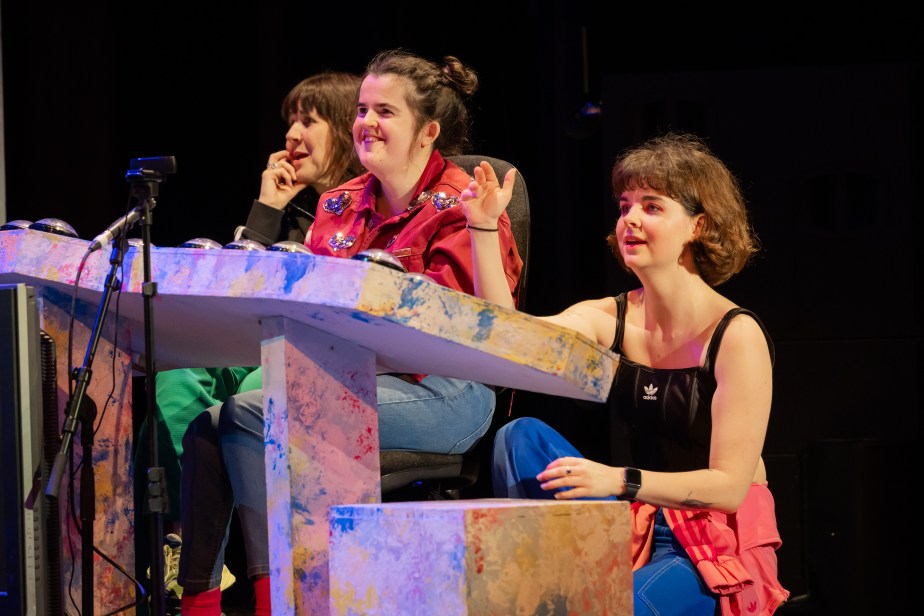
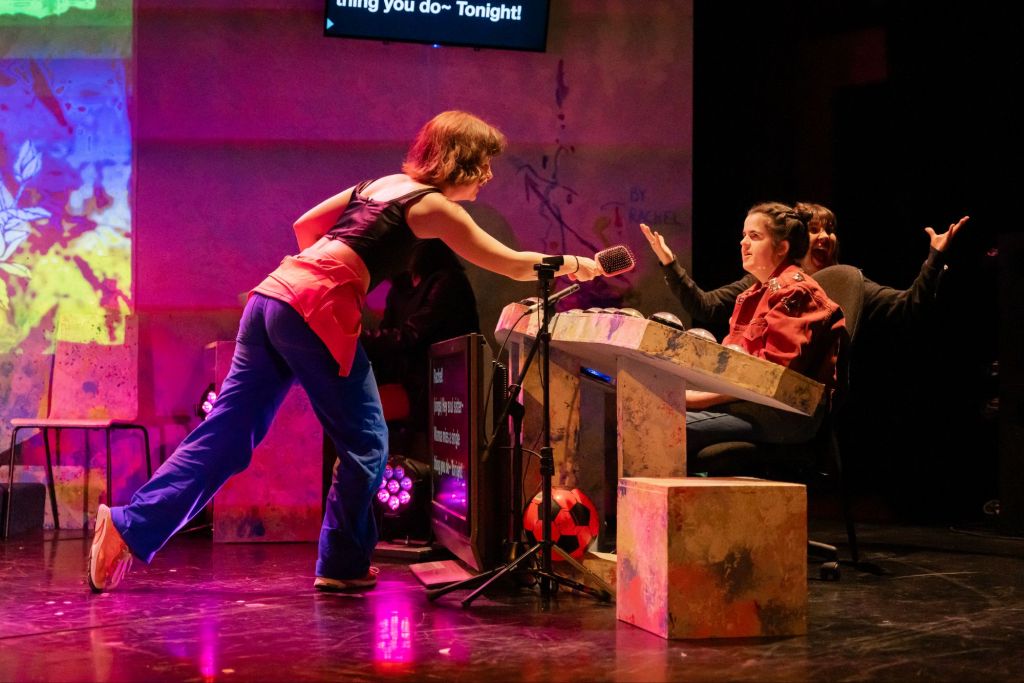
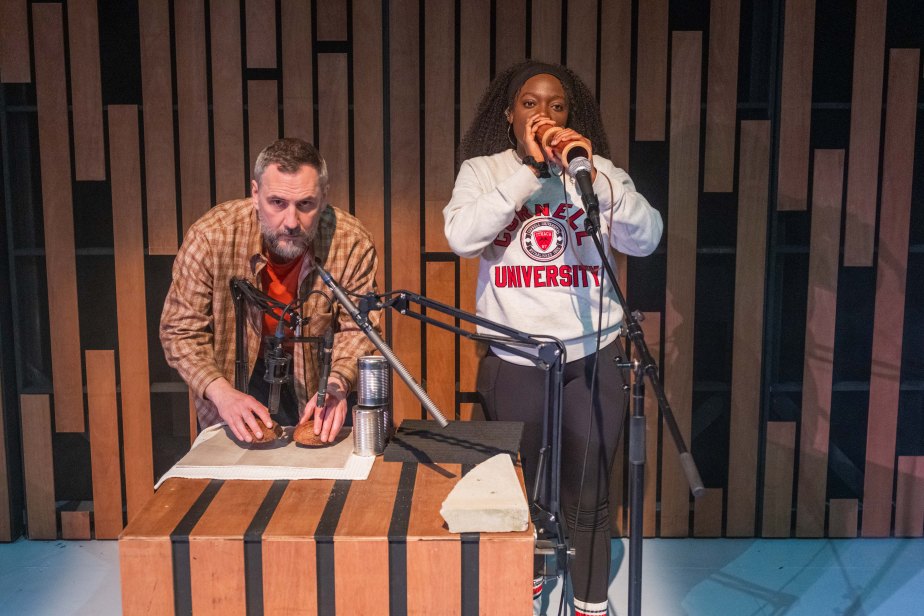
At the centre of the show is Rachel, a Director with learning disabilities who lives in a care home. It is her wants, whims and wonderfully unfiltered decisions that shape the entire evening. The rules are simple: Rachel picks what happens next by pressing one of 39 buttons in front of her and everyone else – cast, crew, and a theatre full of wide-eyed onlookers have to get on board with her choices. There is something delightfully subversive about seeing seasoned performers waiting in earnest for Rachel’s next instruction like students waiting for the supply teacher to hand out stickers.

The cast of Perfect Show For Rachel.
Image credit: Ikin Yum

The humour is baked into this unpredictability. One moment we’re in a nightclub, the next there’s a monologue about friendship or a skit about farts. Then we’re playing human skittles or at a Kylie Minogue concert. Watching the cast pivot gracefully (and sometimes less gracefully) from one idea to the next is half the fun; watching Rachel delight in her own power is the other half.

But beneath the joyful absurdity beats a genuinely moving heart. Perfect Show for Rachel is not just a gimmick, it’s a celebration of Rachel’s autonomy, creativity, and presence. The production quietly dismantles the idea that theatre needs to be controlled, polished or predictable to be meaningful. In fact, the show’s most affecting moments come precisely from its unpredictability: the tender pauses, the tiny negotiations, the shared laughter that ripples across the room when something goes unplanned and the cast doubles down with absolute sincerity.

The ensemble’s generosity is extraordinary. They listen, they follow, they honour each choice Rachel makes with unforced respect. The flexibility required is Olympian; the warmth is palpable. For a piece that could easily tip into gimmickry, ZooCo instead crafts something that feels radical in its simplicity: a show shaped by a woman whose voice is often overlooked in wider society, placed at the unarguable centre.

Perhaps the show’s greatest achievement is the way it quietly challenges traditional theatrical power dynamics. Who gets to decide? Who gets to lead? Who gets to be witnessed? Here, the answers are beautifully, deliberately redistributed. And in doing so, the production becomes more than a tribute. Instead it becomes an act of radical inclusion, woven through with affection and wit.

In the end, Perfect Show for Rachel is not “perfect” in the polished, predictable, dramaturgical sense. It’s perfect in a far more meaningful way: it’s honest. It’s alive. It’s a reminder that theatre is at its most thrilling when it surrenders to the messy, joyous logic of being human.

CONTACT MCR THEATRE 19th – 22nd Nov 2025

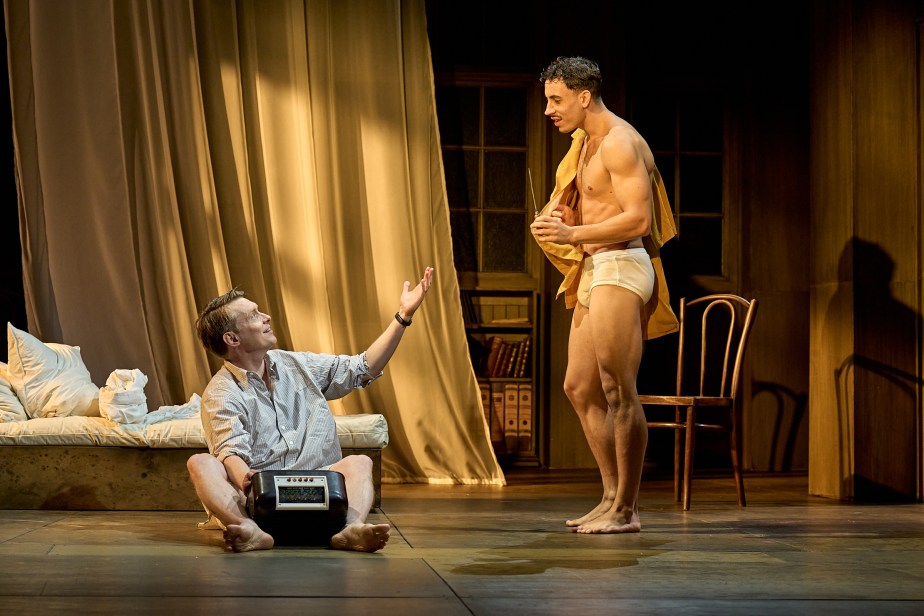
Breaking The Code

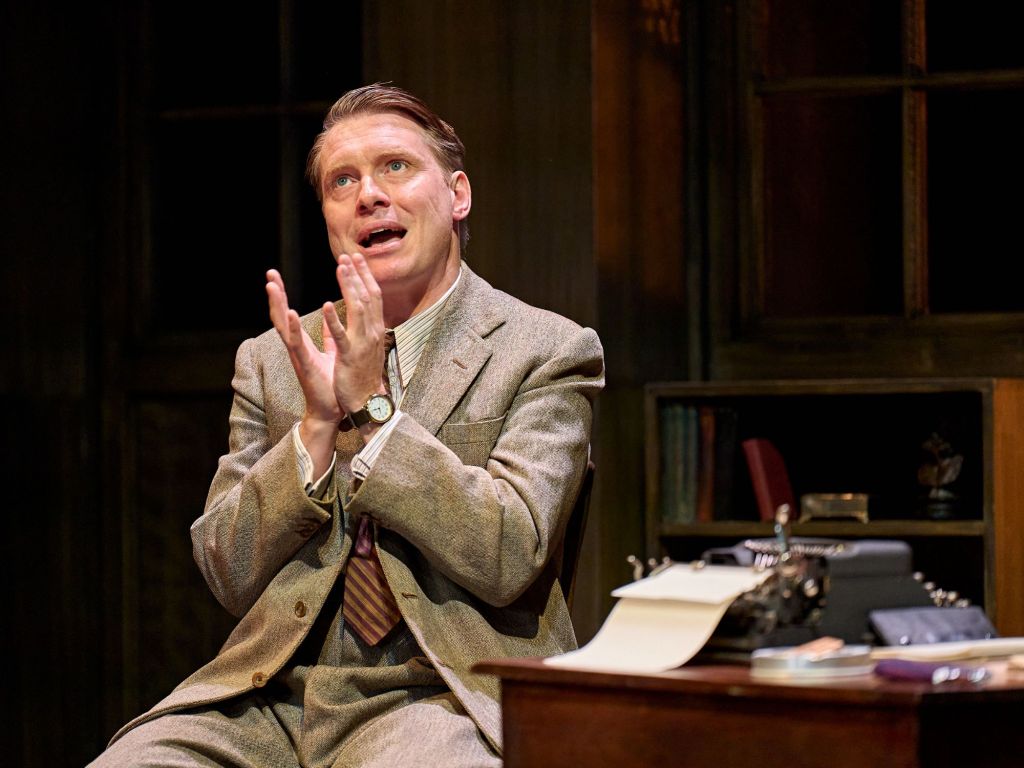
Mark Edel-Hunt as Alan Turing in Breaking The Code at HOME MCR
Image credit: Manuel Harlan

Written by Hugh Whitemore with a new epilogue by Neil Bartlett

Directed by Jesse Jones

A Royal & Derngate, Northampton, Landmark Theatres and Oxford Playhouse co-production in association with Liverpool Everyman & Playhouse and HOME

HOME MCR

⭐️⭐️⭐️⭐️

This timely revival of Breaking the Code offers a moving, finely judged portrayal of genius under siege. Hugh Whitemore’s play about Alan Turing; the mathematician, Enigma Code war hero, and victim of Britain’s criminalisation of homosexuality might be almost four decades old, but in this production it feels achingly relevant and startlingly humane.

At the centre is a beautifully modulated performance by Mark Edel‑Hunt as Turing. He resists the temptation to play Turing as an eccentric caricature and instead finds something wonderfully fragile and real. His speech patterns, social awkwardness, and flashes of impish humour combine to give the role a quiet power. The moments when intellect falters in the face of love or shame are especially affecting as life unravels. This is a truly mesmerising performance as Edel-Hunt gives us a stuttering misfit who visibly soars when describing mathematical theorems and who yearns for love and affection.

Director Jesse Jones keeps the staging spare and fluid, allowing the story’s emotional logic to unfold like a mathematical proof. The use of minimalistic design and subtle lighting anchors the production in its historical moment while underlining Turing’s eerie prescience about the modern digital world. The simplicity allows for a fluid and believable transition through the numerous vignette pieces which weave together this study of Turing the man and the genius.

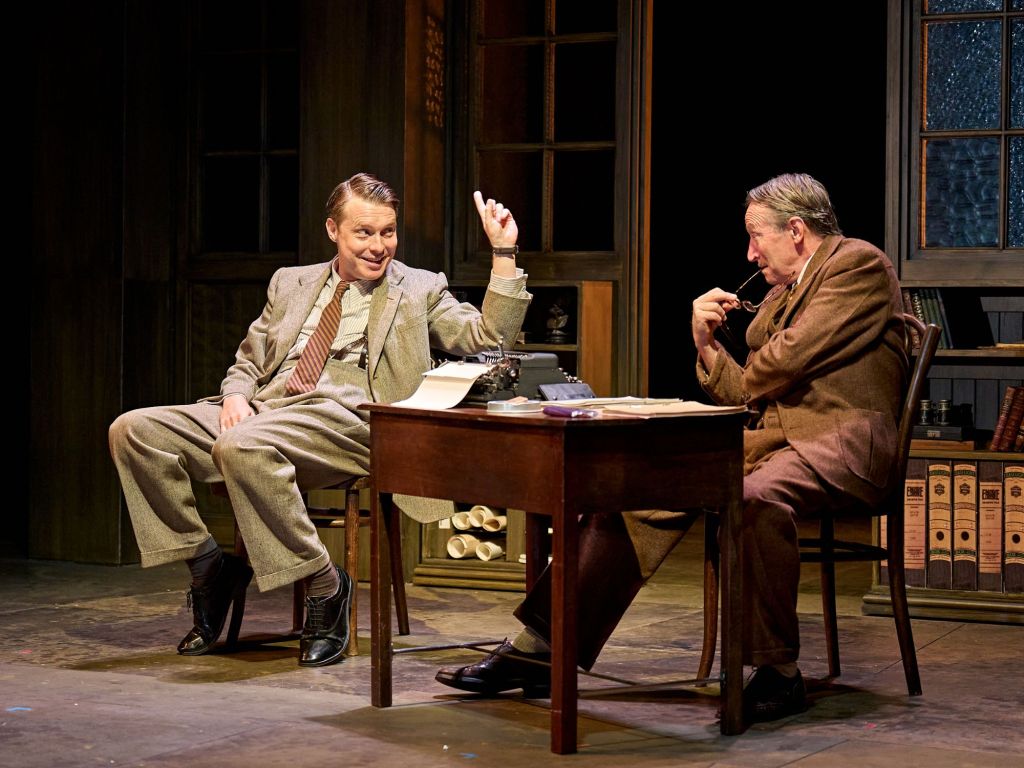
The rest of the cast are impressive with Susie Trayling as Turing’s mother and Joe Usher as his ill-fated lover bringing moral texture and earthy warmth, ensuring that this is no sterile biopic but a living, breathing human drama. There are some simply beautiful interactions in this production that do justice to the writing but the standout moments are with Peter Hamilton Dyer who plays Turing’s colleague, Billy Knox at Bletchley Park. The two actors play off each other with a  precision and wit that is simply theatrical alchemy.

Mark Edel-Hunt and Peter Hamilton Dyer in Breaking The Code at HOME MCR
Image credit: Manuel Harlan

The new epilogue by Neil Bartlett updates the original 1986 play by taking into account Turing’s 2013 pardon and the development of “Turing’s Law”. This may have felt like a necessary update that brings the story into sharp relief for our times. However and perhaps due to watching this production in Manchester where Turing is already celebrated with such pride and fondness, this felt unnecessary. The additional exposition jarred with Turing’s final moments on stage, played with heartbreaking restraint which quietly reminds us all how brilliance can both illuminate and isolate.

HOME MCR 28th Oct – 1st Nov 2025

ROMEO AND JULIET

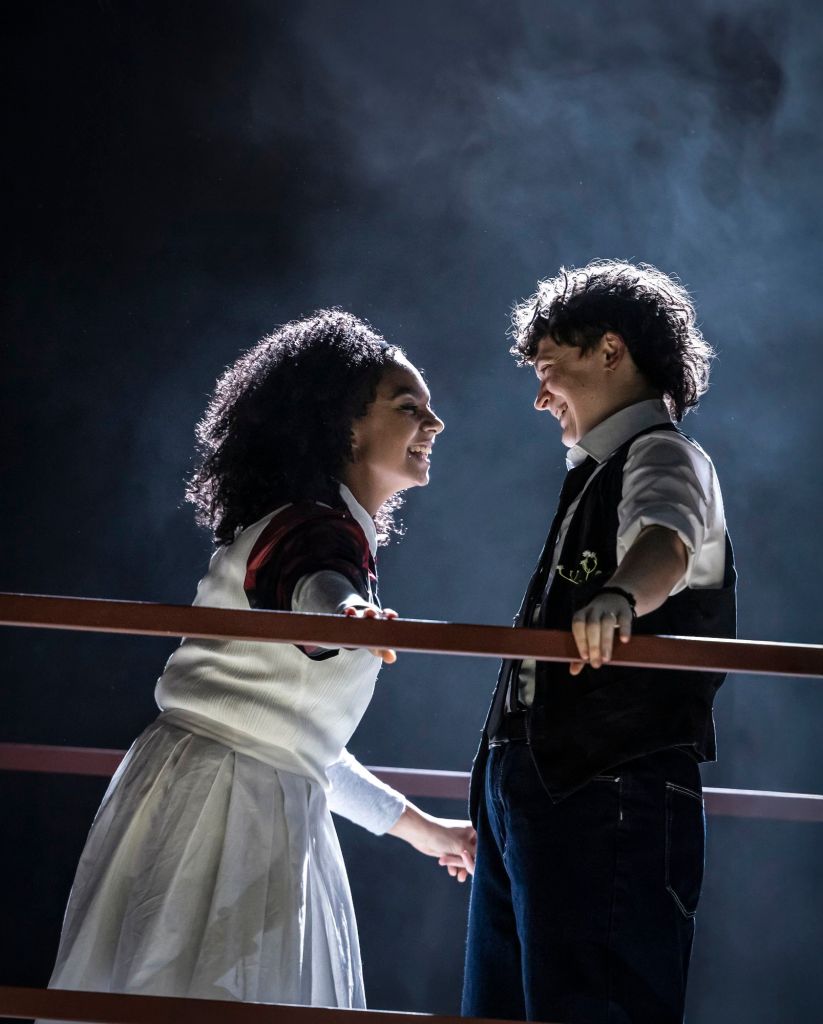
Zoe West and Alicia Forde  as Romeo and Juliet at Liverpool Everyman.
Photo credit: Pamela Raith Photography

Written by William Shakespeare

Directed by Ellie Hurt

Liverpool EVERYMAN

⭐️⭐️⭐️⭐️

The star-crossed lovers have been reimagined countless times, but the Everyman’s latest take on Romeo and Juliet proves there’s still fire in one of Shakespeare’s most famous tragedies. Director Ellie Hurt has shaken the dust off the Verona cobblestones and transplanted them into a world that feels strikingly contemporary, without losing the pulse of Shakespeare’s poetry.

The Everyman’s thrust stage, with its intimacy and edge, works wonders for a play about red hot passion colliding with simmering feuds. The opening brawl brims with a raw, streetwise energy that instantly declares this is not a Verona of ruffled sleeves and dainty sonnets, but one where violence is sadly as casual and lethal as in any British city today.

Alicia Forde delivers a Juliet played with a sharp wit and a teenager’s quicksilver emotional shifts, she resists the tragic heroine mould and instead feels vividly alive; by turns funny, impatient, fierce, and achingly young. Zoe West as Romeo is a mixture of impulsive swagger and genuine vulnerability that is utterly absorbing. The electric chemistry between these star crossed lovers burns not in polished declarations, but in stolen glances and nervous laughter, which makes their sudden plunge into tragedy all the more painfully poignant.

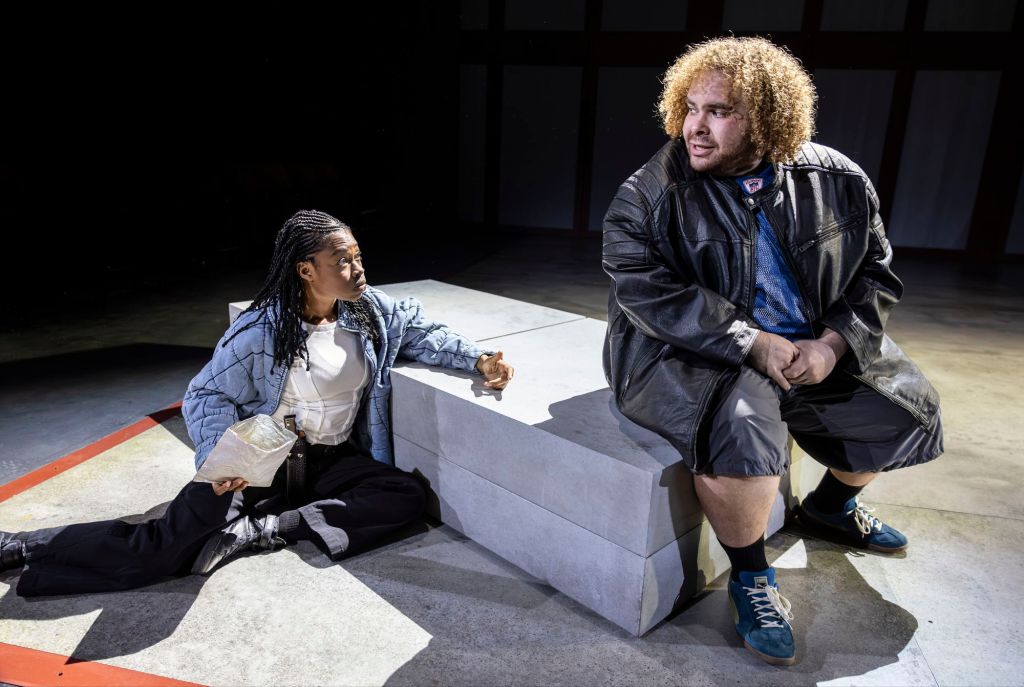
The production is peppered with smart choices as a perfectly cast Elliot Broadfoot delivers Mercutio’s bawdy humour with the  timing of a polished stand-up set. Kelise Gordon-Harrison as Benvolio is vibrant with youth yet wiser and more reflective than his peers. Eithne Browne brings real depth and humorous empathy to the Friar.

Kelise Gordon-Harrison and Elliot Broadfoot as Benvolio and Mercutio.
Image credit: Pamela Raith Photography

Live music underscores scenes with a throbbing, modern urgency from a score by Dom Coyote with music from Joy Division, Kate Bush and Jimmy Somerville interspersed with a hymnal poignancy delivered by the Chorus. The lighting design flips seamlessly from neon brashness to candlelit intimacy. The costume design fuses modern street fashion with that of Tudor times, with every costume having flashes of blood red suggestive of the impending tragedy.

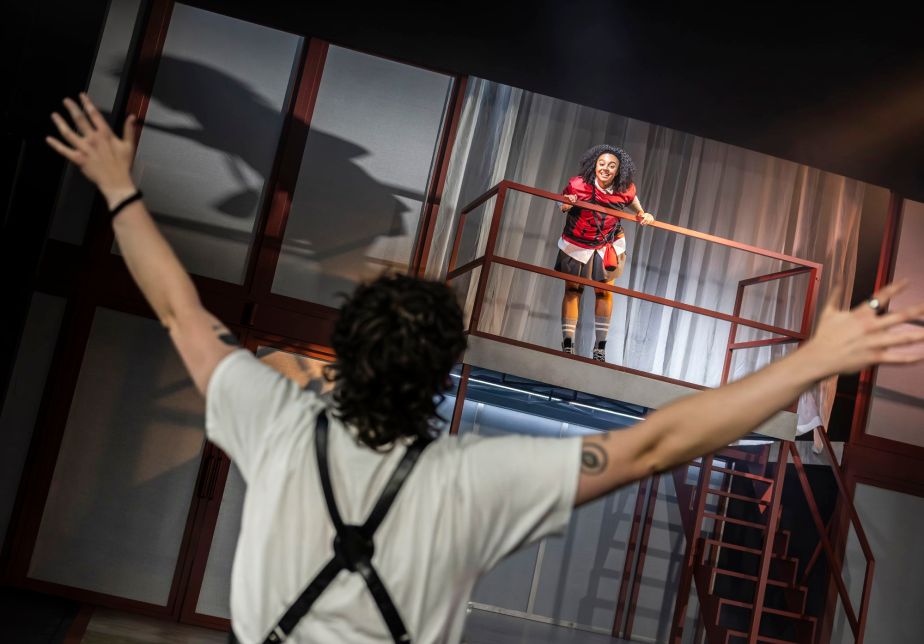
But the Everyman’s greatest triumph here is clarity. For a play often drowned in its own reputation, this staging makes the story feel inevitable and freshly shocking. This could be a balcony in old Verona or a balcony on a council estate in Toxteth or Moss Side. By the time the lovers fall, you’re reminded that tragedy is not about inevitability, but about the exquisite, wasteful cruelty of timing.

This Romeo and Juliet doesn’t just retell a familiar tale—it makes you feel its sting anew, as though hearing that ancient line for the first time…never was a story of more woe.

LIVERPOOL EVERYMAN 13th Sept- 4th Oct 2025

Juliet Ellis A Symphony of Flesh and Bones

A Symphony of Flesh and Bones. MIF25
Image credit: Juliet Ellis

Devised by Juliet Ellis

South Warehouse, Aviva Studios

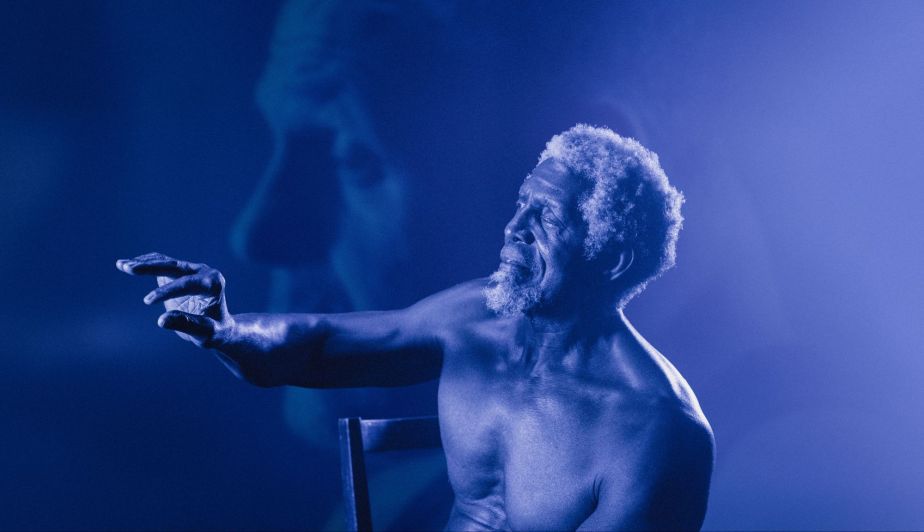
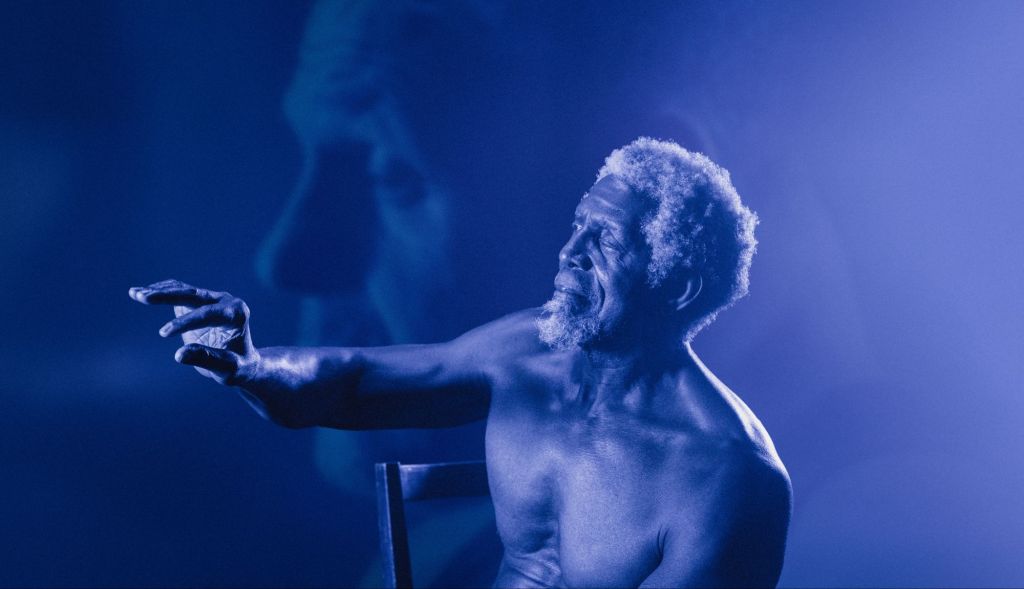
Juliet Ellis delivers a deeply meditative and heartfelt work in A Symphony of Flesh and Bones, in which she explores Buddhist philosophy alongside her use of film to question what it means to inhabit a body. Ellis uses photography and film of her father, a former bodybuilder, and her brother, a retired cage fighter to bring authenticity and tenderness to themes of masculinity, aging, and familial legacy.

Both intensely personal and universally resonant, this is a work whose impact lingers as beautiful images in a highly impactful setting. The images are striking and beautifully composed. The multi-screen layout mirrors a mandala’s visual symmetry, ephemeral, interwoven, and spiritually resonant. The blue-toned imagery evokes Buddhist symbolism of infinitude. The layers of screens that surround all four sides of the space adds to their impact and makes for a beautiful installation.

This is however where this production becomes frustrating and unsatisfactory. There is a slightness to the spoken element of this piece which is not helped by Ellis just reading  out her thoughts from a printed document. The piece runs at 90 minutes and therefore the images on screen often linger for longer than needed and the pacing tends to drag. The staging and lighting are beautifully conceived but ultimately this piece feels confused, sitting somewhere between a TED talk with high production values and an art installation you feel obliged to observe at the artists’ pace. It’s a real shame as this would have worked brilliantly as a durational piece running on a loop with a recording of the artists’ thoughts playing with the audience being able to move around the space or lie on the floor just looking up at the screens.

AVIVA STUDIOS 11-13th July 2025

A SINGLE MAN

Ed Wood as George and Jonathan Goddard as Jim in A Single Man at AVIVA Studios
Credit: Johan Persson

Based on the novella by Christopher Isherwood

Directed by Jonathan Watkins

The Hall, AVIVA STUDIOS

⭐⭐⭐⭐

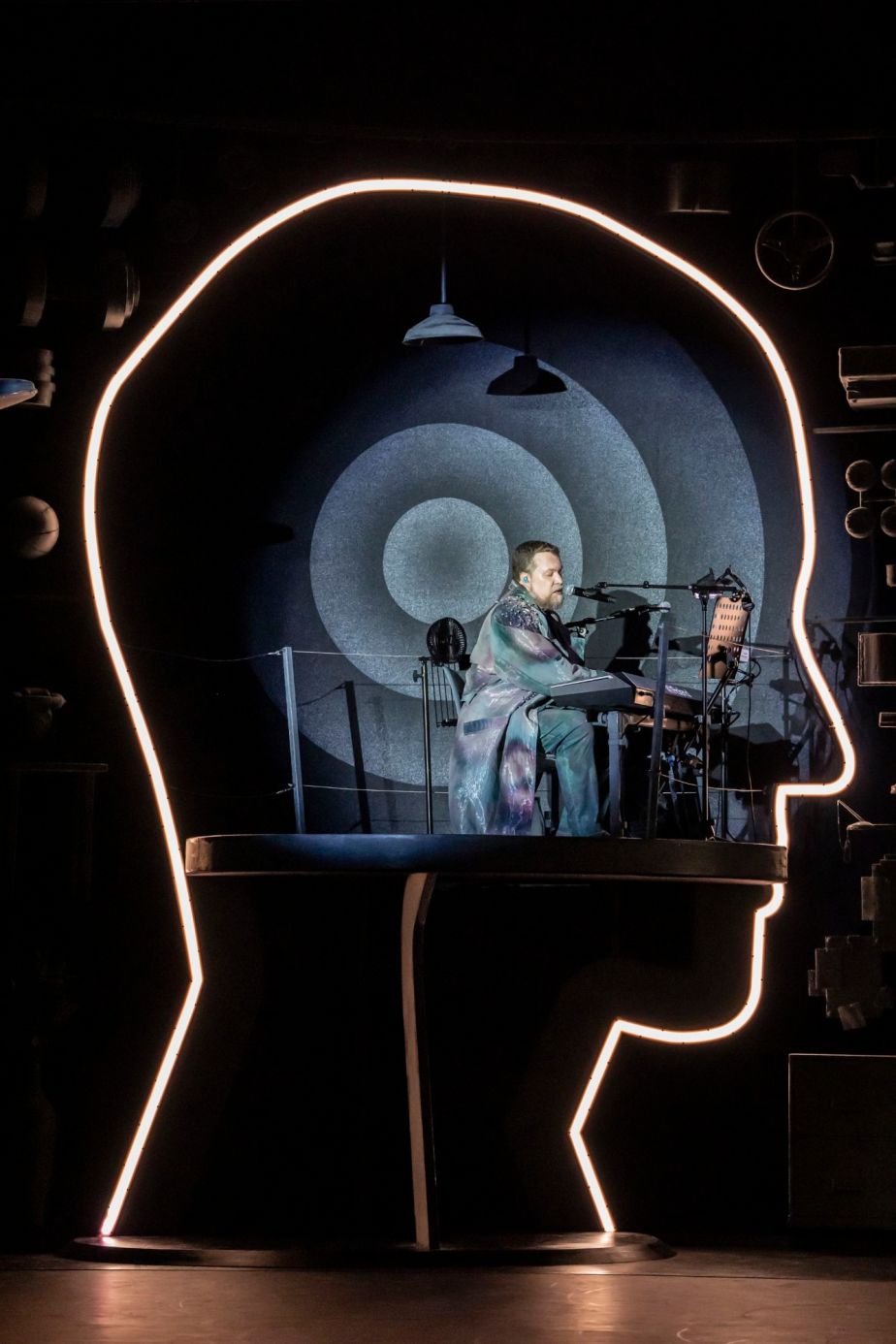
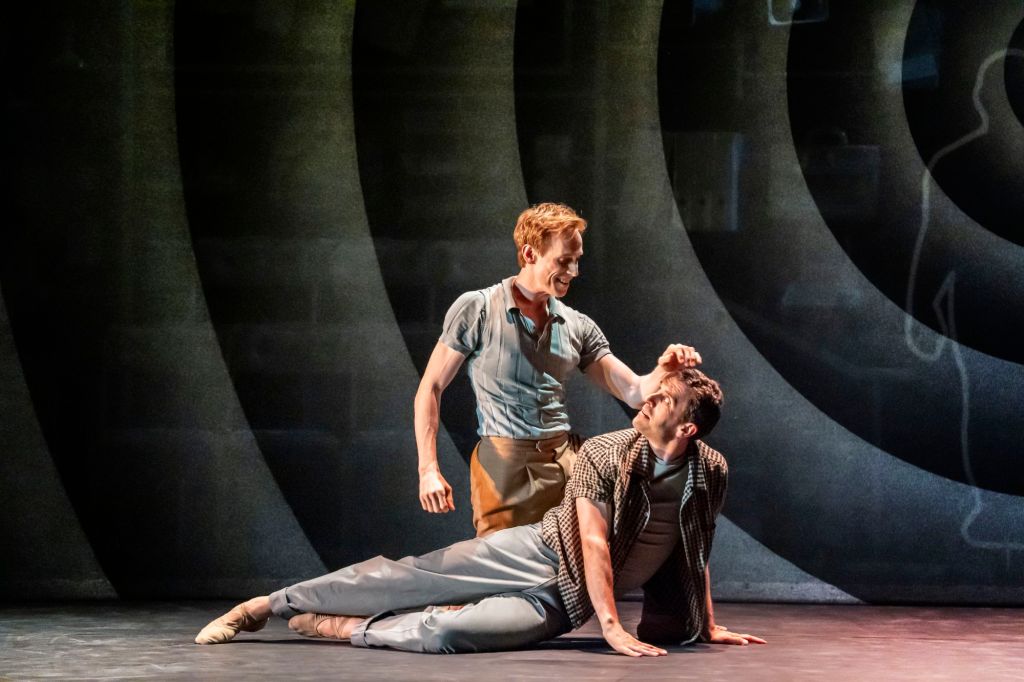
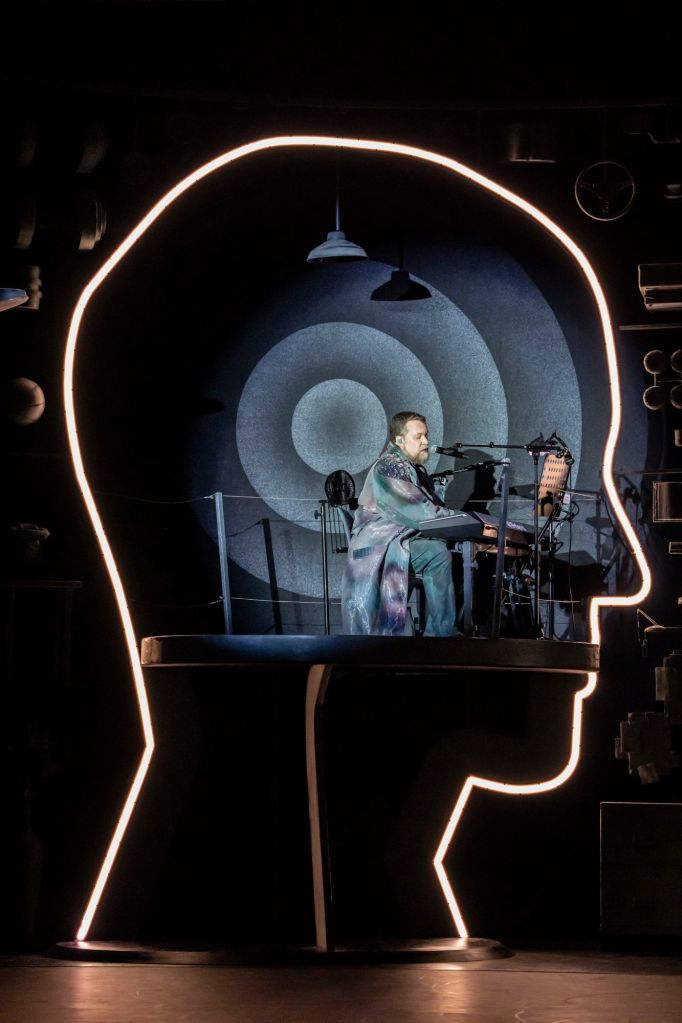
Jonathan Watkins’ new ballet adaptation of Christopher Isherwoods A Single Man unveils itself as a quietly potent exploration of grief, love, and queer identity. The creative gamble of splitting the portrayal of George, physically through Ed Watson’s danced embodiment and emotionally through John Grant’s live voice pays off beautifully. It’s a collaboration that refuses the easy path, forging a live multilayered dialogue between body and soul.

Ed Watson, formerly of the Royal Ballet, brings raw emotionality and a life-worn authenticity to George’s every gesture. His performance pulses with the contradiction of restraint and release: disciplined form that fractures under the weight of loss, yet never becomes self-indulgent. When he moves, there is a tangible, visceral pull of emotional snapshots of his dead lover Jim. There is a touching beauty in his connection to his lost lover that is delicately but powerfully conveyed. Moments when the ensemble peel his lover from his arms feel like the palpable wrench known to anyone who has loved and lost.

John Grant’s original songs, composed with Jasmin Kent Rodgman and performed live by the Manchester Collective linger around the edges of the set like memories that refuse to be tucked away. His lyrics map out George’s interior life: moments of tender self-awareness, bitter regret, and the faint glimmer of hope. This duality between the seen and unseen, the spoken and unsaid gives the piece a rare emotional depth. There are however points in the lyrics where they move too much toward exposition of the original text as if not quite trusting the dancers and the audience to fully grasp the narrative.

John Grant in A Single Man
Credit: Johan Persson

The choreography, directed by Watkins with visionary care, balances the elegance of classical ballet with a contemporary urgency. Flashbacks, abstracted movements, and physical abstractions of inner pain are choreographed with a poet’s intuition. They evoke the 1960s California while remaining rooted in George’s emotional landscape as a gay man who must mourn his lover and navigate his grief in private as a love that dare not speak its mind.

Visually, the production is a lavish and intimate feast. Oscar-winner Holly Waddington’s costumes are very 1960s and use colour to real effect. Splashes of red for Charley and Kenny are a nod to the red of lifeblood and passion. The bodysuits the ensemble cast frequently strip down to are waxy pale and marbled in the muted colours of decomposition. Chiara Stephenson’s sculptural set combines stylized restraint with emotional resonance. The ash grey construct of a sprues containing everything required to function in daily life subtly alludes to George’s attempt to mask and try to play at normality. The screens that reappear mimic a vortex and serve well to mark out the segments when George retreats into his memories. The play of light and form enacts the interplay of memory and reality, and the staging honours George’s solitude while also embracing the small, human moments that break through despair.

In the context of MIF’s wider “Dream Differently” programme for 2025 which champions hybridity and emotional complexity then A Single Man stands out as a highlight. It is less a huge spectacle than a subtle, achingly human meditation on loss. The final moments feel hopeful and redemptive. Perhaps we can all do well to hold a sense of possibility that the pain of grief can be redemptive and like kintsugi pottery we can be broken and yet emerge stronger.

AVIVA STUDIOS 2nd – 6th July 2025

Through It All Together

Reece Dinsdale and Shobna Gulati in Through It All Together at Leeds Playhouse.
Image credit: Charlie Swinbourne

Written by Chris O’Connor

Directed by Gitika Buttoo

Leeds Playhouse, Courtyard Theatre


⭐⭐⭐⭐☆

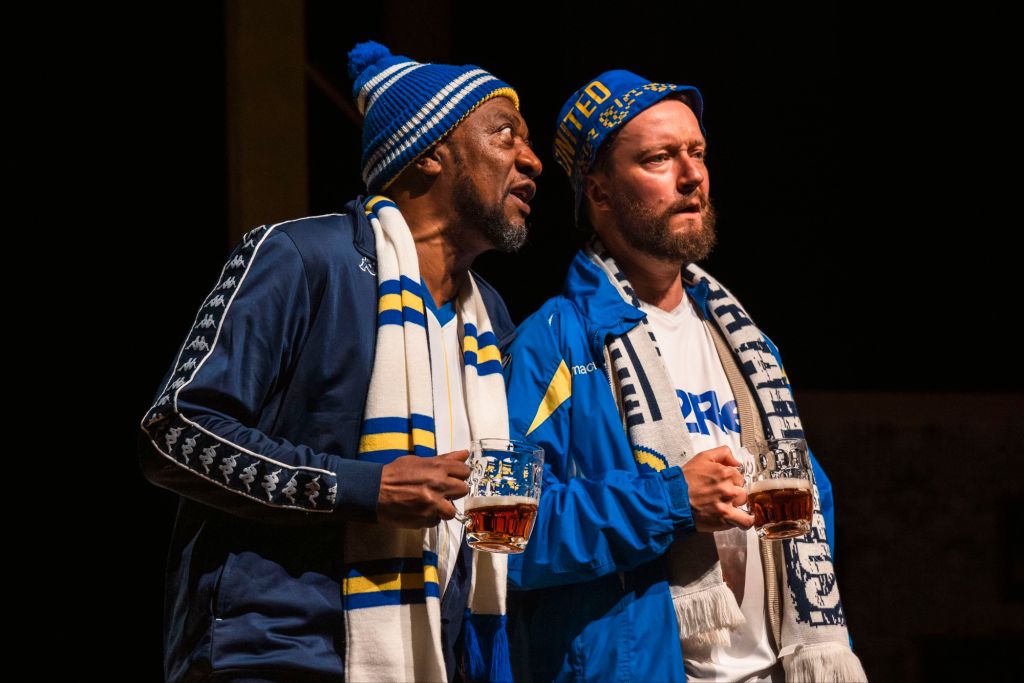
Through It All Together, Chris O’Connor’s tender, funny, and profoundly human new play, scores a heartfelt goal at Leeds Playhouse. Blending the collective high of Marcelo Bielsa’s transformative Leeds United era with the quiet, day-to-day reality of living with dementia, this world premiere directed by Gitika Buttoo is a deeply affecting exploration of love, memory, identity—and how football, of all things, can help us hold onto our sense of Self.

The result is a beautifully calibrated narrative centred on Howard (Reece Dinsdale) and Sue (Shobna Gulati), a long-married Leeds couple whose lives are defined as much by matchdays as they are by memory loss. Their shared devotion to Leeds United—and to each other—becomes a touchstone as Howard’s dementia begins to unravel their sense of normalcy.

But this isn’t a story of despair. O’Connor balances challenge with a deep humanity,  never sugar-coating, but never wallowing either. “There are a lot of stories about dementia that focus only on the decline, the hardship… I wanted to show a more nuanced picture.” The ensuing result is a window into gritty, Northern humour and emotional resilience that suggests there are ways to navigate this new life that are not totally bleak and hopeless.

Reece Dinsdale’s portrayal of Howard is all the more moving for its subtlety. He captures the erratic rhythms of memory loss with clarity and compassion, avoiding caricature in favour of something richer. As the illness slowly progresses there are more post-it notes dotted around the home to ground him as we watch the light in his light in his eyes seem to palpably dim. Shobna Gulati’s Sue is no mere carer—she’s the team captain of this household, full of warmth, exhaustion, fierce loyalty and humour. Together, they embody a partnership that’s far more than caretaking; it’s a testament to shared history. Gulati is wonderfully warm and authentic as a wife facing an uncertain future, but determined to still make new memories with the man she loves.

Excellent supporting roles from Dean Smith and Everal A Walsh flesh out the world outside of the home with energy and wit, from the passionate football pundetry of a wickedly funny podcast to football fans uniting in the pub or on the terraces with unbridled optimism or surly despondency. Natalie Davies is very believable as the daughter whose initial discomfort and awkwardness around her fathers’ diagnosis slowly shifts to something new that has real emotional depth and develops a deeper bond between parent and adult child.

Everal A Walsh and Dean Smith in Through It All Together at Leeds Playhouse
Image credit: Charlie Swinbourne

Buttoo’s direction is deft, never overstated, and her pacing allows the emotional beats to land without lingering too long. Amanda Stoodley’s set elegantly shifts between domestic space and Elland Road reverie, and her inspired stained glass window depiction of Marcelo Bielsa vividly evokes how football serves as church for so many. Annie May Fletcher’s sound design and Jason Taylor’s lighting evoke both the roar and passion of the crowd and the flickering confusion of a fading mind. The production’s authenticity owes much to the involvement of  Dr Nicky Taylor, Theatre and Dementia Research Associate at Leeds Playhouse as O’Connor collaborated with people living with dementia throughout the writing process.

This play will resonate with Leeds fans, particularly those still mourning the magic of the Bielsa years and those embarking with renewed hope as Leeds once again play in the Premier League. But crucially, Through It All Together is not really about football but instead “It’s about a family navigating life, loss, and love.” The result is a play that feels lived-in, full of both emotional urgency and the soft, cumulative weight of experience.

Through It All Together is a triumph not because it finds easy answers, but because it honours complexity. It reminds us that memory may fade, but love leaves traces. It’s an ode to resilience, to chosen rituals, to the invisible thread that binds couples, families, fans, and strangers in the same chant, week after week. Whether you’re a die-hard Leeds United fan or someone who couldn’t care less about football, this is a show worth seeing. As O’Connor hopes, “Maybe people will leave the theatre feeling a little more connected to their own families, and a bit more educated on dementia. And maybe, just maybe… they’ll convert to Leeds United.”

LEEDS PLAYHOUSE 23rd June – 19th July 2025

The Walrus has a right to Adventure

The cast of The Walrus has a Right to Adventure at Liverpool Everyman.
Image credit: Ean Flanders

Written by Billie Collins

Directed by Nathan Crossan-Smith

LIVERPOOL EVERYMAN
⭐⭐⭐⭐☆

Billie Collins is definitely one to watch as their work is evolving at a rapid rate from their debut play Too Much World At Once in 2023 to last years collaboration with Thickskin, the excellent Peak Stuff. Their latest work, The Walrus Has A Right to Adventure is an utterly charming piece that weaves together three stories full of  warmth and wit within a big ecological heart. Three central characters each have a startling and life-changing encounter with a wild creature inspired by real life stories. This is a genuine ambitious play that is weird and wonderful in equal measure. Featuring a walrus, a stag, a bear, and a big queer soul this is a quicksilver exploration of our intimate connection to the natural world and the power and beauty of metamorphosis.

Director Nathan Crossan-Smith knits together three wildly different stories with a surprising amount of coherence and emotional punch. At the centre of each vignette is an encounter with the unexpected: a young shelf stacker is confronted by a majestic white stag in Halewood Tesco, a fierce mother bear derails a wedding proposal in Colorado while  a walrus decides to inhabit a fishing boat in Norway. These surreal interruptions crack open the lives of three characters grappling with identity, purpose, and possibility.

Tasha Dowd in The Walrus has a Right to Adventure at Liverpool Everyman.
Image credit: Ean Flanders

Tasha Dowd is endearingly grounded as Rio, a Tesco night-shifter whose brush with the mythical stag nudges them toward self-exploration. There’s a tenderness and subtlety in Dowd’s performance that makes Rio’s journey quietly powerful. Each performer also plays multiple other characters through the narrative and each character Dowd inhabits is vividly drawn and deeply engrossing down to the quiver of a hand that evokes an elderly parent or the physical menace of a redneck, second amender. Princess Khumalo’s Hazel is sharper-edged as a young woman suddenly thrown off-course by a man on one knee with a bear behind him. Khumalo brings great comic timing but grounds it in something rawer when Hazel begins to unpick what she really wants. Meanwhile, Reginald Edwards delivers a charmingly dry turn as Oskar, the Norwegian tour guide whose boat becomes a walrus squat. His blend of deadpan resistance and existential bewilderment is a comic highlight.

The set, designed by Chloe Wyn, is sleek and inventive allowing for seamless shifts between continents and climates. Live Foley sound effects (from composer and sound designer Oliver Vibrans) are used to delightful effect, turning rustling trees, crashing antlers, and grunting walruses into an audible playground. The whole staging evokes a vintage radio play unfolding before our eyes. Rajiv Pattani’s lighting keeps the pace slick and the transitions fluid. There is a really beautiful look to the whole production that has a really avant garde European style that evokes an Ivo van Hove piece.

It is a testament to the writer and the cast and creatives involved that the multiple storylines which could easily have felt a little fragmented remains fluid and cohesive. Collins’ writing sparkles with wit, but also isn’t afraid to pause for introspection. The play gently interrogates how we live, love, and consume—and who we become when nature elbows its way back into our human bubbles. Most refreshing is the queer narrative running through Rio’s story. It’s treated not as an issue, but as a tender, joyful part of life…messy, moving, and very human.

Ultimately, The Walrus Has A Right to Adventure is an exuberant, slightly bonkers reminder that ultimately the wisest thing we can do is listen…to the animals, to each other, to ourselves.

The Walrus Has A Right to Adventure at Liverpool Everyman
Image credit: Ean Flanders

Liverpool Everyman 12th-21st June 2025

TESS

TESS. Image credit: Kie Cumming

Written by Thomas Hardy

Adapted and Directed by Alex Harvey and Charlotte Mooney

HOME MCR

HOME plays host to a visceral, breathtaking reimagining of Thomas Hardy’s Tess of the D’Urbervilles. This dreamy production quite literally soars in this genre-blending adaptation by Ockham’s Razor.

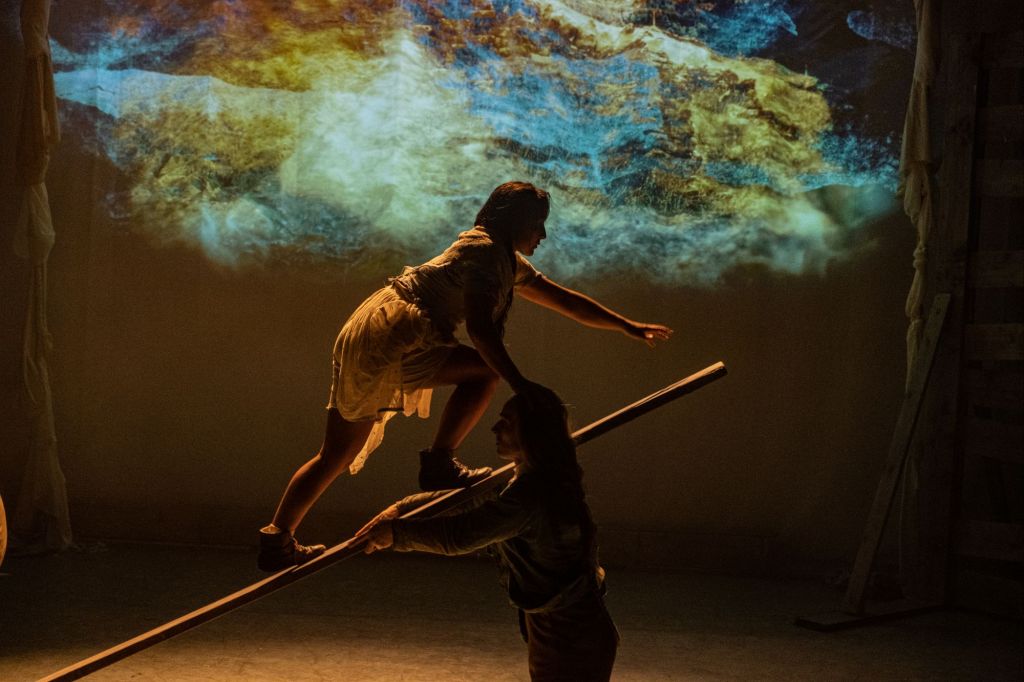
Gone is the pastoral restraint of traditional Hardy. Instead, we’re catapulted into a raw, kinetic world where spoken word collides with aerial spectacle, and physical theatre gives pulse to Tess’s inner life. With ropes, rigging, and a shape-shifting set by Tina Bicât that conjures both rural Dorset and Tess’s psychological terrain, this production is as visually inventive as it is emotionally brutal.

From the opening moments, where Tess’s body arcs through the air, we sense a young woman buffeted by forces far larger than herself – class, patriarchy and fate. The acrobatics aren’t just decorative but truly dramaturgical. Every lift, tumble, and suspension reveals something of her journey: the elation of love, the vertigo of injustice, the weight of grief.

Hardy’s 19th-century text is refracted through a contemporary lens, but not diluted. The themes of poverty, privilege, female agency, and the policing of desire all land with fresh urgency. There’s a fury simmering beneath the lyricism of the script which fuses Hardy’s own words with piercing modern clarity. There is a piercing moment on stage as Joshua Frazer as Alec D’Urberville spins imperiosly around Tess in a hoop like a giant gold wedding ring that is both stunning and chilling.

The cast are remarkable – muscular and tender, able to pivot from aerial feats to fragile, unspoken intimacies without ever breaking the spell. Here there are two perfomers as Tess. Hanora Kamen narrates her own story and invites the audience to watch as her tragic tale unfolds. Dance artist Lila Naruse ensures that Tess is heartbreakingly rendered: strong but vulnerable, caught in the ropes of her circumstances even as she fights to break free.

The staging is constantly surprising, using vertical space and movement to express what Hardy wrote between the lines: that the social systems around Tess are as confining as any physical trap. For creative team of Directors Alex Harvey and Charlotte Mooney this production is clearly a labour of love. They are ably supported by an exquisite soundscape from Holly Khan and dreamy video design by Daniel Denton. Nathan Johnson‘s choreography is just flawless and commands attention in a similar and intimate way to his work with Punchdrunk.

TESS Image by Kie Cumming

TESS is a triumph of theatrical innovation and emotional storytelling that speaks directly to a contemporary audience. The solidarity of women, the enduring effects of shame, and the quiet power of resistance are all threaded through the performance with care and urgency. Hardy purists may blink but even they’ll be moved by the sheer poetry of this production’s fall and flight.

HOME MCR 5th – 7th June 2025