FENCES

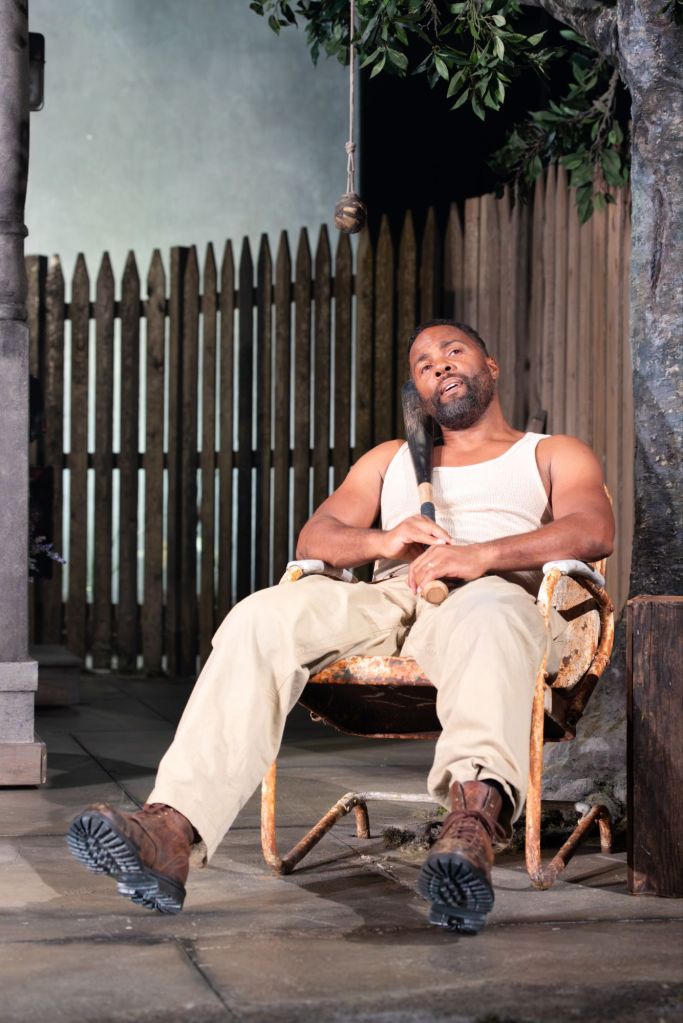
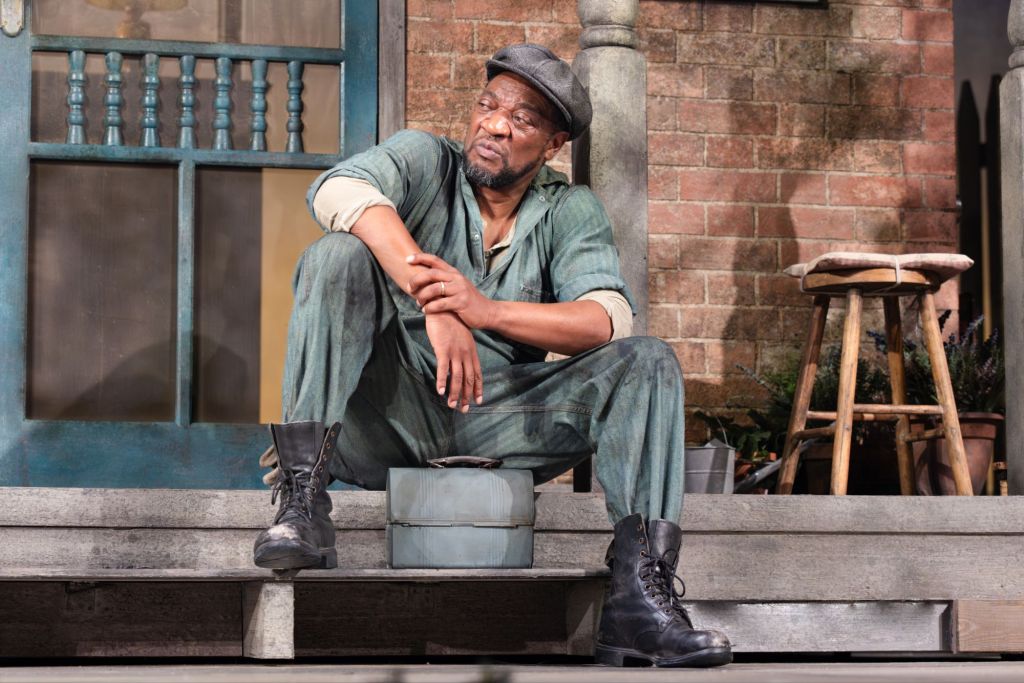
Ray Fearon as Troy in Fences. Leeds Playhouse Image credit: Tyler Fayose

Written by August Wilson

Directed by Daniel Bailey

LEEDS PLAYHOUSE

★★★★☆

“Some people build fences to keep people out and other people build fences to keep people in.” In August Wilson’s Fences, those barriers become both metaphor and battleground, and this wonderfully captivating production by Headlong at Leeds Playhouse understands that the most formidable walls are often the ones we carry inside us. Director Daniel Bailey leans into the glorious musicality of Wilson’s muscular and poetic writing, and ensures this very naturalistic production soars all the way from 1950s Pittsburgh to St Peter’s Gate.

In the seventh of Wilson’s “Pittsburgh Cycle”, the Maxson family home is presided over by Troy, a former baseball player whose thwarted sporting ambitions and experiences of racism have hardened into a worldview as uncompromising as the man himself. He is a provider, a husband and a father, but also a man who has mistaken control for love and self-protection for wisdom.

Ray Fearon delivers a beautifully measured performance that allows for all the complexities and contradictions of a man who can be both deeply lovable and monstrous. His Troy is a magnificent creation, swaggering into the backyard as though it were his personal kingdom, dispensing hard-earned wisdom alongside home truths that are considerably less wise. He can be funny, infuriating, tender and terrifying within the same conversation. Crucially, in this production his failures are allowed to sit alongside his wounds, leaving us to wrestle with the uncomfortable truth that damaged people can cause damage without being entirely defined by it.

The performances around him are equally finely calibrated. This is an ensemble that listens. Conversations overlap, tempers flare, jokes land and old grievances surface with the messy spontaneity of family life. Nothing feels artificially performative, instead the actors create the delicious illusion that we have wandered into a household where decades of history continue just beyond the edges of the stage. At the heart of these are wonderfully judged performances by Madeline Appiah as wife, Rose, Everal A Walsh as best friend Bono and Simon-Anthony Rhoden as his brain-damaged brother Gabriel.

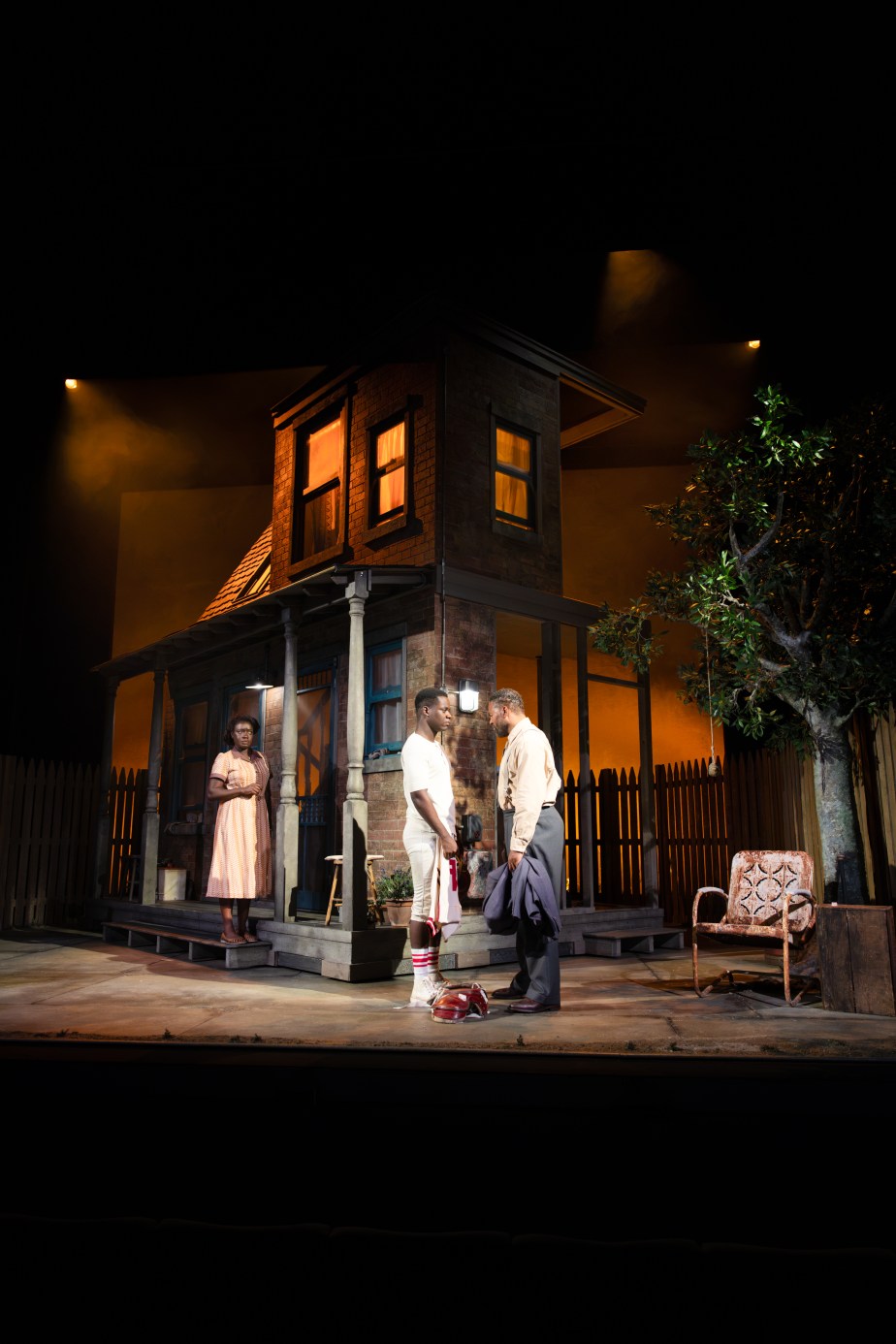
The unfinished fence running through the backyard becomes an increasingly potent visual metaphor for Troy’s determination to keep danger out, while simultaneously keeping those closest to him from moving freely beyond his reach. Set Designer, Lily Arnold has created a vivid design where there is no white picket fence in this American Dream but in its stripped back simplicity there is a real beating heart in this home. Turning with the times and events, this house both lures you in to bear witness and can enthrall as it throbs with passion.


Wilson’s dialogue is rich with humour, rhythm and vernacular poetry, and the production wisely resists the temptation to gild it. There is plenty of laughter here, but it is laughter with splinters. Beneath the banter lurk questions of race, masculinity, fatherhood, ambition and the inheritance of disappointment from one generation to the next. At almost three hours, the drama occasionally dips and its episodic structure means the momentum ebbs in places. Yet the emotional accumulation is formidable and arresting. The final scenes make for a perhaps satisfying wrapping up of this family drama yet risk veering into unnecessary exposition.

Overall this is a beautiful production that trusts actors, text and audience in equal measure. Captivating, compassionate and impressively naturalistic, Headlong’s Fences lets its characters breathe rather than turning them into symbols. The result is a bruising, beautifully observed portrait of a family trying, imperfectly, to love one another across the barriers life has built
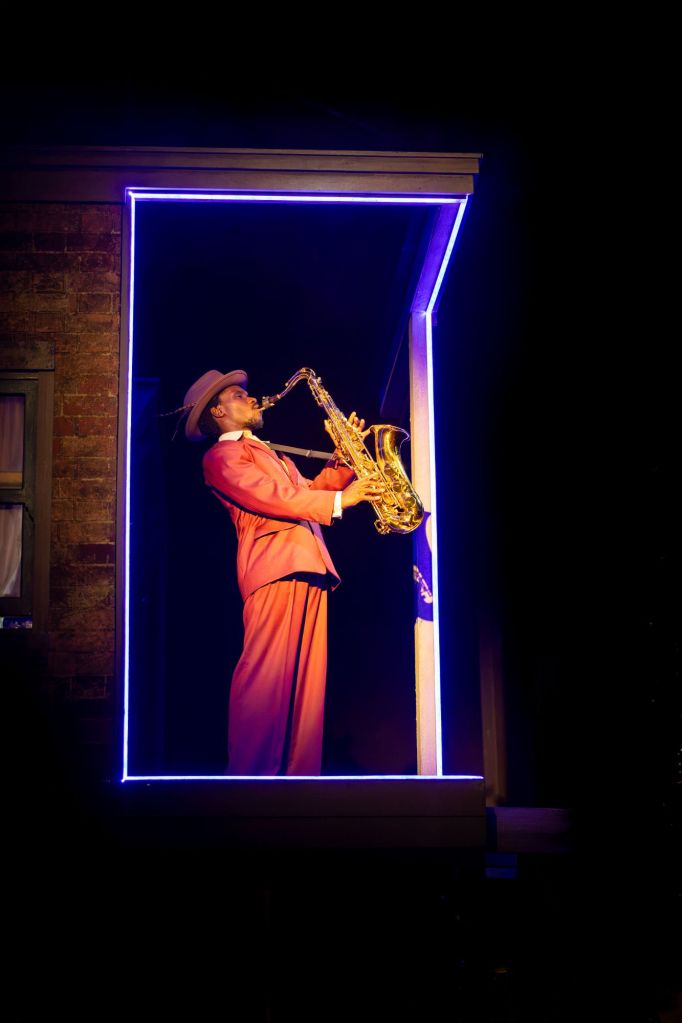
Michael Ahomka-Lindsay as Lyons in Fences at Leeds Playhouse. Image credit: Tyler Fayose
Everal A Walsh as Bono in Fences at Leeds Playhouse. Image credit: Tyler Fayose

Leeds Playhouse 11-26th September 2026

Through It All Together

Reece Dinsdale and Shobna Gulati in Through It All Together at Leeds Playhouse.
Image credit: Charlie Swinbourne

Written by Chris O’Connor

Directed by Gitika Buttoo

Leeds Playhouse, Courtyard Theatre


⭐⭐⭐⭐☆

Through It All Together, Chris O’Connor’s tender, funny, and profoundly human new play, scores a heartfelt goal at Leeds Playhouse. Blending the collective high of Marcelo Bielsa’s transformative Leeds United era with the quiet, day-to-day reality of living with dementia, this world premiere directed by Gitika Buttoo is a deeply affecting exploration of love, memory, identity—and how football, of all things, can help us hold onto our sense of Self.

The result is a beautifully calibrated narrative centred on Howard (Reece Dinsdale) and Sue (Shobna Gulati), a long-married Leeds couple whose lives are defined as much by matchdays as they are by memory loss. Their shared devotion to Leeds United—and to each other—becomes a touchstone as Howard’s dementia begins to unravel their sense of normalcy.

But this isn’t a story of despair. O’Connor balances challenge with a deep humanity,  never sugar-coating, but never wallowing either. “There are a lot of stories about dementia that focus only on the decline, the hardship… I wanted to show a more nuanced picture.” The ensuing result is a window into gritty, Northern humour and emotional resilience that suggests there are ways to navigate this new life that are not totally bleak and hopeless.

Reece Dinsdale’s portrayal of Howard is all the more moving for its subtlety. He captures the erratic rhythms of memory loss with clarity and compassion, avoiding caricature in favour of something richer. As the illness slowly progresses there are more post-it notes dotted around the home to ground him as we watch the light in his light in his eyes seem to palpably dim. Shobna Gulati’s Sue is no mere carer—she’s the team captain of this household, full of warmth, exhaustion, fierce loyalty and humour. Together, they embody a partnership that’s far more than caretaking; it’s a testament to shared history. Gulati is wonderfully warm and authentic as a wife facing an uncertain future, but determined to still make new memories with the man she loves.

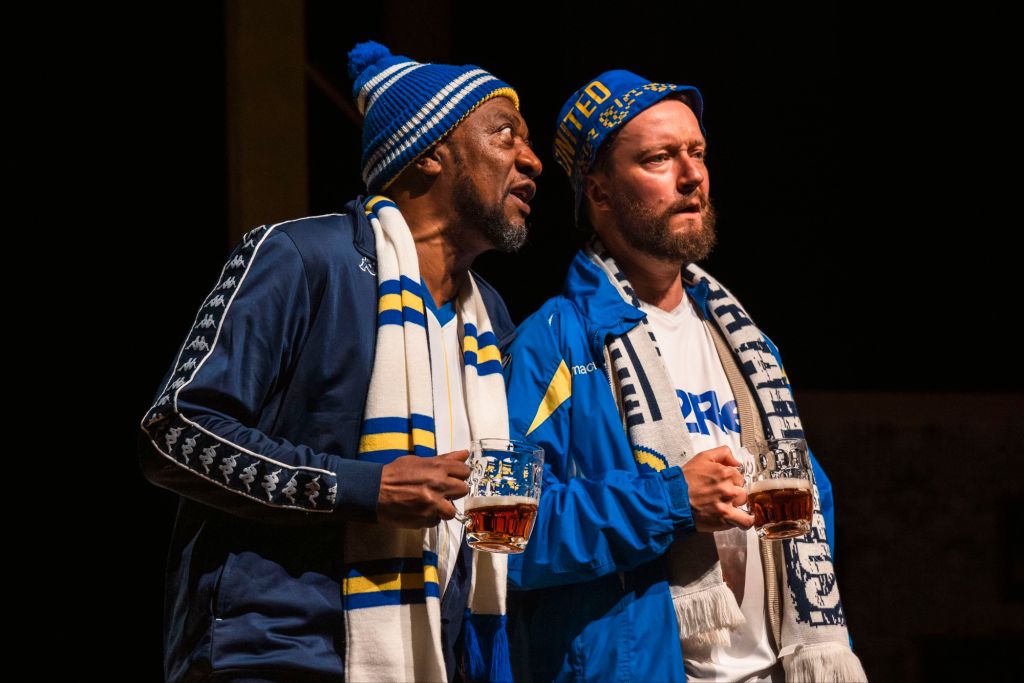
Excellent supporting roles from Dean Smith and Everal A Walsh flesh out the world outside of the home with energy and wit, from the passionate football pundetry of a wickedly funny podcast to football fans uniting in the pub or on the terraces with unbridled optimism or surly despondency. Natalie Davies is very believable as the daughter whose initial discomfort and awkwardness around her fathers’ diagnosis slowly shifts to something new that has real emotional depth and develops a deeper bond between parent and adult child.

Everal A Walsh and Dean Smith in Through It All Together at Leeds Playhouse
Image credit: Charlie Swinbourne

Buttoo’s direction is deft, never overstated, and her pacing allows the emotional beats to land without lingering too long. Amanda Stoodley’s set elegantly shifts between domestic space and Elland Road reverie, and her inspired stained glass window depiction of Marcelo Bielsa vividly evokes how football serves as church for so many. Annie May Fletcher’s sound design and Jason Taylor’s lighting evoke both the roar and passion of the crowd and the flickering confusion of a fading mind. The production’s authenticity owes much to the involvement of  Dr Nicky Taylor, Theatre and Dementia Research Associate at Leeds Playhouse as O’Connor collaborated with people living with dementia throughout the writing process.

This play will resonate with Leeds fans, particularly those still mourning the magic of the Bielsa years and those embarking with renewed hope as Leeds once again play in the Premier League. But crucially, Through It All Together is not really about football but instead “It’s about a family navigating life, loss, and love.” The result is a play that feels lived-in, full of both emotional urgency and the soft, cumulative weight of experience.

Through It All Together is a triumph not because it finds easy answers, but because it honours complexity. It reminds us that memory may fade, but love leaves traces. It’s an ode to resilience, to chosen rituals, to the invisible thread that binds couples, families, fans, and strangers in the same chant, week after week. Whether you’re a die-hard Leeds United fan or someone who couldn’t care less about football, this is a show worth seeing. As O’Connor hopes, “Maybe people will leave the theatre feeling a little more connected to their own families, and a bit more educated on dementia. And maybe, just maybe… they’ll convert to Leeds United.”

LEEDS PLAYHOUSE 23rd June – 19th July 2025