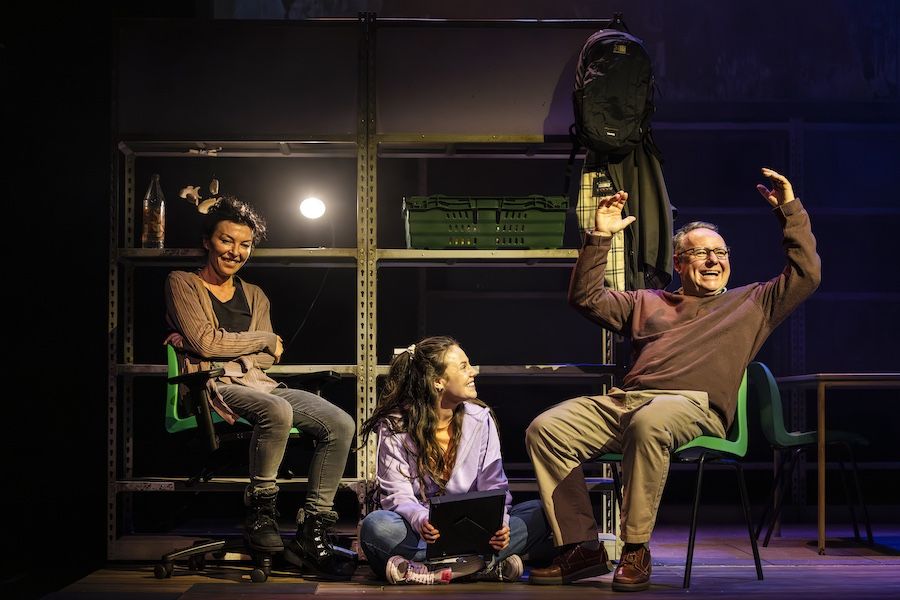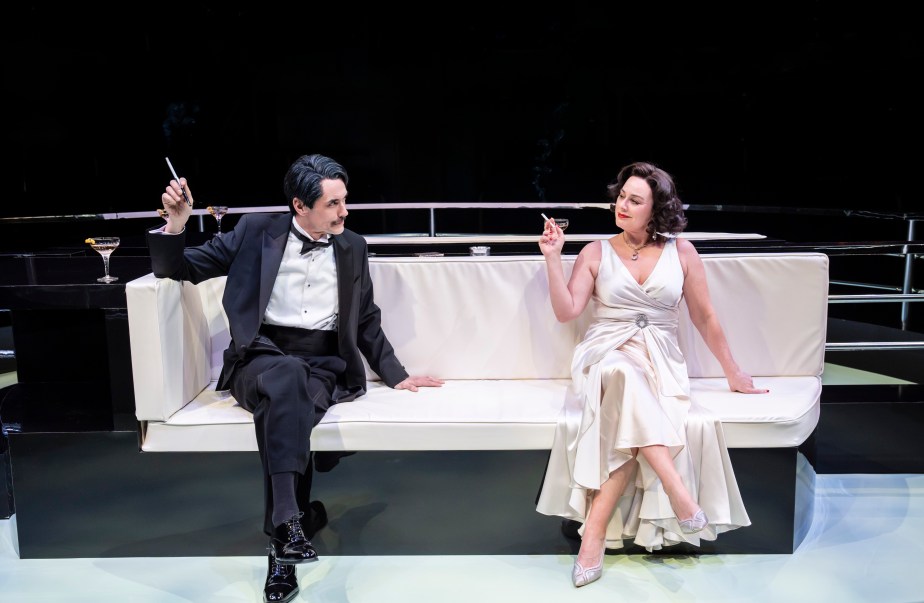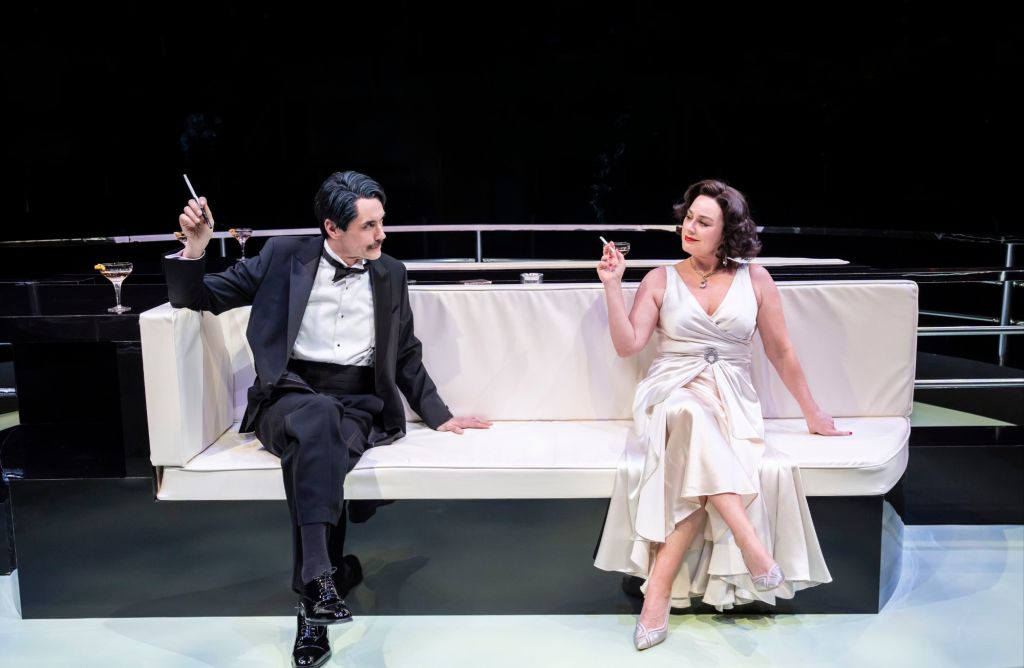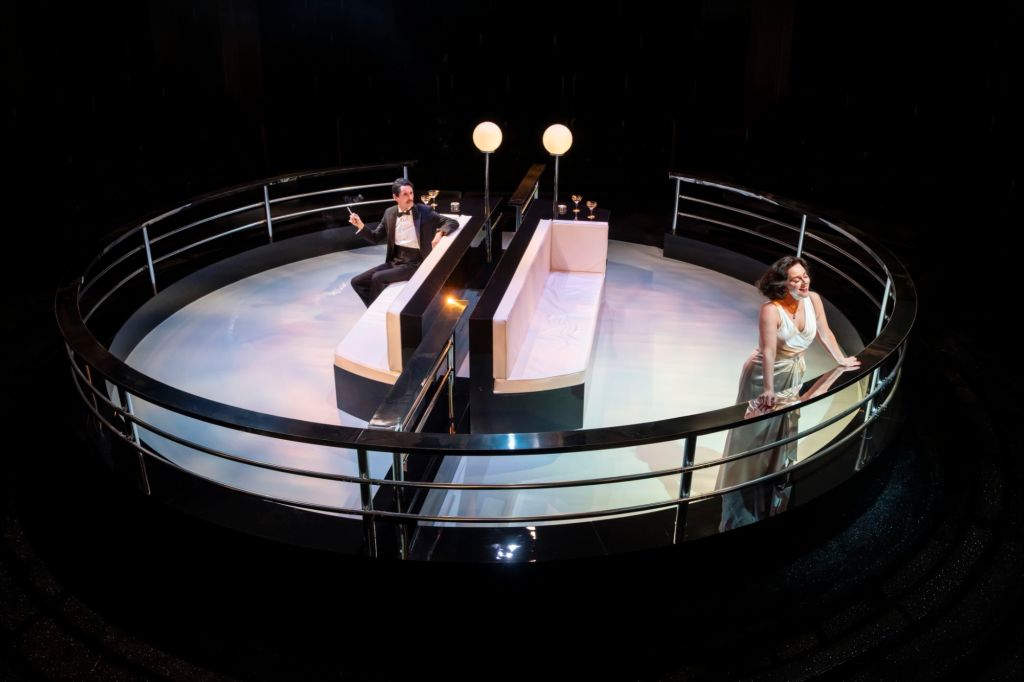

Privileged to see individuals confront their demons and share their journey toward positive change in my psychotherapy practice. Intrigued by people and inspired by how the Arts can positively impact the human spirit somewhere each and every day. Passionate about theatre and the arts. Lover of the mosh pit at gigs.
The South Warehouse at Aviva Studios transformed into an immersive, in-the-round venue for this late night takeover by Surround Sounds. Moody industrial ceilings, balconies for pop up performances and a circular stage for live music ensured a layout that invited movement and spontaneity.
The lineup was an eclectic curation with sets from cult Manchester band WU LYF (making a rare live return), North London’s Lex Amor, and a b2b DJ session by AFRODEUTSCHE with Jamz Supernova anchored the night. Rising talents like Reisner, Adisa Allen, Sophia Dignam (bringing jazz‑soul‑electronic fusion vibes), Che3kz, Jali Nyonkoling Kuyateh, plus collective walkabouts by Ghetto Fabulous, Club Clam, The Fvck Pigs, Banksie, and Coco Cannell ensured genre-blurring, high-energy variety.
The shift to an in-the-round stage helped cultivate a sense of communal celebration with the audience more a part of the perfomance than traditional music staging often allows for. There was no break in the momentum with live sets and DJ sets ensuring the programming unfolded like a continuous rave‑meets‑festival carousel, pulling you through waves of alt‑rock, rap, jazz‑infused textures, hard‑hitting bass, and art‑club mashups.
Surround Sounds was an electrifying fusion of Manchester’s independent spirit within a slick, warehouse‑scale space. It stayed true to Sounds From the Other City’s rebellious roots while embracing bold musical and spatial experimentation. A night built on energy, inclusivity, and audacious creativity—a fitting celebration of 20 years of underground culture.
A Symphony of Flesh and Bones. MIF25 Image credit: Juliet Ellis
Devised by Juliet Ellis
South Warehouse, Aviva Studios
Juliet Ellis delivers a deeply meditative and heartfelt work in ASymphonyofFleshandBones, in which she explores Buddhist philosophy alongside her use of film to question what it means to inhabit a body. Ellis uses photography and film of her father, a former bodybuilder, and her brother, a retired cage fighter to bring authenticity and tenderness to themes of masculinity, aging, and familial legacy.
Both intensely personal and universally resonant, this is a work whose impact lingers as beautiful images in a highly impactful setting. The images are striking and beautifully composed. The multi-screen layout mirrors a mandala’s visual symmetry, ephemeral, interwoven, and spiritually resonant. The blue-toned imagery evokes Buddhist symbolism of infinitude. The layers of screens that surround all four sides of the space adds to their impact and makes for a beautiful installation.
This is however where this production becomes frustrating and unsatisfactory. There is a slightness to the spoken element of this piece which is not helped by Ellis just reading out her thoughts from a printed document. The piece runs at 90 minutes and therefore the images on screen often linger for longer than needed and the pacing tends to drag. The staging and lighting are beautifully conceived but ultimately this piece feels confused, sitting somewhere between a TED talk with high production values and an art installation you feel obliged to observe at the artists’ pace. It’s a real shame as this would have worked brilliantly as a durational piece running on a loop with a recording of the artists’ thoughts playing with the audience being able to move around the space or lie on the floor just looking up at the screens.
Blackhaine And Now I Know What Love Is at Diecast for MIF25 Image credit: Archie Finch
Devised and Choreographed by Blackhaine
DIECAST
There is something brutal and viscerally raw in Now I Know What Love Is. This latest unflinching offering from choreographer and experimental musician Tom Heyes, otherwise known Blackhaine is staged as part of the Manchester International Festival. This is a marmite piece not necessarily immersive in any traditional sense and its narrative is not easily explained as the audience is invited into to this “numb world”.
Blackhaine intentionally plunges the audience into a world where love is indistinguishable from violence, where tenderness coexists with terror, and where the physical body becomes both weapon and wound. The piece is a relentless assault on every level. Visually, sonically, emotionally, there is no escaping and any hint of a redemptive ending is fragile and uncertain. Here the narrative is pure sensation. There is no comfort to be found here but rather an invocation of feeling that stays long after the lights fade.
The performance opens in near darkness, soundscape throbbing with industrial menace as dancers slowly appear through the crowd moving blankly like zombies. Later bodies contort into jagged, frenetic shapes. Each movement seems torn from the flesh—jerking, spasming, collapsing. This is dance stripped to its rawest essence…survival. At times dancers pound the floor as though trying to summon the earth itself to respond. There is an urgency to the physicality that speaks of both personal and collective desperation, of lives lived on the brink. The sound design is punishing—waves of static, guttural noise, haunting synths—that builds and fragments, echoing the disintegration on stage. Lighting is stark, utilitarian: this is a space that refuses to comfort.
And yet, in the midst of this bleak landscape, there are fragile moments of strange beauty. The title Now I Know What Love Is hangs over the piece like a ghost. Love here is fragile and fleeting and always teetering on the edge of obliteration. The moments of guitar that creep in like cracks of light feel like a comforting homage to Vini Reilly and The Durutti Column but is just as quickly decimated by a screaming rant.
For some, the lack of narrative and the extremity of the aesthetic may prove alienating, however this is not a show that seeks approval. It is confrontational, even adversarial at times… there is no real guidance for anyone unfamiliar with immersive productions. For those willing to surrender to its fractured structure there offers something rare: a glimpse into the abyss.
In the end, NowIKnowWhatLoveIs is less about answers than about exposing discomfort. It scrapes away at the surface of performance, of identity, of the human condition, and dares you to look at what lies beneath. It is telling in an immersive performance that we the audience silently observe pain and possible death yet we do nothing to soothe or comfort. Faced with anguish we peer and occasionally photograph or film palpable distress before moving on to watch the next scene. Perhaps that makes us, the audience, the bleakest element of this production.
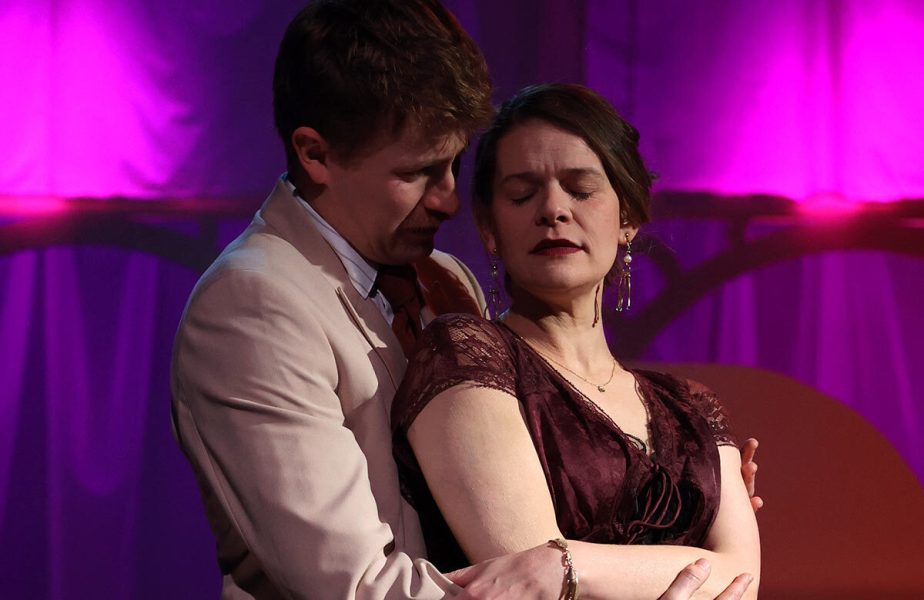
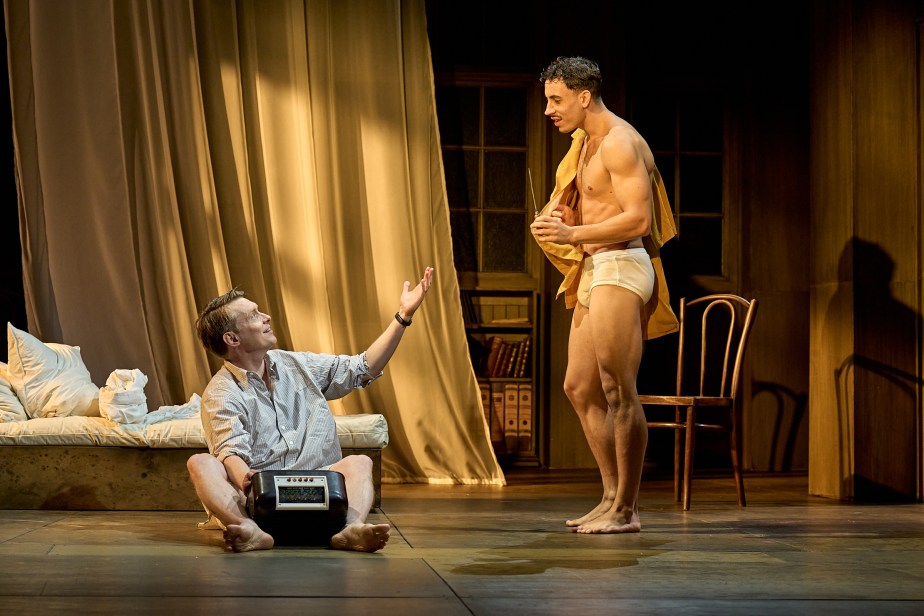
Ed Wood as George and Jonathan Goddard as Jim in A Single Man at AVIVA Studios Credit: Johan Persson
Based on the novella by Christopher Isherwood
Directed by Jonathan Watkins
The Hall,AVIVA STUDIOS
⭐⭐⭐⭐
Jonathan Watkins’ new ballet adaptation of Christopher Isherwood’sA Single Man unveils itself as a quietly potent exploration of grief, love, and queer identity. The creative gamble of splitting the portrayal of George, physically through Ed Watson’s danced embodiment and emotionally through John Grant’s live voice pays off beautifully. It’s a collaboration that refuses the easy path, forging a live multilayered dialogue between body and soul.
Ed Watson, formerly of the Royal Ballet, brings raw emotionality and a life-worn authenticity to George’s every gesture. His performance pulses with the contradiction of restraint and release: disciplined form that fractures under the weight of loss, yet never becomes self-indulgent. When he moves, there is a tangible, visceral pull of emotional snapshots of his dead lover Jim. There is a touching beauty in his connection to his lost lover that is delicately but powerfully conveyed. Momentswhentheensemblepeel his lover from his arms feel like the palpable wrench known to anyone who has loved and lost.
John Grant’s original songs, composed with Jasmin Kent Rodgman and performed live by the Manchester Collective linger around the edges of the set like memories that refuse to be tucked away. His lyrics map out George’s interior life: moments of tender self-awareness, bitter regret, and the faint glimmer of hope. This duality between the seen and unseen, the spoken and unsaid gives the piece a rare emotional depth. There are however points in the lyrics where they move too much toward exposition of the original text as if not quite trusting the dancers and the audience to fully grasp the narrative.
John Grant in A Single Man Credit: Johan Persson
The choreography, directed by Watkins with visionary care, balances the elegance of classical ballet with a contemporary urgency. Flashbacks, abstracted movements, and physical abstractions of inner pain are choreographed with a poet’s intuition. They evoke the 1960s California while remaining rooted in George’s emotional landscape as a gay man who must mourn his lover and navigate his grief in private as a love that dare not speak its mind.
Visually, the production is a lavish and intimate feast. Oscar-winner Holly Waddington’s costumes are very 1960s and use colour to real effect. Splashes of red for Charley and Kenny are a nod to the red of lifeblood and passion. The bodysuits the ensemble cast frequently strip down to are waxy pale and marbled in the muted colours of decomposition. Chiara Stephenson’s sculptural set combines stylized restraint with emotional resonance. The ash grey construct of a sprues containing everything required to function in daily life subtly alludes to George’s attempt to mask and try to play at normality. The screens that reappear mimic a vortex and serve well to mark out the segments when George retreats into his memories. The play of light and form enacts the interplay of memory and reality, and the staging honours George’s solitude while also embracing the small, human moments that break through despair.
In the context of MIF’s wider “Dream Differently” programme for 2025 which champions hybridity and emotional complexity then ASingleMan stands out as a highlight. It is less a huge spectacle than a subtle, achingly human meditation on loss. The final moments feel hopeful and redemptive. Perhaps we can all do well to hold a sense of possibility that the pain of grief can be redemptive and like kintsugi pottery we can be broken and yet emerge stronger.
Reece Dinsdale and Shobna Gulati in Through It All Together at Leeds Playhouse. Image credit: Charlie Swinbourne
Written by Chris O’Connor
Directed by Gitika Buttoo
Leeds Playhouse, Courtyard Theatre
⭐⭐⭐⭐☆
ThroughItAllTogether, Chris O’Connor’s tender, funny, and profoundly human new play, scores a heartfelt goal at Leeds Playhouse. Blending the collective high of Marcelo Bielsa’s transformative Leeds United era with the quiet, day-to-day reality of living with dementia, this world premiere directed by Gitika Buttoo is a deeply affecting exploration of love, memory, identity—and how football, of all things, can help us hold onto our sense of Self.
The result is a beautifully calibrated narrative centred on Howard (Reece Dinsdale) and Sue (Shobna Gulati), a long-married Leeds couple whose lives are defined as much by matchdays as they are by memory loss. Their shared devotion to Leeds United—and to each other—becomes a touchstone as Howard’s dementia begins to unravel their sense of normalcy.
But this isn’t a story of despair. O’Connor balances challenge with a deep humanity, never sugar-coating, but never wallowing either. “There are a lot of stories about dementia that focus only on the decline, the hardship… I wanted to show a more nuanced picture.” The ensuing result is a window into gritty, Northern humour and emotional resilience that suggests there are ways to navigate this new life that are not totally bleak and hopeless.
Reece Dinsdale’s portrayal of Howard is all the more moving for its subtlety. He captures the erratic rhythms of memory loss with clarity and compassion, avoiding caricature in favour of something richer. As the illness slowly progresses there are more post-it notes dotted around the home to ground him as we watch the light in his light in his eyes seem to palpably dim. Shobna Gulati’s Sue is no mere carer—she’s the team captain of this household, full of warmth, exhaustion, fierce loyalty and humour. Together, they embody a partnership that’s far more than caretaking; it’s a testament to shared history. Gulati is wonderfully warm and authentic as a wife facing an uncertain future, but determined to still make new memories with the man she loves.
Excellent supporting roles from DeanSmith and EveralAWalsh flesh out the world outside of the home with energy and wit, from the passionate football pundetry of a wickedly funny podcast to football fans uniting in the pub or on the terraces with unbridled optimism or surly despondency. Natalie Davies is very believable as the daughter whose initial discomfort and awkwardness around her fathers’ diagnosis slowly shifts to something new that has real emotional depth and develops a deeper bond between parent and adult child.
Everal A Walsh and Dean Smith in Through It All Together at Leeds Playhouse Image credit: Charlie Swinbourne
Buttoo’s direction is deft, never overstated, and her pacing allows the emotional beats to land without lingering too long. AmandaStoodley’s set elegantly shifts between domestic space and Elland Road reverie, and her inspired stained glass window depiction of Marcelo Bielsa vividly evokes how football serves as church for so many. Annie May Fletcher’s sound design and Jason Taylor’s lighting evoke both the roar and passion of the crowd and the flickering confusion of a fading mind. The production’s authenticity owes much to the involvement of Dr Nicky Taylor, Theatre and Dementia Research Associate at LeedsPlayhouse as O’Connor collaborated with people living with dementia throughout the writing process.
This play will resonate with Leeds fans, particularly those still mourning the magic of the Bielsa years and those embarking with renewed hope as Leeds once again play in the Premier League. But crucially, Through It All Together is not really about football but instead “It’s about a family navigating life, loss, and love.” The result is a play that feels lived-in, full of both emotional urgency and the soft, cumulative weight of experience.
Through It All Together is a triumph not because it finds easy answers, but because it honours complexity. It reminds us that memory may fade, but love leaves traces. It’s an ode to resilience, to chosen rituals, to the invisible thread that binds couples, families, fans, and strangers in the same chant, week after week. Whether you’re a die-hard Leeds United fan or someone who couldn’t care less about football, this is a show worth seeing. As O’Connor hopes, “Maybe people will leave the theatre feeling a little more connected to their own families, and a bit more educated on dementia. And maybe, just maybe… they’ll convert to Leeds United.”
The cast of The Walrus has a Right to Adventure at Liverpool Everyman. Image credit: Ean Flanders
Written by Billie Collins
Directed by Nathan Crossan-Smith
LIVERPOOL EVERYMAN ⭐⭐⭐⭐☆
Billie Collins is definitely one to watch as their work is evolving at a rapid rate from their debut play Too Much World At Once in 2023 to last years collaboration with Thickskin, the excellent PeakStuff. Their latest work, TheWalrusHasARighttoAdventure is an utterly charming piece that weaves together three stories full of warmth and wit within a big ecological heart. Three central characters each have a startling and life-changing encounter with a wild creature inspired by real life stories. This is a genuine ambitious play that is weird and wonderful in equal measure. Featuring a walrus, a stag, a bear, and a big queer soul this is a quicksilver exploration of our intimate connection to the natural world and the power and beauty of metamorphosis.
Director Nathan Crossan-Smith knits together three wildly different stories with a surprising amount of coherence and emotional punch. At the centre of each vignette is an encounter with the unexpected: a young shelf stacker is confronted by a majestic white stag in Halewood Tesco, a fierce mother bear derails a wedding proposal in Colorado while a walrus decides to inhabit a fishing boat in Norway. These surreal interruptions crack open the lives of three characters grappling with identity, purpose, and possibility.
Tasha Dowd in The Walrus has a Right to Adventure at Liverpool Everyman. Image credit: Ean Flanders
Tasha Dowd is endearingly grounded as Rio, a Tesco night-shifter whose brush with the mythical stag nudges them toward self-exploration. There’s a tenderness and subtlety in Dowd’s performance that makes Rio’s journey quietly powerful. Each performer also plays multiple other characters through the narrative and each character Dowd inhabits is vividly drawn and deeply engrossing down to the quiver of a hand that evokes an elderly parent or the physical menace of a redneck, second amender. Princess Khumalo’s Hazel is sharper-edged as a young woman suddenly thrown off-course by a man on one knee with a bear behind him. Khumalo brings great comic timing but grounds it in something rawer when Hazel begins to unpick what she really wants. Meanwhile, Reginald Edwards delivers a charmingly dry turn as Oskar, the Norwegian tour guide whose boat becomes a walrus squat. His blend of deadpan resistance and existential bewilderment is a comic highlight.
The set, designed by Chloe Wyn, is sleek and inventive allowing for seamless shifts between continents and climates. Live Foley sound effects (from composer and sound designer Oliver Vibrans) are used to delightful effect, turning rustling trees, crashing antlers, and grunting walruses into an audible playground. The whole staging evokes a vintage radio play unfolding before our eyes. RajivPattani’s lighting keeps the pace slick and the transitions fluid. There is a really beautiful look to the whole production that has a really avant garde European style that evokes an Ivo van Hove piece.
It is a testament to the writer and the cast and creatives involved that the multiple storylines which could easily have felt a little fragmented remains fluid and cohesive. Collins’ writing sparkles with wit, but also isn’t afraid to pause for introspection. The play gently interrogates how we live, love, and consume—and who we become when nature elbows its way back into our human bubbles. Most refreshing is the queer narrative running through Rio’s story. It’s treated not as an issue, but as a tender, joyful part of life…messy, moving, and very human.
Ultimately, The Walrus Has A Right toAdventure is an exuberant, slightly bonkers reminder that ultimately the wisest thing we can do is listen…to the animals, to each other, to ourselves.
The Walrus Has A Right to Adventure at Liverpool Everyman Image credit: Ean Flanders
Adapted and Directed by Alex Harvey and Charlotte Mooney
HOME MCR
HOME plays host to a visceral, breathtaking reimagining of Thomas Hardy’s Tess of the D’Urbervilles. This dreamy production quite literally soars in this genre-blending adaptation by Ockham’sRazor.
Gone is the pastoral restraint of traditional Hardy. Instead, we’re catapulted into a raw, kinetic world where spoken word collides with aerial spectacle, and physical theatre gives pulse to Tess’s inner life. With ropes, rigging, and a shape-shifting set by Tina Bicât that conjures both rural Dorset and Tess’s psychological terrain, this production is as visually inventive as it is emotionally brutal.
From the opening moments, where Tess’s body arcs through the air, we sense a young woman buffeted by forces far larger than herself – class, patriarchy and fate. The acrobatics aren’t just decorative but truly dramaturgical. Every lift, tumble, and suspension reveals something of her journey: the elation of love, the vertigo of injustice, the weight of grief.
Hardy’s 19th-century text is refracted through a contemporary lens, but not diluted. The themes of poverty, privilege, female agency, and the policing of desire all land with fresh urgency. There’s a fury simmering beneath the lyricism of the script which fuses Hardy’s own words with piercing modern clarity. There is a piercing moment on stage as Joshua Frazer as Alec D’Urberville spins imperiosly around Tess in a hoop like a giant gold wedding ring that is both stunning and chilling.
The cast are remarkable – muscular and tender, able to pivot from aerial feats to fragile, unspoken intimacies without ever breaking the spell. Here there are two perfomers as Tess. Hanora Kamen narrates her own story and invites the audience to watch as her tragic tale unfolds. Dance artist Lila Naruse ensures that Tess is heartbreakingly rendered: strong but vulnerable, caught in the ropes of her circumstances even as she fights to break free.
The staging is constantly surprising, using vertical space and movement to express what Hardy wrote between the lines: that the social systems around Tess are as confining as any physical trap. For creative team of Directors Alex Harvey and Charlotte Mooney this production is clearly a labour of love. They are ably supported by an exquisite soundscape from Holly Khan and dreamy video design by Daniel Denton. Nathan Johnson‘s choreography is just flawless and commands attention in a similar and intimate way to his work with Punchdrunk.
TESS Image by Kie Cumming
TESS is a triumph of theatrical innovation and emotional storytelling that speaks directly to a contemporary audience. The solidarity of women, the enduring effects of shame, and the quiet power of resistance are all threaded through the performance with care and urgency. Hardy purists may blink but even they’ll be moved by the sheer poetry of this production’s fall and flight.
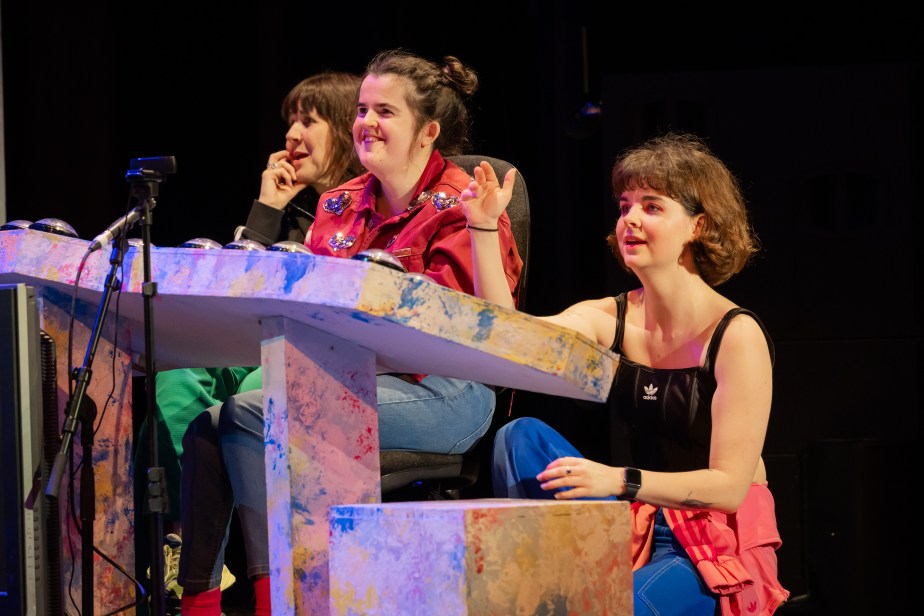
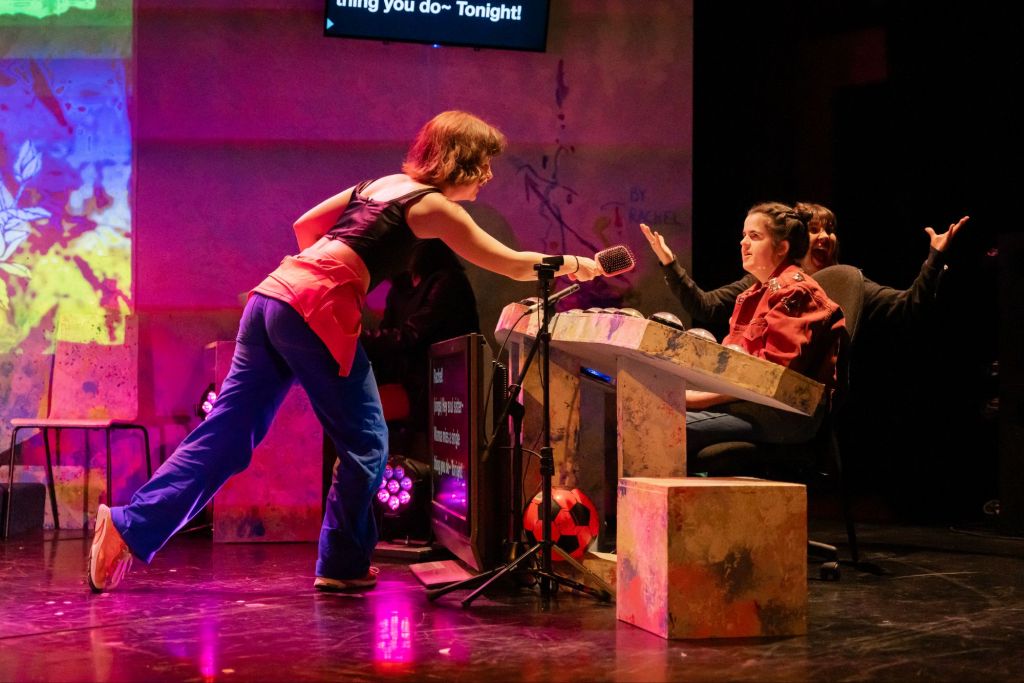
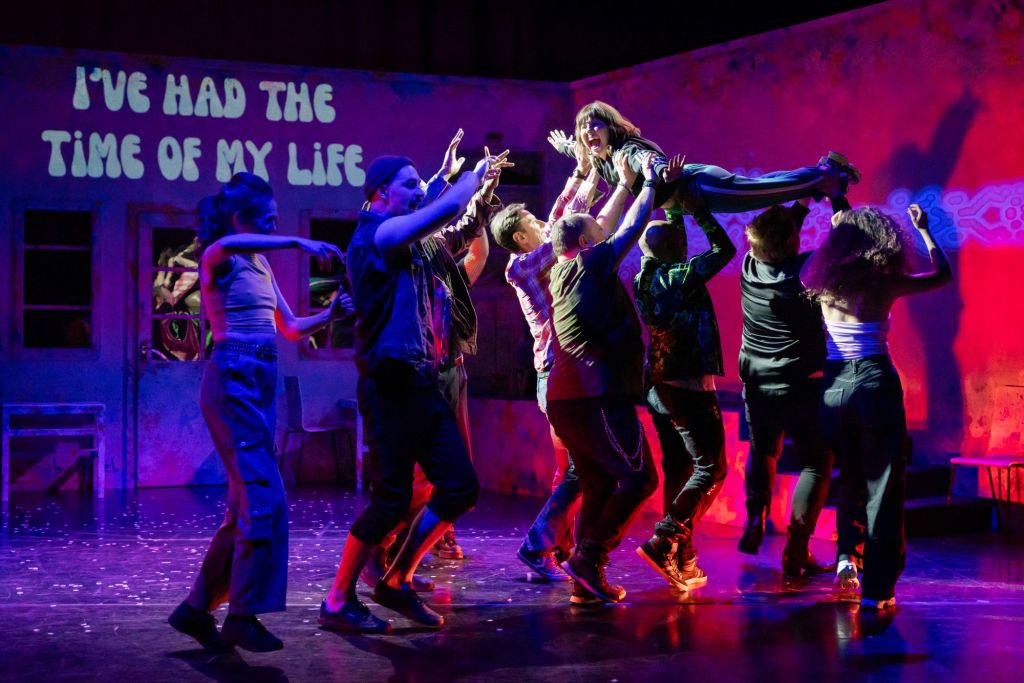
The cast of The Taming of The Shrew. Image credit: Shay Rowan
Written by William Shakespeare
Directed by Amy Gavin and Hannah Ellis Ryan
The Shrew Gets a Manc Makeover: Unseemly Women Take On Shakespeare
The bawdy babes are back and this time, they’re not pulling any punches. Unseemly Women, HER Productions, and Girl Gang Manchester have teamed up for a burlesque-soaked, neon-splashed, full-throttle takedown of Shakespeare’s most problematic “rom-com” at HOME and it’s an absolute riot.
Under the whip-smart direction of Amy Gavin and Hannah Ellis Ryan, The Taming of the “Shrew” ditches dusty tradition for something far more visceral. Set between a glitter-drenched nightclub and the chaotic world of Padua, this all-female and non-binary ensemble slices through the Bard’s gender politics with stilettos sharpened.
The very talented cast slinks and shimmy across the stage and into the audience to ramp up the immersive aspects of this sassy production. Think Baz Luhrmann meets Blackadder on a hen do in the Northern Quarter, with a soundtrack that pivots from catchy pop tracks and bluesy vocals to the sinister horror of a slowed down Andy Williams’ Can’t Take My Eyes Off You.
Shady Murphy is magnificent as Katerina, all fire and fury before her spark is methodically and heartbreakingly extinguished. Opposite her, a brilliant Emily Spowage delivers a Petruchio that’s equal parts swagger and sadism. It’s a masterclass in gaslighting so when Petruchio insists the sun is the moon, your stomach will twist as Katerina tries to navigate around safe path through her marital nightmare.
Visually, it’s a feast: Zoe Barnes’ Vivienne Westwood-inspired wedding dress looks iconic. The Belles look suitably beguiling and risqué for this production. The pole dancing and musical elements ramp up the visual drama and showcase the multi-talented performers in this riotous piece.
This is a fun and face-paced punch to the gut that’s a glitter cannon full of feminist fury. By refusing to sanitize the original text, this production reframes it with power, purpose, and a healthy dose of revenge. Here this vibrant and talented ensemble reclaim the narrative. The odious Sly Christopher is left to watch the women like a second rate Bernard Manning gagged and trussed up like a turkey.
Catch it before it disappears in a cloud of glitter and gaslight.
Concept, Direction, Photography, Text and Performance by Benji Reid
AVIVA STUDIOS, WAREHOUSE ONE
Finding the Sublime in the Click of a Shutter: Benji Reid’s FIND YOUR EYES
There are some performances that ask for your attention,here Benji Reid’s FINDYOUREYES does not ask, it commands it. From the first subtle toll of a bell to the final, well-earned ovation, Reid’s self-described Choreo-Photolist offering doesn’t just hold your gaze; it re-engineers it.
Originally commissioned for Manchester International Festival in 2023, it’s a thrill to see a local artist not just holding their own, but unequivocally owning the space as they return to their home city via touring the production to New York.
Reid, once a pioneer in the UK hip hop dance scene, now an alchemist of light and movement—merges dance, photography, and narrative with surgical finesse. This isn’t just interdisciplinary work. This is interdimensional. The camera, usually an archive tool, here becomes a conjuring device. Images are captured live and appear like magic on giant screens. Reid is a silent sorcerer revealing pages of his spellbook in real time.
The genius of FINDYOUREYES lies in its transparency. Reid doesn’t conceal the trick; he hands you the wand. You see the fans, the foil, the flashes. You hear the barely-there click of the shutter. It’s not illusion, it’s transfiguration. We witness the banal become beautiful: a charging cable turned cyborg crown; a pole dancer becoming a mythic creature caught mid-flight. You don’t just observe the process, you are implicated in it.
Three performers Slate Hemedi, Salomé Pressac, and Zuzanna Kijanowska channel their bodies with a poise that feels both disciplined and transcendent. Hemedi and Pressac unfold themselves like origami, their precision so intimate it feels voyeuristic. Zuzanna Kijanowska seems more phoenix than pole artist as she defies gravity and expectation. These aren’t performances, they are revelations.
The set design by Ti Green deserves a standing ovation of its own: minimalist but mutative, each act unfolding new dimensions, as though the stage itself is evolving in step with the emotional tenor of the work.
The piece is not without pain. It speaks of loss sometimes in whispers, sometimes in shouts of grief, trauma, and the complicated legacy of Black masculinity. Reid’s monologues, stitched with poetic brevity, touch on family wounds, suicidal ideation, and the tender devastation of caring for an ailing parent. It is brave work, and yet never self-indulgent. Under the deft dramaturgy of Keisha Thompson, the deeply personal becomes piercingly universal.
But perhaps the most moving part of FINDYOUREYES is its reverence for ritual. It treats creativity as ceremony: the lighting of a candle, the lifting of a lens, the building of a world. This isn’t dance as performance but more dance as invocation with the camera capturing moments in time. Reid is not merely a choreographer or photographer-but a high priest of fleeting truth.
In one of the final monologues, he offers the question: “It’s not how do you fly, but why?” FINDYOUREYES doesn’t answer that question, instead it invites you to experience the lift-off.
Michael Roberson in WAKE. Image credit: Ruth Medjber
Co-Created and Co-Directed by Jennifer Jennings and Phillip McMahon
Warehouse One, HOMEMCR
Growing up Protestant in rural Northern Ireland I went to a lot of funerals. There were wakes with copious amounts of tea, cake and sandwiches and the odd drop of whisky or sherry. They were mostly restrained quiet affairs where your loss was acknowledged with a solemn handshake, a box of teabags or a tin of ham. I always had a sense that our Catholic neighbours had nailed the wake more as a celebration for the dead with music and booze usually leading to a good cèilidh. Apparently I was right and THISISPOPBABY are on the mainland showcasing the rites of the WAKE but with a few extra bells and whistles. My lovely Dad was seen to the grave with the lilt of bagpipes…as of last night I’m wishing we could redo his send-off with some accordions, the bodhrán and maybe an Irish dancer in a sequined g-string with buttock tassles and possibly a world champion pole dancer if the budget would stretch.
Jennifer Jennings and Phillip McMahon of Dublin based THISISPOPBABY have blended the traditional mourning rites with a high calibre camp burlesque show that includes aerial work, Irish dance, slam poetry, break dancing and pole dancing. The result is anarchic and playful rousing invitation to mourn our dead by celebrating life. The production has had several sell out run in Dublin before heading to Sadlers Wells and now Manchester. The Warehouse space is a ideal setting with a tiered stage for the musicians and the pole dancer whereas the circular second stage has a circus vibe and is used for the dance routines and the aerial work. The audience are seated to 3 sides of the circular stage so the sight lines are excellent.
Balloon dance from Wake. Image credit: Ruth Medjber
THIS IS THE WAKE FOR EVERYONE THAT’S NEVER COMING BACK…
Felispeak is the Irish-Nigerian spoken word artist who weaves a story through the very varied performance styles. Her crisp dry drawl has a laconic charm and there is a real lyricism in her words that is reminiscent of some of our great Irish poets. Some performances burst on stage such as Colombian breakdancer CristianEmmanuel Dirocie or the mind bending balloon dance by American competitive Irish dancer Michael Roberson and THISISPOPBABY stalwart Phillip Connaughton. Others have a gentler intro such as a beautiful aerial routine by Jenny Tuffs or the plaintive voice and accordian of Darren Roche from the band Moxie in the haunting Raglan Road.
The music here is a roller coaster soundtrack that encompasses traditional melodies and modern Irish classics like The Cranberries Ode To My Familydelivered in a gorgeous performance by Emer Dineen. Peppered through these are Bronski Beat Small-town Boy used in a phenomenally confident performance by Michael Roberson. Eurythmics Sweet Dreams sees another striking clubland meets Irish dance while the Peggy Lee classic is rendered unforgettable by a hilariously cheeky performance by Phillip Connaughton.
This is a impressive production bringing together fourteen artists from very varied disciplines and showcases some stunning performances including Venezuelan Lisette Krol, who is a world champion pole dancer and a truly breathtaking performer. Most of all, WAKE is a celebration of how we choose to live while acknowledging death is all around us. In this only possible response is to be open to the joy and accepting of the pain of lost lives that were well lived. This life-affirming production feels like everyone has been on the poitín or Irish moonshine and this is a party for the dead that everyone should join.