
Oldham Coliseum
Written by Lucy Prebble
Directed by Jake Murray
Play With Fire Productions
The U.K. has the fourth highest level of antidepressant prescribing in the Western world with prescription levels tripling since the millennium. Yet a study published in The Lancet earlier this year on the efficacy of these drugs suggests at least a million more Britons should be taking antidepressants. With mental healthcare becoming an increasingly important topic of discussion, Fire Productions brings the award winning The Effect to the North West. This Lucy Prebble play is about a clinical study on the effects of an unlicensed antidepressant on non-depressed, paid volunteers. The play explores whether Love really is the drug or if artificially elevated dopamine levels are indeed Viagra for the heart.
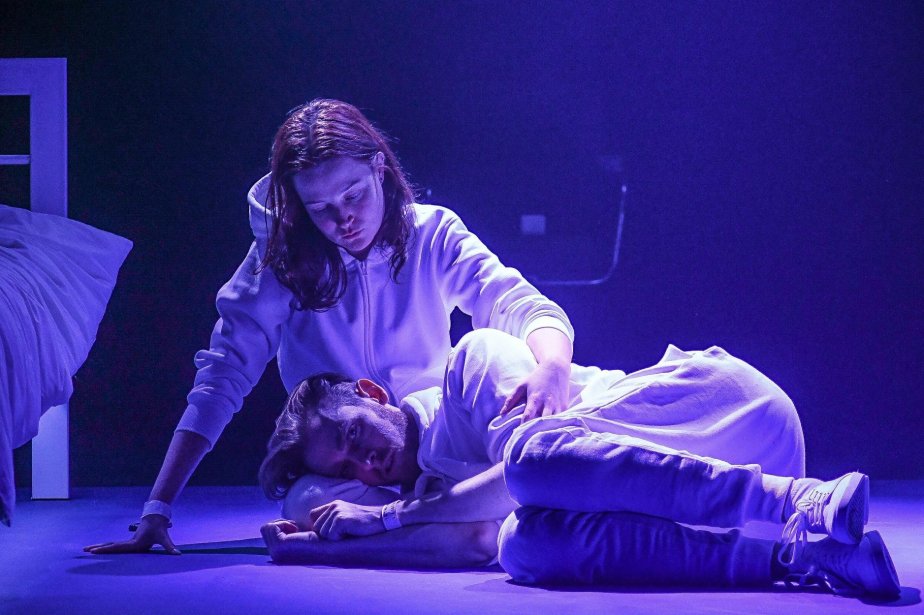
Striking stage design by Louis Price creates a sleek and effective set that coupled with lighting by Adam Murdoch ensure that the production looks as good as the onstage performances. Scenes flow smoothly and concisely in this highly structured amd cerebral piece. The order and precision of the early scenes at the research facility are a smart foil to the messiness that unfolds as heightened emotions takeover.
The direction by Jake Murray ensures empathy, passion and tenderness are infused into every scene whether it is dopamine infused euphoria or dopamine deprived despair. In this double blind study the lovers, young and old are under the spotlight as the audience observe the empirical and the more qualitative research approaches. Is this elevated mood and loss of appetite due to the dopamine in the drug or is it due to the exhilaration of falling in love? Does a relationship breakdown trigger a reactive depression or does a chemical imbalance in the brain cause depression and if left untreated can it cause the breakdown of a relationship?
The young couple are utterly believable in their growing attraction and resultant confusion as they grapple with what is placebo and what is real in their relationship. As Connie, Elaine McNicol is all process driven, reflective and cautious as the curious, young psychology student whose emotional world starts to rapidly expand. Daniel Bradford really shines as Tristan. His Northern Irish accent totally fooled me and I’m from N.I! He brings a genuine lust for life to his character that is always engaging and when the drama unfolds he is truly mecurial in this role. He absolutely lives in the moment so when his character becomes trapped in the moment, it is painfully poignant to see all that joy and passion snuffed out; just as it can be in episodes of serious depression.
The two doctors are middle aged and differ in their approach to the subject matter. Toby is the trial director who favours the science and sees medication as an effective means of regulating brain chemistry whereas Lorna sees things from a deeply personal perspective and wonders if depression can be a useful pain informing us that we need to change our lives. Both perspectives have validity as without enough dopamine in the brain we struggle to have the motivation to effect change which in itself can cause depression.

Karren Winchester is wonderful as Lorna showing dry humour and resilience, she is always intensely believable as the deeply, emotionally invested psychiatrist. In the second act she excels as depression sets in and in her scene talking to the human brain she is chillingly reflective. Her portrayal of the toxicity and dissociation in depression is startlingly accurate. This is wonderful writing for any actor but Winchester really uses every word to self-flagellate. It is not surprising that many individuals suffering depression do not seek help as the voice in their own head can be so punitive that they simply don’t see themselves as worthy of assistance.
The mysteries of the human heart and mind are enduringly complex and as interwoven as the formation of the brain itself. The Effect raises more questions than it answers but this is a conversation that will always fascinate and divide in equal measure.
Oldham Coliseum 25 – 27th September
Images by Sophie Giddens


 Live Art Alive