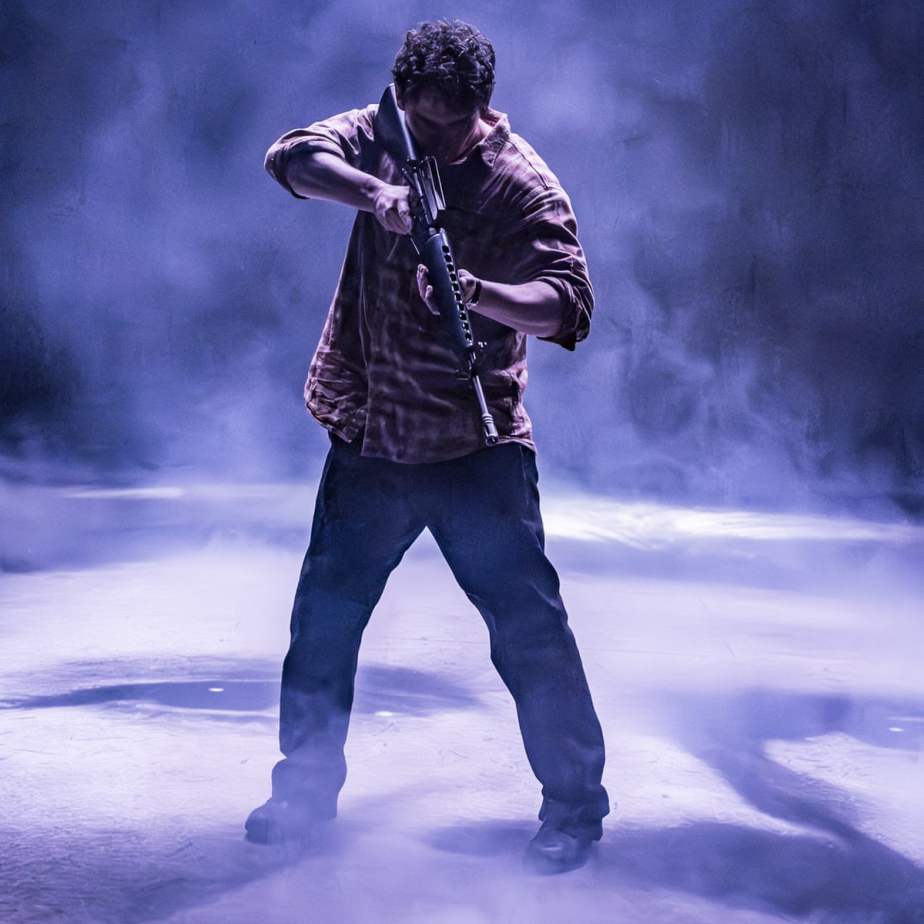
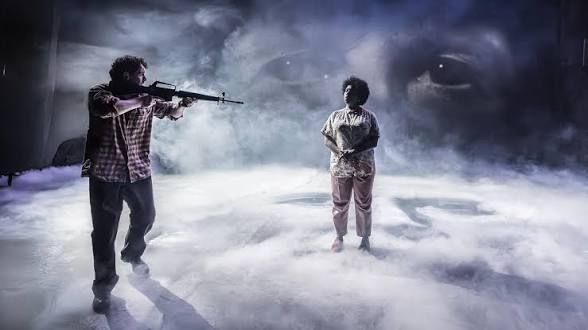
Image credit: Marc Brenner
Writer Hilary Mantel
Playwright Alexandra Wood
LIVERPOOL EVERYMAN
★★★★☆
Politics and theatre have always made for dangerous and unpredictable bedfellows. One deals in illusion, the other in manifesto, and both depend entirely on getting the timing just right. At Liverpool Everyman Theatre, The Assassination of Margaret Thatcher arrives carrying enough ideological Semtex to flatten a tabloid newsroom. However, what ultimately gives this adaptation of Hilary Mantel’s notorious 2014 short story its bite is not the provocation of the title but the unnerving humanity beneath it.
The first act unfolds with a dark comedic interplay that feels like watching a sitcom being recorded. Cups of tea are made, curtains twitch, conversations swirl dangerously around uncomfortable subject matter like guests avoiding a murky stain on the carpet. Yet beneath the domestic mundanity sits a slow volcanic rumble of class resentment and exhausted rage. There is a deliciously sureal feel to this scenario where a middle class divorcee expecting a plumber to fix her boiler and instead gets a gunman hellbent on killing the Prime Minister. Under the care of Alexandra Wood, Mantel’s dialogue remains a marvel of weaponised civility.
The production’s two central performances are powerful performances that anchor the evening . Anita Reynolds plays Caroline with a brittle restraint that suggests a woman permanently holding herself together like jewellery beads on a fraying thread. Every clipped sentence feels like a choked dry scream. Opposite her is the would-be assassin Robbie O’Neill who carries himself with an intriguing blend of swagger and sadness: part pub philosopher, part fallen romantic hero. Their scenes together fizz with a strange chemistry as they weigh each other up and find some surprising commonalities.
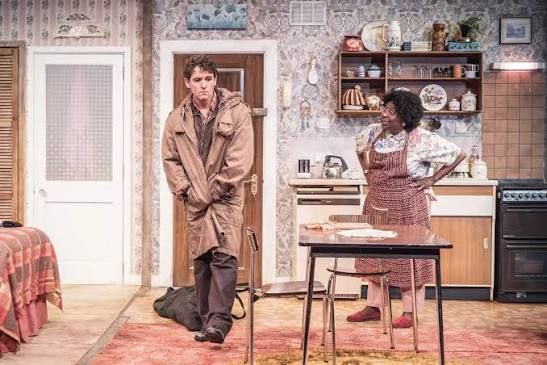
Image credit Marc Brenner
What elevates the production beyond an accomplished literary adaptation is the extraordinary tonal shift of the second act. Until then, the Everyman stage feels cramped with suburban realism, all muted anxieties and stale air evoked by the bland domesticity of Ceci Calf’s set. Suddenly the production rips itself open theatrically. Walls vanish, lighting fractures, sound pulses through the auditorium like a national panic attack and bodies start to drop fromthe ceiling. The staging broadens into something almost expressionistic, as though Britain itself has blown apart with uncertain possibilities. It is thrillingly done with the sort of audacious visual pivot that makes audiences physically sit forward.
The transition also sharpens the play’s central question. Thatcher rarely appears directly, yet her presence dominates the room like cigarette smoke clinging to wallpaper decades later. The production wisely avoids easy sanctimony or cartoon villainy. Instead it examines how political ideology colonises ordinary lives, shaping marriages, loneliness, ambition and despair long after the speeches end. This is a play that will resonate regardless of political views. It is premiering in Liverpool, a city who had good cause to loathe Thatcher, it is playing out as other divisive world leaders are subject to assassination attempts and I’m sitting watching this play remembering my own upbringing where fleetingly my local M.P. was the very Bobby Sands that Brendan seeks to avenge.
There are moments where the script threatens to disappear too deeply into its own intellectual labyrinth. A handful of speeches feel more exposition than drama. Yet the cast navigate these passages with enough emotional precision to keep the tension taut.
What lingers afterwards is the queasy recognition that Britain still speaks in Thatcher’s vocabulary even while arguing about her legacy. This production understands that political ghosts do not rattle chains. They sit quietly in kitchens, in boarded-up high streets, in the silence between neighbours. The Everyman has created something both witty and deeply unsettling: a state-of-the-nation drama with frostbite in its veins.

