Written by Lorraine Hansberry
Directed by Tinuke Craig
A Headlong, Leeds Playhouse, Lyric Hammersmith Theatre and Nottingham Playhouse co-production
“Her creative ability and her profound grasp of the deep social issues confronting the world today will remain an inspiration to generations yet unborn.” These were the words of Martin Luther King Jnr spoken in 1965 at the funeral of playwright and activist Lorraine Hansberry. Almost 65 years on, her seminal play A Raisin in the Sun remains just as powerful as it was when originally produced as the first play by a black woman on Broadway. This new production directed by Tinuke Craig celebrates the writing of the hugely talented Hansberry as successfully as her production of August Wilson’s Jitney in 2022.
This production has all the elements of a classic kitchen sink drama as three generations of the Younger family are crammed into a roach infested apartment with paper thin walls and a shared bathroom in Chicago. Times are changing and so are the fortunes of this family who are waiting on a life insurance payout. The Matriach, Lena aspires to buy a small home with a yard to plant flowers and finance her daughter through college. Walter Lee, her son is a dissatisfied dreamer who sees the money as a way out of his job as a chauffeur and into a life as an owner of a liquor store with a fleet of cars on his own driveway. His weary wife Ruth wants nothing more than to get out of this cramped apartment and soak in her very own bathtub. Beneatha, the daughter imagines a bright future as a doctor. Grandson, Travis would simply be happy with a bedroom rather than sleeping on the living room couch each night.
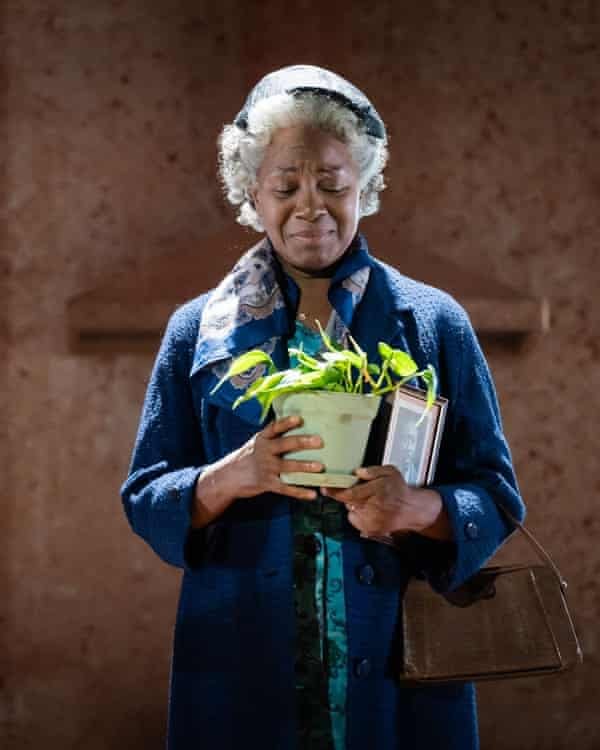
The issues confronting this family are societal racism, poverty and how it restricts our choices and the politics of housing which remain just as relevant today. Each character is fully fleshed out and has complexity and depth. Doreene Blackstock as Lena exudes grace and resilience as she attempts to tend to her children while struggling to understand their very different desires. There is a yawning chasm between a woman who once saw freedom as not being lynched and a yearning to own rather than be owned and the very different aspirations of her children. Solomon Israel as her son is not afraid to play the greedy hapless dreamer who eventually finds some honour. He moves fluidly between casual cruelty and drunken misogyny to moments of real tenderness as he tries to navigate being the man of the house and doing right by his family. Joséphine-Fransilja Brookman brings a light comic touch to her portrayal of Beneatha. At times a flouncing, petulant teenager with as many aspirational hobbies as boyfriends there is also emotional depth as a young woman desiring a career rather than a husband, and who has more faith in herself than in a God. Cash Holland may sometimes lean too much into the melodrama but is very believable as a young wife living with her husband’s family and desperate to escape the cramped living conditions. One of three sharing in his role as Travis, Josh Ndlovu is excellent as the young boy in the midst of all the family drama.

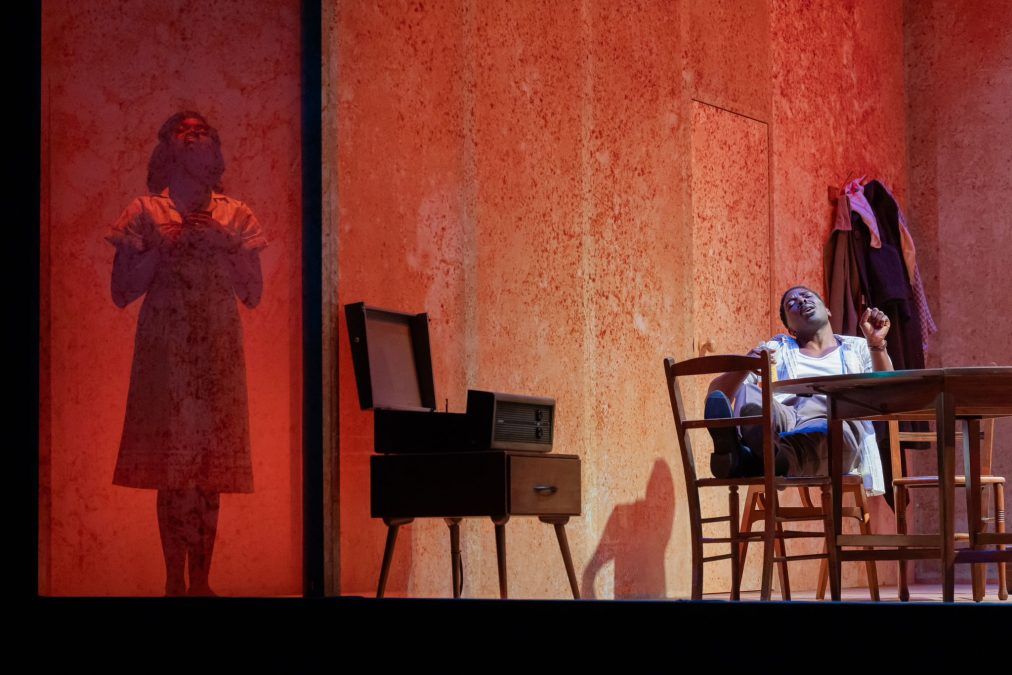
The set design by Cécile Trémilières adds a dreamy realism. The sparse but perfectly clean furnishings illustrate the pride these women take in making the best of what is available to them, while the paper thin transparent walls highlight the lack of privacy and the tenuous nature of renting in an impoverished tenement. The dreamy, almost ghostly aspects of characters lit within the other rooms is highly evocative and perfectly alludes to the generations gone before who also dreamt of ownership and security.
The second Act looks at the repercussions of Lena buying property in a white area of Chicago. Ironically this is the most affordable option but it heralds a knock on the door from the politely “acceptable” face of racism as Karl from the Clybourne Park welcome committee offers to buy back the home from the family. Faced with the options to recoup the money Walter Lee has lost or have a home of their own despite the risks, the Younger family must make yet another monumental decision. A Raisin in the Sun was inspired by the poem Raison by Langston Hughes who asked What happens to a dream deferred? There will always be a multitude of answers to this question but this production gives its own response, and it is as powerful as Lorraine Hansberry first intended in 1959.


 Live Art Alive