A Christmas Carol

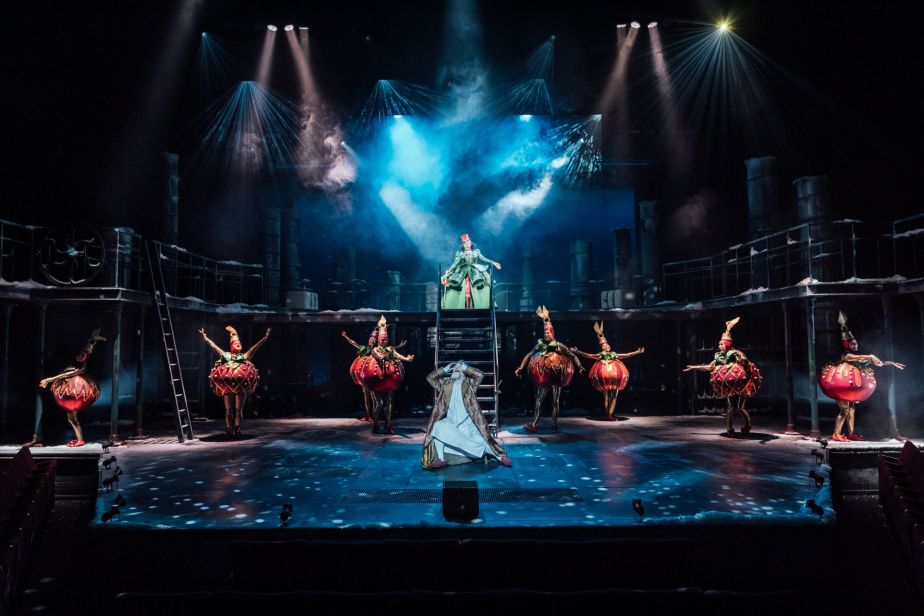
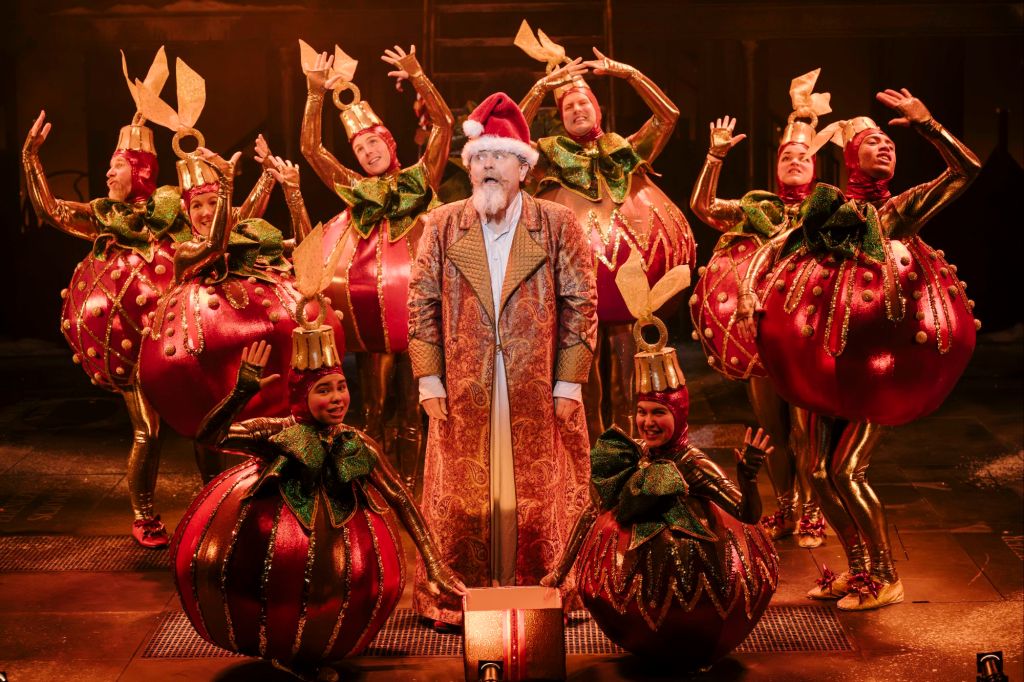
Reece Dinsdale as Ebenezer Scrooge with the ensemble cast in A Christmas Carol at Leeds Playhouse
Image Credit: Helen Murray

Adapted by Deborah McAndrew

⭐️⭐️⭐️⭐️

A warm, witty, and wonderfully human A Christmas Carol seasoned with some Yorkshire grit.

Leeds Playhouse once again unwraps its annual festive treat, and this year’s A Christmas Carol is a glowing, golden bauble of a production. Set in Victorian Yorkshire wool mill, it’s traditional enough to satisfy the purists, yet peppered with just enough invention to keep the tale feeling spry, spirited, and surprisingly fresh.

From the moment the ensemble spills onto the stage, singing carols with crisp winter harmonies, there’s an infectious sense of festive togetherness. The production leans into the story’s communal heart: figures materialise from the shadows to become narrators, townsfolk, ghosts, and even Scrooge’s own conscience, creating a fluid world where past, present and future overlap like swirling snowflakes.

At the centre of it all is Reece Dinsdale as a sharply etched, quietly devastating Ebenezer Scrooge. The performance is refreshingly understated; rather than a cartoon miser, we’re given a man worn down by choices, loss, and habit. This gives the eventual thawing of that famously icy heart real emotional heft and makes his giddy transition into festive joy all the more delightful.

The Ghosts are a particular triumph.  Bea Clancy as The Past arrives with a gentle, moonlit glow, weaving memory and melancholy together with a dancer’s grace. Claudia Kariuki bursts in with boisterous charm, a living embodiment of abundance and goodwill, sweeping the audience into laughter with every generous gesture. Their performance is a real scene stealer and when surrounded by the human dancing baubles, this is a real highpoint in this production that evokes part big Hollywood musical, part grand burlesque production. And the wraithlike Ghost of Christmas Future is evoked with spare, elegant, and utterly silent drama that is visually haunting and remains chilling in its simplicity, a reminder that even the most festive tale has its shadows.
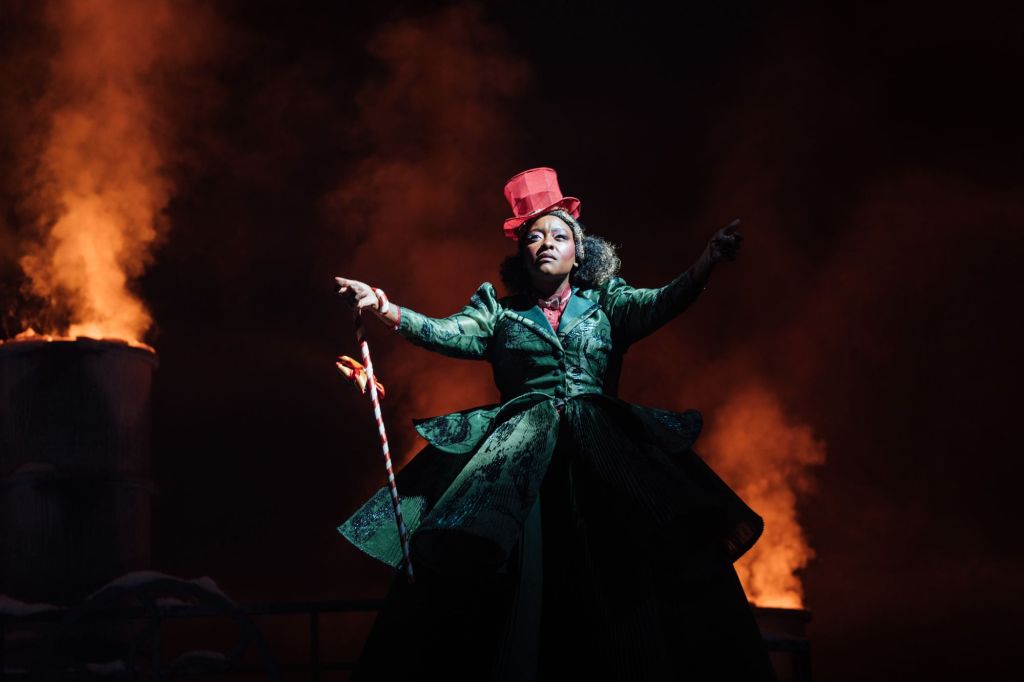
Claudia Kariuki as The Ghost of Christmas Present. Image credit: Helen Murray

The Cratchit family, The Fezziwigs and Scrooge’s nephew, Fred are all the embodiment of good nature and strength in adversity. Their scenes perfectly highlight everything that Scrooge has loss in his quest for financial success. The deaf actors in the Cratchit family are highly effective giving some beautiful moments such as Nadia Nadarajah giving a silent but deadly takedown of Scrooge while Stephen Collins brings a gentle warmth to every scene as Bob.


Visually, this production is a feast. The set design by Hayley Grindle conjures Victorian Leeds with warm lamplight, crisp silhouettes, and a set that expands and contracts like the folds of a storybook. Costumes shimmer with earthy, Dickensian texture, while clever lighting shifts the tone from cosy hearthside scenes to eerie graveyard gloom in an instant. Music plays a starring role with brass band music in the background and live accompaniment on stage threading through the piece, giving it the feel of a carol concert wrapped in theatrical magic.

If there’s the occasional moment where the pacing softens or a sentimental beat lingers a little too long, it’s easily forgiven in a production that so wholeheartedly embraces the season’s spirit. This isn’t a radical reinvention, nor does it try to be. Instead, it’s a lovingly crafted, community-minded Christmas retelling that understands exactly why audiences return to Dickens year after year. Director Amy Leach knows the Playhouse audience well from her tenure as Associate Artistic Director and as always is a deft hand at creating work that is incredibly inclusive which never veers into tokenism.

Warm, witty, and full of heart, Leeds Playhouse’s A Christmas Carol is a festive hug in theatrical form. A show that sends you back out into the night believing, just a little bit more, in kindness, generosity, and second chances.

LEEDS PLAYHOUSE 20th Nov ’25 – 17th Jan ’26

Through It All Together

Reece Dinsdale and Shobna Gulati in Through It All Together at Leeds Playhouse.
Image credit: Charlie Swinbourne

Written by Chris O’Connor

Directed by Gitika Buttoo

Leeds Playhouse, Courtyard Theatre


⭐⭐⭐⭐☆

Through It All Together, Chris O’Connor’s tender, funny, and profoundly human new play, scores a heartfelt goal at Leeds Playhouse. Blending the collective high of Marcelo Bielsa’s transformative Leeds United era with the quiet, day-to-day reality of living with dementia, this world premiere directed by Gitika Buttoo is a deeply affecting exploration of love, memory, identity—and how football, of all things, can help us hold onto our sense of Self.

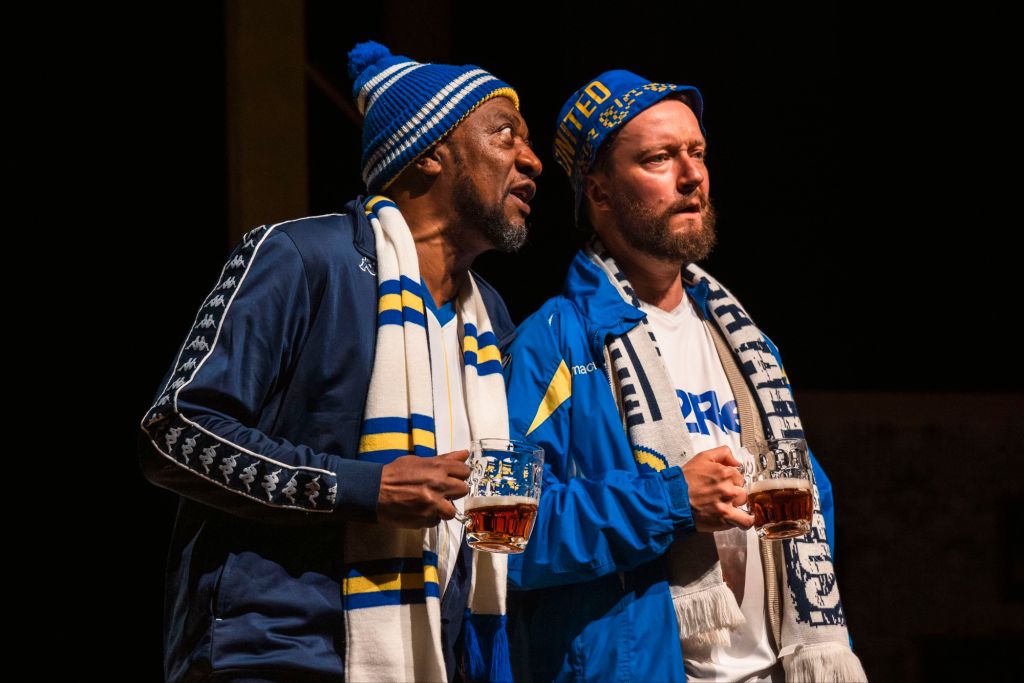
The result is a beautifully calibrated narrative centred on Howard (Reece Dinsdale) and Sue (Shobna Gulati), a long-married Leeds couple whose lives are defined as much by matchdays as they are by memory loss. Their shared devotion to Leeds United—and to each other—becomes a touchstone as Howard’s dementia begins to unravel their sense of normalcy.

But this isn’t a story of despair. O’Connor balances challenge with a deep humanity,  never sugar-coating, but never wallowing either. “There are a lot of stories about dementia that focus only on the decline, the hardship… I wanted to show a more nuanced picture.” The ensuing result is a window into gritty, Northern humour and emotional resilience that suggests there are ways to navigate this new life that are not totally bleak and hopeless.

Reece Dinsdale’s portrayal of Howard is all the more moving for its subtlety. He captures the erratic rhythms of memory loss with clarity and compassion, avoiding caricature in favour of something richer. As the illness slowly progresses there are more post-it notes dotted around the home to ground him as we watch the light in his light in his eyes seem to palpably dim. Shobna Gulati’s Sue is no mere carer—she’s the team captain of this household, full of warmth, exhaustion, fierce loyalty and humour. Together, they embody a partnership that’s far more than caretaking; it’s a testament to shared history. Gulati is wonderfully warm and authentic as a wife facing an uncertain future, but determined to still make new memories with the man she loves.

Excellent supporting roles from Dean Smith and Everal A Walsh flesh out the world outside of the home with energy and wit, from the passionate football pundetry of a wickedly funny podcast to football fans uniting in the pub or on the terraces with unbridled optimism or surly despondency. Natalie Davies is very believable as the daughter whose initial discomfort and awkwardness around her fathers’ diagnosis slowly shifts to something new that has real emotional depth and develops a deeper bond between parent and adult child.

Everal A Walsh and Dean Smith in Through It All Together at Leeds Playhouse
Image credit: Charlie Swinbourne

Buttoo’s direction is deft, never overstated, and her pacing allows the emotional beats to land without lingering too long. Amanda Stoodley’s set elegantly shifts between domestic space and Elland Road reverie, and her inspired stained glass window depiction of Marcelo Bielsa vividly evokes how football serves as church for so many. Annie May Fletcher’s sound design and Jason Taylor’s lighting evoke both the roar and passion of the crowd and the flickering confusion of a fading mind. The production’s authenticity owes much to the involvement of  Dr Nicky Taylor, Theatre and Dementia Research Associate at Leeds Playhouse as O’Connor collaborated with people living with dementia throughout the writing process.

This play will resonate with Leeds fans, particularly those still mourning the magic of the Bielsa years and those embarking with renewed hope as Leeds once again play in the Premier League. But crucially, Through It All Together is not really about football but instead “It’s about a family navigating life, loss, and love.” The result is a play that feels lived-in, full of both emotional urgency and the soft, cumulative weight of experience.

Through It All Together is a triumph not because it finds easy answers, but because it honours complexity. It reminds us that memory may fade, but love leaves traces. It’s an ode to resilience, to chosen rituals, to the invisible thread that binds couples, families, fans, and strangers in the same chant, week after week. Whether you’re a die-hard Leeds United fan or someone who couldn’t care less about football, this is a show worth seeing. As O’Connor hopes, “Maybe people will leave the theatre feeling a little more connected to their own families, and a bit more educated on dementia. And maybe, just maybe… they’ll convert to Leeds United.”

LEEDS PLAYHOUSE 23rd June – 19th July 2025

All Blood Runs Red

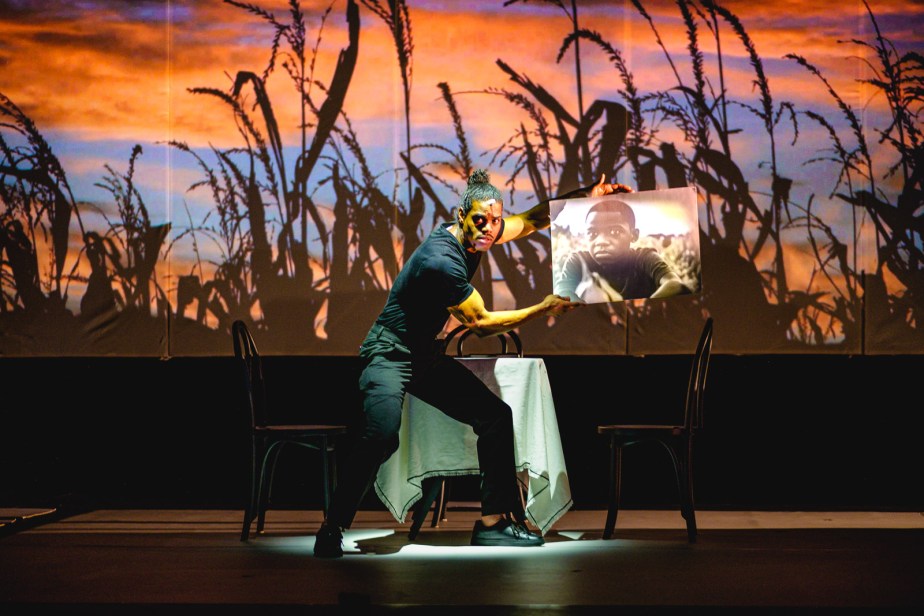
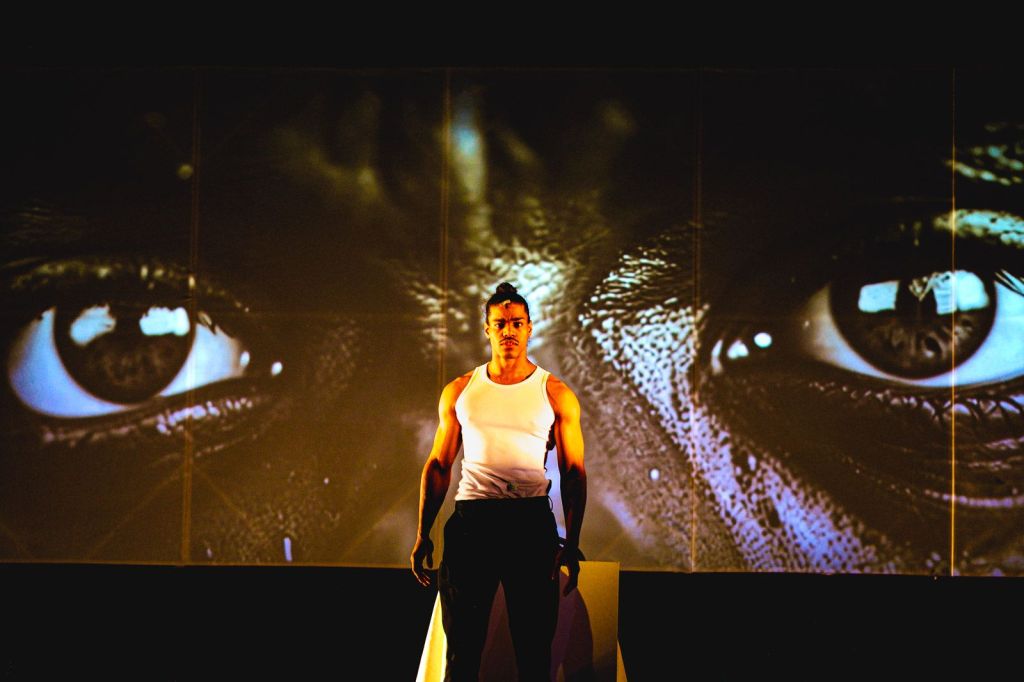
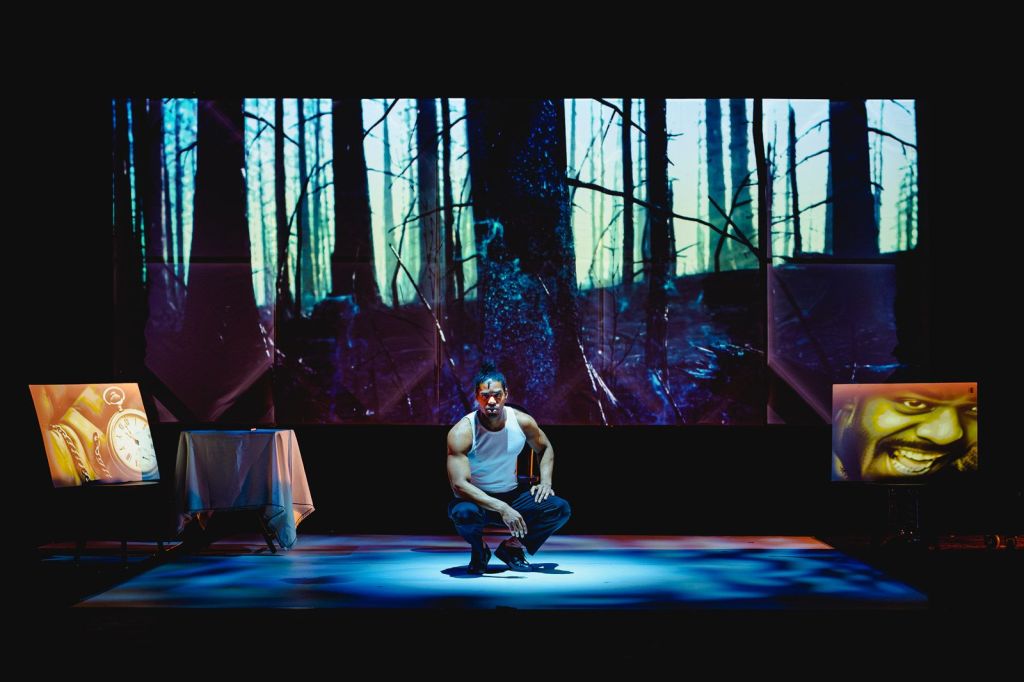
Morgan Bailey in All Blood Runs Red at Leeds Playhouse Image credit:- Ed Waring

Written and devised by Morgan Bailey, Pete Brooks, Simon Wainwright and Andrew Quick

Directed by Tyrone Higgins

Leeds Playhouse

There are some theatre companies whose name conjure up a certain magic and impel you to go see everything they do. One of these is the innovative Imitating The Dog whose work is always seeped in great storytelling using visually creative and innovative methods. This latest production tells a series of interlinked stories with a recurrent theme around how stories get told and what makes some stories get whitewashed from history…can we reclaim them and what might they tell us about ourselves.

All Blood Runs Red takes its name from a plane flown in WW1 by one of the first ever African American fighter pilots who flew in the French Flying Corps at a time when his native airforce still refused people of colour. Eugene Bullard emerges from history as an extremely colourful character. He fled his native Georgia at a time when lynchings were common, he travelled to Paris via Scotland learning some German en route. He was a drummer in the golden jazz years knowing people like Josephine Baker,he ran a club, was a circus performer and then a spy in WW2. In later years he returned to America and was involved in the Civil Rights movement and finally worked as a lift attendant in the Rockefeller building. This indicates a remarkable life worthy of a Hollywood blockbuster. Yet the whole essence of this production highlights how easily history can whitewash and marginalise remarkable people based on the colour of their skin.

Morgan Bailey in All Blood Runs Red at Leeds Playhouse. Image credit:- Ed Waring.

This is not a linear story of the life of Eugene Bullard. Instead vignettes from his life are interspersed with the lived experience of the Deviser/Performer Morgan Bailey who peppers the production with recollections of how he discovered who Eugene was. On a French film set in Paris, Bailey was playing the role of a young black G.I. in WW2 when he first encountered a book about Eugene Bullard. This production includes Bailey reflecting on his own personal experience of feeling his  cultural history and sense of self being whitewashed on set. Woven through the stories of these two men born a hundred years apart is the description of a Parisian  lunch where Bailey first suggests telling Bullard’s story with members of Imitating The Dog.

This interplay may frustrate those who may desire a more fully fleshed out history of this fascinating man, however the whole point of the production is to play with the narrative and explore the ways in which stories are told. This is a theatre company that is all about finding new ways to look at stories and bring them alive. Their trademark blend of live theatre mixed with live film-making, digital creativity and sound design brings theatre alive in a unique and challenging manner. This multi faceted and layered production honours a man who emerges from history as someone who defies categorisation and whose life was as rich and varied as this vivid and beautifully constructed production.

LEEDS PLAYHOUSE 14/15th February 2025

On Tour

THE LION, THE WITCH AND THE WARDROBE

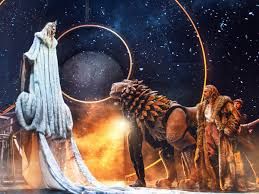
The Lion, The Witch and The Wardrobe 2022 West End Production.
Image credit: Brinkhoff-Moegenburg

Based on the novel by C.S. Lewis

Based on the original production by Sally Cookson

Directed by Michael Fentiman

Leeds Playhouse

I still have all The Chronicles of Narnia books from when the they were given to me as a child. I remember being told the famous writer came from Northern Ireland and Narnia was inspired by our local landscape. A child’s imagination paints their own rich and unique vision from the words on the page. This theatrical adaptation directed by Michael Fentiman certainly delivers on both an epic and touchingly intimate level. The setting of the stage in The Quarry Theatre works beautifully. The opening scene is a lone soldier clad in his great coat and steel helmet quietly playing piano below a huge clock face. As the cast slowly gather on stage to the strains of We’ll Meet Again, the scene is set to meet the four siblings being evacuated during WWII who are heading for not only an unknown place in Scotland but a magical trip through a wardrobe that will lead to Narnia.

The four adult actors who play the sons and daughters of Adam and Eve do a good job of evoking the children. Joanne Adaran and Jesse Dunbar exude decency and earnestness as the elder Susan and Peter. Bunmi Osadolar gives Edmund all the sullen intensity and greedy spitefulness of an angry young boy while Kudzai Mangombe really shines as the pure hearted Lucy, The Bringer of Light.

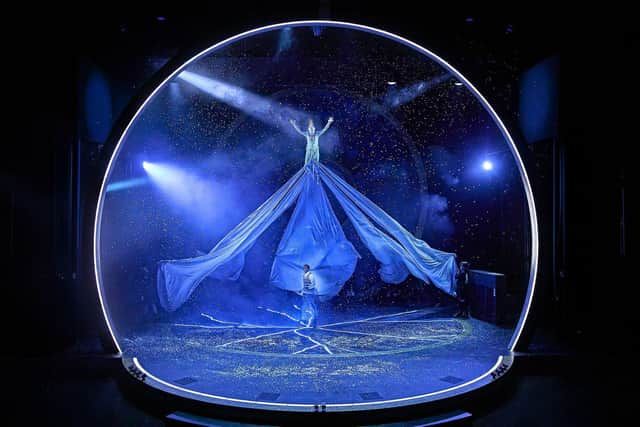
Alfie Richards charms as Mr Tumnus the kindly fawn, and Ed Thorpe and Anya de Villiers are excellent as Mr and Mrs Beaver helping to lead the resistance in Narnia. Stanton Wright is the noble human face of Aslan the lion and Kraig Thornber is wonderful as the wise and benevolent Professor. The star of the show is Katy Stephens who is magnificent as The Snow Queen. Every second on stage she oozes imperious cruelty as she tries to hold her power over Narnia. As Aslan returns bringing Spring and her power starts to ebb away, she ramps up her evil ways shearing the mighty lion and wearing his pelt as a war trophy.

The set and costume design by Tom Paris is gorgeous. Sumptuous costumes for the Snow Queen create drama and some spellbinding moments especially when she rises up over Narnia floating with gauze robes descending ethereally across the stage as the snow falls steadily. Set changes are so smooth and fluid that they ramp up the magic as one moment Lucy is in the cosy woodland home of Mr Tumnus and the next she joins her siblings at a the dining table for kippers with The Professor.

The puppetry by Toby Oliver and Max Humphries gives Aslan an ancient feel as this is no cuddly lion but a rather an ancient creature that almost seems like a terracotta warrior. Schrodinger the cat has the mangy look of an elderly beast and is imbued with all the character of a wise old family cat. The puppetry merges seamlessly with the human performances and the magic and illusions by Chris Fisher to give the production all the wow factor to be expected from a big West End production. Many of the cast are multi instrumentalists and the music by Barnaby Race and Benji Bower has a folky, whimsical feel with elements that feel like klezmer music.

The overall feel of this production is just beautiful. The deeply Christian and moral background to this story by C.S. Lewis is always present with its battle of good over evil and the redemptive journey for Edmund coupled with the willing sacrifice by Aslan and his subsequent resurrection. They may hark back to a better, possibly more noble era but as we approach another Christmas and a beckoning new year there is a certain comfort to be taken from being reminded that good can overcome evil if we unite together like the beasts of Narnia.

Leeds Playhouse 18th November 2024 – 25th January 2025

A Raisin in the Sun

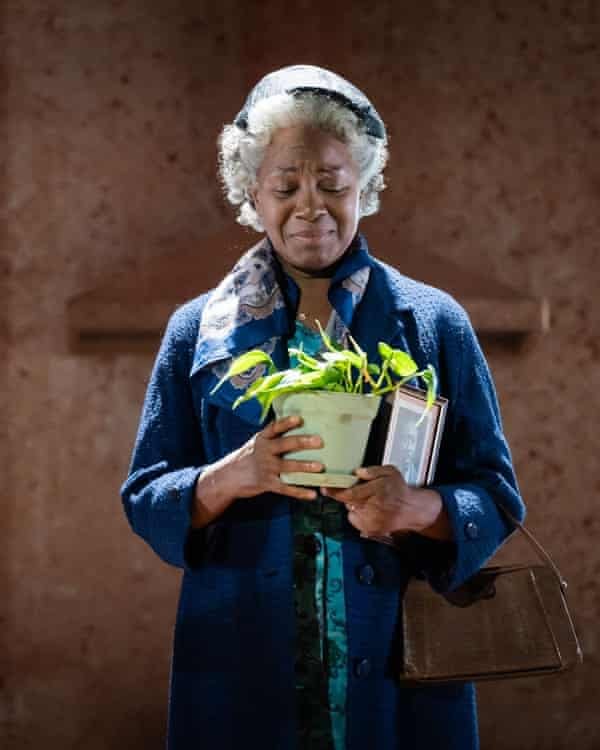
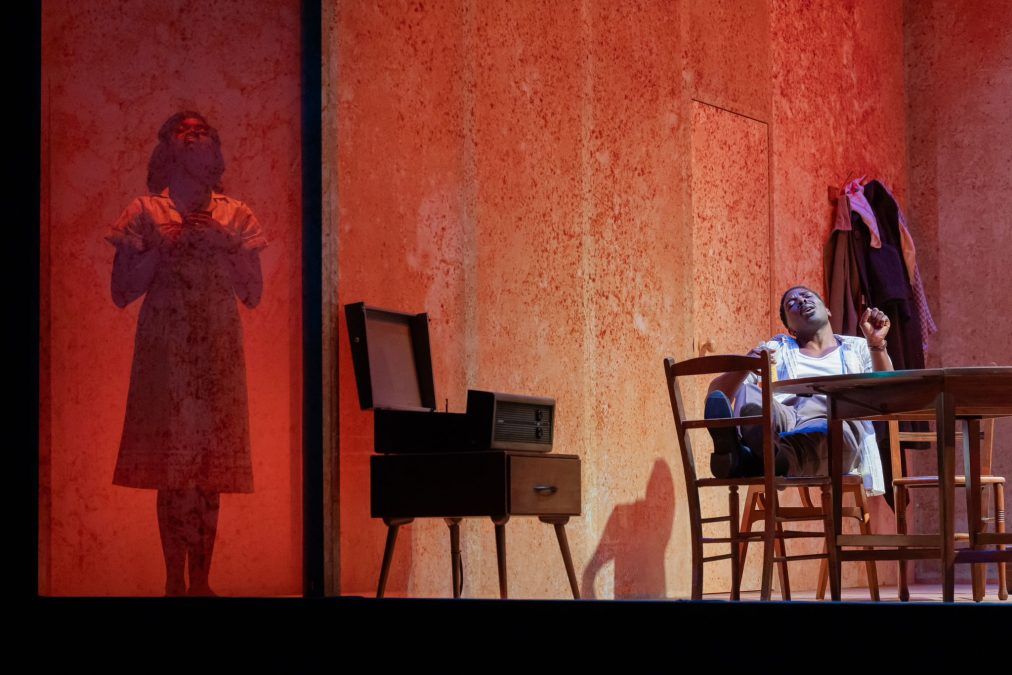
Cash Holland as Ruth and Solomon Israel as Walter Lee in A Raisin in the Sun at Leeds Playhouse. Image credit: Ikin Yum.

Written by Lorraine Hansberry

Directed by Tinuke Craig

A Headlong, Leeds Playhouse, Lyric Hammersmith Theatre and Nottingham Playhouse co-production

“Her creative ability and her profound grasp of the deep social issues confronting the world today will remain an inspiration to generations yet unborn.” These were the words of Martin Luther King Jnr spoken in 1965 at the funeral of playwright and activist Lorraine Hansberry. Almost 65 years on, her seminal play A Raisin in the Sun remains just as powerful as it was when originally produced as the first play by a black woman on Broadway. This new production directed by Tinuke Craig celebrates the writing of the hugely talented Hansberry as successfully as  her production of August Wilson’s Jitney in 2022.

This production has all the elements of a classic kitchen sink drama as three generations of the Younger family are crammed into a roach infested apartment with paper thin walls and a shared bathroom in Chicago. Times are changing and so are the  fortunes of this family who are waiting on a life insurance payout. The Matriach, Lena aspires to buy a small home with a yard to plant flowers and finance her daughter through college. Walter Lee, her son is a dissatisfied dreamer who sees the money as a way out of his job as a chauffeur and into a life as an owner of a liquor store with a fleet of cars on his own driveway. His weary wife Ruth wants nothing more than to get out of this cramped apartment and soak in her very own bathtub. Beneatha, the daughter imagines a bright future as a doctor. Grandson, Travis would simply be happy with a bedroom rather than sleeping on the living room couch each night.

The issues confronting this family are  societal racism, poverty and how it restricts our choices and the politics of housing which remain just as relevant today. Each character is fully fleshed out and has complexity and depth. Doreene Blackstock as Lena exudes grace and resilience as she attempts to tend to her children while struggling to understand their very different desires. There is a yawning chasm between a woman who once saw freedom as not being lynched and a yearning to own rather than be owned and the very different aspirations of her children. Solomon Israel as her son is not afraid to play the greedy hapless dreamer who eventually finds some honour. He moves fluidly between casual cruelty and drunken misogyny to moments of real tenderness as he tries to navigate being the man of the house and doing right by his family. Joséphine-Fransilja  Brookman brings a  light comic touch to her portrayal of Beneatha. At times a flouncing, petulant teenager with as many aspirational hobbies as boyfriends there is also emotional depth as a young woman desiring a career rather than a husband, and who has more faith in herself than in a God. Cash Holland may sometimes lean too much into the melodrama but is very believable as a young wife living with her husband’s family and desperate to escape the cramped living  conditions. One of three sharing in his role as Travis, Josh Ndlovu is excellent as the young boy in the midst of all the family drama.

Image credit: Ikin Yum

The set design by Cécile Trémilières adds a dreamy realism. The sparse but perfectly clean furnishings illustrate the pride these women take in making the best of what is available to them, while the paper thin transparent walls highlight the lack of privacy and the tenuous nature of renting in an impoverished tenement. The dreamy, almost ghostly aspects of characters lit within the other rooms is highly evocative and perfectly alludes to the generations gone before who also dreamt of ownership and security.

The second Act looks at the repercussions of Lena buying property in a white area of Chicago. Ironically this is the most affordable option but it heralds a knock on the door from the politely “acceptable” face of racism as Karl from the Clybourne Park welcome committee offers to buy back the home from the family. Faced with the options to recoup the money Walter Lee has lost or have a home of their own despite the risks, the Younger family must make yet another monumental decision. A Raisin in the Sun was inspired by the poem Raison by Langston Hughes who asked What happens to a dream deferred? There will always be a multitude of answers to this question but this production gives its own response, and it is as powerful as Lorraine Hansberry first intended in 1959.

Leeds Playhouse 13th -28th September 2024

Lyric Hammersmith 8th Oct – 2nd Nov 2024

Paranormal Activity – A New Haunting Live on Stage

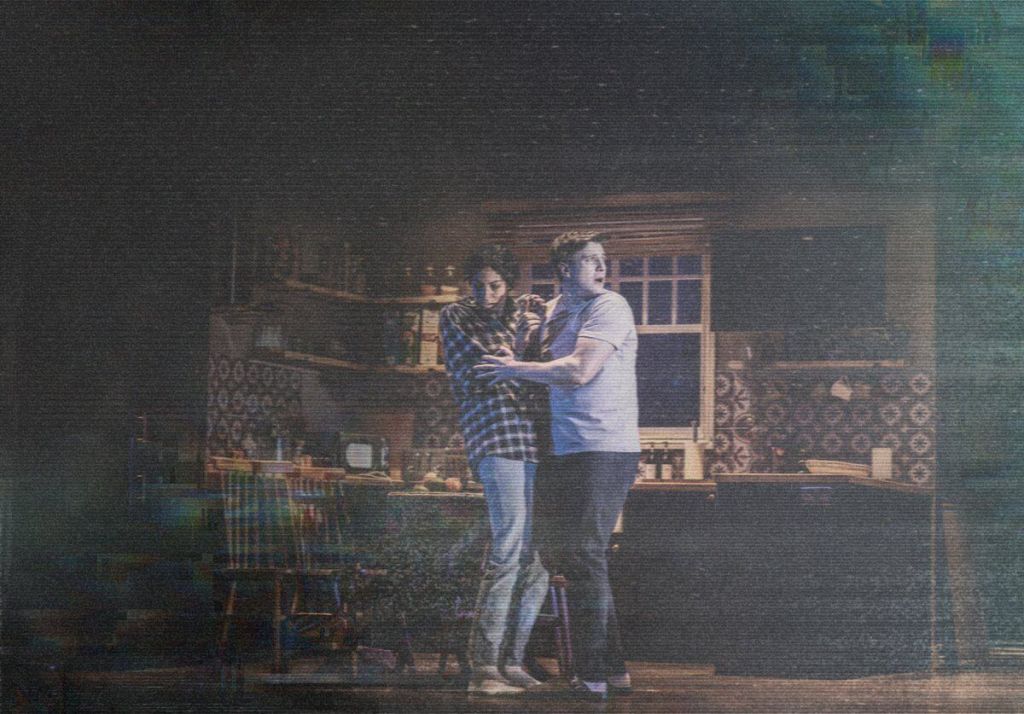
Patrick Heusinger as Jimmy in Paranormal Activity – A New Haunting Live on Stage at Leeds Playhouse. Image credit: Pamela Raith

Written by Levi Holloway

Directed by Felix Barrett

Co-produced by Leeds Playhouse and Simon Friend Entertainment

Courtyard Theatre, Leeds Playhouse

This brand new production is based on the highly successful horror film series Paranormal Activity which became a global cultural phenomenon. Paranormal Activity – A New Haunting Live on Stage is written by Levi Holloway and directed by Felix Barrett MBE, the Artistic Director of Punchdrunk. This theatre company is synonymous with the term immersive theatre with hugely successful and long running productions such as Sleep No More, The Drowned Man and most recently The Burnt City and Viola’s Room. As a production which has been marketed with a deliberate policy of giving no details about content it follows the trademark Punchdrunk secrecy which lends itself well to ensuring maximum shock factor for this horror production as there are zero spoiler alerts. It has garnered its buzz from lovers of the horror genre and those theatre goers excited to see what Barrett can create in his first venture into working in a traditional theatre setting.

Sitting in darkness, a voice invites the audience to collectively close their eyes and contemplate the German term eigengraus meaning significant grey which is what we all see when we shut our eyes. The voice suggests that this gray is not a colour but is a place where we make contact with the Dead. A voice in the darkness is a perfect medium for hypnotic induction and so even before we see the stage our senses are becoming immersed in a collective sense of fear.

The set design by Fly Davis is like my childhood dolls house where the front slides off to reveal a two story home complete with stairs and landing. Filled with homely details it evokes a cosy normality that may still hint at an uneasy undercurrent and has a similar attention to detail that is typical of a Punchdrunk set where Barrett delights in dropping clues and meta references. This is a house on a typical London road where street lights glow and where car lights and flashing lights from emergency vehicles will occasionally illuminate the front windows. Where the outside sound of the incessant pelting rain of a British “summer” blends with sounds within a typical home where Alexa playing a chill out soundtrack  is punctuated by the whistle of a kettle on the stove or the reassuring voice of Rachel from Countdown is on Channel 4. An American couple have recently moved into this pleasant home and are adapting to married life and adjusting to life in London having left Chicago. Jimmy has video chats with his overbearing Christian Mom while Lou likes to listen to podcasts about the supernatural. All seems well…

Patrick Heusinger as Jimmy and Melissa James as Lou in Paranormal Activity at LeedsPlayhouse. Image credit: Pamela Raith

The very naturalistic performances are uniformly strong and the tight, well paced writing by Levi Holloway is peppered with pithy dialogue and some very funny one- liners that give the characters real depth but also allows humour to offset the gnawing fear or at times misdirect it by creating light relief then sucker punching you with a sudden shocker. With the aid of some truly mind blowing illusions by Chris Fisher and superb use of sound, Gareth Fry and lighting by Anna Watson the immersive sensory elements suck you in and take the audience on an emotionally turbulent journey that is always so much more than simply just a great story arc.

The story deftly explores love and trust and how we navigate what we struggle to understand or make sense off. We are all hardwired to feel certain core emotions and one of those is Fear…we need to recognise it and react appropriately to stay safe in the world whether we are being chased by a wild animal like our early ancestors or navigating modern life. We tend to fear what we don’t understand and the popularity of the horror genre perhaps allows us to explore fear in a “safe” way. This production certainly plays with our fears and builds a creeping dread with the slow burn of an increasingly spine chilling horror.

Of course not everyone believes in the Paranormal…though some like Lou believe Places aren’t haunted, people are. This made me remember my first introduction to the Paranormal was in childhood when I frequently saw my dead grandmother standing at the bottom of my bed after her death in a car accident. I was never remotely afraid of her silent presence and was not entirely relieved when she stopped appearing. My mother told me years later that the “visits” only stopped after she put a Bible under my pillow. I wonder how many in the audience buy only a ticket for themselves but perhaps turn up with their own unseen Spirit who hasn’t paid their entrance fee or go home afterwards and check behind the doors for shadows?

The only major Spoiler for this production is that it has all the quality production values elements required to suggest a highly successful transfer to the London stage.

LEEDS PLAYHOUSE 4th July – 3rd August 2024

My Fair Lady

The cast of My Fair Lady at Leeds Playhouse Image credit: Pamela Raith

Book and Lyrics by Alan Jay  Lerner

Music by Frederick Loewe

Directed by James Brining

LEEDS PLAYHOUSE and OPERA NORTH

This is a genuinely delightful production that is as delectable as a floral posy from Eliza’s basket. Director James Brining is clearly Team Eliza casting  Katie Bird as a strong vibrant Eliza who has learned how to take care of herself and is not giving up her independence for anyone. As a gritty working class girl she may dream of ‘a room somewhere, far away from the cold night air’ but she never loses sight of the reality of her circumstances. This linguistics experiment and potential transformation might be an intellectual challenge for  Professor Higgins but for Eliza it is a chance to strive for a more secure career not a passive assumption of acquiring a wealthy lover or husband. This Edwardian musical romp stays pretty close to the original which works well in a cost of living crisis where many head to their local library to keep warm just as Eliza warms herself at the street brazier and her father and his pals huddle in the cosy warmth of a gaslit pub.

This co-production with Opera North allows for the large scale scenes and gives power and vibrancy to the classic score. The orchestra led by Oliver Rundell fills the large Quarry Theatre and sounds pitch perfect for a production on this scale. The big musical numbers feel sumptuous and the chorus do a wonderful job of bringing these scenes to life aided by Lucy Hind‘s joyful choreography. There are some lovely touches such as the barbershop elements to numbers such as Wouldn’t It Be Loverly and the memorable crowd scenes at Ascot which are wittily portrayed using quirky photo boards to transform the chorus into the gentry. The Embassy Ball scene has real energy and perfectly portrays Eliza’s successful move into polite society. The clever staging by Madeleine Boyd allows for a very varied range of scenes and the two levels act as an effective allusion to the class division of Edwardian London.

Katie Bird as Eliza in My Fair Lady at Leeds Playhouse. Image credit: Pamela Raith

The chemistry between Katie Bird as Eliza and John Hopkins as Professor Higgins works well. Bird is earthy and feisty whereas Hopkins brings a loose-limbed laconic aspect to his Higgins that is both infuriating and endearing. The will they/won’t they get together element which was introduced in the original musical by Lerner & Loewe was never intended in George Bernard Shaw’s play Pygmalion. Director James Brining brings a truth to the closing scenes in that both characters are irrevocably changed by the other but that may not be enough to bring them together. Eliza has newfound confidence in herself that is no longer just bravado whereas Higgins may have discovered that we are all capable of profound and deep feelings regardless of how we sound when we seek to articulate our innermost emotions.

John Hopkins and Dean Robinson as Professor Higgins and Colonel Pickering in My Fair Lady. Image credit: Pamela Raith

The other main characters are well cast with  Richard Mosley-Evans bringing warmth and a certain likability to his portrayal as England’s most “original moralist” and Eliza’s pragmatic father. Dean Robinson as the kindly Colonel Pickering is a good foil for the more belligerent and foolish antics of the Professor, as is the calming influences of an excellent Helen Évora and Molly Barker as the housekeeper and Mrs Higgins. Ahmed Hamad is boyishly sweet and naive as Freddy who is hopelessly enamoured of Eliza.

There can be real risks in blending operatic styles with musicals but here they are in perfect accord. Katie Bird soars when required but retains the capacity to delightfully butcher her vowels as she attempts to follow Higgins rather extreme teaching methods. What John Hopkins delivers vocally builds as the extremes of his character are revealed but most vitally he brings a delightful quirkiness that is quite captivating. My Fair Lady is a musical classic filled with songs that most of us remember from childhood and this production at Leeds Playhouse is a satisfyingly pleasurable experience for anyone already familiar with or experiencing this classic for the very first time. For the cast, the creatives and the crew…You did It. You Did It…Ev’ry bit of credit for it all (And the credit for it all)
Belongs to you! (belongs to you!)

LEEDS PLAYHOUSE 31st May – 29th June 2024

FRANKENSTEIN

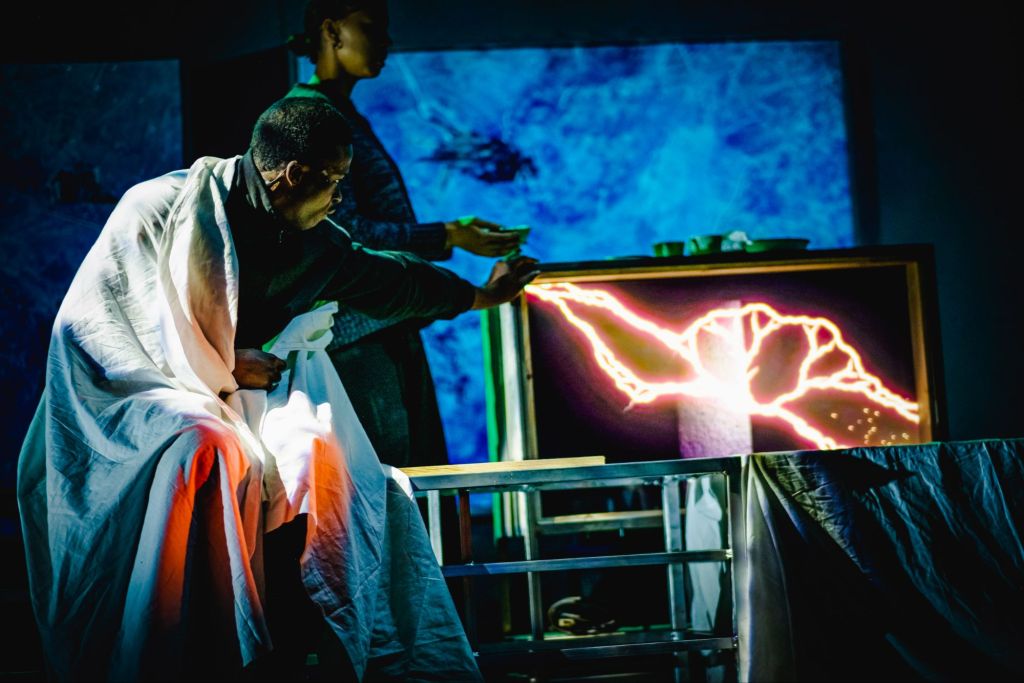
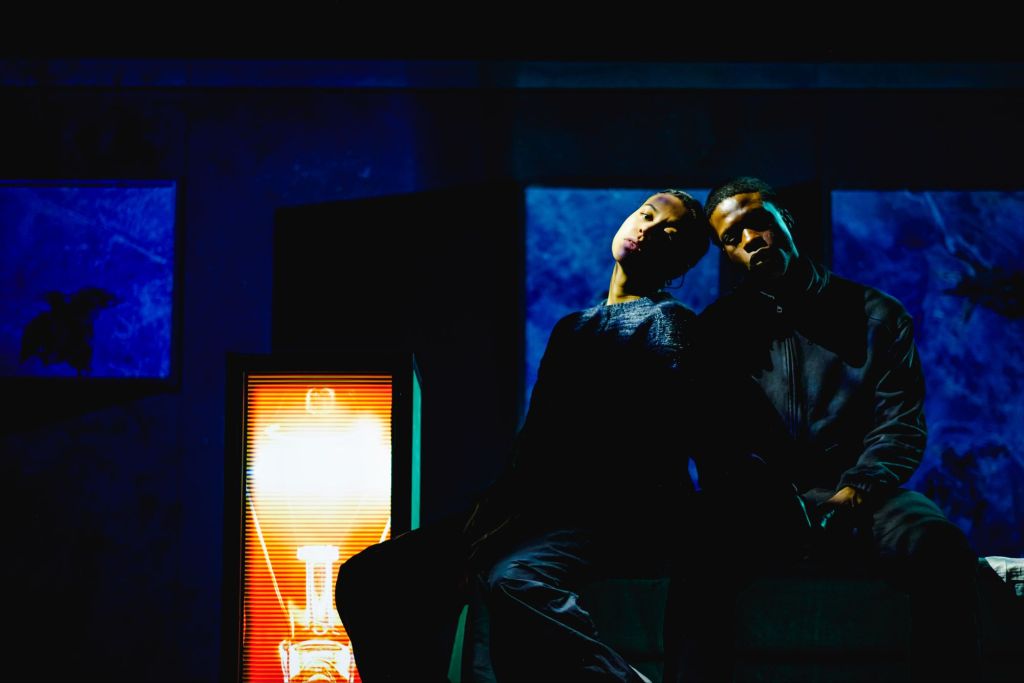
Nedum Okonyia and Georgia-Mae Myers in Frankenstein at Leeds Playhouse
Photo: Ed Waring

Inspired by the writing of Mary Shelley

Co Directed by Andrew Quick, Peter Brooks and Simon Wainwright

An Imitating The Dog and Leeds Playhouse Co Production

Quarry, Leeds Playhouse

Frankenstein was written over two hundred years ago by the nineteen year old Mary Shelley. The themes of the book have resonated through the centuries as we humans continue to grapple with the concepts of birth, life and death and what it essentially means to exist. Inspired to compete with her husband Shelley, the poet Byron and John Polidori to write a horror story, she wove together a story of a creature formed from the gruesome parts of cadavers stitched together and sparked into life by the principle of galvanism. The full tragedy is that this creature willed into life is destined never to be loved by his creator Frankenstein. This new rendition by Imitating The Dog splices together this Gothic romantic masterpiece with a story  where a young couple grapple with coming to terms with a pregnancy and its implications in an uncertain world.

Georgia-Mae Myers and Nedum Okonyia in Frankenstein at Leeds Playhouse
Photo: Ed Waring

This latest production by Imitating The Dog is a creative departure from their work of recent years as they abandon their trademark use of live camera projections used so effectively in work such as Night of the Living DeadRemix, Dracula:The Untold Story and Macbeth. This new work blends story telling with digital technology and movement. The result is visually glorious as Video Designers Davi Callanan and Alan Cox make every use of the strikingly simple set design by Hayley Grindle. The staging comes alive as violent weather patterns erupt across the stage, snowy blizzards and terrifying thunderstorms encompass the characters and beautifully compliment the radio broadcasting of the original text. There are other gems as set props illuminate with video images such as embryos, sonograms and birds that are reminiscent of a Damien Hirst installation or a Victorian laboratory.

The overall impact is highly effective as it allows the drama of Frankenstein, the claustrophobia of Walton’s ship and the beauty of the  polar landscape to come alive. Composer  James Hamilton has created a glorious score that weaves through the piece and creates a perfect alchemy with the rest of the staging. The score also brings additional powerful to the taut, muscular performances of the two leads. The choreography by Casper Dillen has an urgency and desperation that channels that of Victor Frankenstein and his Creature while also illustrating the push/pull of the young couple deciding what to do regarding the pregnancy.

Georgia-Mae Myers and Nedum Okonyia give their all to this production. Utterly invested in the characters they bring to life from the book and in the modern day embodiment of a couple wrestling with a momentous decision in an uncertain world. It is frustrating that the naturalistic dialogue employed for the modern setting seems to get lost when in translation when up against the writing of Mary Shelley. On occasion some of the parallels drawn, such as between the Creature and the shouty man outside the couple’s flat can seem heavy-handed and unnecessary. The couple come alive during the movement sequences but perhaps would have benefited from stronger dialogue to give them more depth so that ultimately an audience could care and invest in them as much as with the characters in the book.

There is much to enjoy in this production and the themes of Frankenstein will remain relevant as it continues to astound as to how Shelley’s vision of a man sewn together from discarded body parts and galvanised into life could ever be fully realised in anything but our imagination. Yet two hundred years on we think nothing of using defibrillators to breathe fresh life after a heart stops beating and use organ, body and skin implants to give loved ones hope and a new lease of life. Imitating The Dog have used their unique set of components and galvanised their own vision of Frankenstein and it seems to be a pretty successful rebirth!

Leeds Playhouse  15 – 24 February 2024

FRANKENSTEIN Tour dates

OLIVER!

The cast of Oliver! at Leeds Playhouse
Image credit: Alastair Muir

Books, music and lyrics by Lionel Bart

Adapted from Charles Dickens’ Oliver Twist

Directed by James Brining

Leeds Playhouse

Christmas is certainly the time for nostalgia and sitting back rewatching old movies and indulging in familiar traditions such as Pantomime or a juicy epic from Charles Dickens. Leeds Playhouse have opted for the later and have thrown all the festive bells and whistles at this gloriously indulgent production. The classic Lionel Bart musical adaptation Oliver! has been a crowd pleaser for over 70 years. Director James Brining has taken his personal childhood memory of starring as a hungry urchin boy in a school production and lovingly celebrates this theatrical gem with a diverse and highly talented cast.

Set and costume Designer Colin Richmond has made brilliant use of the main stage in The Quarry by staging in the round with a range of elaborate platforms and bridges which allows for maximum drama and loads of very naturalistic movement on stage. The costumes are lovingly detailed and evoke every echelon of society that Dickens describes. London street markets come alive with the hustle and bustle of traders, shoppers and pickpockets. The grim workhouse filled with pallid hungry children desperate for gruel but dreaming of Food, Glorious Food is powerfully contrasted by the laden tables of food carried to gluttonous Victorian besuited men who frequent the same hallowed private clubs still entered by Tory politicians today who seem equally unconcerned by today’s food banks. Scenes in the funeral parlour where Oliver is sold as a tiny coffin follower are gleefully macabre as gloomy coffins open in the floor or a white faced child emerges from another to a sea of black clad mourners with quirky steam punk dark glasses. The overhead bridges and walkways work very well in allowing a large cast to move around on stage with freedom and give great scope to the clever choreography of Lucy Hind.

Felix Holt and cast in Oliver! at Leeds Playhouse. Image credit: Alastair Muir
Oliver! at Leeds Playhouse.
Image credit: Alastair Muir

Fagin’s base is filled with colourful pocket squares and eccentric bric a brac that allude more to the Victorian eccentricity of a born entrepreneur than the darker antisemitism of the original Fagin in Dickens. Steve Furst as Fagin is wily and has a certain Bohemian seedy charm but is also reminiscent of Wilfred Brambell in Steptoe and Son. The real brute is of course Bill Sykes played with real thuggish menace by Chris Bennett who is genuinely scary on stage. The feisty performance of vocal powerhouse Jenny Fitzpatrick makes for a striking and moving contrast as her Nancy feels robust enough to have no time for the thuggery of her lover. When she sings As Long As He Needs Me it is incredibly emotive as the complexity nature of love in a violent and coercive relationship is perfectly evoked. There are some great performances from all the main cast with a standout comedic turn from Minal Patel and Rosie Edie as the ghastly Bumbles.

The children in the Young Company are consummate professionals throughout this lengthy and demanding production. The young Oliver and The Artful Dodger are played by a rotating cast of young actors befitting modern child labour legislation. The press night production had Nicholas Teixeira playing Oliver and his clear diction and strong, pitch perfect renditions of Where Is Love? and Who Will Buy? were very impressive. Felix Holt was perfectly cast as the impudent but charming Artful Dodger.

This is a lush, exuberant extravaganza of a production that is memorable for all the right reasons. Every aspect feels well thought out and lovingly attended to. It’s truly encouraging to see large scale theatre productions in the North West that are worthy of coaxing London theatre goers to come North and hopefully remind Arts Council England that money allocated outside of London is a sound investment. If nothing else it might help keep Northern theatres from potentially resorting to pick a pocket or two to survive!!

OLIVER! at Leeds Playhouse 24th Nov 2023 – 27th Jan 2024

Lord Of The Flies

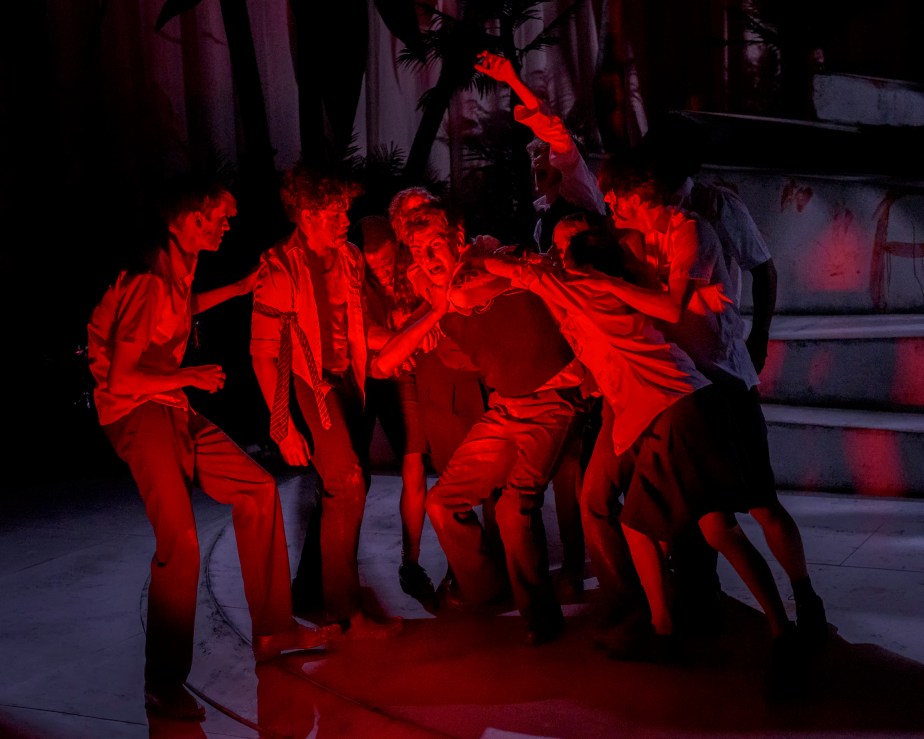
Image credit: Anthony Robling

Written by William Golding

Adapted by Nigel Williams

Directed by Amy Leach

Leeds Playhouse and Belgrade Theatre Company co-production with Rose Theatre

Leeds Playhouse

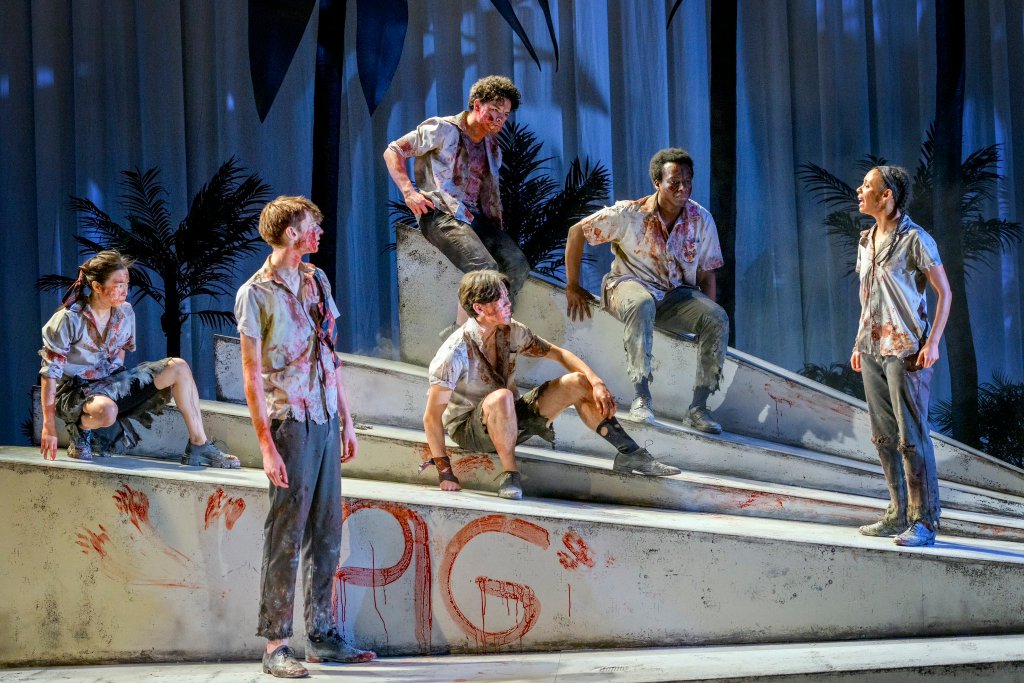
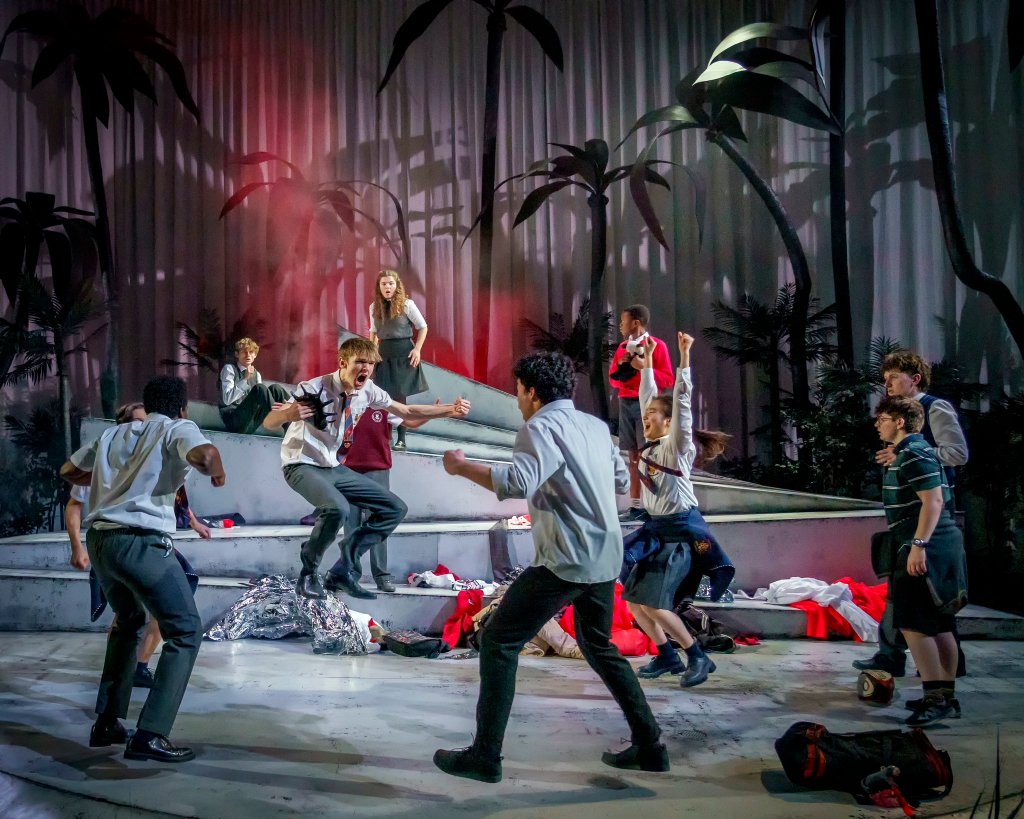
Written in 1957 and a GCSE English staple for generations this production could be, at best a useful adaptation for students and schools to schedule into the curriculum. In the hands of a skilled and creative director like Amy Leach it thankfully translates as a provocative and cautionary tale for the 21st century. The casting by Lucy Casson is really excellent, replacing a traditional group of schoolboys with a genuinely diverse cast that all work together to create a terrifyingly believable bunch of kids stranded alone on an island. As with any really excellent horror you may know what’s coming next but it’s dramatic impact repeatedly hits with a fresh sucker punch!

Max Johns’ set evokes elements of a lush tropical island; yet there is a darkness to the towering palm trees and the pale cliffs evoke an inner city skate park that might just be threatened by rival gangs. Leach jettisons her characters unto stage with a mighty jolt and a deluge of crash debris falls from the sky. Friendships are formed and reformed in seconds as some of this bunch of traumatised kids seek to find order and security while others revel in the new found freedoms of a world without family or schools. This cautionary tale of power struggles between good and evil, order and anarchy, and morality and immorality is as relevant now as nearly 70 years ago. It is no less shocking and perhaps more genuinely frightening in our modern world where knives and bullets are easily come by and our seeming capacity to see threat in “other” is alarmingly prevalent.

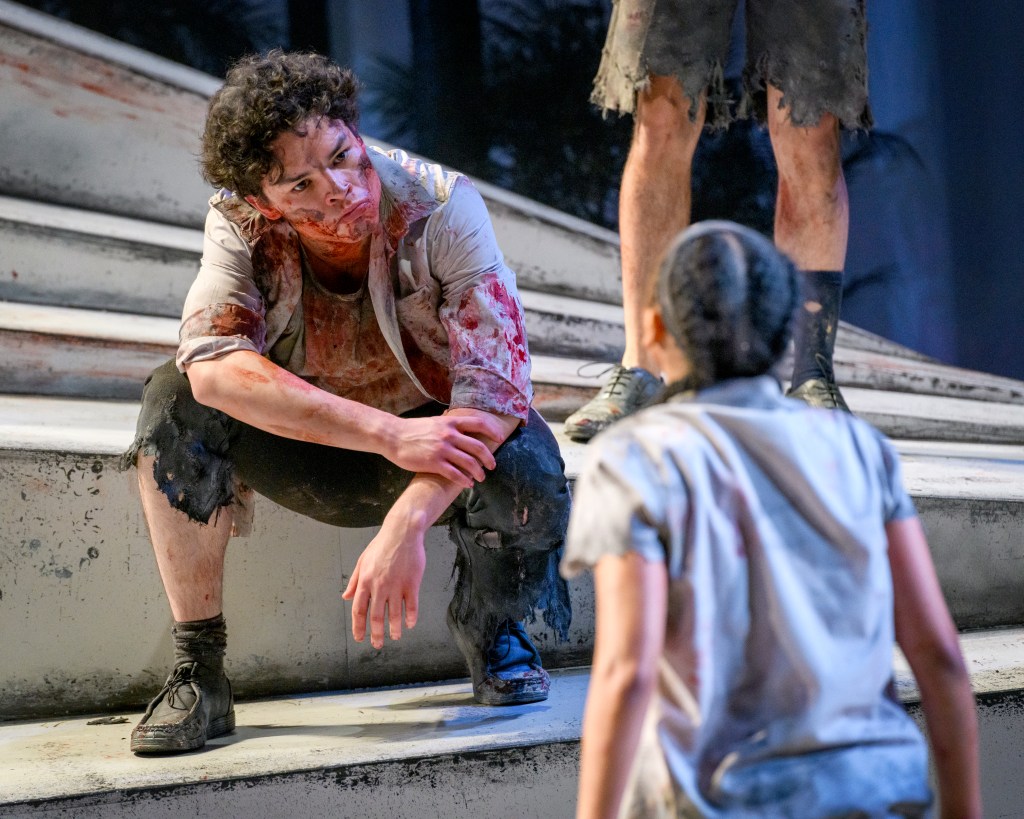
This disparate bunch of children from different schools pick a leader in Ralph who Sade Malone plays beautifully as a good all rounder who has a natural exuberance and an innate sense of fairness. Her role as leader is threatened by the gangly, arrogant Jack who Patrick Dineen embodies with all the elitist, self- aggrandisement of an Oxford Bullingdon boy. Neuro diverse actor Adam Fenton shines as the ticcing, epileptic Simon and Jason Connor gives a skilled performance as the wise Piggy who is likable yet annoying. Deaf actors Ciaran O’Breen and Eloise Pennycott bring a lot to this production with their comedic timing and expressive physicality. Jason Battersby gives a stand out performance as Roger who revels in the pain and misery of others. This is a chilling watch as Battersby gives his Roger a nihilistic stance as the quiet onlooker who quickly becomes a sadistic sociopath swaggering across the stage and dispassionately murdering Piggy.

Jason Battersby as Roger and Sade Malone as Ralph. Image credit: Anthony Robling.

Theatre programming that brings curriculum pieces to life on stage is crucial to widening learning opportunities and breaking down preconceptions and threshold anxiety for the next generation of theatre lovers. It is also sensible bread and butter programming for increasingly cash strapped theatres. Thankfully this Lord Of The Flies production achieves all the above but with the addition of being a genuinely elevated piece of theatre. Amy Leach and a talented team of cast and creatives have produced something really fresh and relevant that inspires and provokes.

At Leeds Playhouse until 8 April, then at Rose Theatre , Kingston, 18-22 April; Belgrade Theatre , Coventry, 25-29 April; and Northern Stage, Newcastle, 3-6 May.