
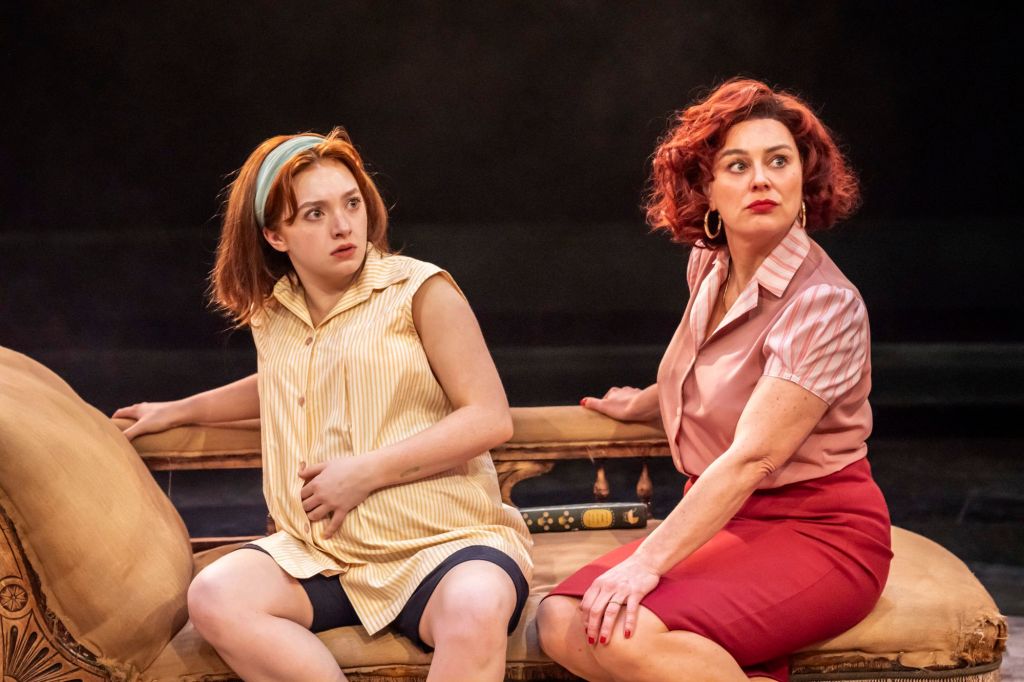
Image credit: Johan Persson
Written by Shelagh Delaney
Directed by Emma Baggott
ROYAL EXCHANGE THEATRE
This revival of the classic kitchen sink drama A Taste Of Honey by Director Emma Baggott is clearly a fan girl love letter to Shelagh Delaney and her beloved Salford. Impassioned and vibrant, the women that Delaney wrote at age 19, burst unto the stage unapologetically flawed and unflinchingly forthright. The men here are secondary whether callous or kind, they are merely there as supporting roles in the women’s stories. Over sixty years on and this story of impoverished, working class women still has the capacity to shock. Today there may be more choices and acceptance around homosexuality and race but the cost of living crisis is still leaving families on the breadline, reproductive rights are under threat and sky rocketing rents and greedy landlords have families living in accommodation every bit as grim as this Salford maisonette.
Designer Peter Butler has really accentuated the dreamy realism of A Taste Of Honey. There are all the authentic looking furnishings of a sparse, shabby rented flat with few touches of homeliness but suspended above the bleakness is a vast construction that can illuminate the space with fairground bulbs. Like a skeleton of a carousel it looms over the stage with echoes of the Salford gasworks and when illuminated by Lighting Designer Simisola Majekodumni there is the sudden warm glow of endless possibilities in this usually drab environment.

Jill Halfpenny epitomises all the restless dissatisfaction of Helen with her casual disregard of her teenage daughter Jo and her unflinching focus on her own survival. She is a she wolf with scant maternal instincts incapable of loving either wisely or well. Halfpenny oozes the kind of tough, gritty sensuality reminiscent of the great Elsie Tanner in Coronation Street. She truly is an overblown rose ripe for the picking and full of thorns as daughter Jo is just blossoming and already sprouting her own defensive prickly thorns.
This thorny relationship is harshly devisive as both women battle for survival and supremacy. Rowan Robinson gives Jo moments of vulnerability fitted to this child woman who finds herself pregnant and repeatedly abandoned by those who could and should do better. Recognising a mother who had so much love for others and none for me she fleetingly tests love and rejects it. Robinson is the sparky and stroppy teenage girl capable of giving as good as she gets but there are moments in certain exchanges such as when she flirts with her new stepfather that can seem slightly off kilter. Scenes with an excellent David Moorst as Geoffrey are beautifully executed as she plays house with this young gay man and seems destined to play out the patterns of her own deeply flawed Mother.
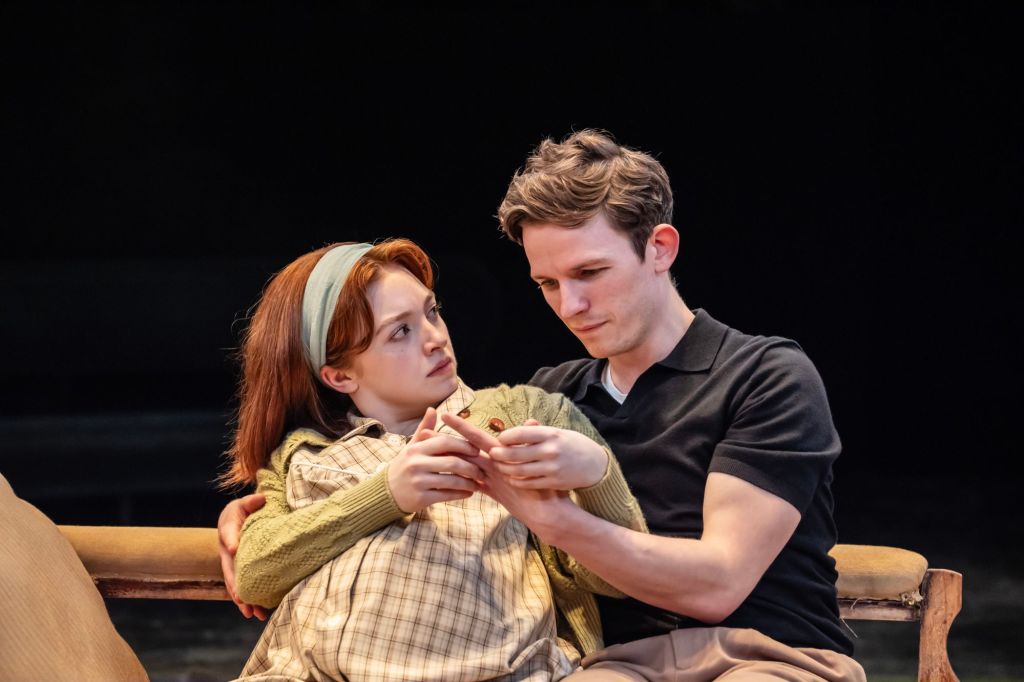
Image credit: Johan Persson
Moorst gives an intense and brittle performance that perfectly encapsulates the grief of a young gay man in The Sixties who realises he will never get the family life and children he craves. Andrew Sheridan as Peter is his polar opposite as the younger man who thinks he can buy love and then casually discard it like a sweet wrapper in the gutter.
There is much to love in this production but like its characters there are flaws. There are moments when performers are hard to hear which is less due to them and more about the staging. The positioning slightly off stage of the bed for instance allows for a very intimate experience for certain seats but means that a few scenes occur with quite a restricted experience for much of the audience. Overall it is rich and vibrant production pulsing with all the passion Delaney imbued her original script with. The arrangement by Alexandra Faye Braithwaite and the use of Nishla Smith as the jazz singer who weaves in melodies such as Dirty Old Town written about post-war Salford by Ewan MacColl are perfect. The silent observing of every scene by Smith punctuated by her glorious etheral singing is the glue that pulls together this collection of lost souls. Her vocal is the only taste of honey that does not lose its sweetness or turn sour.



 Live Art Alive