

Image credit: Ean Flanders
Written by Billie Collins
Directed by Nathan Crossan-Smith
LIVERPOOL EVERYMAN
⭐⭐⭐⭐☆
Billie Collins is definitely one to watch as their work is evolving at a rapid rate from their debut play Too Much World At Once in 2023 to last years collaboration with Thickskin, the excellent Peak Stuff. Their latest work, The Walrus Has A Right to Adventure is an utterly charming piece that weaves together three stories full of warmth and wit within a big ecological heart. Three central characters each have a startling and life-changing encounter with a wild creature inspired by real life stories. This is a genuine ambitious play that is weird and wonderful in equal measure. Featuring a walrus, a stag, a bear, and a big queer soul this is a quicksilver exploration of our intimate connection to the natural world and the power and beauty of metamorphosis.
Director Nathan Crossan-Smith knits together three wildly different stories with a surprising amount of coherence and emotional punch. At the centre of each vignette is an encounter with the unexpected: a young shelf stacker is confronted by a majestic white stag in Halewood Tesco, a fierce mother bear derails a wedding proposal in Colorado while a walrus decides to inhabit a fishing boat in Norway. These surreal interruptions crack open the lives of three characters grappling with identity, purpose, and possibility.

Image credit: Ean Flanders
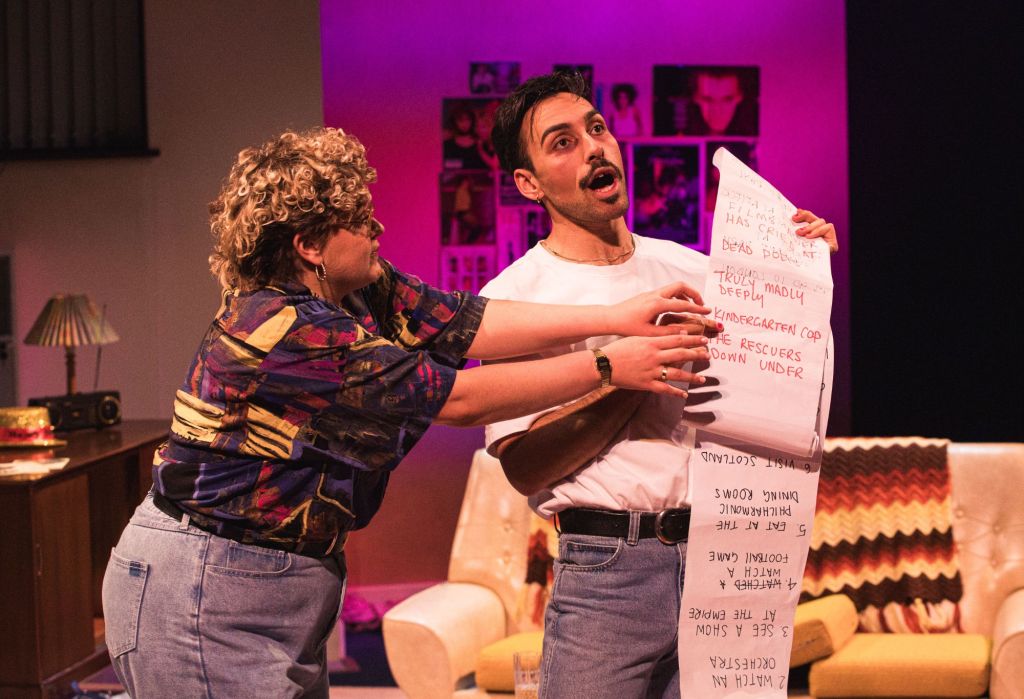
Tasha Dowd is endearingly grounded as Rio, a Tesco night-shifter whose brush with the mythical stag nudges them toward self-exploration. There’s a tenderness and subtlety in Dowd’s performance that makes Rio’s journey quietly powerful. Each performer also plays multiple other characters through the narrative and each character Dowd inhabits is vividly drawn and deeply engrossing down to the quiver of a hand that evokes an elderly parent or the physical menace of a redneck, second amender. Princess Khumalo’s Hazel is sharper-edged as a young woman suddenly thrown off-course by a man on one knee with a bear behind him. Khumalo brings great comic timing but grounds it in something rawer when Hazel begins to unpick what she really wants. Meanwhile, Reginald Edwards delivers a charmingly dry turn as Oskar, the Norwegian tour guide whose boat becomes a walrus squat. His blend of deadpan resistance and existential bewilderment is a comic highlight.
The set, designed by Chloe Wyn, is sleek and inventive allowing for seamless shifts between continents and climates. Live Foley sound effects (from composer and sound designer Oliver Vibrans) are used to delightful effect, turning rustling trees, crashing antlers, and grunting walruses into an audible playground. The whole staging evokes a vintage radio play unfolding before our eyes. Rajiv Pattani’s lighting keeps the pace slick and the transitions fluid. There is a really beautiful look to the whole production that has a really avant garde European style that evokes an Ivo van Hove piece.
It is a testament to the writer and the cast and creatives involved that the multiple storylines which could easily have felt a little fragmented remains fluid and cohesive. Collins’ writing sparkles with wit, but also isn’t afraid to pause for introspection. The play gently interrogates how we live, love, and consume—and who we become when nature elbows its way back into our human bubbles. Most refreshing is the queer narrative running through Rio’s story. It’s treated not as an issue, but as a tender, joyful part of life…messy, moving, and very human.
Ultimately, The Walrus Has A Right to Adventure is an exuberant, slightly bonkers reminder that ultimately the wisest thing we can do is listen…to the animals, to each other, to ourselves.

Image credit: Ean Flanders

 Live Art Alive