Written by Brian Friel
Directed by David Thacker
The King’s Arms
It’s not very often I have the time or indeed the inclination to go see the same play twice in one week. Faith Healer at The King’s Arms on opening night was so perfectly rendered that I had to catch it again before it finished its short run. Brian Friel often writes of the rural Northern Ireland that I grew up in and he absolutely captures the mercurial aspects of a community where people have co-existed while always seeing the same world through such different prisms. In Faith Healer he takes 3 characters and gives them lengthy monologues which highlight their very different perspectives on a series of key moments they all experienced together. Within the story telling of each character there are constant threads that connect and confirm each other’s story but numerous elements that differ or conflict challenging the audience to draw their own conclusions. Director David Thacker uses every inch of the space to create an immersive vibe where the performers are placed amongst the audience so the storytelling feels up close and intimate. The result is mesmerising as the truth and the fantasy meet, merge and fade into the ether.
Small, new theatre companies such as Rising Moon Theatre rely on Fringe theatre spaces and here the venue is perfect for this play about these itinerant travellers who move around the country selling hope or as Frank says perhaps bringing the gift of letting go of the last vestige of hope. Seated on fold up chair and absorbing the slightly shabby faded grandeur of the space evokes the kind of venues that may have hosted Frank as the fantastic Frank Hardy…Faith Healer. Grace is his wife or mistress who may be from Yorkshire or Northern Ireland. They are accompanied by Frank’s manager Teddy who is a Londoner with a history of nurturing vaudeville acts.
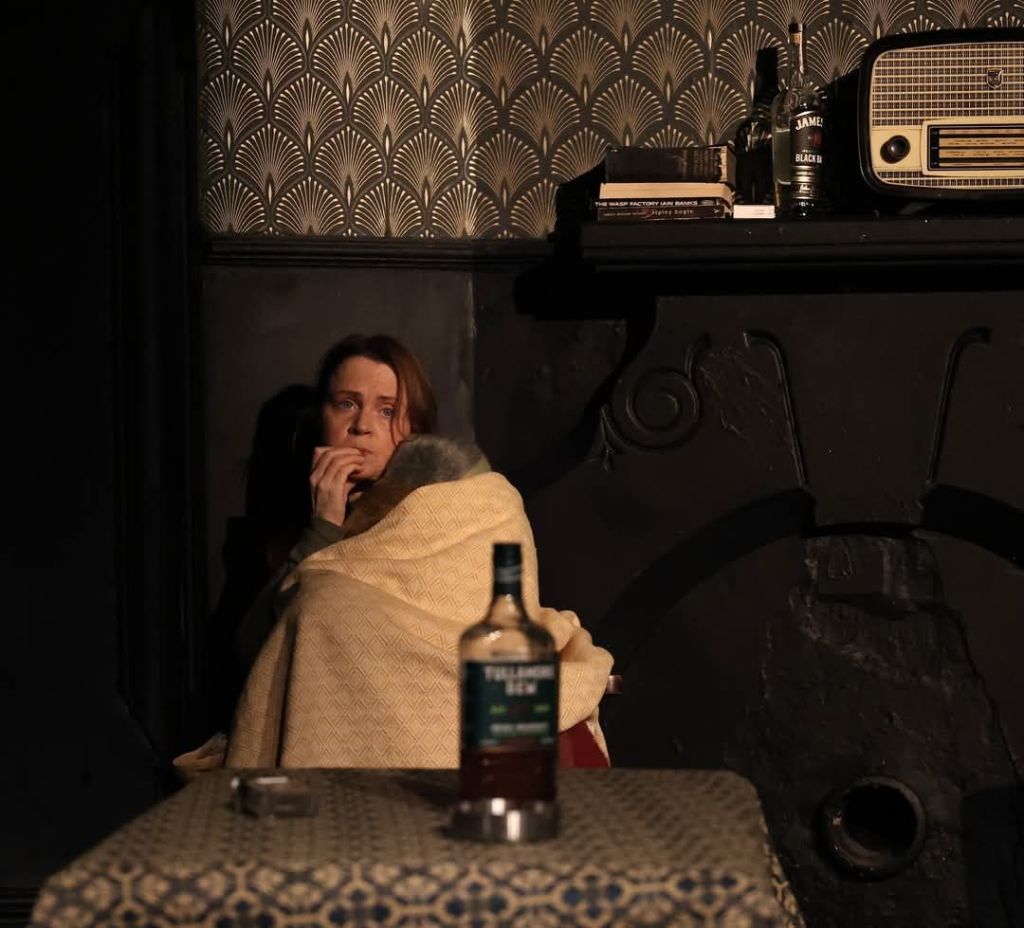
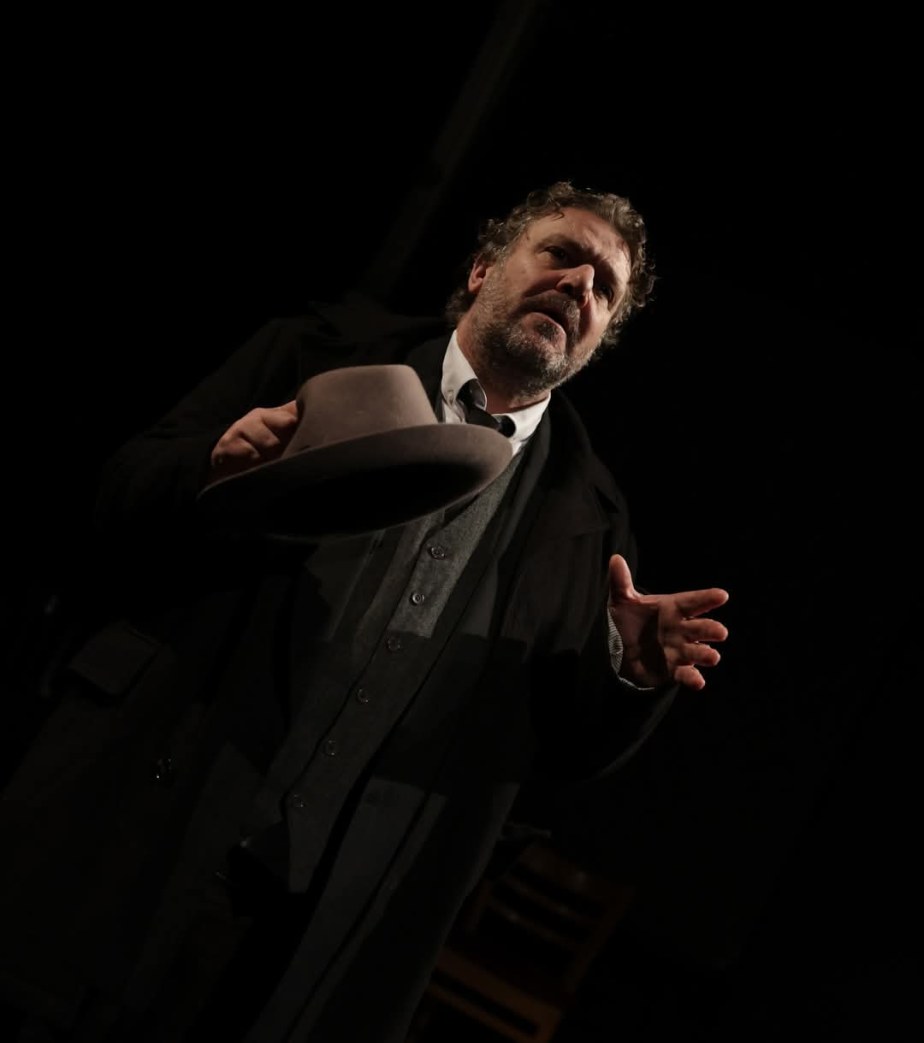
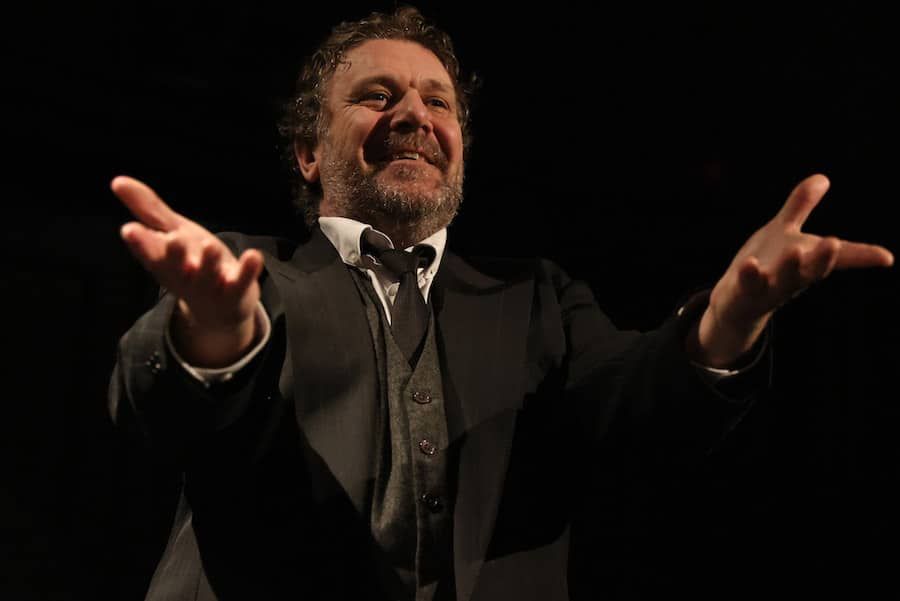
The cast all give thoroughly committed performances. Vicky Binns wrings every ounce of emotion from the tortured and traumatised Grace. This is a deeply emotionally fragile woman who is untethered by grief and yearning. Watching Grace emotionally unravel is not an easy watch but Binns imbues her character with such a plaintive poignancy and brittle dignity that her monologue is utterly absorbing. Colin Connor is Frank a wounded bear of a man who spews bluster and passion and frustration peppered with moments where his face lights up as he recalls a night in Wales where the stars aligned and he cured everyone in the room. Connor is a masterful storyteller who clearly relishes this role of the Healer both feared and reviled whether perceived as the real deal or a master of chicanery.
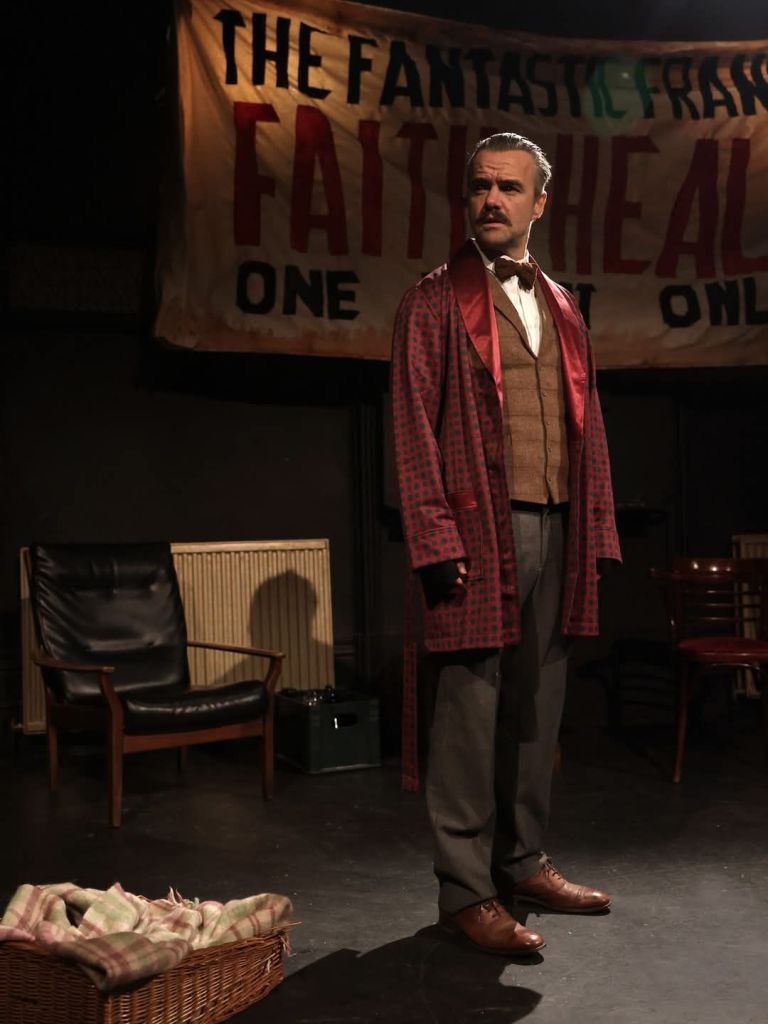
Rupert Hill is on a real creative roll recently taking the lead in his self -penned play HUSK at Hope Mill Theatre, directing an excellent production of COCK at 53Two and starring in In The Time Of Dragons at The Edge Theatre. Here he sits silently throughout the first half intently watching and listening as husband and wife relive pivotal moments from their past. A stillborn baby birthed in the back of a van in the back of beyond and buried in a field. Fights and recriminations as they travel Scotland and Wales seemingly exiled from their homeland until the great return to Ireland. Then a dark horrific night in Friel’s fictional Ballybeg where a crooked finger is cured and this momentary success sets of a terrible series of events. Hill brings a light touch to the second half weaving humour and pathos with charm and aplomb. He lights up the stage as he tells tales of past successes with such acts as a bagpipe playing whippet which seems to come alive as he describes it. Hill’s character Freddy may be down on his luck and also bereft of his colleagues but ultimately he is imbued with more hope and faith than the fantastic Frank Hardy could ever muster.
This is the real deal when great writing, a good Director with vision and a strong cast open to taking risks come together and create theatrical alchemy. This production hit all the right notes with its immersive feel ramping up the intimacy and inviting the audience to have faith in what happens on stage and trust the process. Having been on the receiving end of rural Irish faith healers on numerous times growing up its a strange sensation when it works. It feels like a warm sense of satisfaction that envigorates the mind and body and restores the spirit with a sense of bliss. If Frank nailed it in a hall in Wales and cured everyone there then I think Thacker and his team may have achieved a similar success rate in a pub in Manchester.


 Live Art Alive