Blog

Moth

Hope Mill Theatre

large_e99370a4-6030-4e9f-9551-b45af2b668d9.png

Sometimes theatre yields a little bit of magic. There was a buzz and a whizz and and and…….. Imagining how Claryssa and Sebastian would have reacted if they were in the audience for Moth instead of on the stage tonight. This is the stuff of nightmares whether we were once bullied as teenagers or we fear our children might be. Declan Greene creates a sense of the horrors of being teenage misfits and bravely portrays the two young actors  to the audience with no attempt to engage our sympathy or affection.

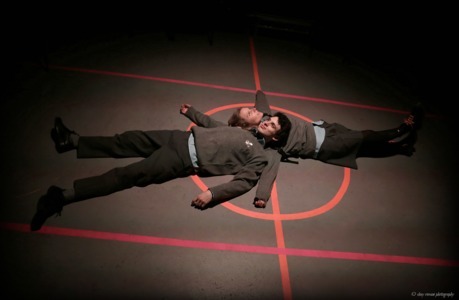
This is a great production by Ransack Theatre which is visually stunning. The seating of the audience is akin to sitting either side of a gym hall or sports field so we are quickly immersed in the school setting. Floodlights at one end plus a giant cocoon-like duvet and an elaborate cave structure of lights and strobes at the other end. The lighting by Matt Leventhall is seriously impressive for a smaller theatre and is used brilliantly by director Piers Black-Hawkins to convey the disintegration of relationships and ultimately of sanity.

Charlotte Gascoigne is perfect as emo Claryssa who likes poetry and kind of tolerates Sebastian but also rages at the world and can flit from acts of kindness to vicious acts and violence. Sebastian is that weird, hyperactive kid who smells different to us as though our animal selves know to either separate from or simply annihilate such individuals. Interestingly Schizophrenia is one of a handful of medical conditions humans can detect by smell and in early onset often manifests with visual illusions. The strangely tender yet dispassionate moments of spitting into the handkerchief also suggest a sickly boy who may be suffering from cystic fibrosis. This is not going well for Sebastian or Claryssa with or without the gleaming moth of Saint Sebastian.

This is at times confusing and frustrating but somehow that doesn’t really matter. The audience will probably tell very varied stories of what actually happens on stage. The end result is still a brilliantly constructed piece with some stunning physical theatre that pulsates with the light and soundscape. Not to be missed.

Running until April 22nd

The Tenant of Wildfell Hall


The Bolton Octagon

033017boltonoctagontenantofwildfellproductionphotos068

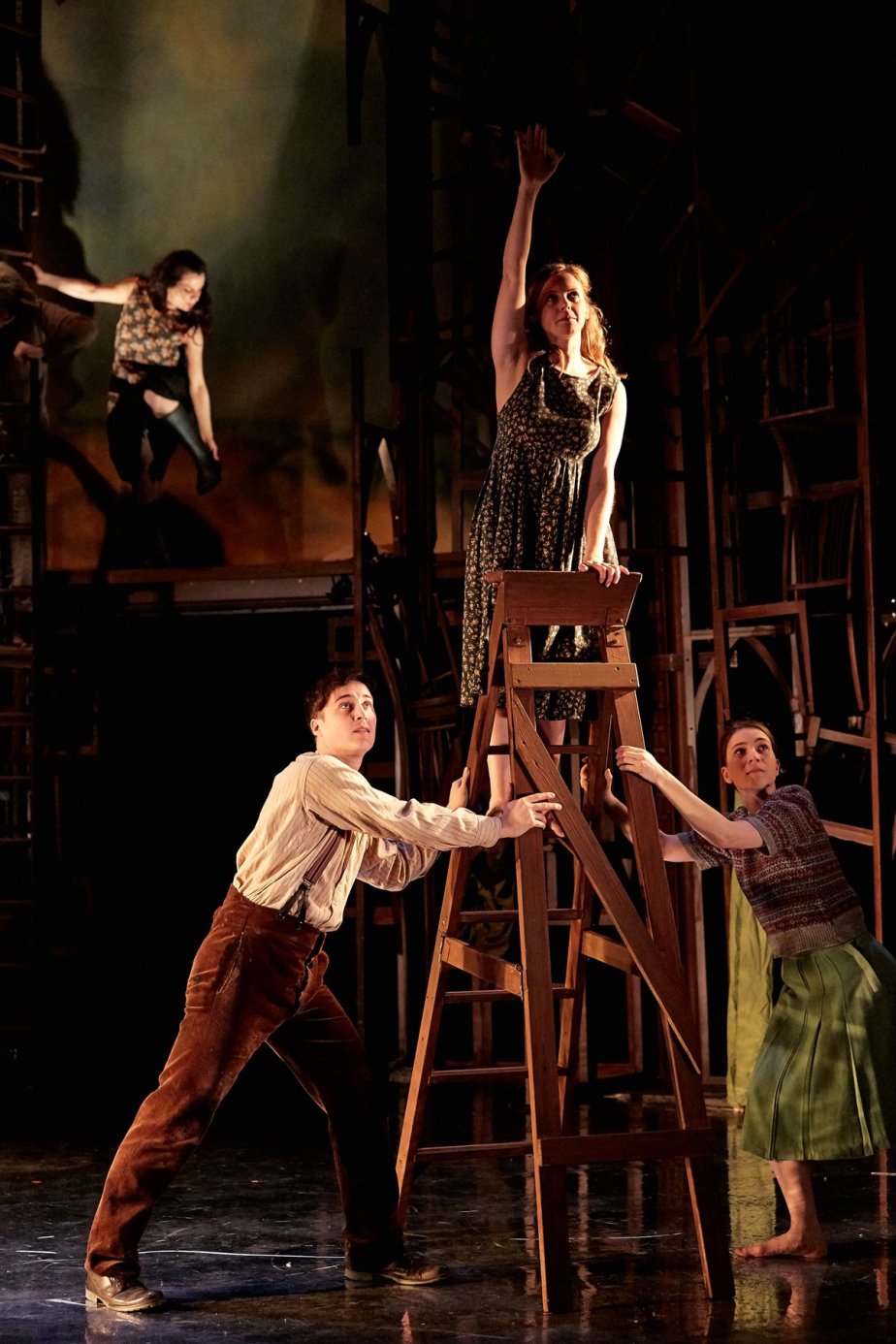
This was how I imagine dinner theatre might feel but without tables and without food. Anne Brontë wrote this gritty portrayal of married life in 1848 in which she spoke passionately about domestic abuse, alcoholism and women’s rights. Two hundred years on those issues are still relevant and still require our consideration, however a modern audience is perhaps much harder to shock. Deborah McAndrew has done a very effective job of adapting this weighty classic for the stage however it a solid rendering rather a stimulating and passionate portrayal.

Phoebe Pryce is very believable as the stoic and driven Helen. She is an intelligent and independent woman who is determined to shield her young son from the excesses of his fathers hedonistic lifestyle. The first half of the play sees her disguised as the widow Mrs Graham who in her desperation to remain hidden is so unsociable that she generates a storm of gossip and speculation in the quiet rural community around Wildfell. Prickly and intelligent she is a world away from the dull and vapid females who sip tea and delight in local gossip rather than art or literature.

In the second half we revisit her unhappy marriage through the device of her lovelorn suitor reading her diary. Here we see an immature young woman infatuated with her new husband the charming but dastardly Arthur played with aplomb by Marc Small. Unlike her friends Helen is not prepared to accept a bad marriage and escapes with her only financial security being her ability as a landscape artist. Set in the 1820s this is the act of a strong and deeply wounded women so it is difficult to believe either her quickly falling for another man or her choice to return to Grassdale Manor to nurse her ailing husband.

Gilbert Markham initially appears dull and dependable but is perhaps stifled by the society he is surrounded by – epitomising a man whose best friend truly is his dog. Michael Peavoy is well cast as the quietly handsome farmer who finds his love and admiration finally reciprocated. It is very telling that the rather fabulous Sancho the sheepdog is discarded in the second act as the farmer falls more deeply in love.

The other performances are all reliable and rise to the challenge of playing dual roles as the action moves to Grassdale Manor. The younger females are mainly either sweet and vapid or vindictive and petulant whereas the older women are bossy and opinionated or careworn and stoic. The menfolk are also a mixed bag of flawed characters. The local cleric stood out as adding a comedic element as an ale loving Irish buffoon. Colin Connor kept the audience amused though at times his performance felt too much like a nod to Ian Paisley and Mrs Brown.

The set was disappointing as the fake dry stone walls felt more suited to Wuthering Heights. The fire was a cosy touch of the safety of home and hearth but the move to portray Helens marital home felt lazy  and did little to convey the luxury  she gave up in order to have her independence.

It is a clever move to adapt  a classic for the stage as it often acts to reassure a prospective audience that their investment of time and money is a safe one. This is especially apt as this piece still has a lot to say in modern society and it may create curiosity as it is written by the lesser known but most radical Brontë sister. Anne was only 29 when she died and this her last novel was published less than a year before her death. It was a brave and shocking novel for its time and after her sisters death Charlotte Brontë chose to suppress a proposed third edition citing the subject matter as inconsistent with her sisters “reserved and dejected nature”. Perhaps living in her own  claustrophobic community with an opinionated Northern Irish cleric as a father and a carousing alcoholic for a brother she had good reason to feel dejected and frustrated. Like her heroine she sought financial independence through her own artistic abilities so thumbs up to Deborah McAndrew and Artistic Director Elizabeth Newman for allowing her to speak to a new audience.

At The Bolton Octagon until April 22nd, then touring.

The People Are Singing

Royal Exchange Theatre Studio

Text by LIZZIE NUNNERY

Directed by TAMARA TRUNOVA

This new work by Lizzie Nunnery makes for uneasy viewing. We flinch as 12 year old Irina plays with a skipping rope that seems to scourge her flesh. As she chalks out Hopscotch or bounces over rope we reconnect with the universality of play. Mother and child are hungry and vulnerable. Songs, games and rituals are all that hold them to sanity in a mad world where no one can be trusted and nothing is quite what it seems.

20170407_205136

Cora Kirk is wonderful as the young Irina. She is on stage throughout the performance and handles this demanding role with apparent ease. The characters are well chosen to give a sense of  fighters – Mikhailo (Sam Redway) the embittered and disillusioned revolutionary and Dima (Graeme Hawley) who is excellent as the Russian soldier who  is a loving father turned monster by this war. The other women embody mothers driven mad by war. Katya (Chloe Massey) is the stoic mother feeding her starving child imaginary Borsch and Olena (Kate Coogan) as a grief stricken woman who has watched her son die in a landmine explosion.

The use of physical theatre is wonderful and there are some very deft moments – especially the use of the elastic rope. In the yellow and blue of the Ukrainian flag it allows some great moments on stage while cleverly reminding the audience of how pliable our sense of  truth and physical borders can be.

The creative staging allows the actors to conceal themselves in a range of ways. The sliding doors illuminated with church candles serves to move the actors on and off the stage while evoking a candle lit heaven or hell for the dead.

The use of song and music is central to Nunnery’s work. The singing of Russian and Ukrainian folk songs move the story along and give a sense of history and national pride. The tragedy for mankind is when our songs no longer fits our borders. What survives? Do we write new songs or sing the old ones louder?

This World Stages project brings together Nunnery and Ukrainian director Trunova gathering stories from the local Ukrainian community. They share a passion for story telling and the desire to give a voice to marginalised people. The themes of who we are in wartime and what choices we make when struggling to survive are prevalent in this piece. This is a brave production with a lot to say. There are some standout moments however it requires some editing especially towards the end where it risks becoming muddled and losing its focus. A case of too many ingredients in an excellent Borsch.


The Suppliant Women

The Royal Exchange Theatre Manchester;


I was quite wary about seeing this production. I wanted to like it but quite frankly I was concerned that the linking of a 2500 year old Greek play and our current refugee crisis might end up seeming forced or rather too worthy. As The Lord Mayor of Manchester joins the choir of local volunteers to give the traditional thanksgiving I was intrigued by this piece of theatrical archaeology. The libation wine is poured slowly and evenly around Lizzie Clachan’s stark breezeblock stage;  then the choir  re enter with their suppliant branches forming a human boat sailing gracefully into Argos. Exquisite pure harmonies flood the space and I’m hooked.

Written by Aeschylus; this new version by David Grieg opened his first season as Artistic Director at The Royal Lyceum, Edinburgh. His intention to use theatre as a “democratic space” works well in a space like The Royal Exchange. Here the stage is often crowded but movement remains fluid and effective – perhaps a clever nod to how many countries can adapt successfully to accommodate refugees should they chose to.

The women sing in unison as they beseech King Pelagrus to heed their request for sanctuary reminding him that Argos is home to their ancestors Io who later sought sanctuary in Egypt and to Zeus; and reminding the audience that migration of people is central to our survival as a species. The local choir of 26 young women represent the 50 suppliant daughters of Danaos fleeing Egypt to avoid forced marriage to their 50 cousins. The central dilemma is “if we help we bring trouble if we don’t we invite shame”. This is a democracy so this King asks his people to decide the fate of these young women who have sung so passionately for their right to choose virginity over forced marriage. Sanctuary is granted but there will eventually be a heavy cost as the proprietary, prospective husbands sail into Argos.

This is a play about what do we do when we exercise choice. Are we selfish or altruistic; and either way is there always a price to pay? Beyond the issues of our stance on forced marriage or the refugee situation are other murkier issues that remind us of how complex the decision making process is. These are educated high born women of Egypt seeking asylum from forced marriage. They expect that asylum regardless of the risk to the citizens of Argos who face the fury of The Egyptians. They are shocked when the citizens suggest local marriages which would of course bring fresh blood and new wealth to the local community. It would seem that these steadfast virgins are somewhat disingenuous to the reality that in this life we rarely get something for nothing.

Director Ramin Gray ensures this production is bold and rhythmic and effective. The clever use of ancient instruments, staccato clapping and singing that beguiles, exults and wails laments invite the audience to start to breathe with the performance. Choreographer Sasha Milovic Davies and Movement Director Josephine Hepplewhite do an amazing job of ensuring that the very simple staging remains fluid and gloriously memorable. The human boat moves like it is on water and the simple use of the women’s scarves to form the bovine shape of Io is magical. Gemma May Rees as chorus leader soars vocally and is a luminous presence on stage as she leads the sisterhood of brightly clad suppliants.

It is however the chorus of local volunteers who are the living flesh of this performance. They are our teenage daughters or sisters or pupils clad like Greenham Common protesters or fans of The Levellers. I suspect their vigour and energy will leave a echo in this space long after the play moves on to another city; I’m sure Aeschylus would approve.